Artwork
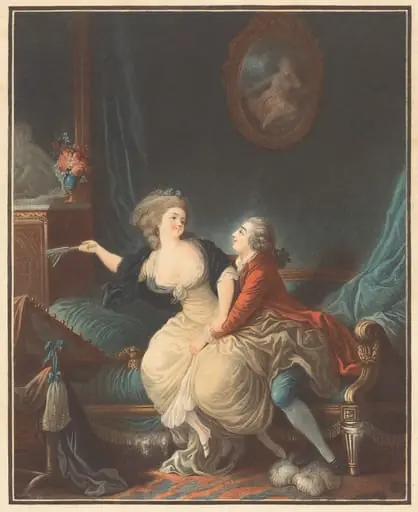
L'Amant écouté
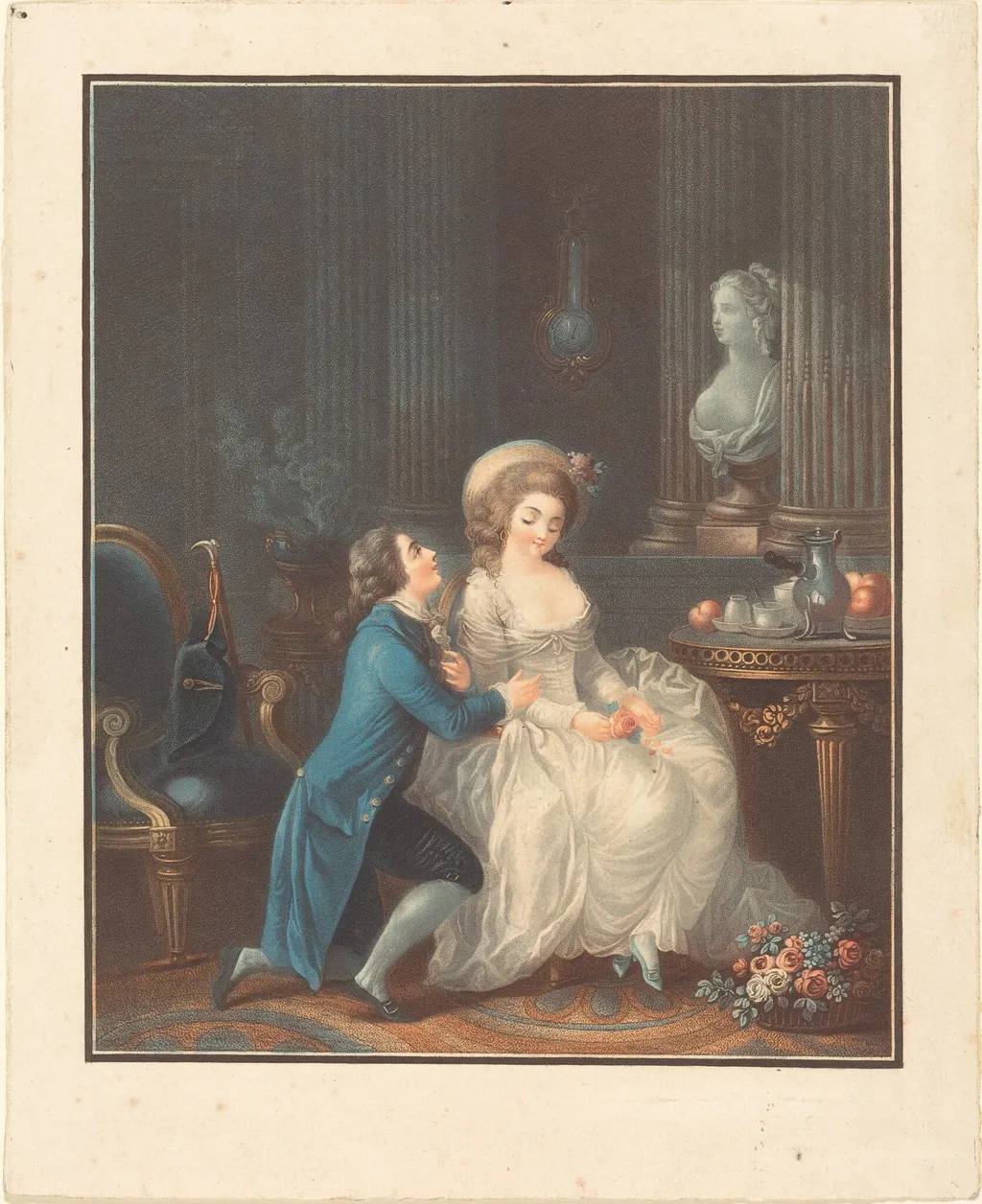
L'Amant écouté is a paint print by the Baroque artist Louis-Marin Bonnet. It dates from 1764 and is held in the collection of the National Gallery of Art. Louis‑Marin Bonnet’s 1764 print L’Amant écouté, executed in color stipple, presents an intimate interior scene.
About this work
Overview
The setting includes a bust, a vase of flowers, and a table bearing a pitcher and cups, contributing to a quiet, domestic atmosphere.
Louis‑Marin Bonnet’s 1764 print L’Amant écouté, executed in color stipple, presents an intimate interior scene. A kneeling man in a blue coat reaches toward a seated woman in a white dress, their hands touching as he looks up at her. The woman gazes downward with a softened expression. The setting includes a bust, a vase of flowers, and a table bearing a pitcher and cups, contributing to a quiet, domestic atmosphere.
Subject & Meaning
The composition captures a moment of tender communication between the two figures, suggesting a private conversation or confession. The gentle exchange of glances and the delicate hand contact emphasize emotional closeness, while the surrounding objects—classical bust, floral arrangement, and modest tableware—reinforce a cultured yet intimate domestic environment typical of late‑Baroque genre scenes.
Technique & Style
Bonnet employed the color stipple method, building tones through fine, dot‑like strokes that blend to create soft gradients of hue. This approach yields a velvety surface and subtle modeling of flesh and fabric, aligning the work with the refined aesthetic of mid‑eighteenth‑century French printmaking, where delicate coloration complemented the Baroque emphasis on sensuality and detail.
History & Provenance
Created in 1764, L’Amant écouté reflects Bonnet’s activity during the waning years of the Baroque period in France. While specific ownership records are scarce, the print has been documented in collections of 18th‑century French prints and is cited in scholarly surveys of the era’s intimate genre imagery, illustrating the artist’s contribution to the period’s visual culture.
Artist & collection