Artwork
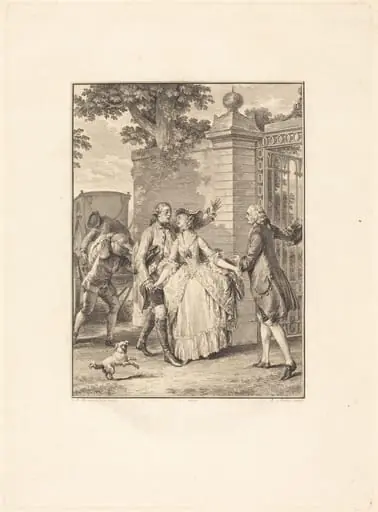
A femme avare galant escroc
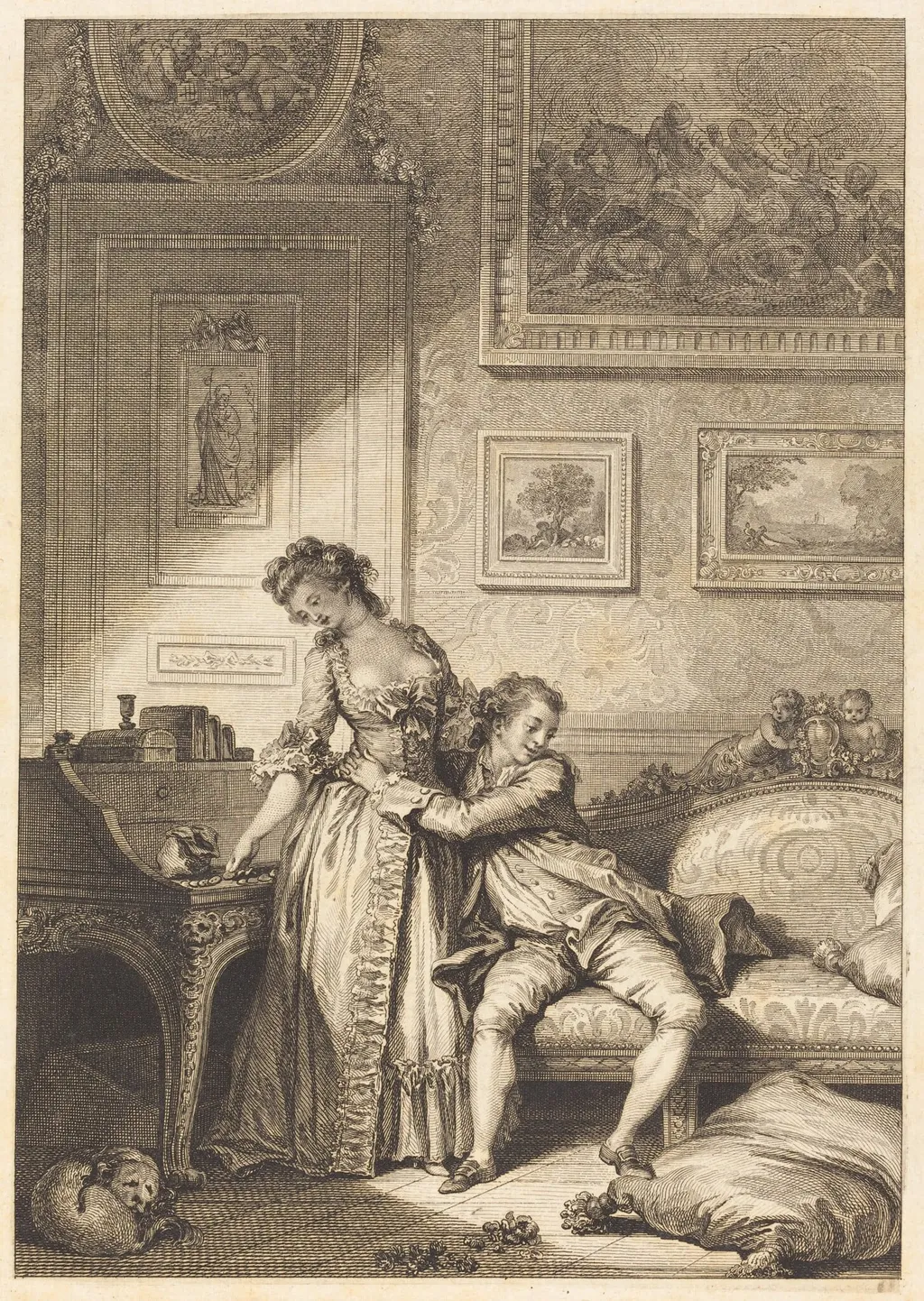
A femme avare galant escroc is an ink print by the Baroque artist Antoine-Jean Duclos. It dates from 1757 and is held in the collection of the National Gallery of Art.
About this work
Overview
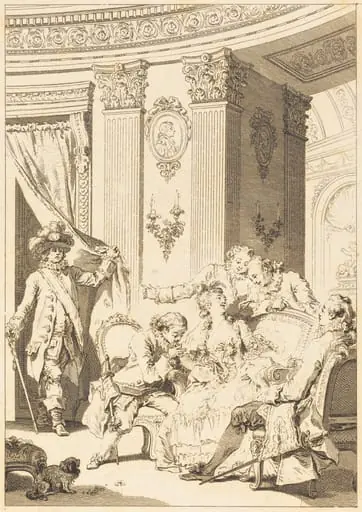
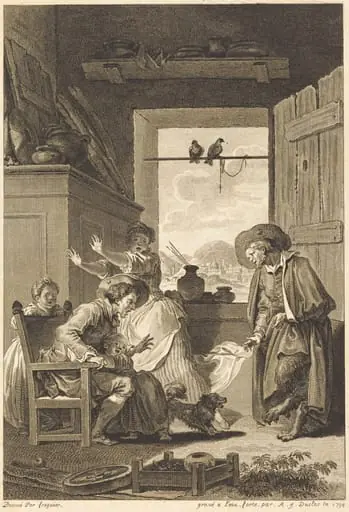
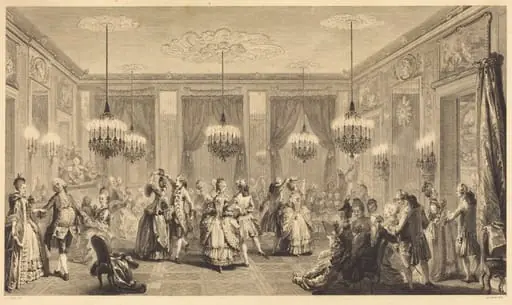
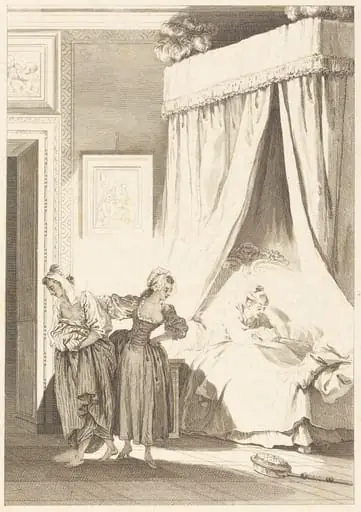
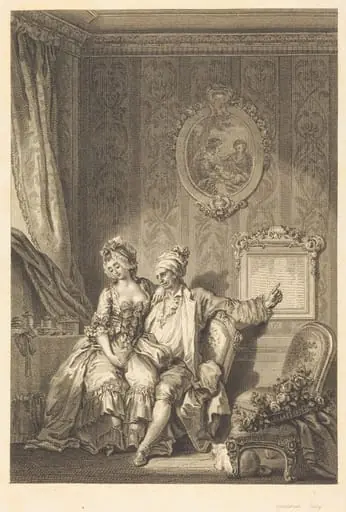
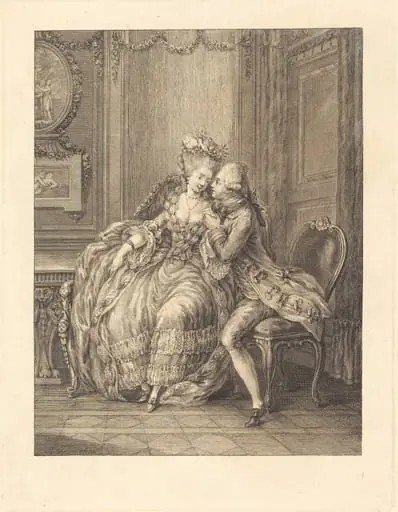
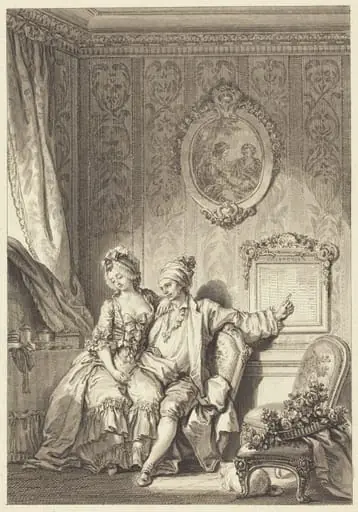
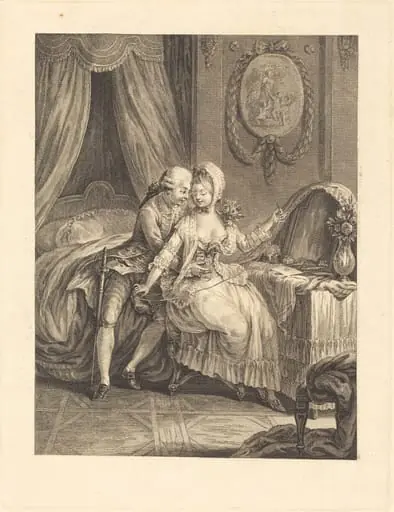
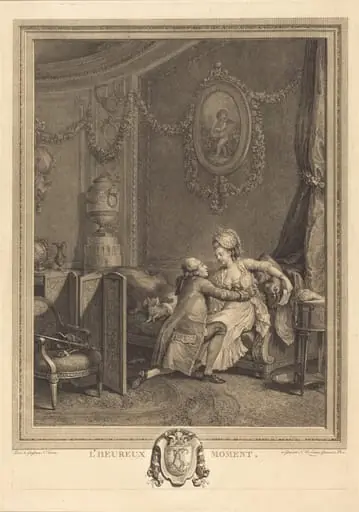
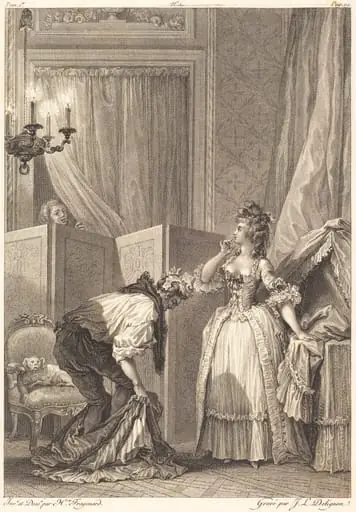
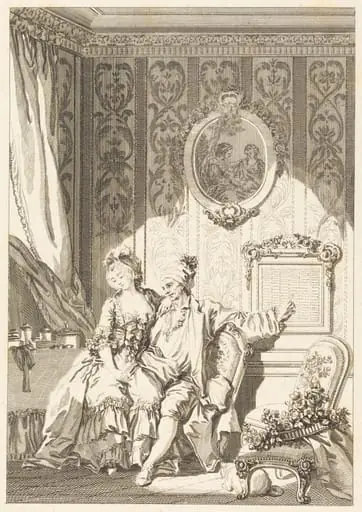
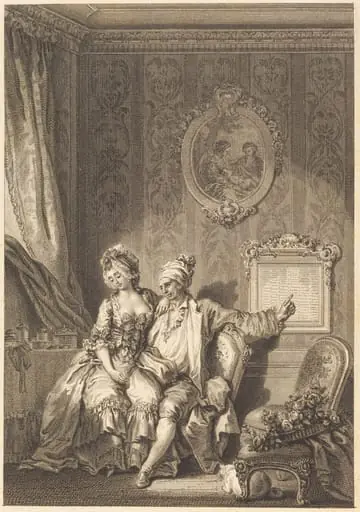
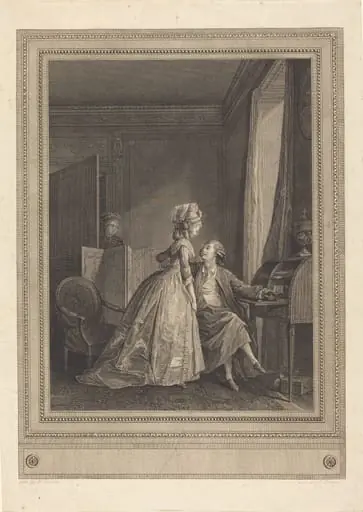
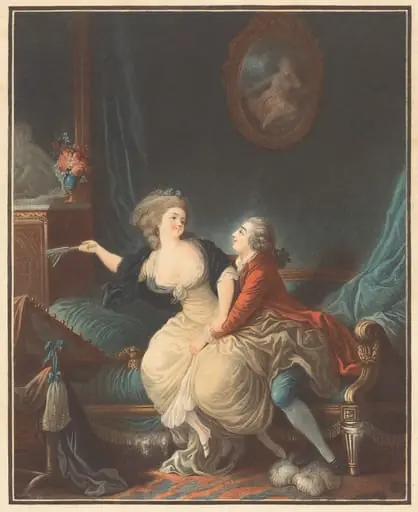
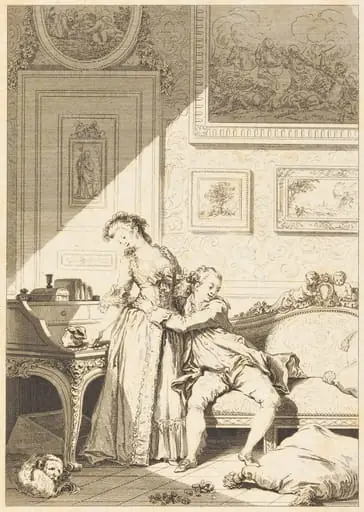
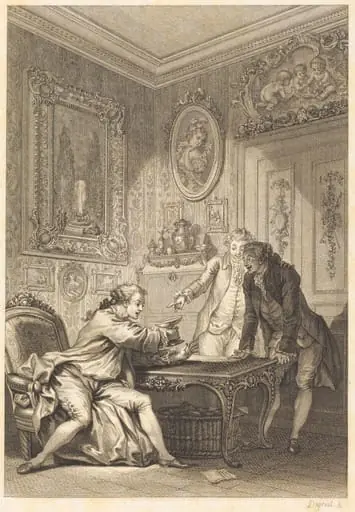
Antoine‑Jean Duclos produced the print titled A femme avare galant escroc in 1757. Executed as an etching combined with engraving, the work measures a modest size typical of mid‑eighteenth‑century French prints. It depicts an interior scene populated by a elegantly dressed woman, a casually seated man, and a small dog, all arranged within a richly appointed room.
Subject & Meaning
The composition presents a woman in a voluminous, pleated gown standing beside a table, clutching a diminutive object, while a man in loose attire reclines on a settee, one arm draped over the armrest. A relaxed dog lies on the floor. The title’s reference to a “stingy, gallant swindler” suggests a satirical commentary on social pretensions and the interplay of wealth and deceit.
Technique & Style
Duclos employed a hybrid process of etching and engraving, allowing him to render fine linear details such as the intricate folds of the woman's dress and the textured wall moldings. The combination of incised lines and engraved strokes creates a contrast between delicate surface texture and the bolder, more defined outlines of the figures, characteristic of French printmaking in the 1750s.
Context
The interior setting, with framed pictures, a bookshelf, and a vase, reflects contemporary bourgeois interiors, emphasizing both refinement and domestic clutter. Such genre scenes were popular in the Rococo period, offering viewers a glimpse of everyday life while subtly critiquing social mores through humor and visual irony.
Legacy
While not as widely reproduced as some of Duclos’s later works, this print exemplifies the artist’s skill in merging narrative content with technical precision. It contributes to the broader understanding of mid‑eighteenth‑century French print culture, illustrating how artists used modest prints to comment on class dynamics and personal vices.
Artist & collection