Artwork
Paris from Pere Lachaise
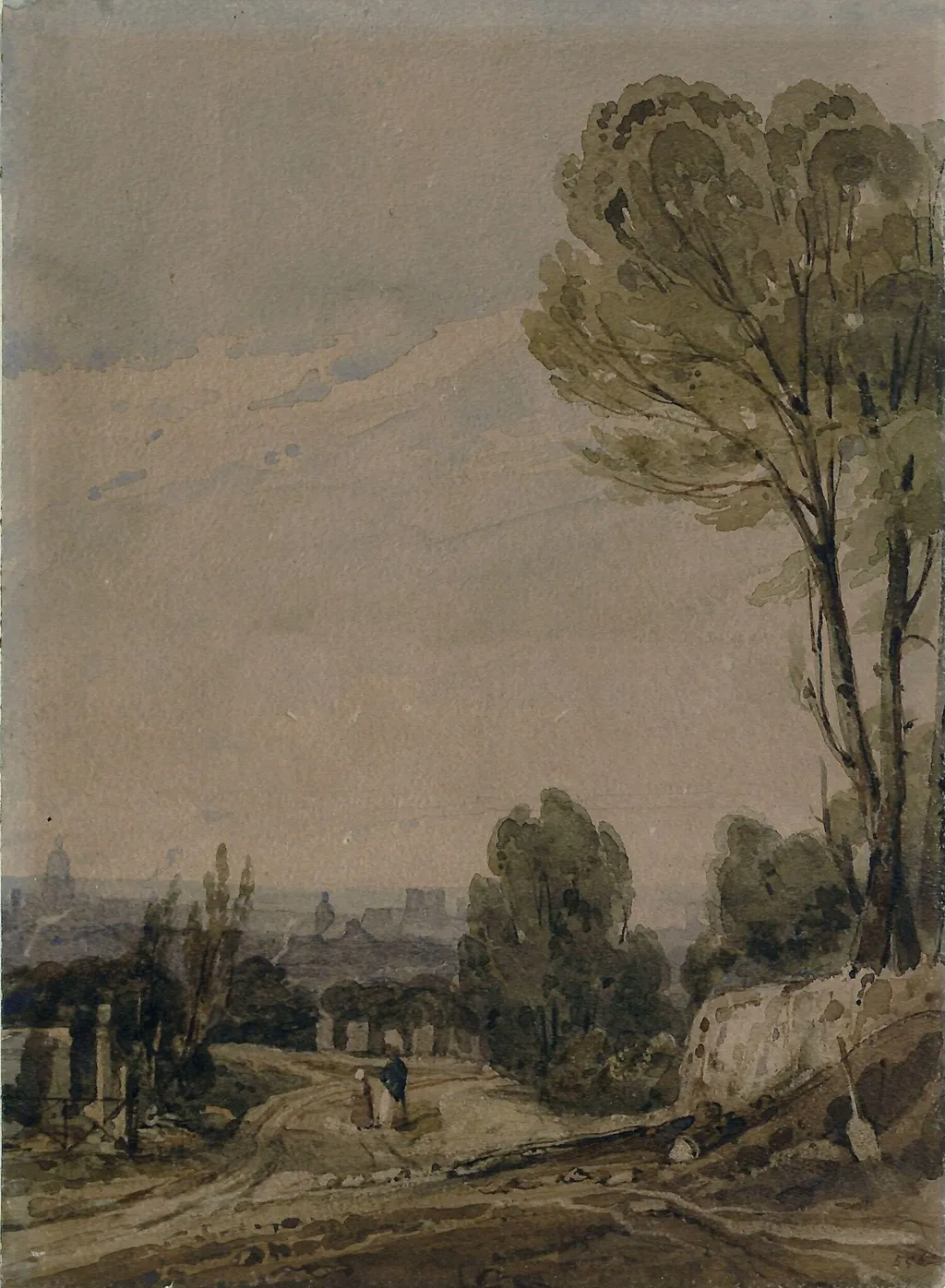
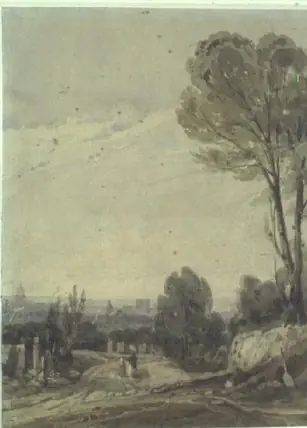
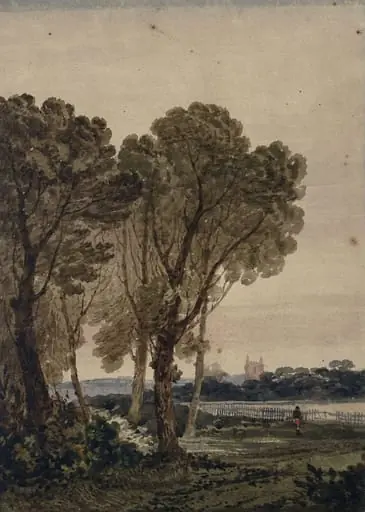
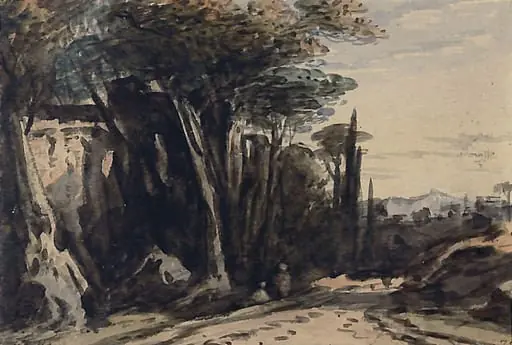
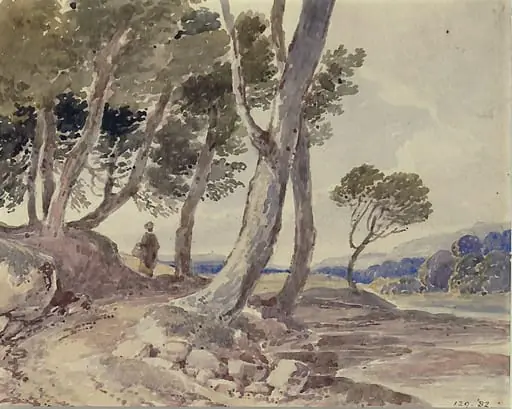
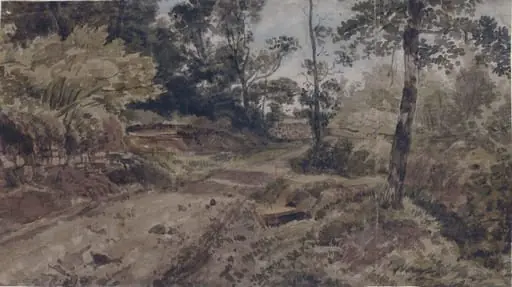
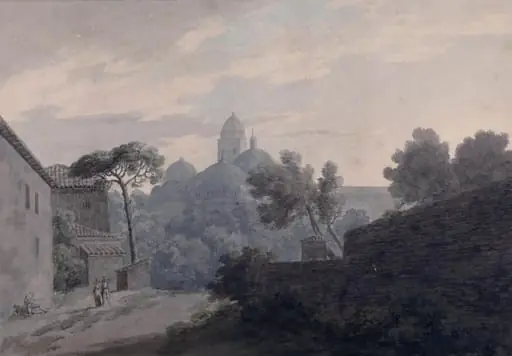
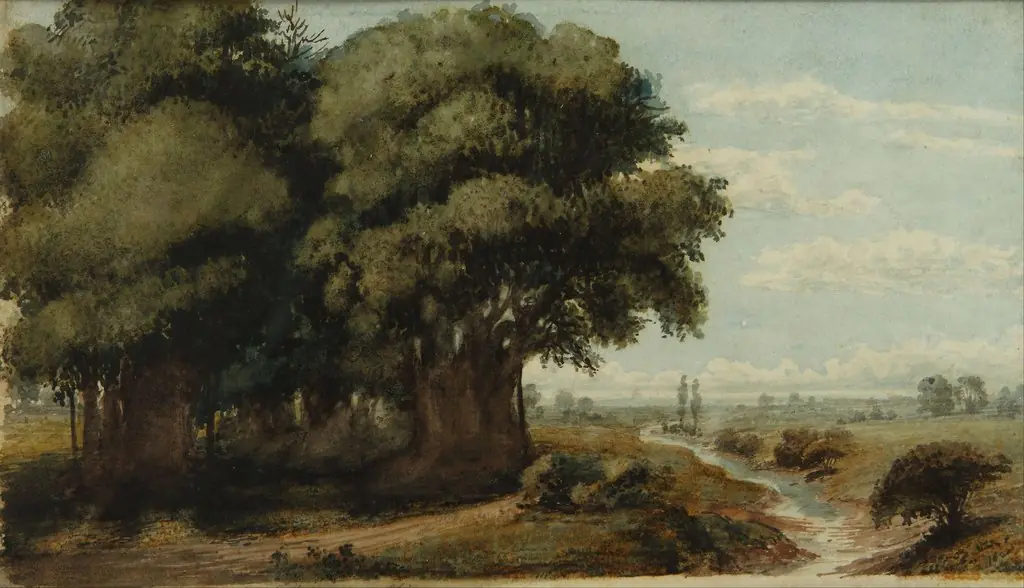
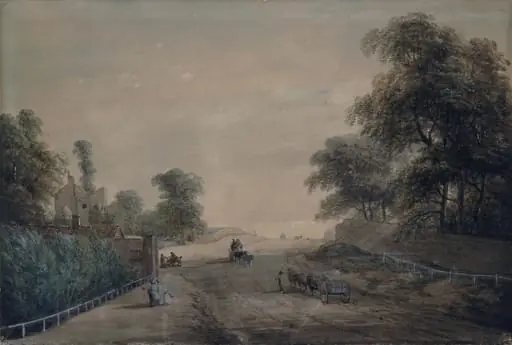
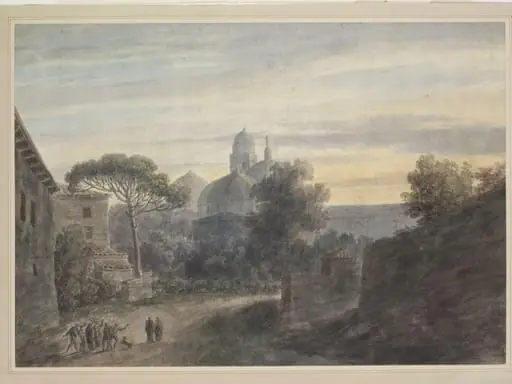
Paris from Pere Lachaise is a watercolor work on paper by Richard Parkes Bonington. It is held in the collection of the Victoria and Albert Museum. This 1850 watercolour by Richard Parkes Bonnington captures a quiet vista of Paris as seen from the slopes of Père Lachaise Cemetery.
About this work
Overview
This 1850 watercolour by Richard Parkes Bonnington captures a quiet vista of Paris as seen from the slopes of Père Lachaise Cemetery.
This 1850 watercolour by Richard Parkes Bonnington captures a quiet vista of Paris as seen from the slopes of Père Lachaise Cemetery. The composition is dominated by a winding path receding into the distance, framed by dense foliage and distant rooftops. The sky, rendered in pale washes, softens the horizon, while the absence of figures enhances the stillness of the scene. The work reflects Bonnington’s mastery of aqueous media to evoke atmosphere over narrative.
Subject & Meaning
The painting presents Paris not as a bustling capital but as a distant, hushed expanse seen from a place of repose. Père Lachaise, a cemetery associated with memory and quiet contemplation, frames the view as one of reflection rather than spectacle. The empty road and solitary tree suggest solitude, inviting the viewer to consider the relationship between life, death, and the enduring cityscape beyond.
Technique & Style
Bonnington employs delicate watercolour washes to build subtle gradations of tone, avoiding sharp outlines in favor of atmospheric blending. The muted palette—soft grays, pale greens, and washed blues—creates a sense of distance and calm. Brushwork is restrained, with fine strokes defining tree limbs and rooftops, while the road emerges through negative space, guiding the eye without forceful detail.
History & Provenance
Executed in 1850, this work belongs to Bonnington’s later period, following his return from France and prior to his death in 1828—though the date appears inconsistent with his lifespan. The painting’s early ownership is undocumented, and it likely remained in private hands until entering institutional collections in the 20th century. Its survival reflects continued interest in his lyrical landscapes.
Context
In mid-19th century France, landscape painting was gaining ground as a vehicle for personal expression, moving beyond topographical record. Bonnington’s view from Père Lachaise aligns with a broader European trend of seeking tranquility in nature and urban peripheries. His approach, influenced by English watercolour traditions, offered a quiet counterpoint to the grand historical scenes favored by the Paris Salon.
Legacy
Though not widely exhibited during his lifetime, Bonnington’s watercolours like this one influenced later British and French landscape artists who valued tonal subtlety and emotional restraint. His ability to convey mood through minimal means helped shape the development of atmospheric watercolour painting in the decades before Impressionism, leaving a quiet but enduring mark on the medium.
Own this work as a print
Artist & collection
Artist
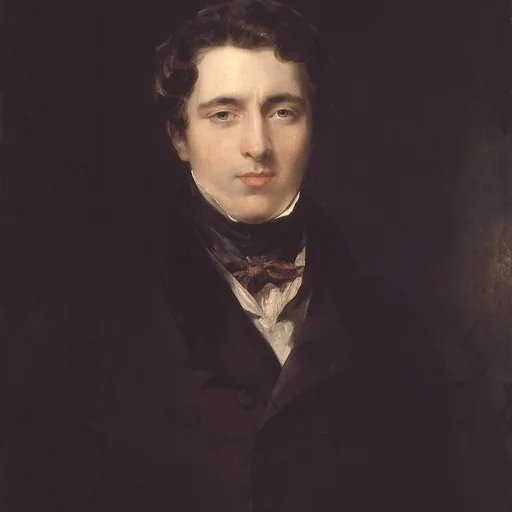
Richard Parkes Bonington (25 October 1802 – 23 September 1828) was an English Romantic landscape painter.