Artwork
The Virgin Giving the Girdle to Saint Thomas, between Saints Francis and Catherine of Siena
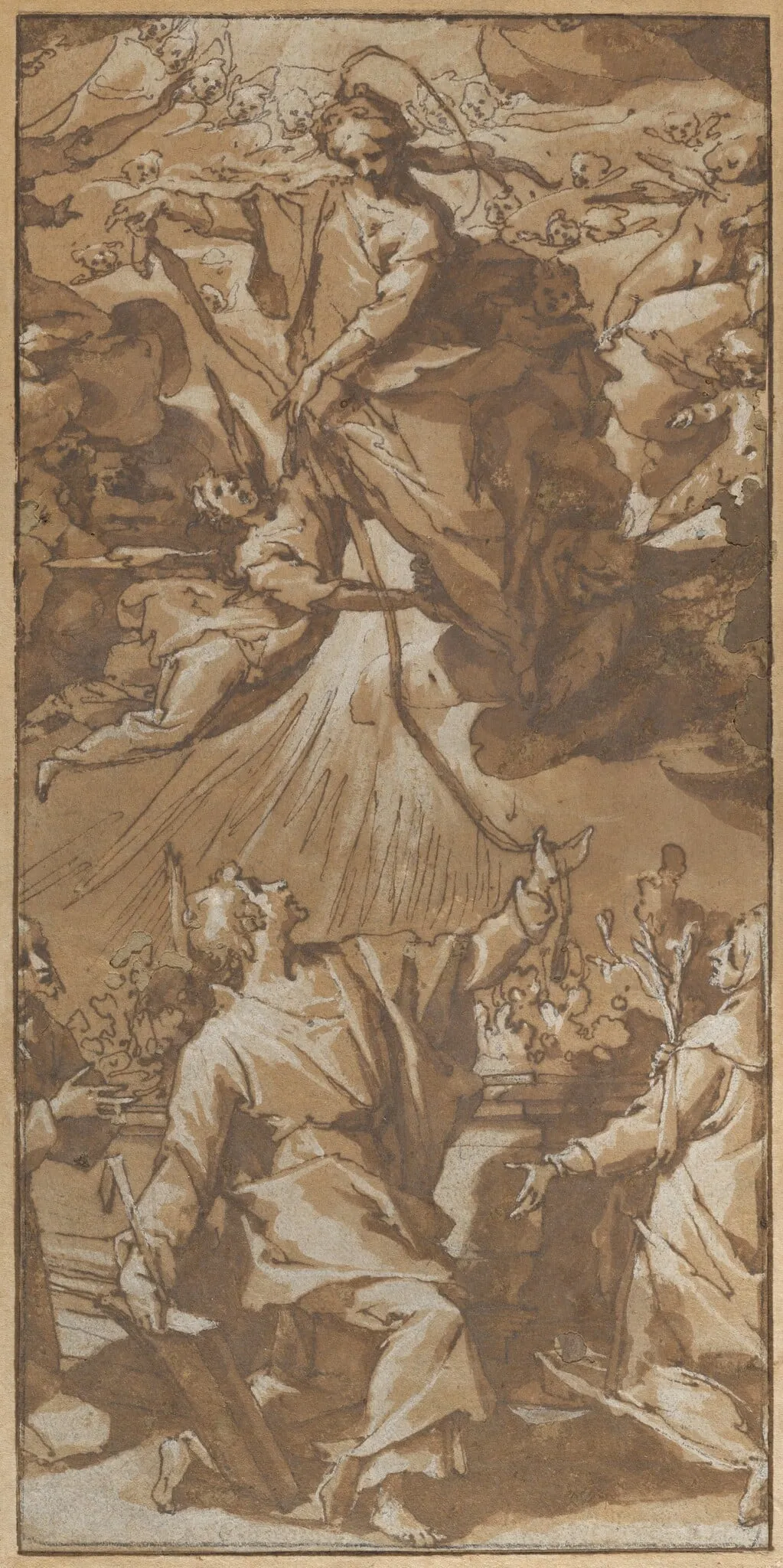
The Virgin Giving the Girdle to Saint Thomas, between Saints Francis and Catherine of Siena is a gouache drawing by the Renaissance artist Andrea Boscoli. It dates from 1602 and is held in the collection of the National Gallery of Art.
About this work
Overview
It reflects the artist’s Florentine training under Santi di Tito and his engagement with classical and Mannerist sources encountered during his time in Rome.
Created around 1602, this drawing by Andrea Boscoli is a religious composition executed in pen and brown ink with brown wash over black chalk, enhanced with white gouache on laid paper. It reflects the artist’s Florentine training under Santi di Tito and his engagement with classical and Mannerist sources encountered during his time in Rome. The work is mounted on an older support and resides in the National Gallery of Art, Washington, D.C., as part of its permanent collection of Renaissance drawings.
Subject & Meaning
The scene illustrates the apocryphal moment when the Virgin Mary, during her Assumption, lowers her girdle to Saint Thomas as proof of her bodily ascension. Flanking her are Saints Francis and Catherine of Siena, witnesses to the divine act. The gesture of the Virgin’s offering, directed toward the kneeling Thomas, underscores themes of faith and tangible evidence. The inclusion of the two saints situates the event within a devotional context familiar to Counter-Reformation audiences.
Technique & Style
Boscoli employed loose, confident pen strokes and layered washes to model form and atmosphere, using black chalk for initial structure and white gouache to highlight drapery and clouds. The rocky landscape and atmospheric background are rendered with swift, sketchy marks, suggesting a preparatory study rather than a finished work. The warm, earthy tonality and restrained use of white enhance the drawing’s immediacy, reflecting a spontaneous yet controlled approach to composition.
History & Provenance
The drawing was likely made during Boscoli’s mature period, following his exposure to Roman antiquities and the works of Polidoro da Caravaggio. It entered the National Gallery of Art’s collection through established acquisition channels, though its earlier provenance remains undocumented. Its preservation on an old mount indicates early recognition of its artistic value, likely within a private or ecclesiastical collection in Tuscany before its modern institutional placement.
Context
Boscoli worked in Florence during a time when religious imagery was shaped by the Council of Trent’s emphasis on clarity and emotional resonance. His engagement with Roman Mannerist aesthetics, particularly in figure composition and drapery, distinguishes his style from more rigid Florentine traditions. This drawing aligns with contemporaneous devotional drawings produced for private meditation, blending narrative precision with expressive spontaneity.
Legacy
Though not widely known outside specialist circles, Boscoli’s work exemplifies the transitional phase between High Renaissance discipline and Baroque dynamism in Florentine drawing. His use of wash and chalk to suggest movement and light influenced later generations of draftsmen. This piece remains a quiet but significant record of how religious subjects were reimagined through intimate, tactile media during the early 17th century.
Artist & collection
Artist
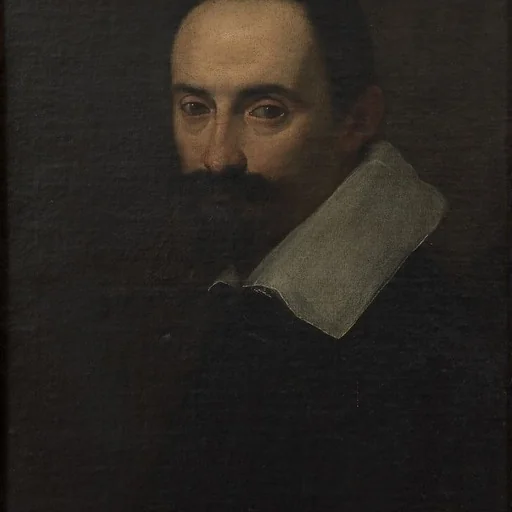
Andrea Boscoli (c. 1560 – c. 1606) was an Florentine painter of the Renaissance. He was born in Florence around 1560. He was a pupil of Santi di Tito, probably in the eighth decade of the 16th century. It was perhaps…

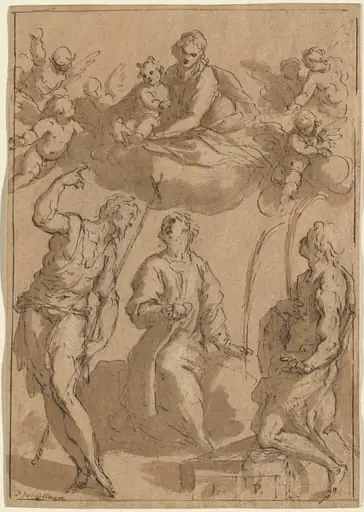 Madonna and Child in Glory with Saints John the Baptist, Stephen, and Lawrence
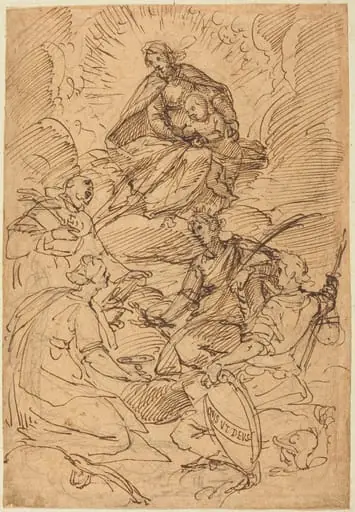 The Madonna and Child in Glory Adored by Saints
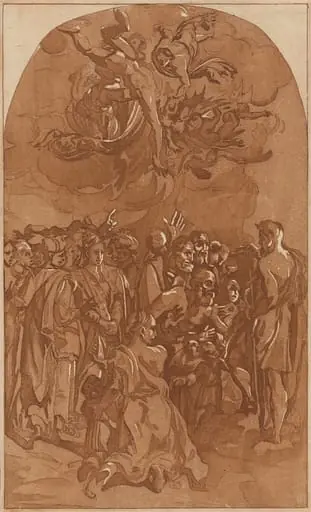 Saint John Preaching
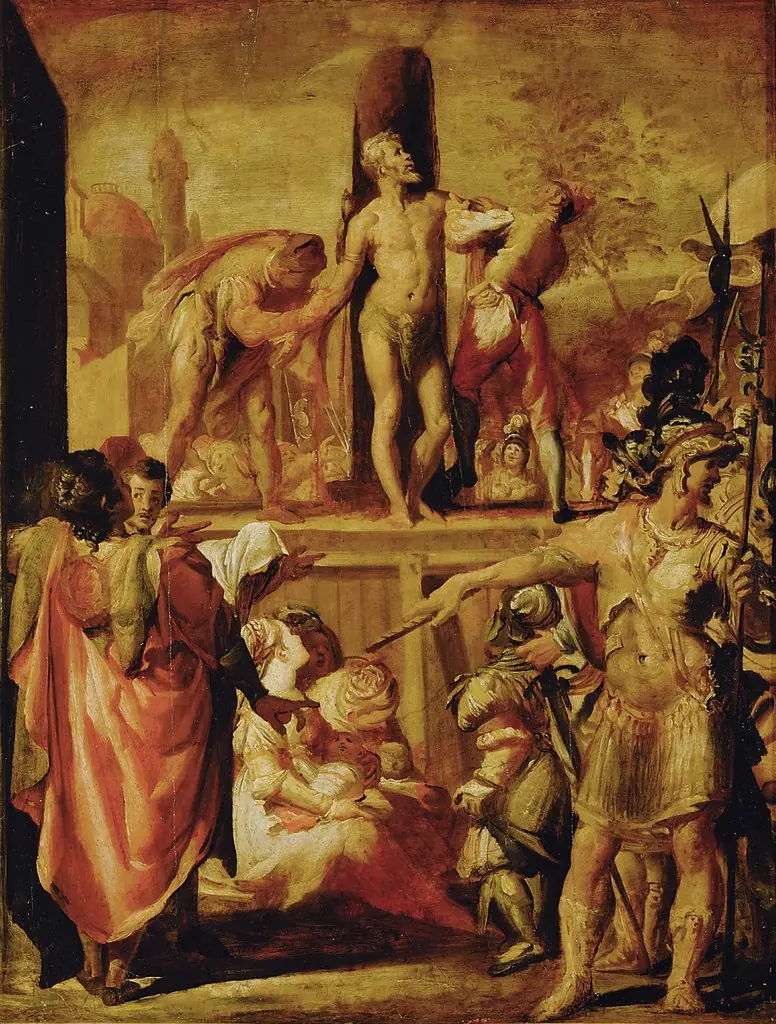
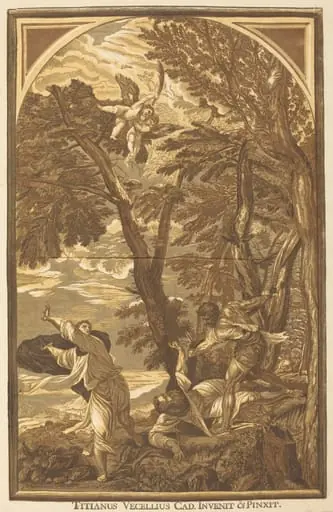 The Death of Saint Peter Martyr
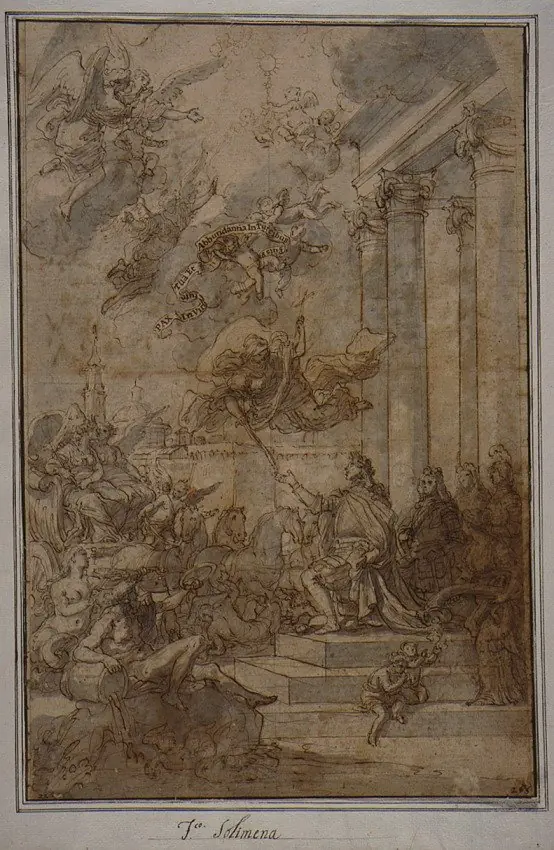 Allegory of the Entry of Charles Bourbon into Naples
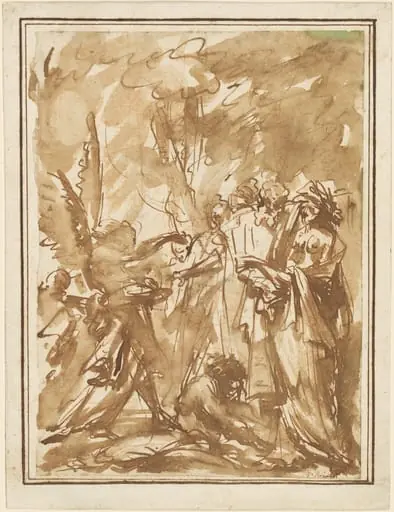 Scherzo with Antique Figures
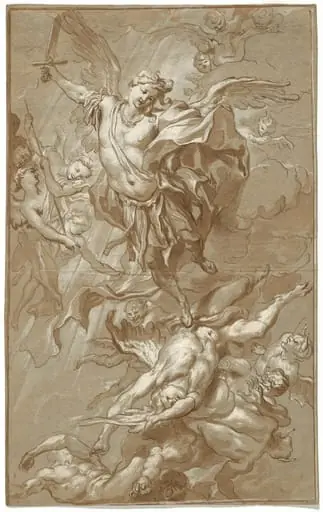 Saint Michael and the Rebel Angels
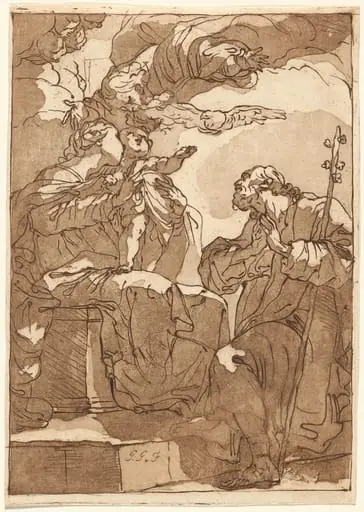 The Holy Family with God the Father
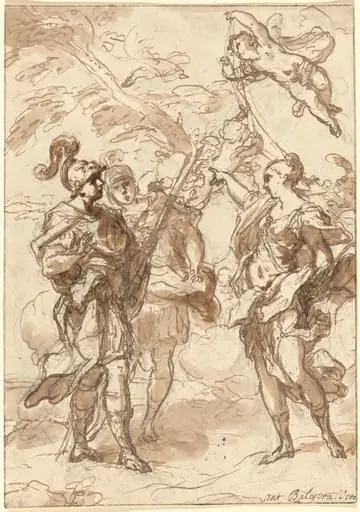 Venus as a Huntress Appearing to Aeneas and Achates
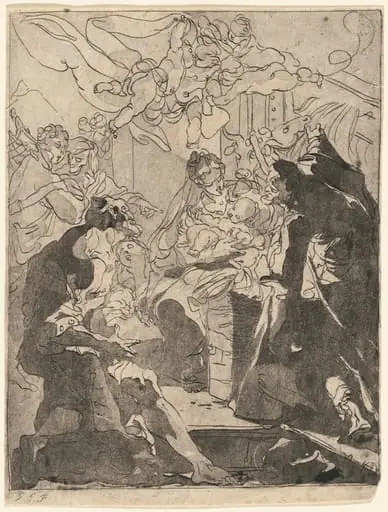 Adoration of the Shepherds
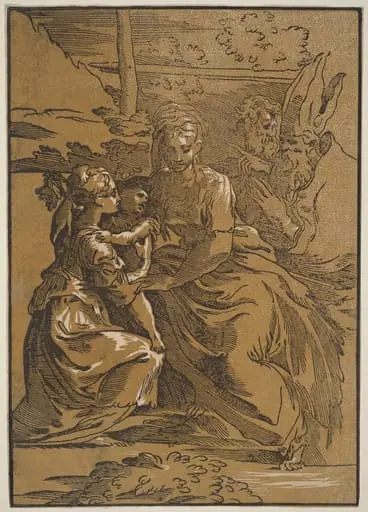 The Holy Family with Two Saints
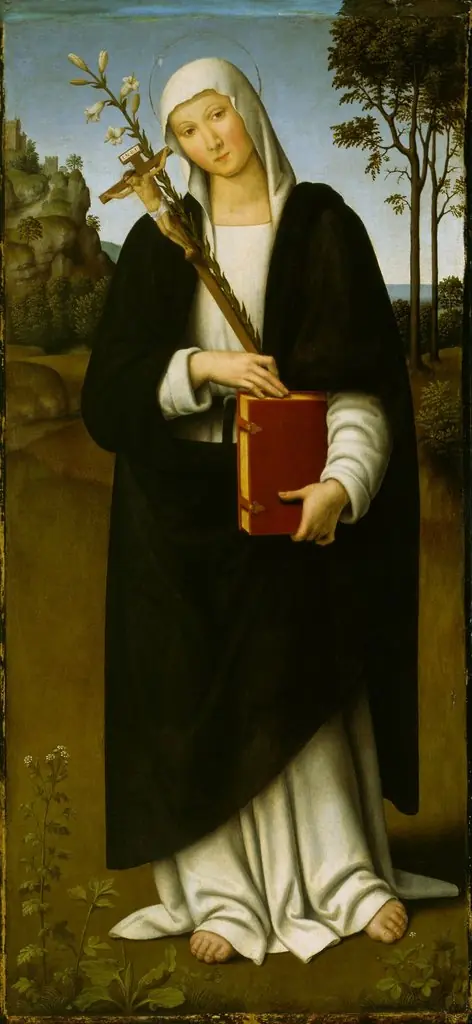 Saint Catherine of Siena