Artwork
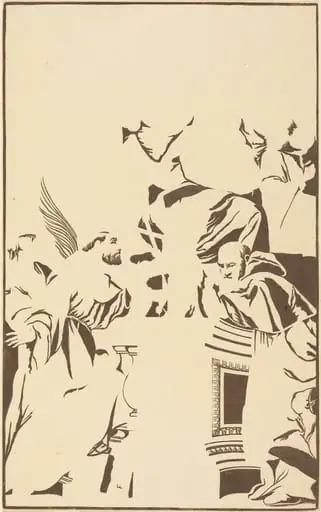
The Death of Saint Peter Martyr
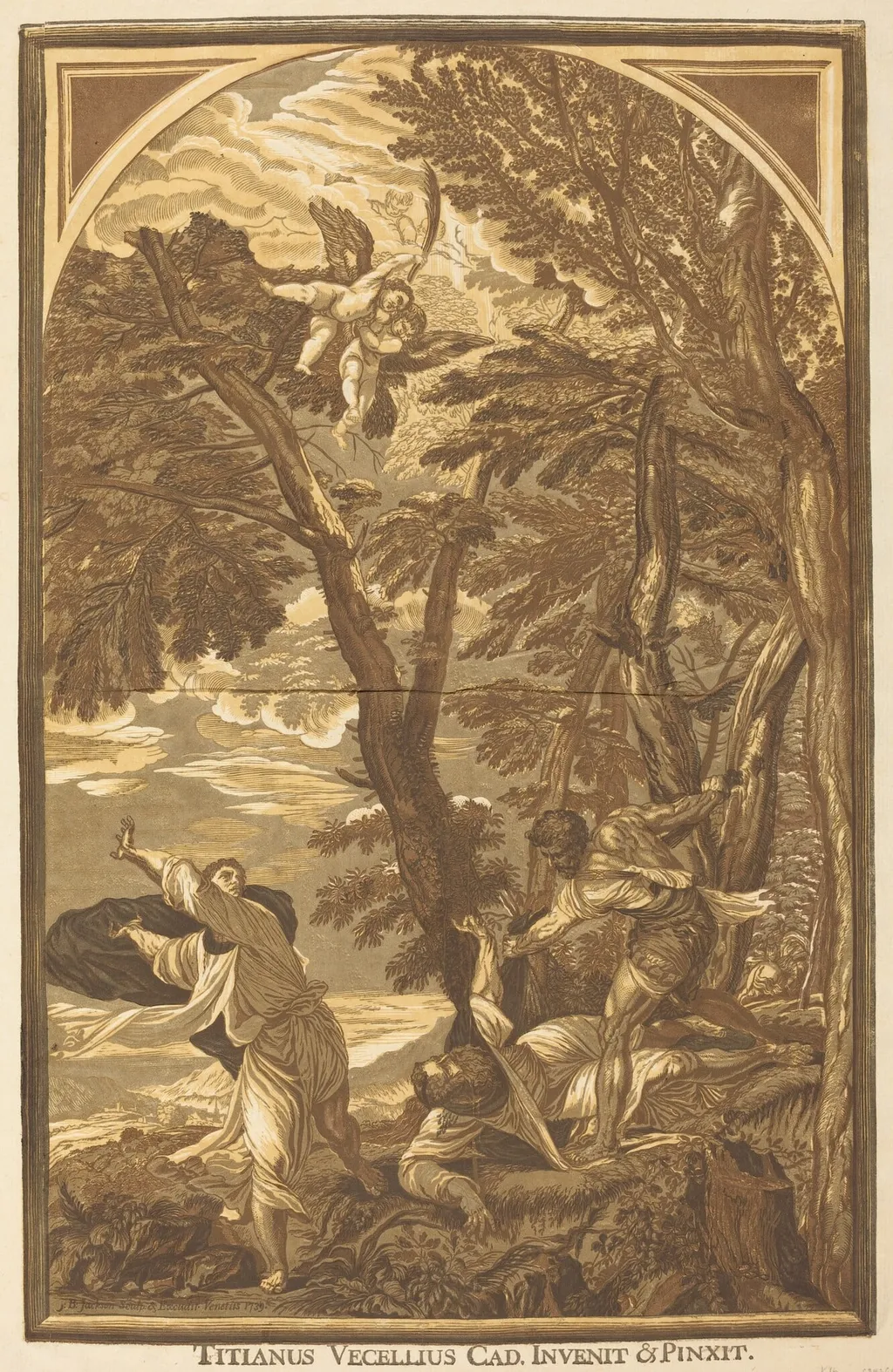
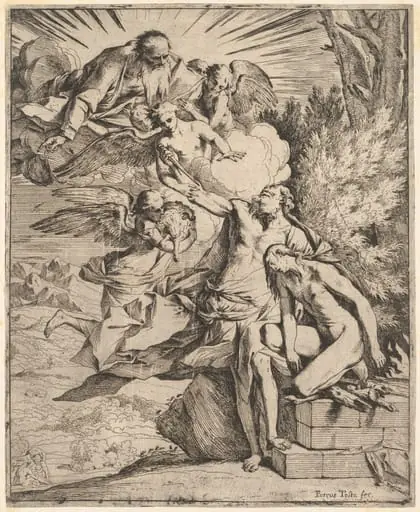
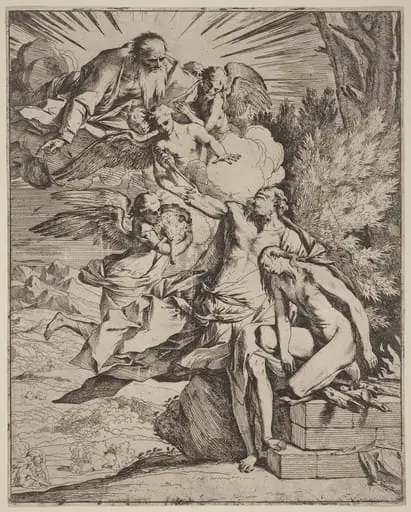
The Death of Saint Peter Martyr is an ink print by the Baroque artist John Baptist Jackson. It dates from 1738 and is held in the collection of the National Gallery of Art.
About this work
Overview
Created around 1738 by British printmaker John Baptist Jackson, this chiaroscuro woodcut depicts the martyrdom of Saint Peter Martyr.
Created around 1738 by British printmaker John Baptist Jackson, this chiaroscuro woodcut depicts the martyrdom of Saint Peter Martyr. Executed on laid paper, the work reflects Jackson’s engagement with Italian print traditions during his time in Paris and Venice. He adapted the technique to emulate the tonal contrasts of oil paintings, using layered woodblocks and oil-based inks to achieve nuanced shading and subtle color effects.
Subject & Meaning
The scene captures the violent death of Saint Peter Martyr, a Dominican friar assassinated in 1252 by heretics. He lies prone in a forest setting, while his attacker looms above. The composition emphasizes the sacredness of his final moments, avoiding overt gore in favor of solemn stillness. The wooded backdrop and dim lighting reinforce the isolation and gravity of the martyr’s sacrifice, aligning with devotional imagery of the period.
Technique & Style
Jackson employed multiple woodblocks to build tonal depth, a hallmark of chiaroscuro printing. He enhanced highlights through embossing, creating raised areas that catch light and simulate the luminosity of painted surfaces. Oil-based inks allowed for richer, more varied hues than traditional water-based prints. The intricate rendering of fabric folds and leaf textures demonstrates his commitment to mimicking the detail of Baroque painting through print.
History & Provenance
Jackson produced this print during a period when European printmakers sought to replicate the dramatic effects of Baroque masters like Caravaggio. Though his works were circulated in England and continental collections, few of his polychrome prints survive intact. This example remains among the better-documented of his chiaroscuro experiments, reflecting his role in bridging British printmaking with continental innovations.
Context
In the early 18th century, religious imagery remained a staple of print culture, even as secular themes gained traction. Jackson’s choice of subject aligned with enduring Catholic devotional practices, particularly in Catholic regions of Europe. His use of chiaroscuro echoed the influence of Italian artists and the Counter-Reformation’s emphasis on emotionally charged sacred narratives, adapted for a print audience.
Legacy
Jackson’s work contributed to the evolution of printmaking as a medium capable of conveying painterly depth. While not widely influential in his lifetime, his technical experiments with color and embossing paved the way for later 18th-century printmakers exploring tonal range. His prints remain rare artifacts of a transitional moment in print history, where craftsmanship met the ambition to rival painting.
Artist & collection

Artist
John Baptist Jackson (1701–1780) was a British artist, a woodcut printmaker of the eighteenth century.

![The Marriage at Cana [left plate], by John Baptist Jackson](https://artifactworldgallery.com/img/john-baptist-jackson--the-marriage-at-cana-left-plate--22bae83d46cc40b5-w320.webp)