Artwork
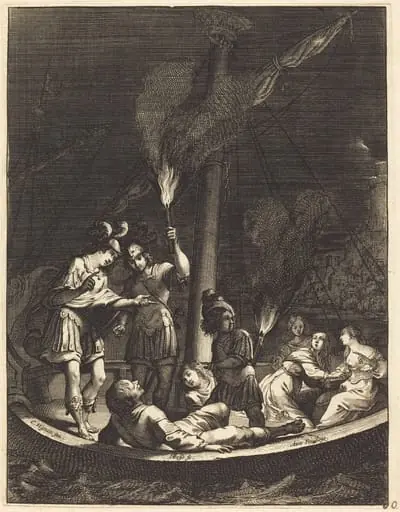
Illustration to Jean Desmarets' "L'Ariane"
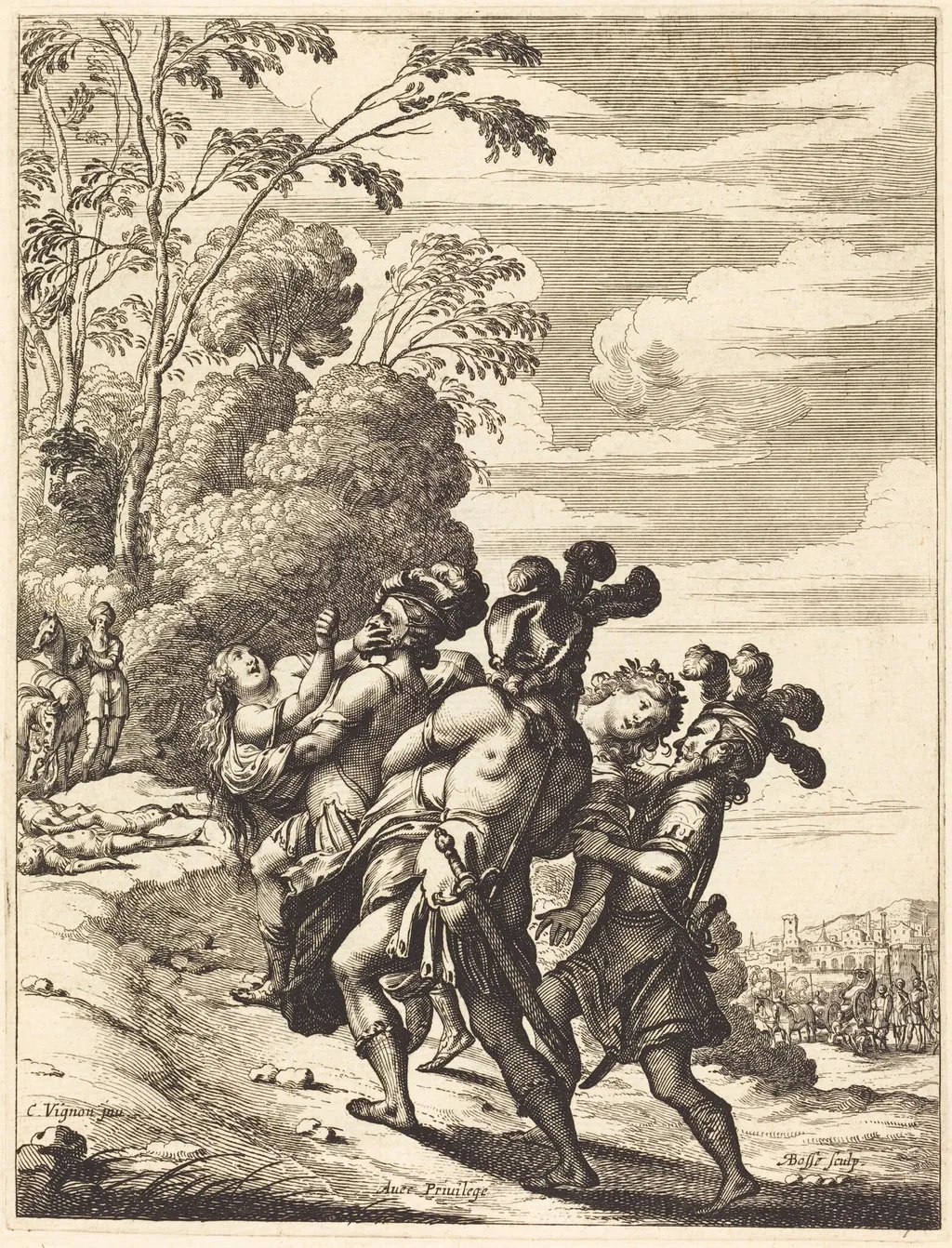
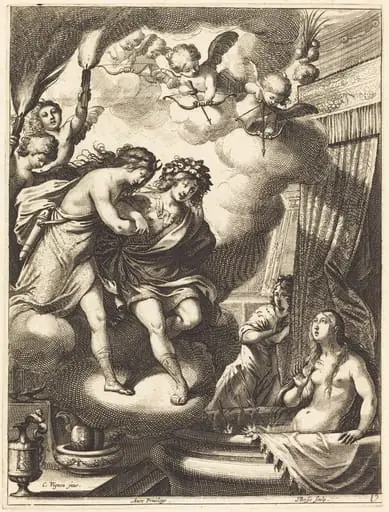
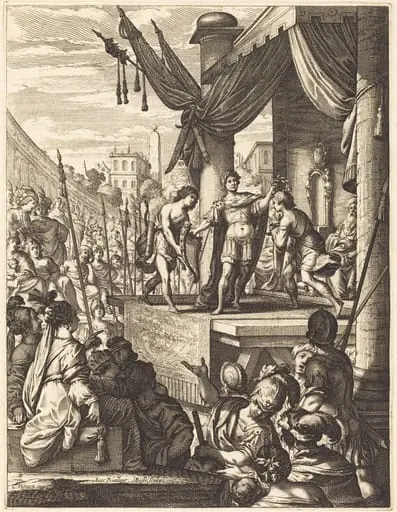
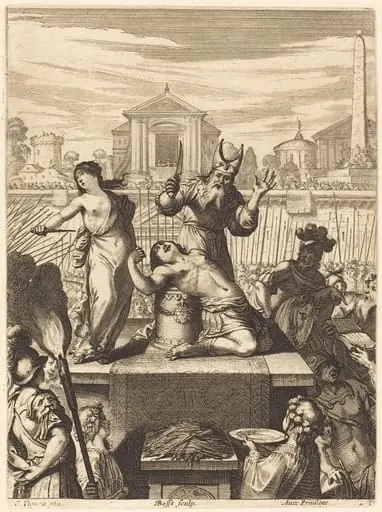
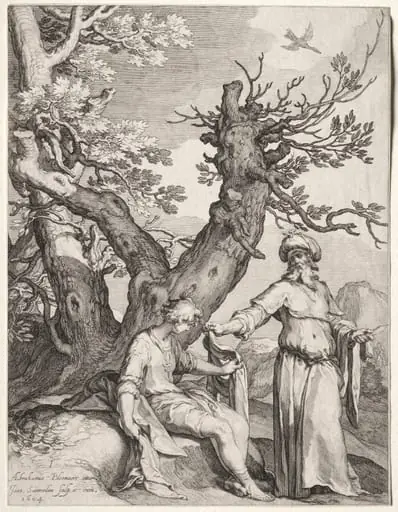
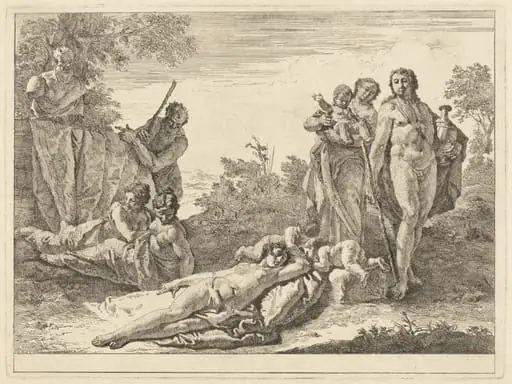
Illustration to Jean Desmarets' "L'Ariane" is an ink print by the Baroque artist Abraham Bosse. It dates from 1639 and is held in the collection of the National Gallery of Art.
About this work
Overview
This 1639 print by Abraham Bosse accompanies Jean Desmarets’ *L’Ariane*, executed in etching and engraving. As a defining work of seventeenth-century French printmaking, it demonstrates the medium’s capacity for intricate detail and tonal variation. The composition balances human figures with landscape elements, creating a dynamic interplay between foreground activity and distant architecture.
Subject & Meaning
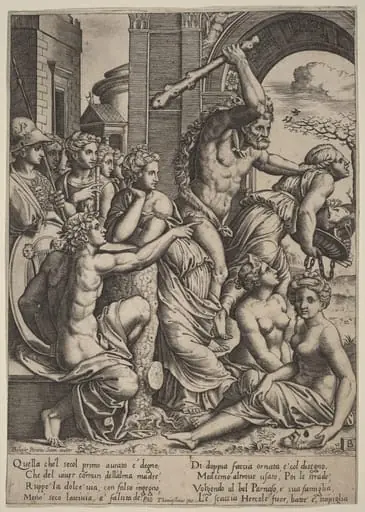
The scene depicts nude figures entwined in vigorous motion, their bodies contorted among vines and foliage.
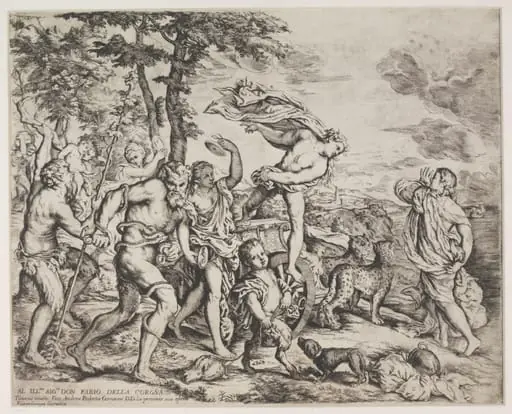
The scene depicts nude figures entwined in vigorous motion, their bodies contorted among vines and foliage. One grasps a cluster of grapes, while another stretches upward in apparent exertion. The tumultuous arrangement suggests either a bacchanalian revelry or a moment of collective struggle, evoking themes of natural abundance, human impulse, or mythological narrative without explicit resolution.
Technique & Style
Bosse employed etching needles and burins to achieve crisp lines and subtle gradations of shadow, lending the figures volumetric solidity. The interplay of fine hatching and cross-hatching animates musculature and drapery, while the distant town is rendered with delicate, almost translucent strokes. This dual approach—forceful modeling alongside atmospheric recession—characterizes the print’s visual tension.
History & Provenance
Produced in Paris in 1639, the print was conceived as an illustrative accompaniment to Desmarets’ text. Its survival reflects the period’s demand for reproductive prints, which disseminated literary and artistic themes across Europe. Subsequent ownership and preservation remain unrecorded, though it endures as a representative example of Bosse’s technical and compositional methods.
Context
During the 1630s, etching emerged as a favored medium among French artists seeking to rival the detail of engraving while retaining the spontaneity of drawing. Bosse, a central figure in this development, often collaborated with playwrights and poets, translating textual narratives into visual form. This print reflects the era’s fascination with classical mythology and pastoral themes, filtered through contemporary printmaking innovations.
Legacy
The work exemplifies Bosse’s influence on seventeenth-century printmaking, particularly his ability to merge narrative clarity with technical precision. Its depiction of dynamic human figures amid natural settings prefigures later Baroque treatments of similar subjects. As a document of collaborative book illustration, it underscores the role of prints in shaping cultural exchange between literature and visual art.
Artist & collection

Artist
Abraham Bosse (c. 1604 – 14 February 1676) was a French artist, mainly as a printmaker in etching, but also in watercolour.

![Flight of M. de Belle-Isle, Prisoner with theAttakapas [right], by Gabriel de Saint-Aubin](https://artifactworldgallery.com/img/gabriel-de-saint-aubin--flight-of-m-de-belle-isle-prisoner-with-theattakapas-right--c4658fbaef898dca-w320.webp)