Artwork
The Siege of La Rochelle [plate 3 of 16; set comprises 1952.8.97-112]
![The Siege of La Rochelle [plate 3 of 16; set comprises 1952.8.97-112], by Abraham Bosse, ink, 1630](https://artifactworldgallery.com/img/abraham-bosse--the-siege-of-la-rochelle-plate-3-of-16-set-comprises-1952-8--3e429776a95a101a-w1024.webp)
The Siege of La Rochelle [plate 3 of 16; set comprises 1952.8.97-112] is an ink print by the Baroque artist Abraham Bosse. It dates from 1630 and is held in the collection of the National Gallery of Art.
About this work
Overview
This print, the third in a sixteen-plate series by Abraham Bosse, documents the 1627–1628 siege of La Rochelle, a pivotal moment in the French Wars of Religion.
This print, the third in a sixteen-plate series by Abraham Bosse, documents the 1627–1628 siege of La Rochelle, a pivotal moment in the French Wars of Religion. Executed in 1630 using etching and engraving on laid paper, it belongs to a larger visual chronicle commissioned to commemorate the royal victory. The composition combines battlefield action with ornamental framing, reflecting both documentary intent and decorative convention common in early modern printmaking.
Subject & Meaning
Though titled 'L’entrée du Roi à la Rochelle,' the image depicts the siege’s climax rather than the king’s entry, which occurred after the city’s surrender. The central zone shows intense combat around ships and fortifications, while the margins feature heraldic scrolls and coats of arms that elevate the event to a state-sponsored narrative. The dissonance between title and scene suggests a propagandistic aim: to glorify royal authority by associating it with military triumph.
Technique & Style
Bosse employed fine, controlled lines typical of etching and engraving to render soldiers, cannons, and architecture with clarity. The black ink on light paper enhances contrast, directing attention to the chaotic center. Decorative borders, rich in scrollwork and emblems, contrast with the stark realism of the battle, demonstrating Bosse’s dual command of narrative precision and ornamental design—hallmarks of his printmaking practice.
History & Provenance
Created shortly after the siege ended, the series was likely produced under royal patronage to legitimize Louis XIII’s campaign against Huguenot rebels. The plates were distributed as printed records of state achievement. This particular impression, part of a bound set acquired by the museum in 1952, retains its original paper and ink, offering insight into how political events were visually codified in early 17th-century France.
Context
The siege marked a turning point in the suppression of Protestant resistance in France. Bosse’s series emerged during a period when print culture increasingly served state interests, transforming warfare into public spectacle. Unlike battlefield sketches, these prints were carefully composed to convey order amid chaos, aligning with the monarchy’s effort to project control and divine favor through imagery.
Legacy
Bosse’s series influenced later historical print cycles by merging documentary detail with symbolic framing. His technique became a model for French printmakers seeking to balance realism and propaganda. Though not widely exhibited today, the set remains a key example of how print media shaped public perception of state power in early modern Europe.
Artist & collection

Artist
Abraham Bosse (c. 1604 – 14 February 1676) was a French artist, mainly as a printmaker in etching, but also in watercolour.

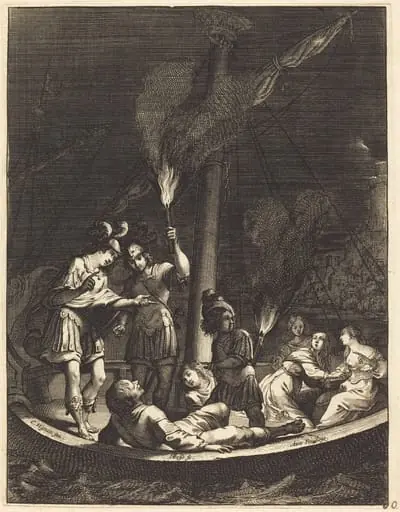
![The Siege of La Rochelle [plate 1 of 16; set comprises 1952.8.97-112], by Jacques Callot](https://artifactworldgallery.com/img/jacques-callot--the-siege-of-la-rochelle-plate-1-of-16-set-comprises-1952-8--4a7a47fc234f38f8-w320.webp) The Siege of La Rochelle [plate 1 of 16; set comprises 1952.8.97-112]
The Siege of La Rochelle [plate 1 of 16; set comprises 1952.8.97-112]![The Siege of La Rochelle [plate 16 of 16; set comprises 1952.8.97-112], by Israel Henriet](https://artifactworldgallery.com/img/israel-henriet--the-siege-of-la-rochelle-plate-16-of-16-set-comprises-1952-8--259b2c0fcc4c8988-w320.webp) The Siege of La Rochelle [plate 16 of 16; set comprises 1952.8.97-112]
The Siege of La Rochelle [plate 16 of 16; set comprises 1952.8.97-112]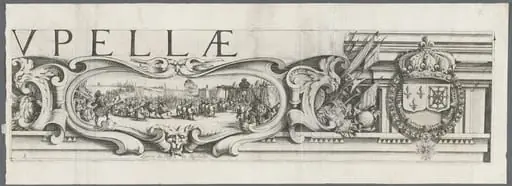 The Siege of La Rochelle: Plate 3
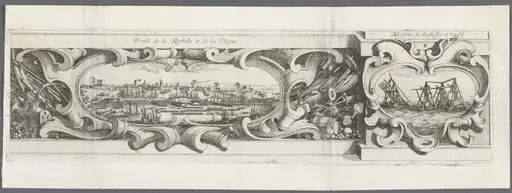 The Siege of La Rochelle: Plate 16
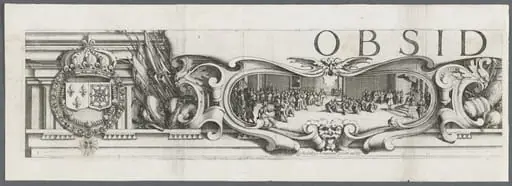 The Siege of La Rochelle: Plate 1
![The Siege of La Rochelle [plate 14 of 16; set comprises 1952.8.97-112], by Abraham Bosse](https://artifactworldgallery.com/img/abraham-bosse--the-siege-of-la-rochelle-plate-14-of-16-set-comprises-1952-8--ab2e920f7fcf3f5f-w320.webp) The Siege of La Rochelle [plate 14 of 16; set comprises 1952.8.97-112]
The Siege of La Rochelle [plate 14 of 16; set comprises 1952.8.97-112]