Artwork
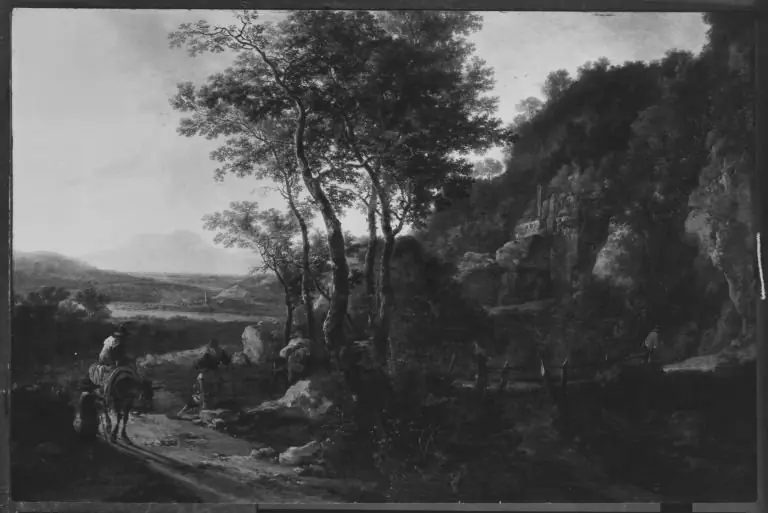
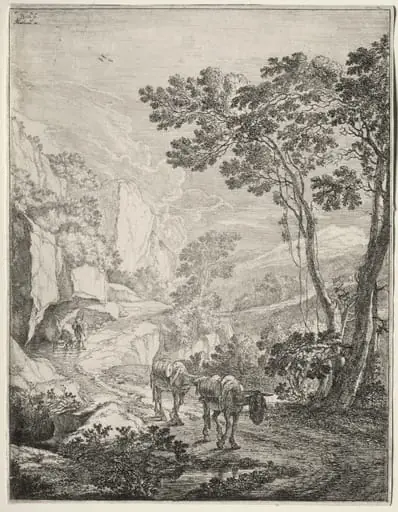
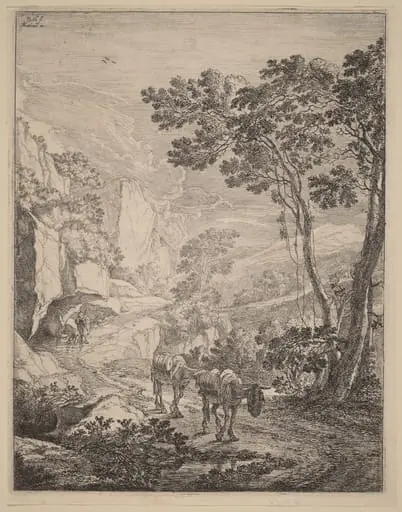
The Ox-Cart: View between Ancona and Sinigaglia
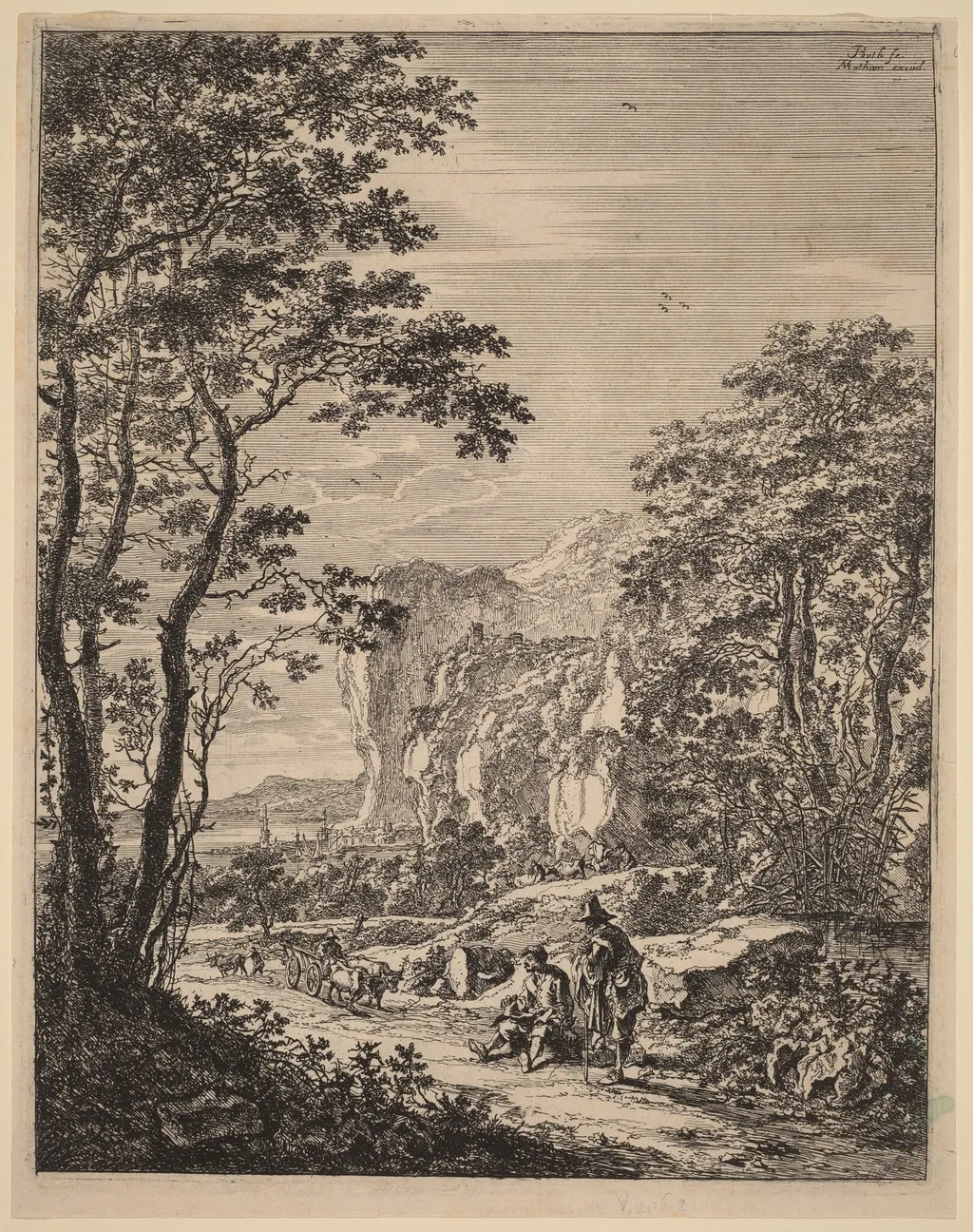
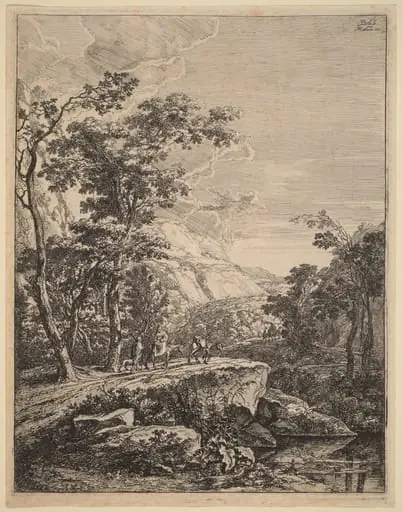
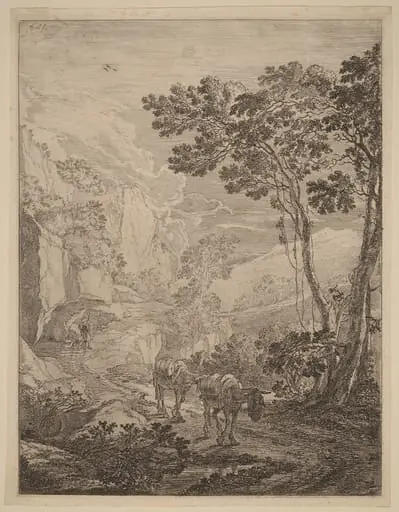
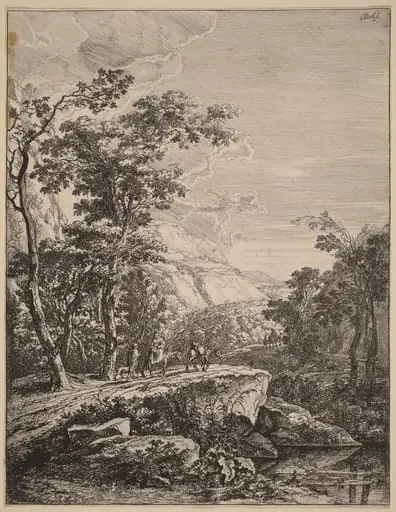
The Ox-Cart: View between Ancona and Sinigaglia is an ink print by the Baroque artist Jan Both. It is held in the collection of the National Gallery of Art.
About this work
Overview
Though Both was trained in the Netherlands, his work reflects a deep engagement with Italian topography, blending Northern precision with Southern atmosphere.
Created around 1700 by the Dutch artist Jan Dirksz Both, this etching captures a quiet stretch of road between the Italian coastal towns of Ancona and Sinigaglia. Though Both was trained in the Netherlands, his work reflects a deep engagement with Italian topography, blending Northern precision with Southern atmosphere. The print belongs to a broader tradition of Dutch artists who traveled to Italy and translated its landscapes into intimate, detailed compositions for home audiences.
Subject & Meaning
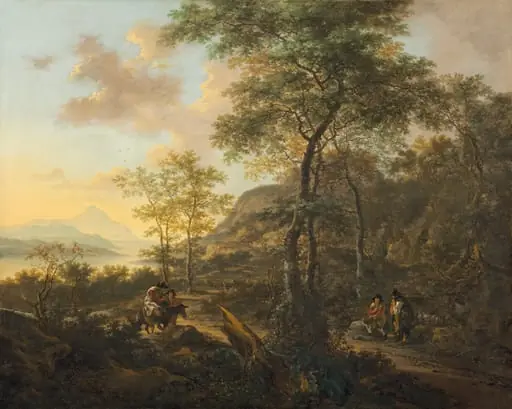
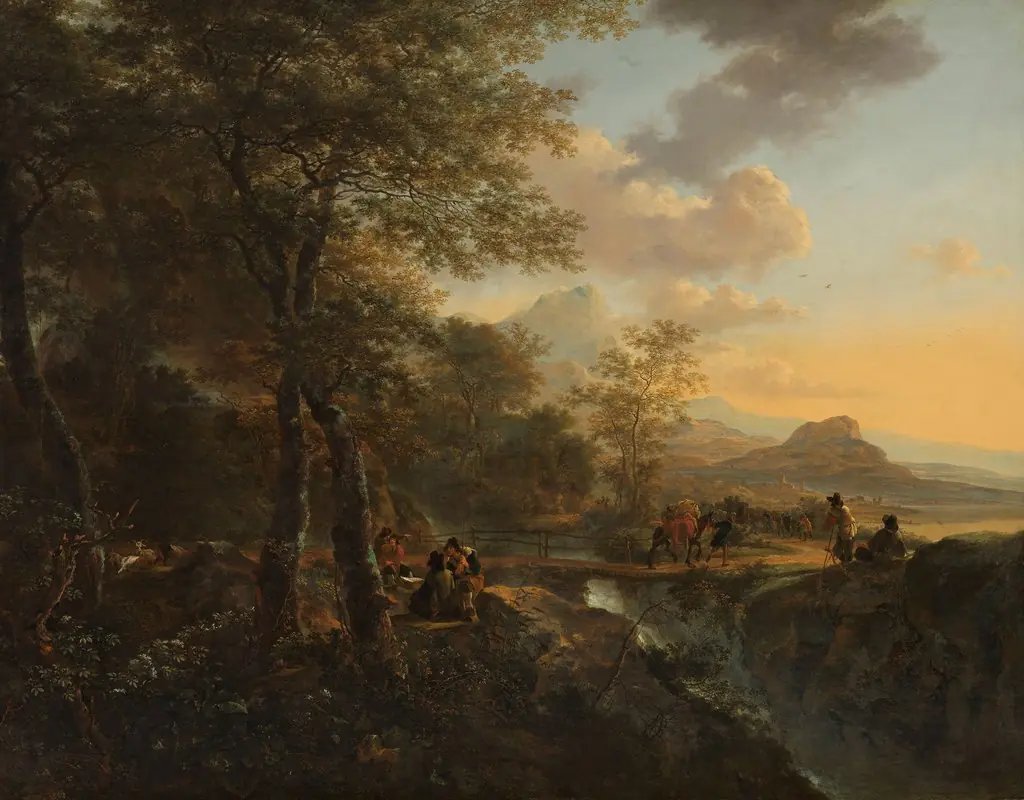
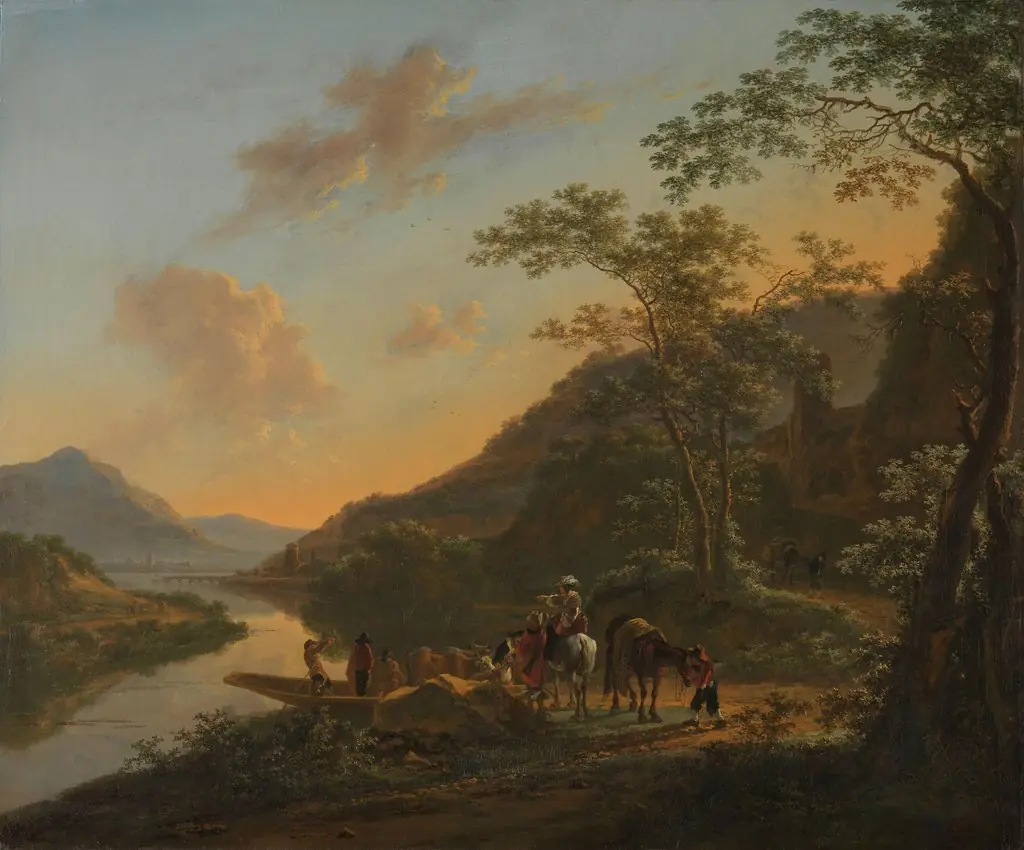
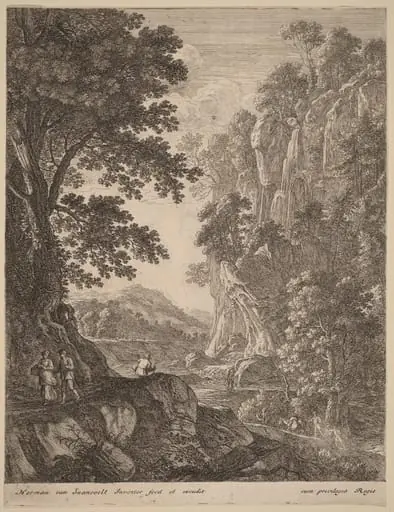
The scene portrays a modest rural journey: a single ox-cart moves along a winding path flanked by dense woodland. Figures scattered along the roadside suggest daily life—travelers, locals, or laborers—without drama or narrative emphasis. The quietude of the moment, framed by towering trees and distant hills, conveys a sense of passage rather than destination. It reflects an interest in the ordinary rhythms of the Italian countryside, observed with calm attention rather than idealization.
Technique & Style
Both employed fine, controlled etching lines to model form and depth, using varying densities of ink to distinguish foreground from background. The dark, intricate branches overhead contrast with the pale, open road, guiding the eye into the distance. The trees are rendered with deliberate texture, their gnarled forms anchoring the composition. The print’s clarity and tonal range reveal a mastery of the etching process, emphasizing structure over atmospheric haze.
History & Provenance
Jan Dirksz Both traveled to Italy in the 1630s and spent years studying its landscapes, returning to the Netherlands with sketches and impressions that informed his later prints. This etching, dated around 1700, likely stems from earlier studies, as Both died in 1652—suggesting the date may reflect a later printing or misattribution. The work circulated among collectors of Italianate landscapes, valued for its fidelity to observed detail rather than romanticized scenery.
Context
In the 17th century, Dutch artists increasingly turned to Italy as a source of inspiration, drawn by its light, ruins, and rural life. Both was part of a generation that adapted these experiences into prints for Northern markets. Unlike grand historical or mythological scenes, his work focused on unembellished travel routes and quiet moments, aligning with a growing appreciation for landscape as a subject worthy of serious artistic attention.
Legacy
Both’s etchings contributed to the development of the Italianate landscape print in Northern Europe, influencing later artists who sought to merge Dutch draftsmanship with Italian scenery. While not widely known today, his works remain important examples of how travel shaped artistic identity in the early modern period. His emphasis on observed detail, rather than fantasy, helped ground landscape art in tangible, lived environments.
Own this work as a print
Artist & collection

Artist
Jan Dirksz Both was a Dutch painter, draughtsman, and etcher, who made an important contribution to the development of Dutch Italianate landscape painting.