Artwork
The Virgin and Child
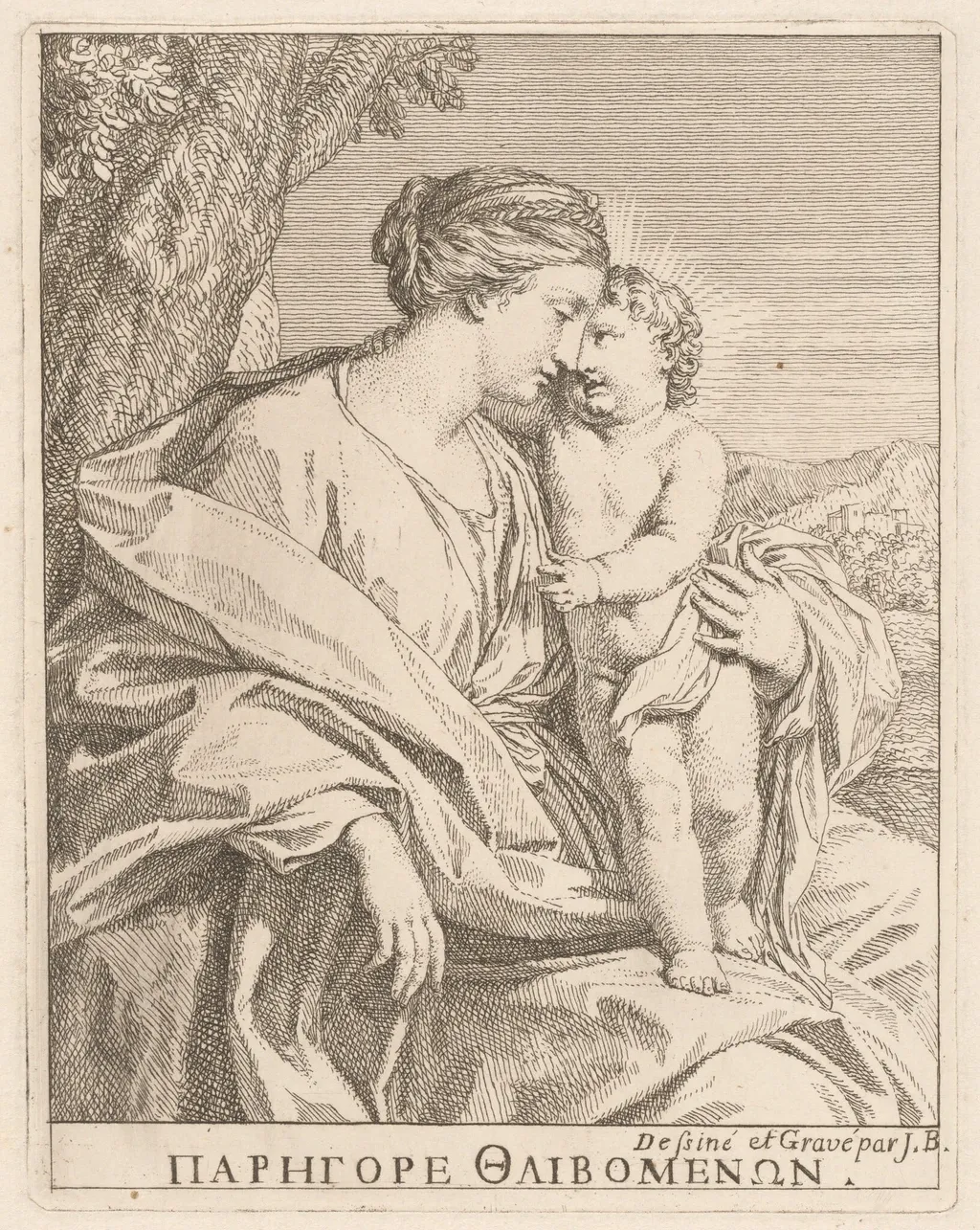
The Virgin and Child is an ink print by the Baroque artist Giovanni Bottani. It dates from 1701 and is held in the collection of the National Gallery of Art.
About this work
Overview
Giovanni Bottani’s 1701 etching titled *The Virgin and Child* presents a monochrome image on laid paper. The composition centers on a veiled woman cradling an infant, both rendered in delicate line work that emphasizes the folds of her robe and the child’s attentive posture. A backdrop of stylized foliage frames the figures, creating a modest yet focused devotional scene.
Subject & Meaning
The work depicts the traditional Christian motif of the Virgin Mary holding the infant Jesus, a subject frequently employed to convey themes of maternal tenderness and divine incarnation. The child’s gaze toward his own hands suggests contemplation of his future role, while the Virgin’s serene expression reinforces notions of purity and spiritual intercession.
Technique & Style
Executed through the etching process, Bottani incised fine lines into a copper plate, which were then inked and pressed onto laid paper. The sharp, controlled strokes delineate fabric texture and facial features, while cross‑hatching builds subtle tonal variations. The decorative foliage in the background employs swirling, almost ornamental lines characteristic of early‑18th‑century printmaking.
History & Provenance
Created in 1701, the print reflects Bottani’s activity within the Italian Baroque print tradition. While specific ownership records are scarce, the piece has circulated among collections of religious prints and is documented in catalogues of early modern Italian etchings, indicating its role as a devotional image for private contemplation.
Artist & collection


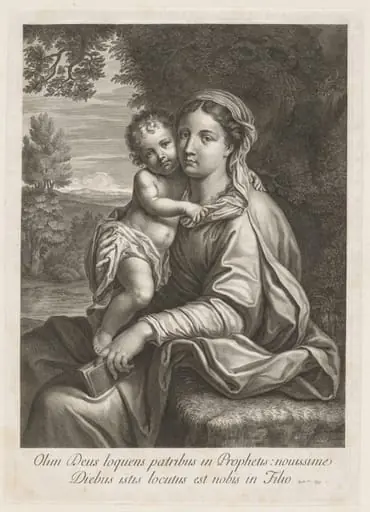 Madonna and Child
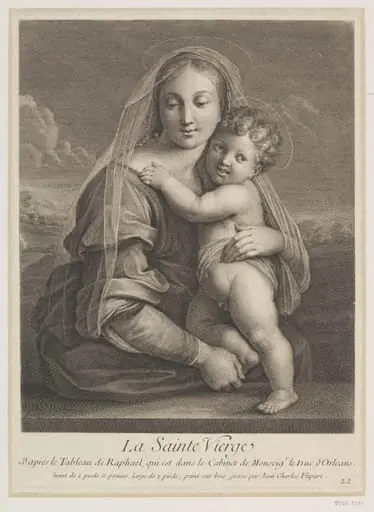 La Sainte Vierge
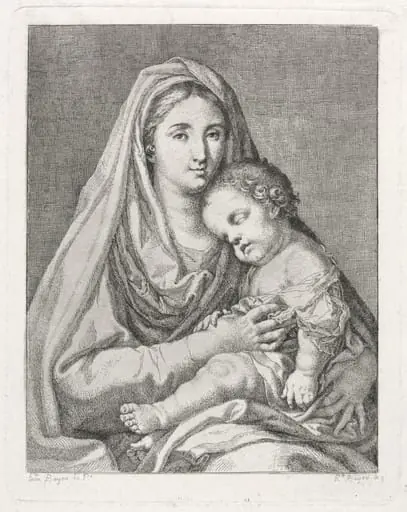 Madonna and Child (after Francisco Bayeu y Subias)
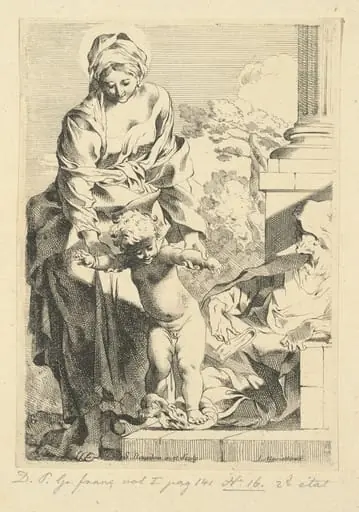 Virgin and Child Trampling Sin
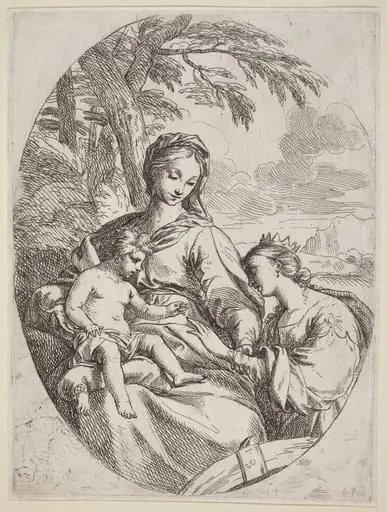 The Mystic Marriage of Saint Catherine
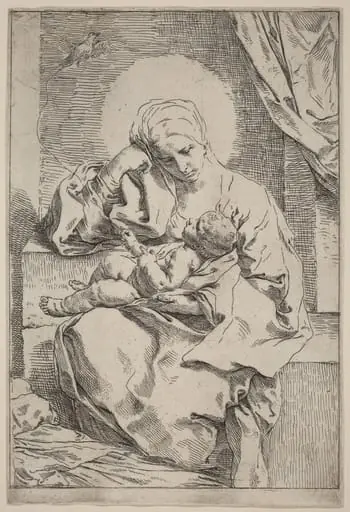 The Virgin and Child with a Bird
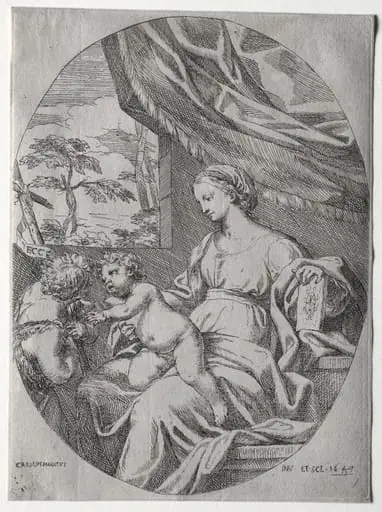 Virgin and Child with the Infant St. John
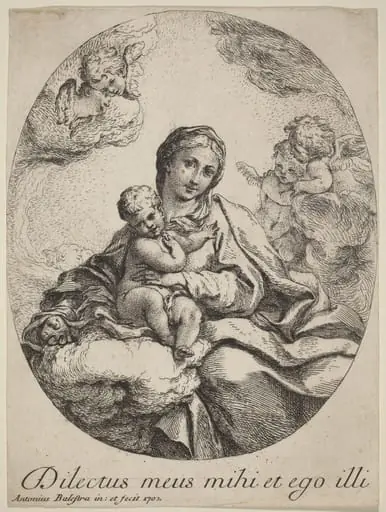 Virgin and Child on a Cloud
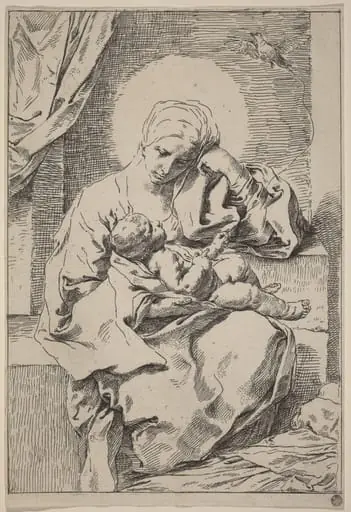 The Virgin and Child with a Bird
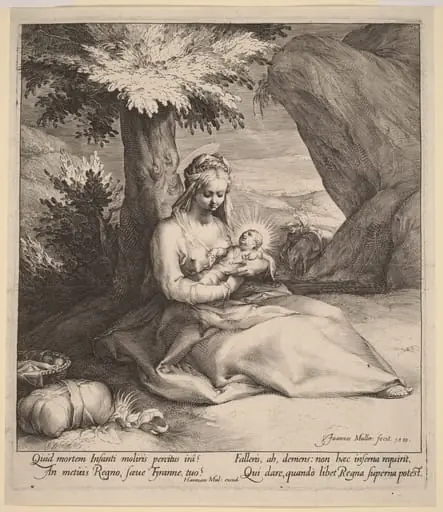 Rest on the Flight into Egypt
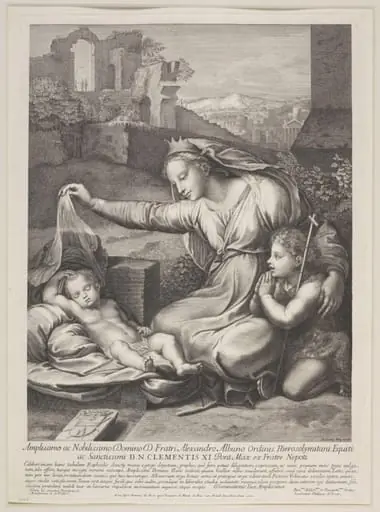 The Holy Family