Artwork
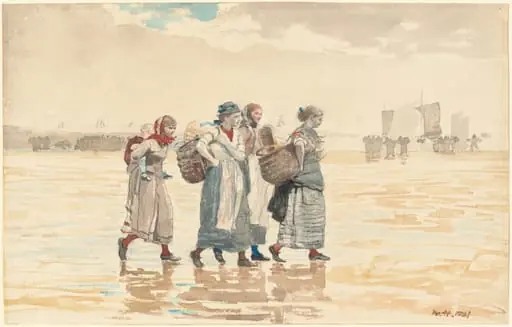
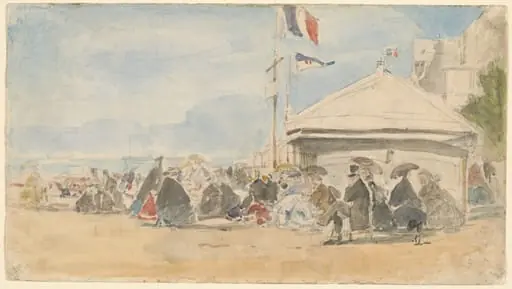
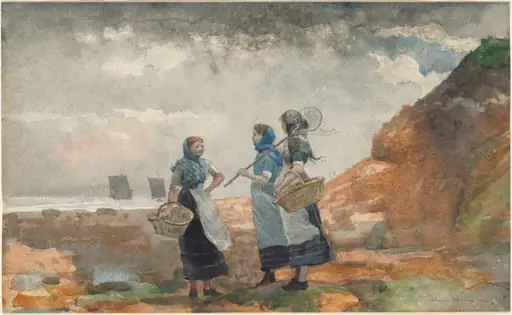
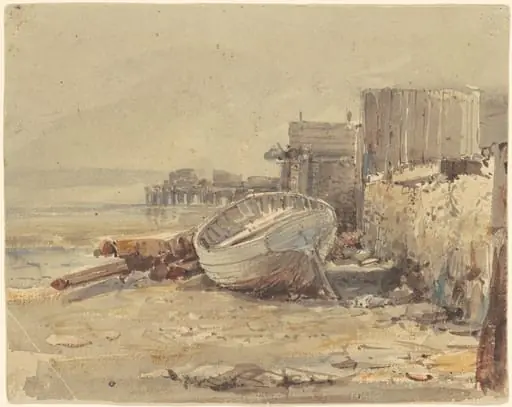
Washerwomen on the Beach at Etretat
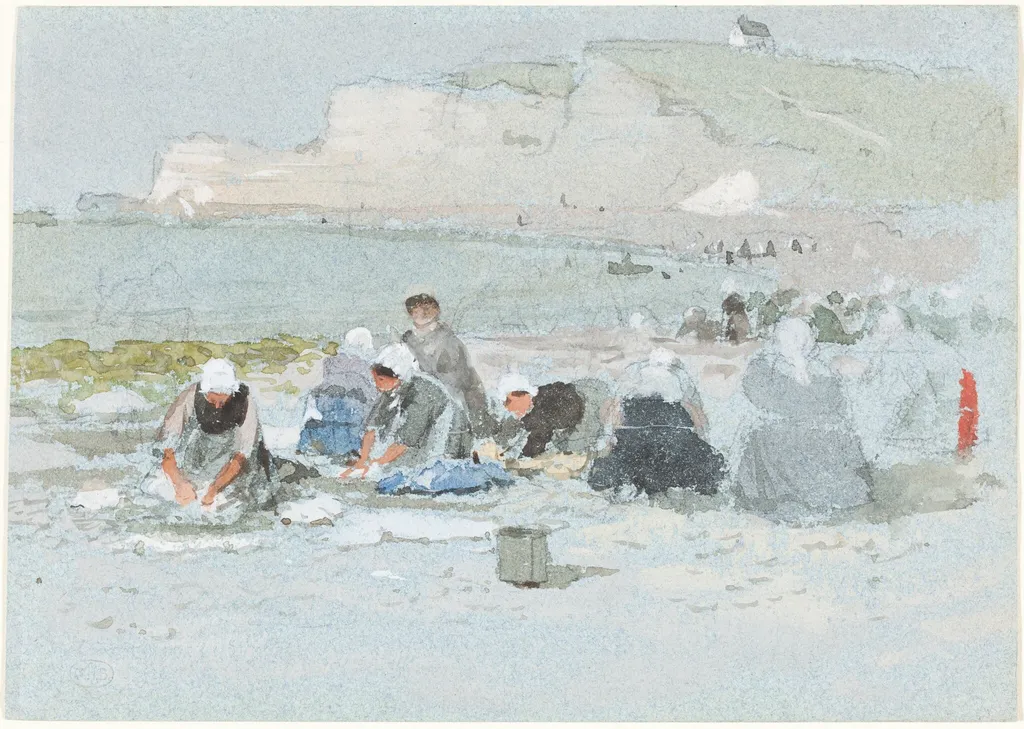
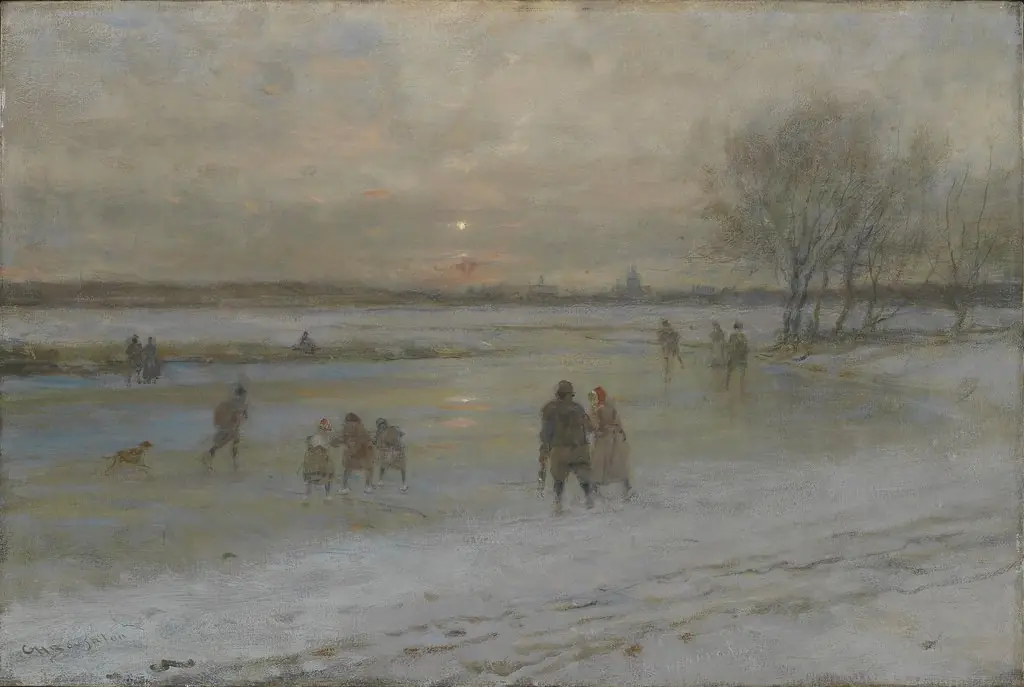
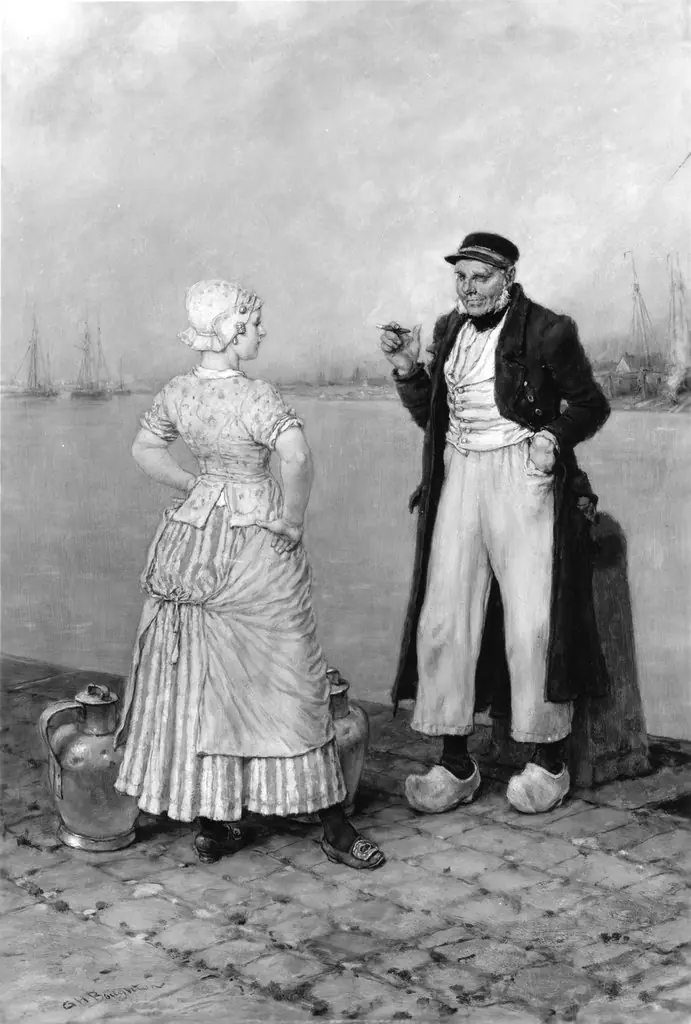
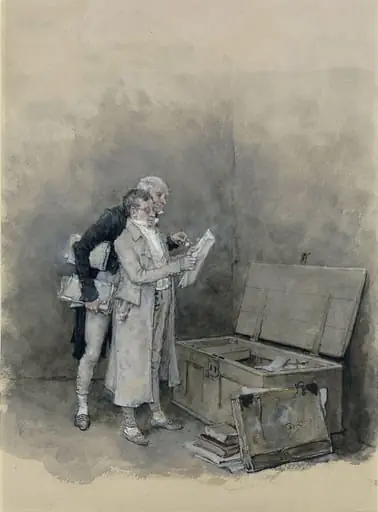
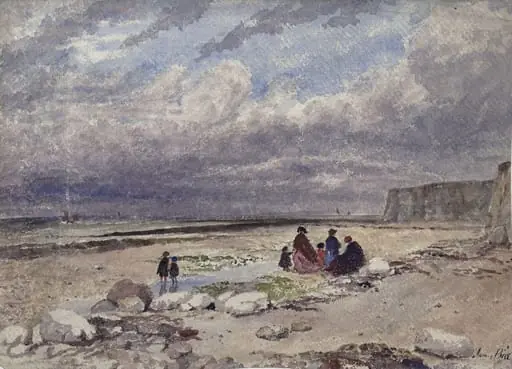
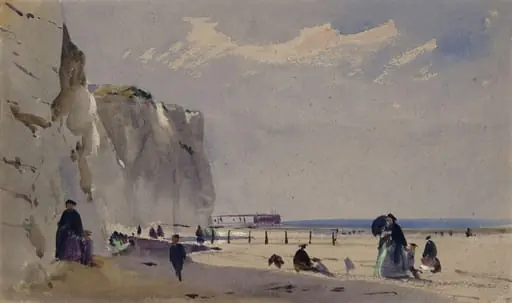
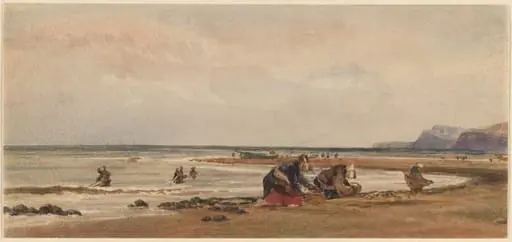
Washerwomen on the Beach at Etretat is a graphite drawing by the Romanticist artist George Henry Boughton. It dates from 1869 and is held in the collection of the National Gallery of Art.
About this work
Overview
George Henry Boughton’s 1869 work *Washerwomen on the Beach at Etretat* is a small-scale drawing executed in watercolor over graphite on blue paper. The composition records a group of women engaged in washing clothes on the shoreline of the French resort town of Étretat, a locale that drew numerous artists in the mid‑nineteenth century.
Subject & Meaning
The scene presents ordinary labor rather than grand historical narrative, reflecting Boughton’s interest in everyday rural and coastal life. By focusing on the rhythmic activity of the washerwomen, the drawing emphasizes the continuity of work against the backdrop of a dramatic seascape, suggesting a quiet dignity in commonplace tasks.
Technique & Style
Boughton employed a graphite underdrawing to establish form before applying translucent watercolor washes on a blue ground, allowing the paper’s hue to influence the overall tone. The limited palette and delicate brushwork capture atmospheric light and the movement of water, while the linear graphite marks retain a sense of draftsmanship typical of his genre studies.
History & Provenance
Created during a period when Boughton was traveling in France, the drawing was likely produced on site or shortly after his visit to Étretat. It entered the art market in the early twentieth century and has since been held in private collections, occasionally appearing in exhibitions that explore transatlantic artists working in European coastal settings.
Artist & collection
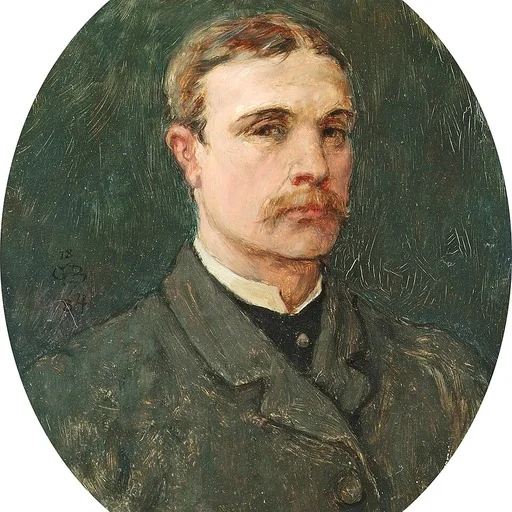
Artist
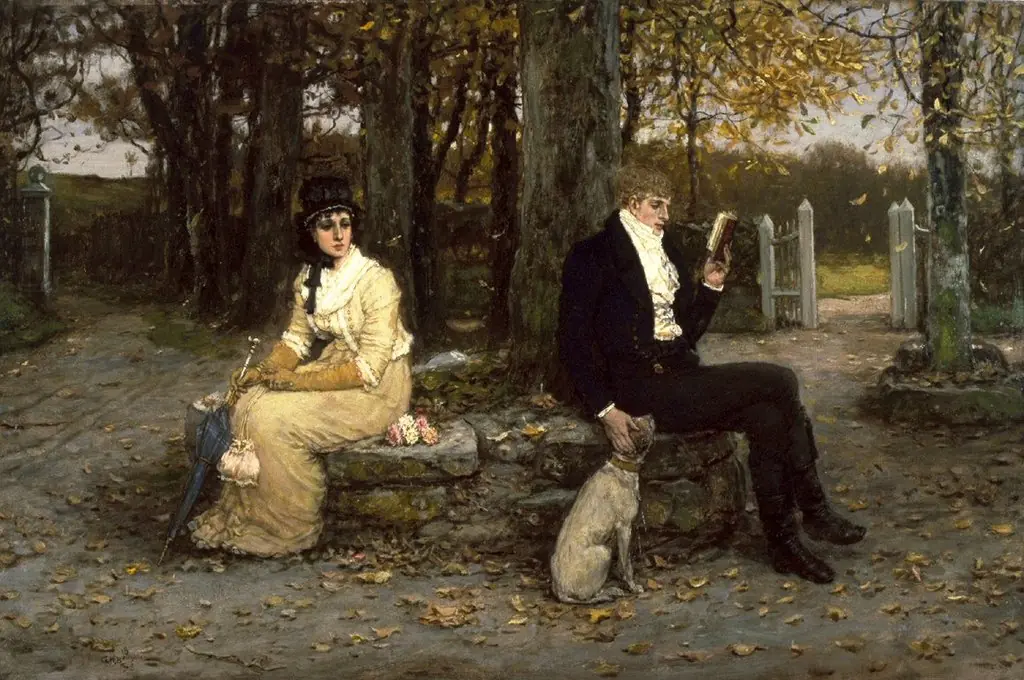
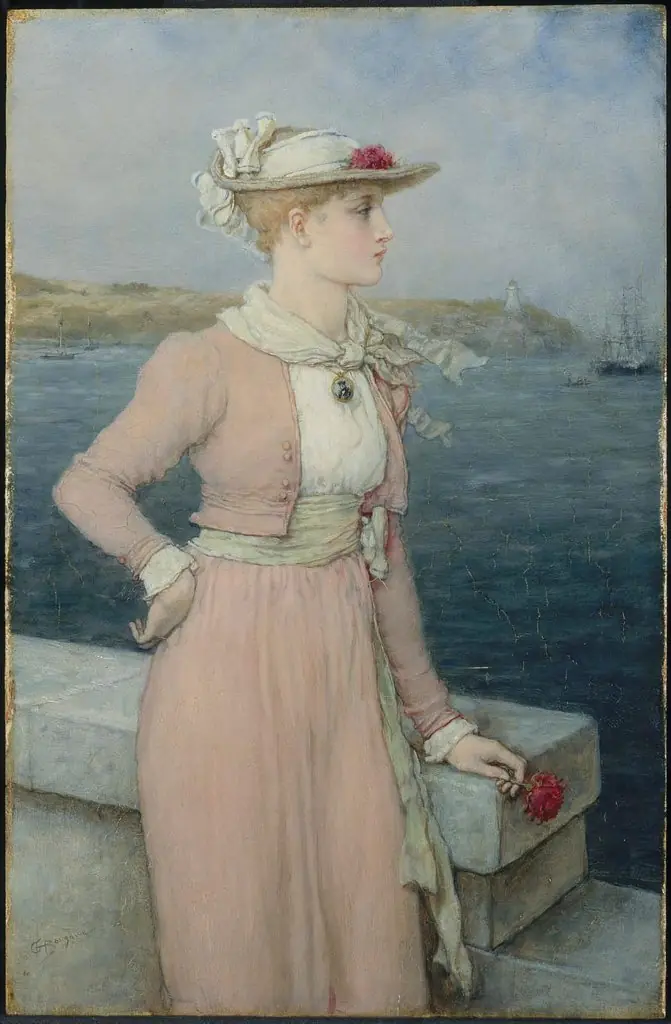
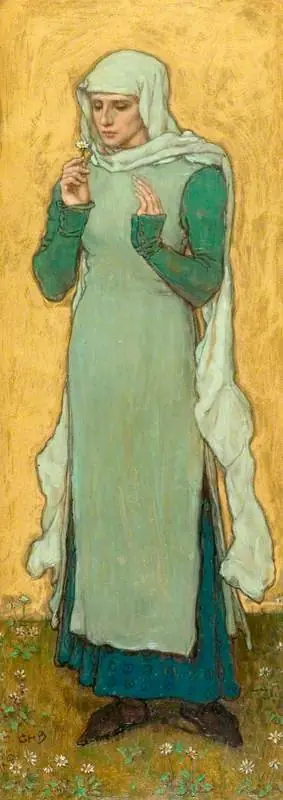
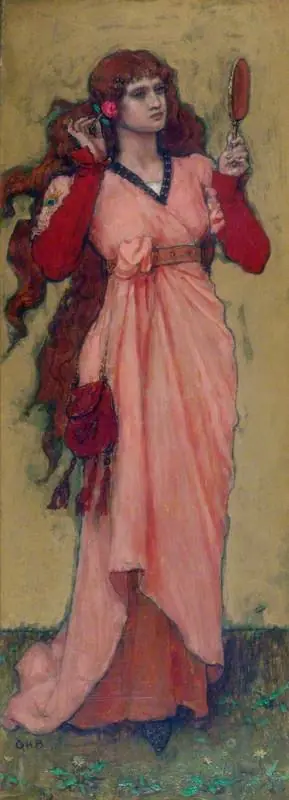
George Henry Boughton (4 December 1833 – 19 January 1905) was an Anglo-American landscape and genre painter, illustrator and writer.