Artwork
Virgin and Child Trampling on Sin
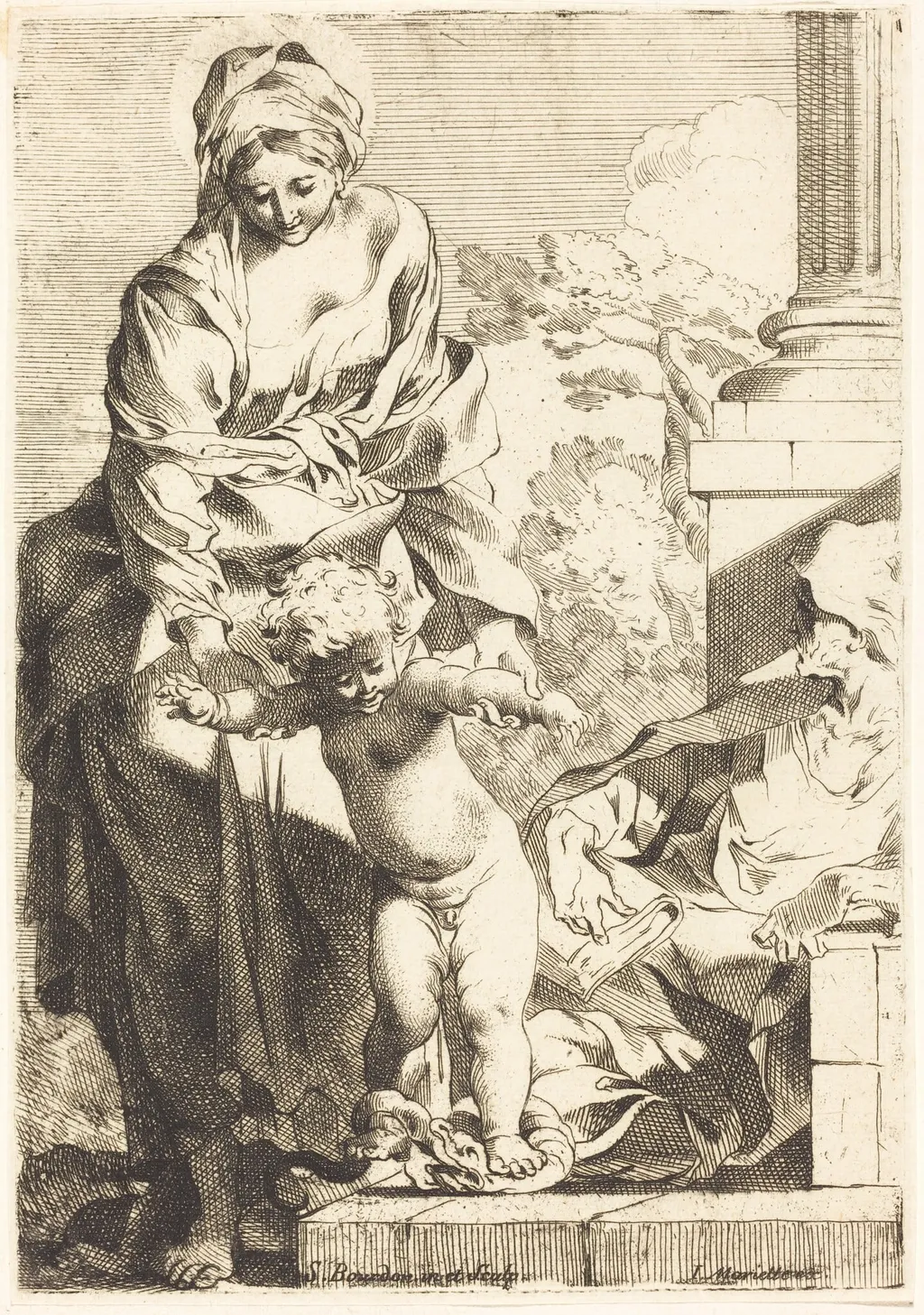
Virgin and Child Trampling on Sin is an ink print by the Baroque artist Sébastien Bourdon. It dates from 1644 and is held in the collection of the National Gallery of Art.
About this work
Overview
Virgin and Child Trampling on Sin is a 17th-century print by French artist Sébastien Bourdon, created around 1644. Executed in etching and engraving on laid paper, the work belongs to the religious genre, exemplifying Bourdon's dual proficiency in printmaking and painting.
Subject & Meaning
The print depicts a serene Virgin, veiled and holding the Child, who gestures toward her. Beneath them, a mass of contorted figures struggles, symbolizing the triumph over sin. The composition conveys a theme of spiritual victory through the Virgin and Child's calm dominance.
Technique & Style
Bourdon combined etching and engraving to achieve nuanced light and dark contrasts. Sharp, expressive lines generate texture, particularly evident in the intricate folds of the Virgin's clothing and the turbulent, writhing forms beneath her feet.
History & Provenance
Created circa 1644, the print's provenance details are not specified in available information. It reflects Bourdon's activity during a period when French artists were exploring the expressive potential of mixed printmaking techniques.
Context
This work sits within the broader religious art tradition of 17th-century Europe, where prints served as a popular medium for disseminating devotional imagery. Bourdon's use of etching and engraving aligns with contemporary technical innovations in printmaking.
Legacy
While specific influence or notable exhibitions of *Virgin and Child Trampling on Sin* are not detailed, the piece contributes to the understanding of Sébastien Bourdon's multifaceted artistic practice and the evolution of 17th-century printmaking techniques.
Artist & collection
Artist
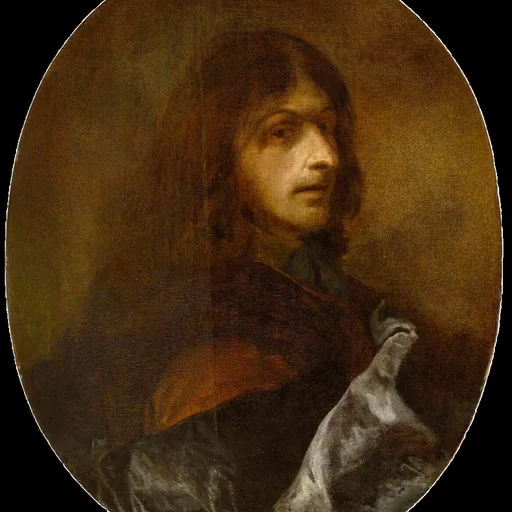
Sébastien Bourdon (French pronunciation: ; 2 February 1616 – 8 May 1671) was a French painter and engraver. His chef d'œuvre is The Crucifixion of St. Peter made for the cathedral of Notre Dame.

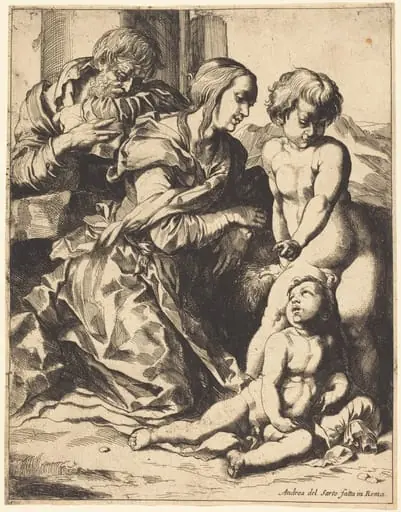 The Holy Family
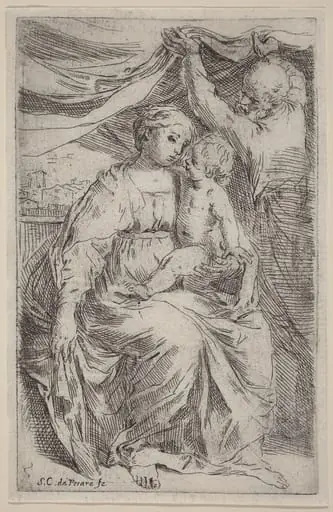 The Holy Family
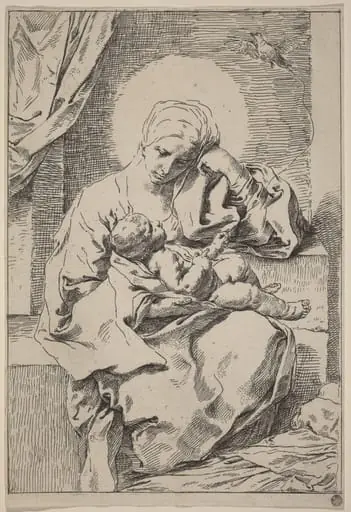 The Virgin and Child with a Bird
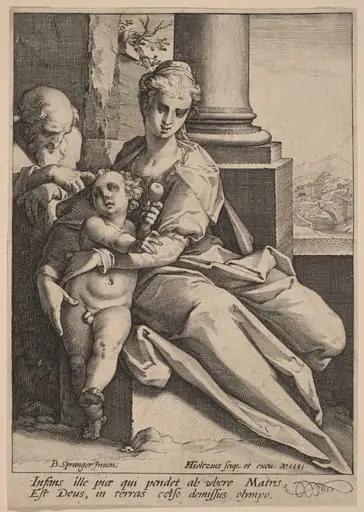 The Holy Family
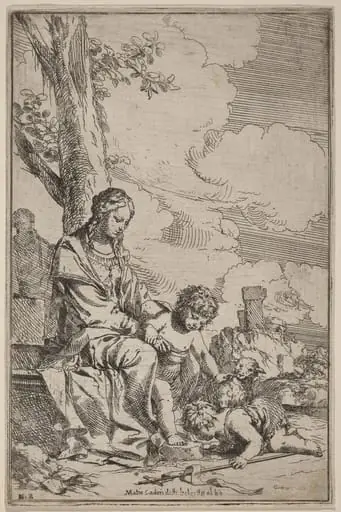 The Virgin and Child with Saint John the Baptist
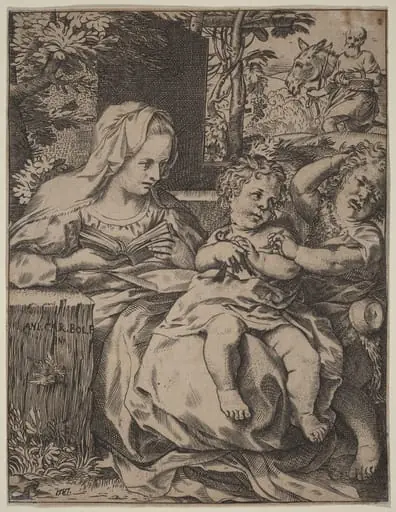 The Madonna of the Swallow
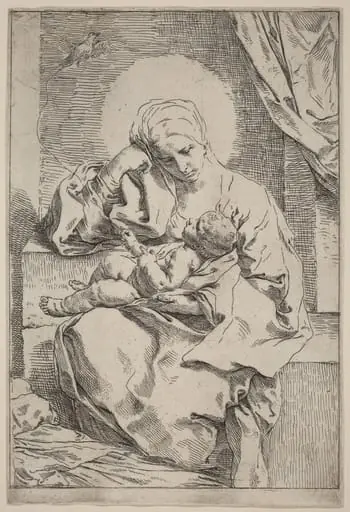 The Virgin and Child with a Bird
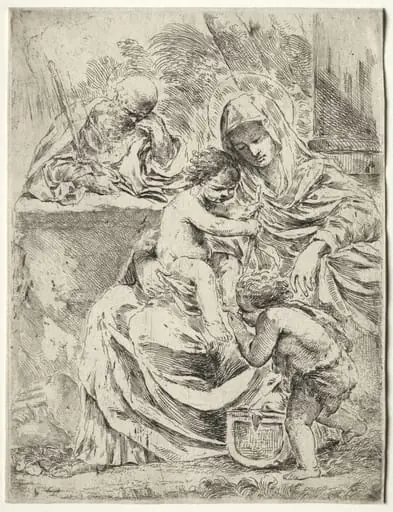 The Holy Family
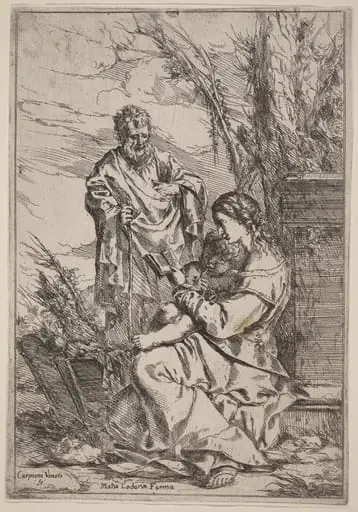 Holy Family with the Virgin Reading
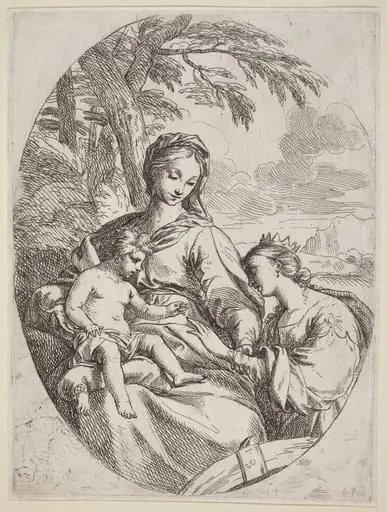 The Mystic Marriage of Saint Catherine
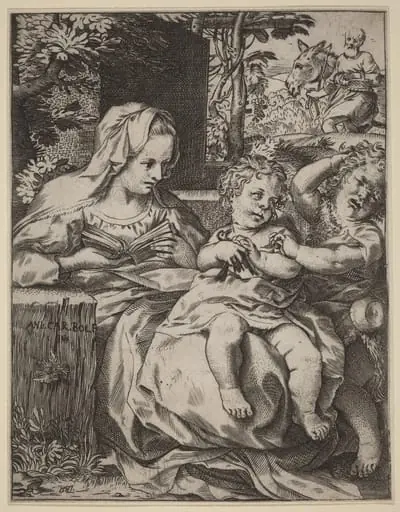 The Madonna of the Swallow (La Madonna Della Rondinella)
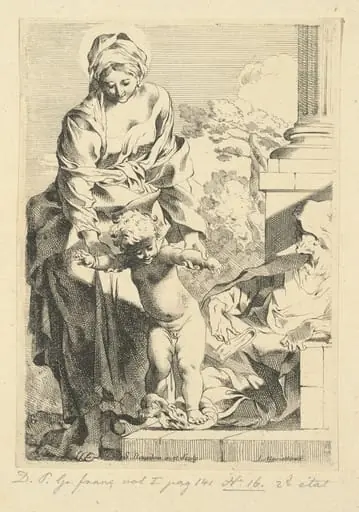 Virgin and Child Trampling Sin