Artwork
The Madonna of the Swallow
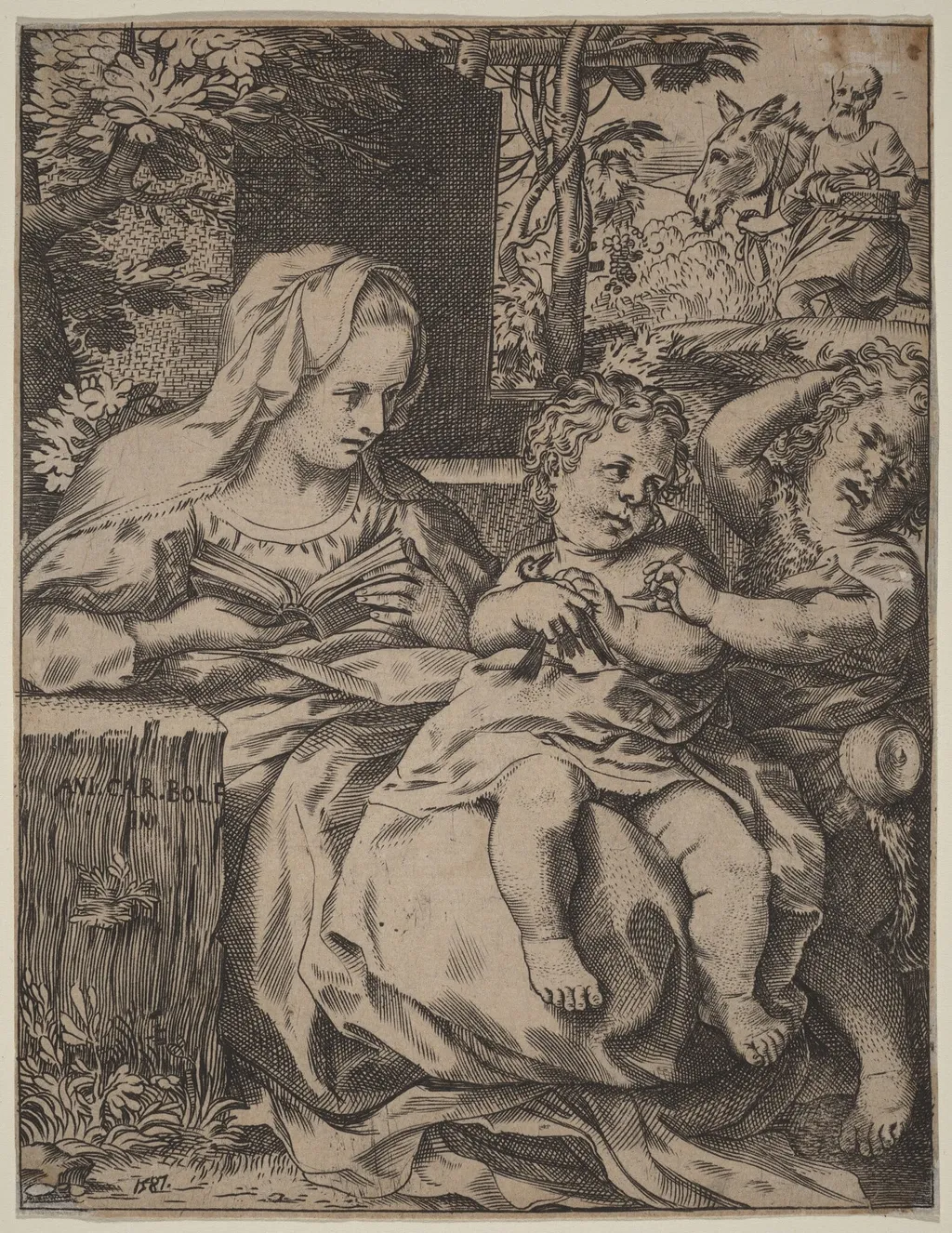
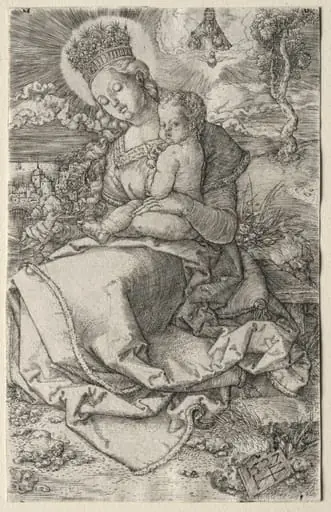
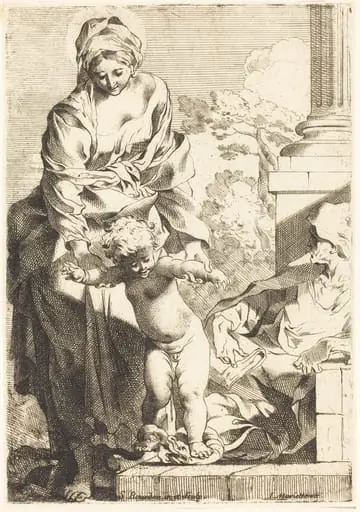
The Madonna of the Swallow is an ink print by the Renaissance artist Annibale Carracci. It dates from 1587 and is held in the collection of the National Gallery of Art.
About this work
Overview
The work reflects his commitment to naturalism and emotional restraint, distinguishing his approach from the more theatrical tendencies of later Baroque art.
Annibale Carracci created this 1587 engraving on laid paper as part of his engagement with religious imagery during his early career. Though better known for painting, Carracci produced a small body of prints that demonstrate his mastery of linear technique and compositional clarity. The work reflects his commitment to naturalism and emotional restraint, distinguishing his approach from the more theatrical tendencies of later Baroque art.
Subject & Meaning
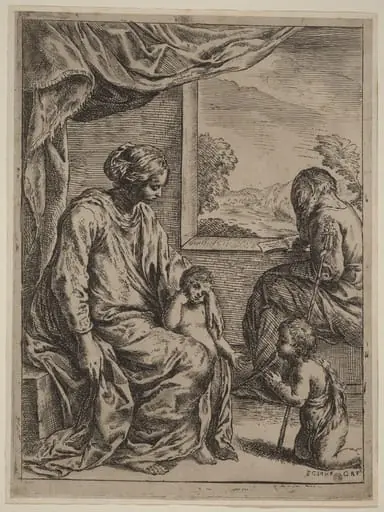
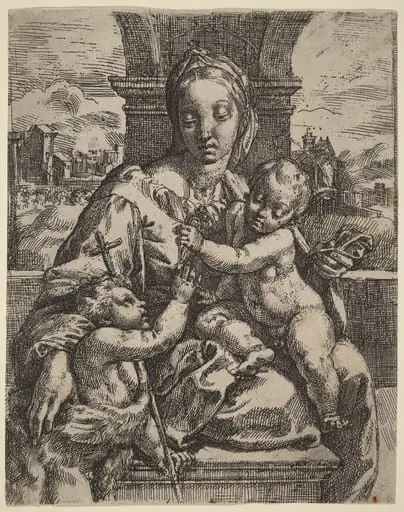
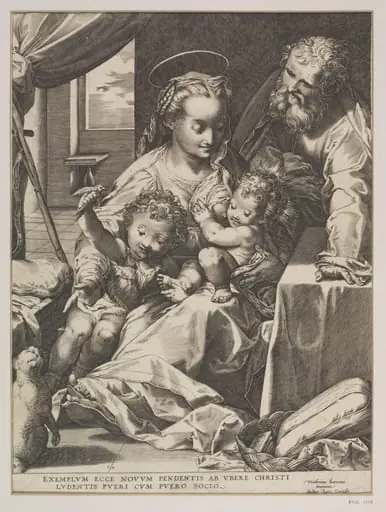
The scene portrays the Virgin Mary seated on a tree stump, holding a book and attended by two children, likely the infant Jesus and the young John the Baptist. Their gentle interaction—reaching hands, quiet gaze—suggests familial tenderness within a sacred context. A distant figure on a donkey and a building in the background imply a narrative beyond the immediate moment, possibly referencing the Flight into Egypt, though the focus remains on intimate human connection.
Technique & Style
Carracci employed fine cross-hatching to model form and suggest texture across fabric, skin, foliage, and stone. The lines are deliberate and controlled, creating subtle gradations of light and shadow without overt dramatic contrast. The use of laid paper, with its characteristic chain lines, enhances the tactile quality of the print. His technique prioritizes clarity and structural harmony over ornamental flourish, aligning with his classical ideals.
History & Provenance
The engraving was made during Carracci’s formative years in Bologna, before his move to Rome. It circulated among collectors and artists familiar with his work, contributing to the dissemination of his stylistic principles. No definitive early ownership records survive, but the print’s survival in multiple institutional collections suggests it was valued for its technical precision and devotional tone.
Context
In late 16th-century Italy, religious prints served both private devotion and artistic education. Carracci’s approach diverged from Mannerist complexity, favoring clarity and natural observation. His prints, though fewer in number than his paintings, were instrumental in spreading his reformist vision—bridging the emotional warmth of northern European engravings with Italian compositional discipline.
Legacy
This engraving exemplifies Carracci’s role in shifting religious imagery toward quiet humanity and structural balance. While not widely reproduced in his lifetime, it influenced later printmakers who sought to merge naturalism with spiritual gravity. His technical discipline in line work became a reference point for artists aiming to elevate printmaking beyond mere reproduction.
Artist & collection
Artist
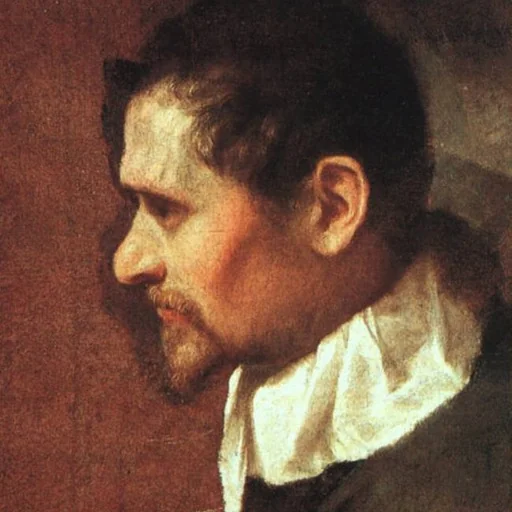
Annibale Carracci ( kə-RAH-chee, UK also kə-RATCH-ee, Italian: ; November 3, 1560 – July 15, 1609) was an Italian painter and instructor, active in Bologna and later in Rome.