Artwork
Holy Family with the Virgin Reading
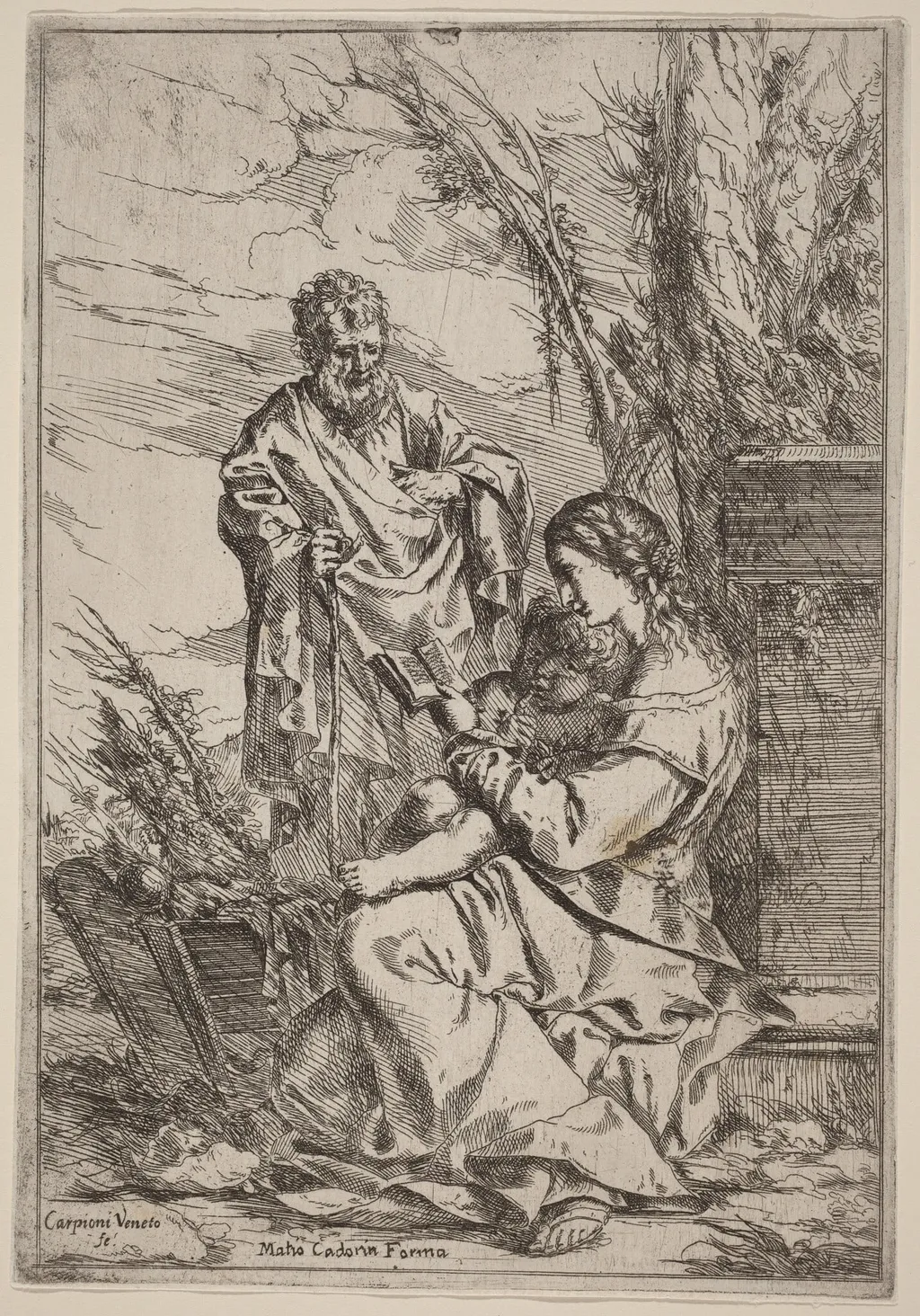
Holy Family with the Virgin Reading is an ink print by the Baroque artist Giulio Carpioni. It dates from 1646 and is held in the collection of the National Gallery of Art.
About this work
Overview
Created in 1646, this etching by Giulio Carpioni depicts a quiet domestic moment within a sacred narrative.
Created in 1646, this etching by Giulio Carpioni depicts a quiet domestic moment within a sacred narrative. Rendered in monochrome on laid paper, the work belongs to the printmaking tradition of 17th-century Italy. Its fine, controlled lines and subtle tonal gradations reflect the artist’s skill in etching, a technique that allowed for both precision and atmospheric depth in reproductive and original imagery.
Subject & Meaning
The composition centers on the Virgin Mary seated with the Christ Child, while Saint Joseph stands nearby, leaning on a staff. Set amid a wooded landscape, the scene merges the sacred with the intimate, emphasizing familial tenderness over grandeur. The Virgin’s act of reading suggests contemplation and spiritual devotion, aligning the moment with devotional practices common in Counter-Reformation piety.
Technique & Style
Carpioni employed etching to achieve a range of line qualities—from sharp, defined contours to softly blurred shadows. The background is built with dense, cross-hatched strokes that suggest depth and foliage, while the figures are rendered with smoother, more deliberate strokes. This contrast enhances the three-dimensionality of the forms and creates a sense of quiet stillness within the natural setting.
History & Provenance
The print was produced during Carpioni’s mature period in Venice, where he was active as both a painter and printmaker. Though few of his etchings survive in large numbers, this work is documented in early 18th-century collections. Its preservation in institutional holdings suggests it was valued for its technical refinement and devotional subject matter within ecclesiastical and private circles.
Context
In mid-17th-century Italy, religious imagery remained central to print culture, especially in regions under strong Counter-Reformation influence. Etchings like this served as accessible devotional aids, circulating among clergy and laypeople. Carpioni’s approach, blending naturalism with spiritual calm, aligned with broader trends in Venetian art that favored emotional resonance over theatricality.
Legacy
While Carpioni is less known today than his contemporaries, this etching exemplifies the quiet power of small-scale religious prints in early modern Europe. Its careful draftsmanship and emotional restraint influenced later printmakers who sought to convey sacred themes through intimacy rather than spectacle. The work remains a testament to the role of print in personal devotion during the Baroque era.
Artist & collection

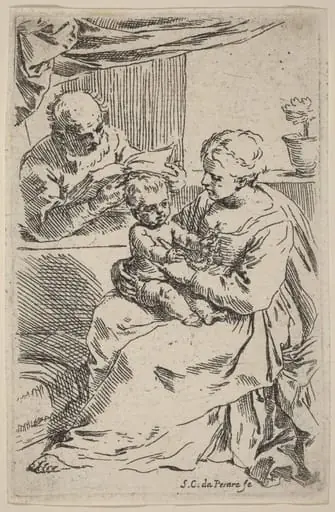 The Holy Family
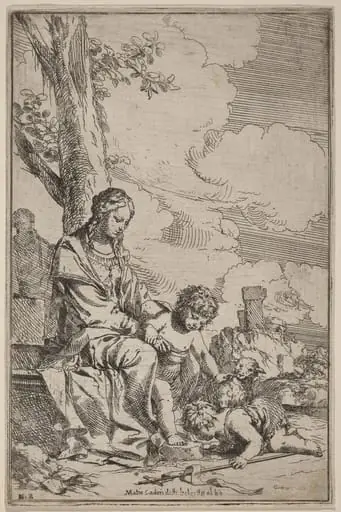 The Virgin and Child with Saint John the Baptist
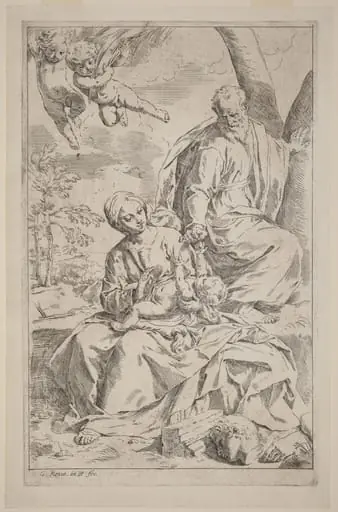 The Rest on the Flight into Egypt
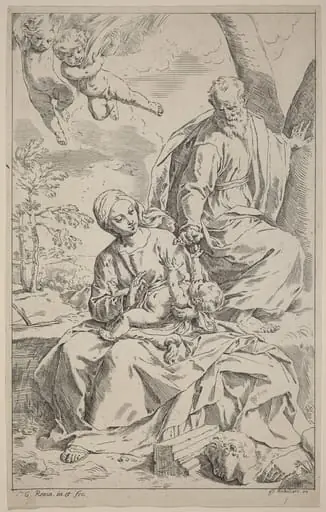 The Rest on the Flight into Egypt
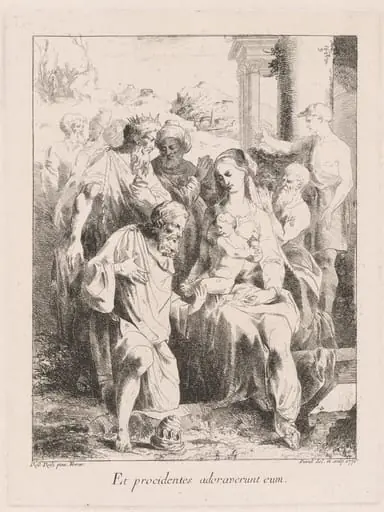 Adoration of the Magi
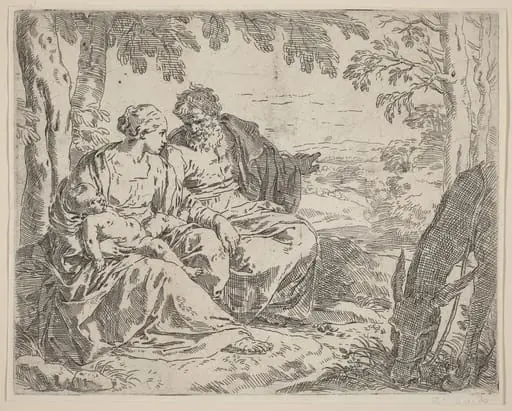 The Rest on the Flight into Egypt
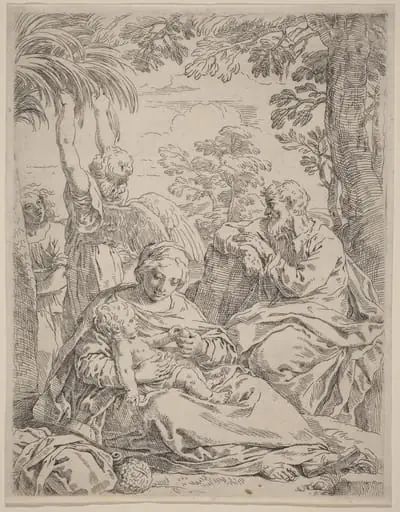 The Rest on the Flight into Egypt
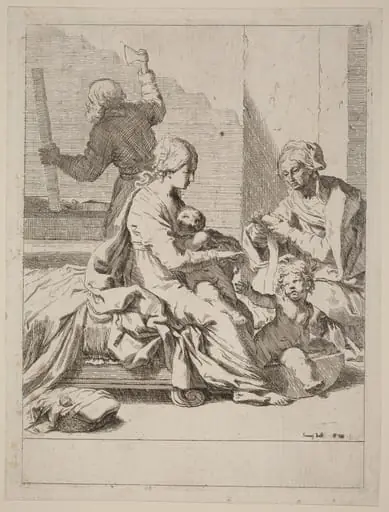 The Holy Family with Saint Elizabeth and Saint John the Baptist
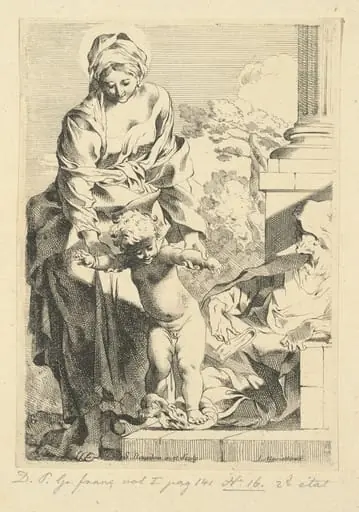 Virgin and Child Trampling Sin
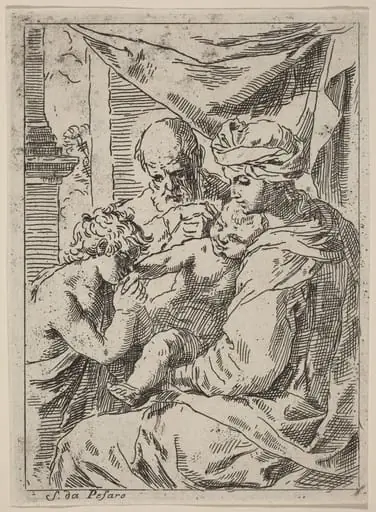 The Virgin and Child with Saint John