Artwork
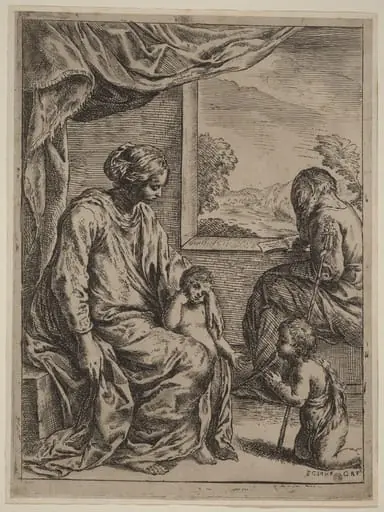
The Virgin and Child with Saint John the Baptist
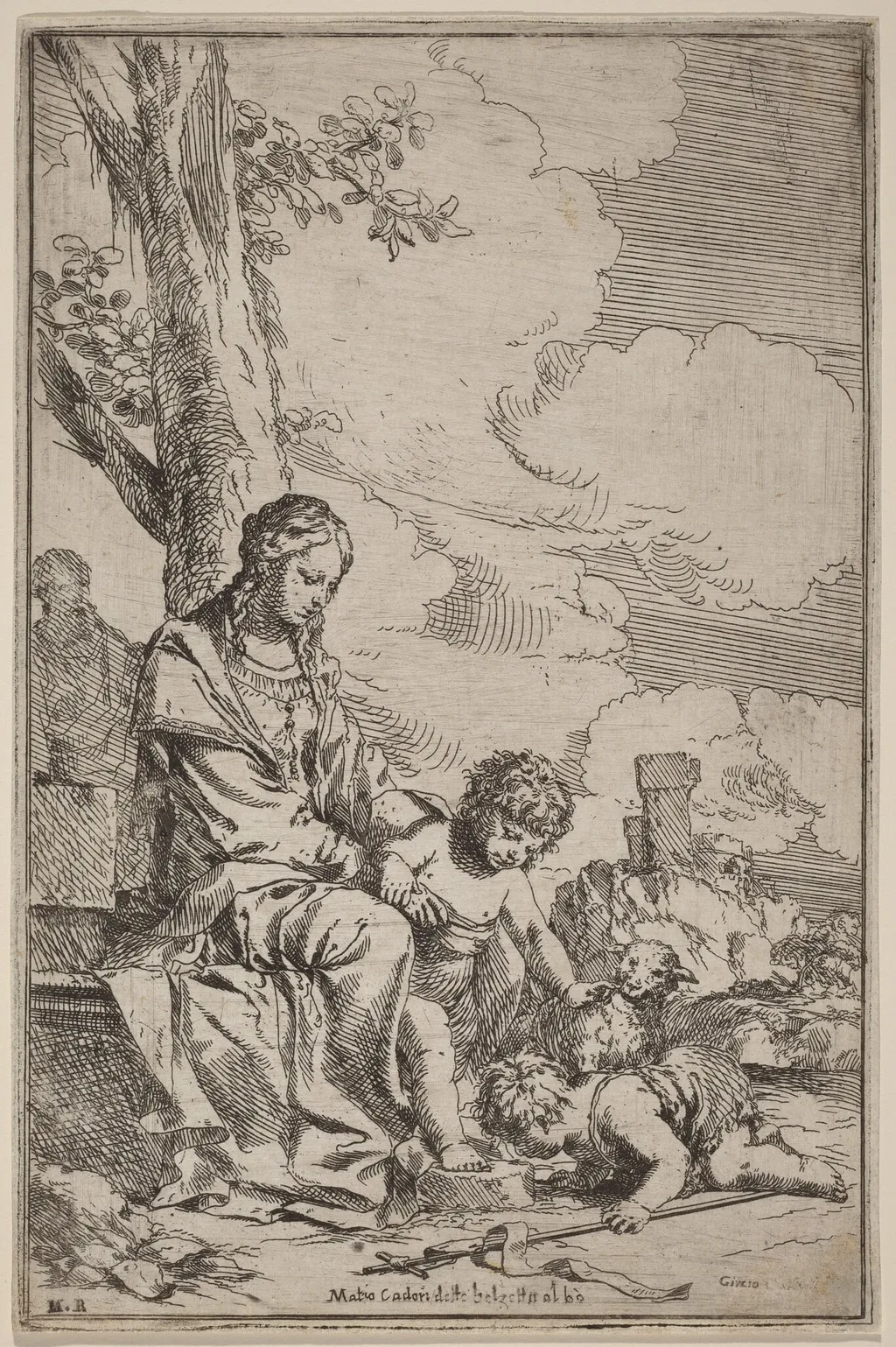
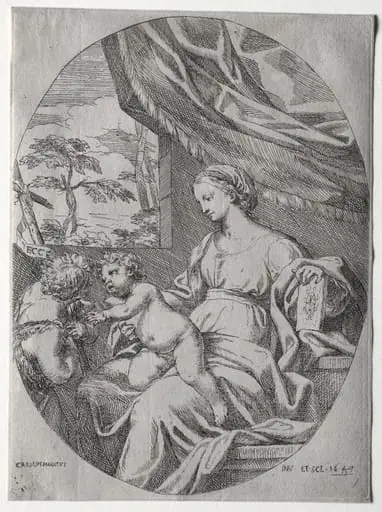
The Virgin and Child with Saint John the Baptist is an ink print by the Baroque artist Giulio Carpioni. It dates from 1646 and is held in the collection of the National Gallery of Art.
About this work
Overview
Created in 1646, this etching by Giulio Carpioni depicts a quiet moment between the Virgin Mary, the infant Christ, and the young Saint John the Baptist.
Created in 1646, this etching by Giulio Carpioni depicts a quiet moment between the Virgin Mary, the infant Christ, and the young Saint John the Baptist. Rendered in fine linear detail, the composition conveys tenderness through subtle shading and soft contours. Unlike grand Baroque altarpieces, this work emphasizes intimacy over drama, using the print medium to distribute a devotional image with quiet clarity.
Subject & Meaning
The scene portrays the Virgin seated on the earth, cradling Jesus as he reaches toward a lamb—a symbol of sacrifice and innocence. John the Baptist, kneeling beside them, gazes upward in reverence, foreshadowing his future role as the precursor to Christ. The inclusion of the lamb and the children’s gestures suggest theological themes of divine innocence and prophetic recognition, rendered without overt symbolism.
Technique & Style
Carpioni employed etching to achieve delicate tonal gradations, using fine, controlled lines to model forms and suggest atmospheric depth. The figures are rendered with naturalistic precision, their expressions and postures conveying quiet emotion. The background, softly rendered with sparse foliage and hazy skies, enhances the sense of stillness, avoiding ornate detail in favor of lyrical restraint.
History & Provenance
The etching was produced during Carpioni’s mature period in Venice, where he was known for religious prints and paintings. While specific early ownership records are sparse, the work aligns with the demand for private devotional imagery among Venetian collectors. Its survival in multiple impressions suggests it was circulated widely, likely for domestic religious use.
Context
Produced in mid-17th century Venice, the print reflects a trend toward intimate, contemplative religious imagery amid the broader Baroque emphasis on spectacle. Carpioni’s approach diverges from the theatricality of contemporaries like Caravaggio, instead favoring calm, humanized sacred figures. This quietude resonated with private piety practices common in Venetian households of the era.
Legacy
Carpioni’s etching contributed to the tradition of small-scale devotional prints in northern Italy, influencing later artists who favored emotional subtlety over grandeur. Though not widely studied today, the work remains a representative example of how religious themes were adapted for personal reflection through the accessible medium of print in the Baroque period.
Artist & collection

 Virgin and Child with the Infant St. John
 Holy Family with the Infant St. John
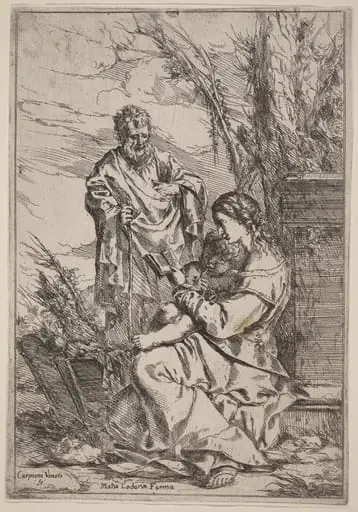 Holy Family with the Virgin Reading
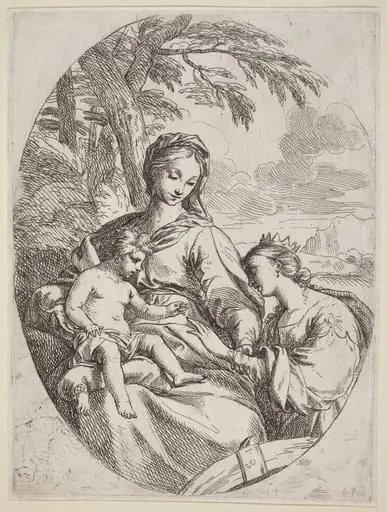 The Mystic Marriage of Saint Catherine
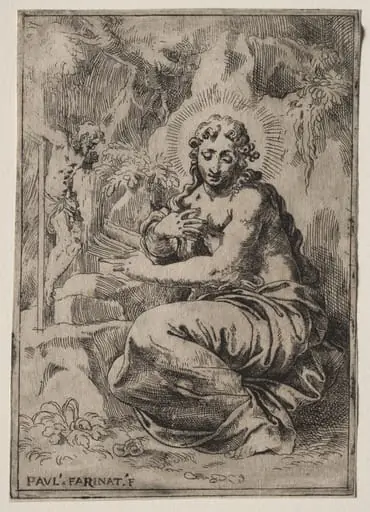 The Magdalen
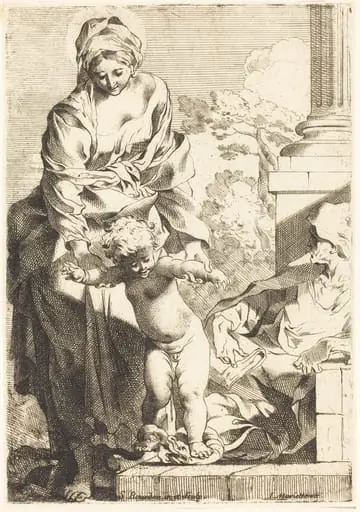 Virgin and Child Trampling on Sin
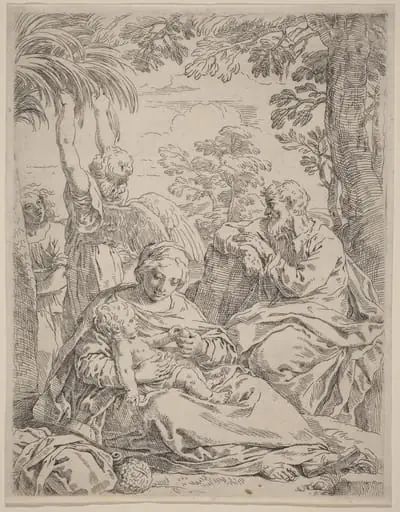 The Rest on the Flight into Egypt
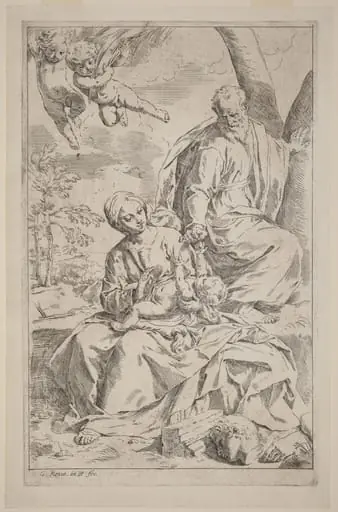 The Rest on the Flight into Egypt
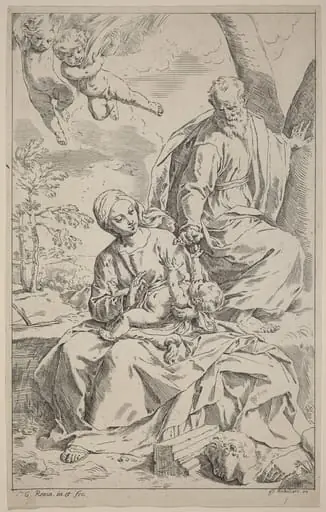 The Rest on the Flight into Egypt
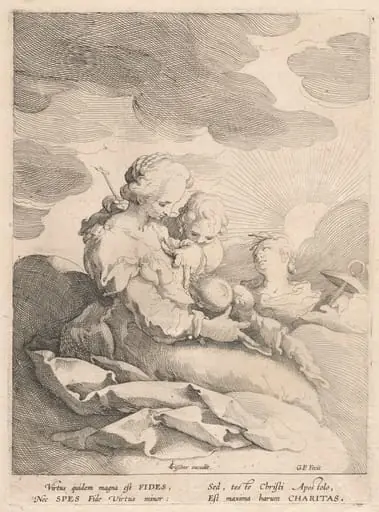 Charity with Faith and Hope
 The Holy Family with Saint John the Baptist
 Rest on the Flight into Egypt