Artwork
The Govenor's Cottage, Europa Point, Gibralter
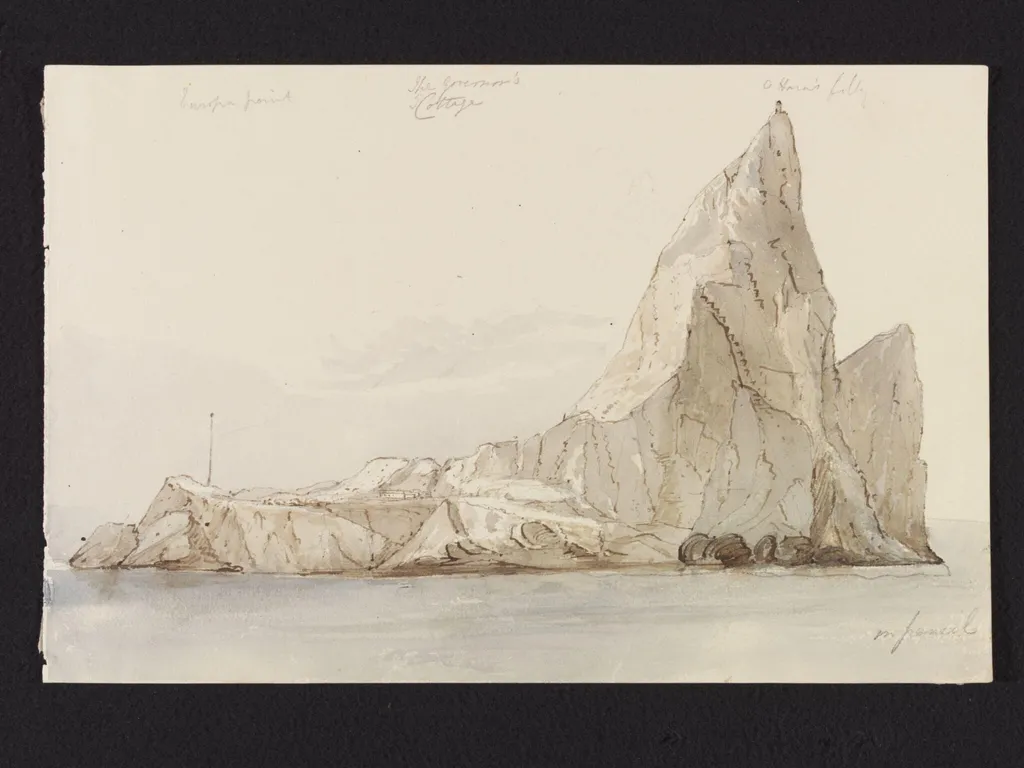
The Govenor's Cottage, Europa Point, Gibralter is a watercolor work on paper by the British Romanticist artist Selina Bracebridge. It dates from 1825 and is held in the collection of the Victoria and Albert Museum.
About this work
Overview
Selina Bracebridge’s 1825 watercolour, titled *The Governor’s Cottage, Europa Point, Gibraltar*, records a modest dwelling perched on the promontory of Europa Point. Executed in delicate washes, the work captures the interplay of sea and stone, presenting a tranquil coastal scene that includes the cottage’s silhouette against a rugged cliff face.
Subject & Meaning
The composition centers on a solitary structure identified as the Governor’s Cottage, situated on a narrow ledge overlooking the Mediterranean. By situating the building amid the stark rock and calm water, the artist emphasizes the isolation of the residence and its relationship to the surrounding maritime landscape.
Technique & Style
Bracebridge employs soft, translucent watercolours to render the texture of the cliffs and the subtle reflections on the water’s surface. The handling of light suggests an observation made on site, with fine brushwork that delineates the jagged rock formations while maintaining an overall atmospheric softness.
History & Provenance
The painting entered the Victoria and Albert Museum’s collection through a collaborative acquisition effort, receiving financial support from The Art Fund, the National Heritage Memorial Fund, Shell International, and the Friends of the V&A. Its provenance reflects the museum’s commitment to preserving works that document 19th‑century British travel and topographical art.
Context
Created during a period when travel to Gibraltar was popular among British officers and tourists, the work reflects contemporary interest in documenting distant locales. The depiction of a governmental residence aligns with the era’s focus on official architecture as symbols of imperial presence.
Artist & collection
Artist

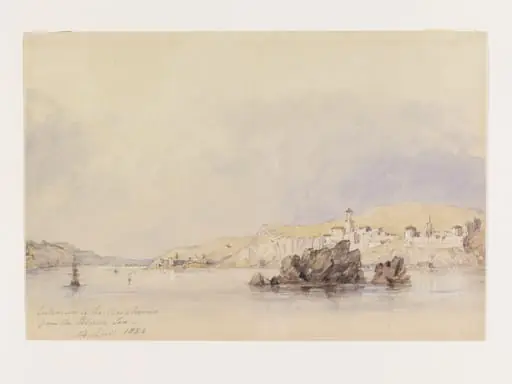 Entrance to the Bosphorus from the Black Sea
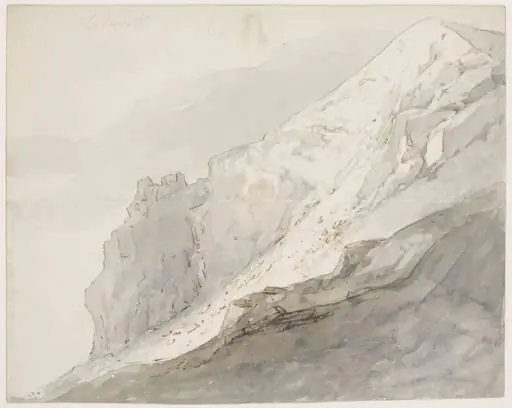 Lulworth
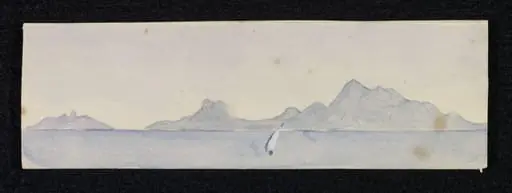 The Rock of Aden
 Cintra
 Ras Morbut Fort and Little Aden
 Cape Desines
 Mt. Sinai
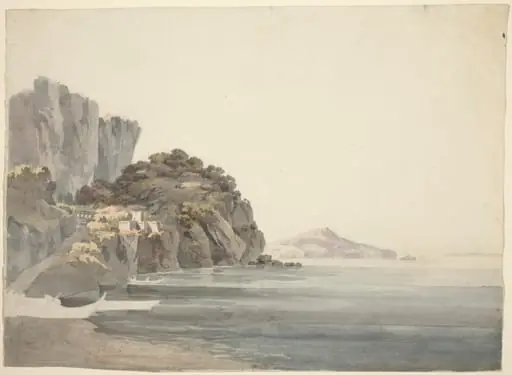 An Italian Coast Scene
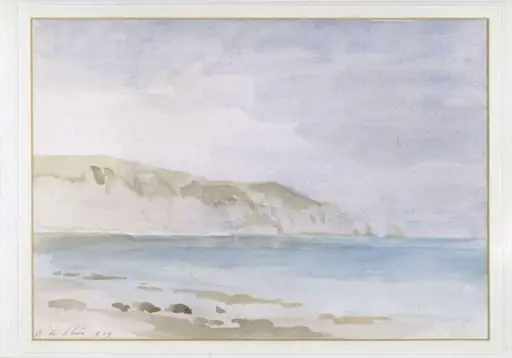 A Grey Day; or A Calm Day: Dover Harbour
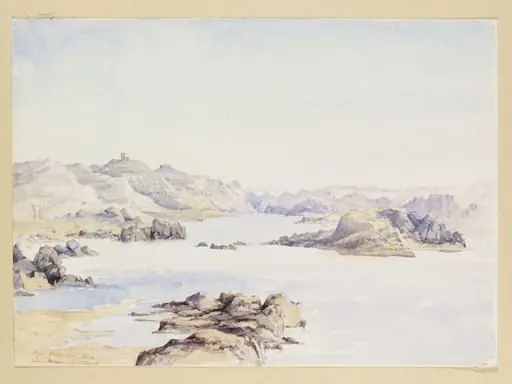 From Elephantine between Asouan and the 1st Cataract
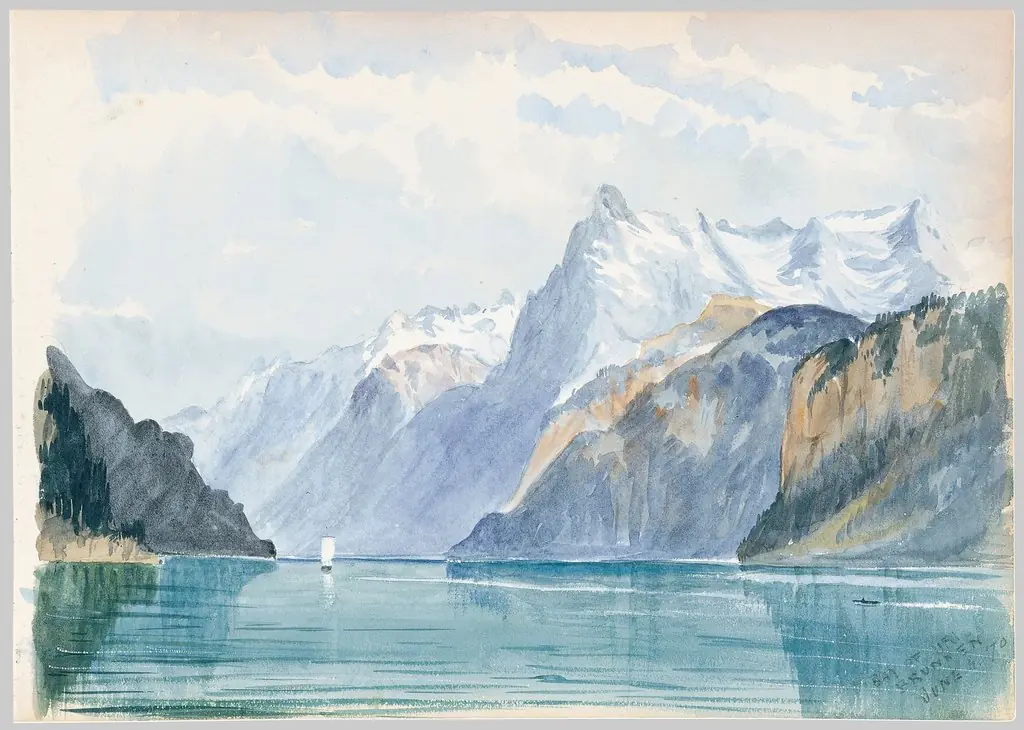 Bay of Uri, Brunnen (from Switzerland 1870 Sketchbook)
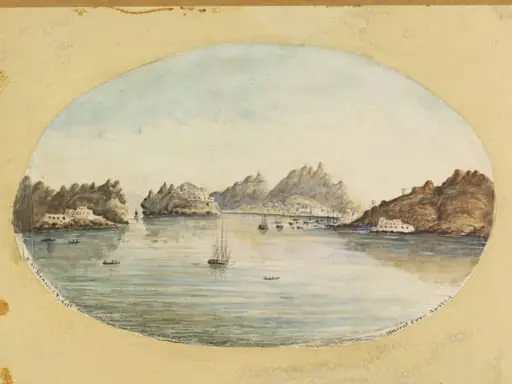 Muscat Cove, Arabia