Artwork
From "Bizzarie di varie Figure"
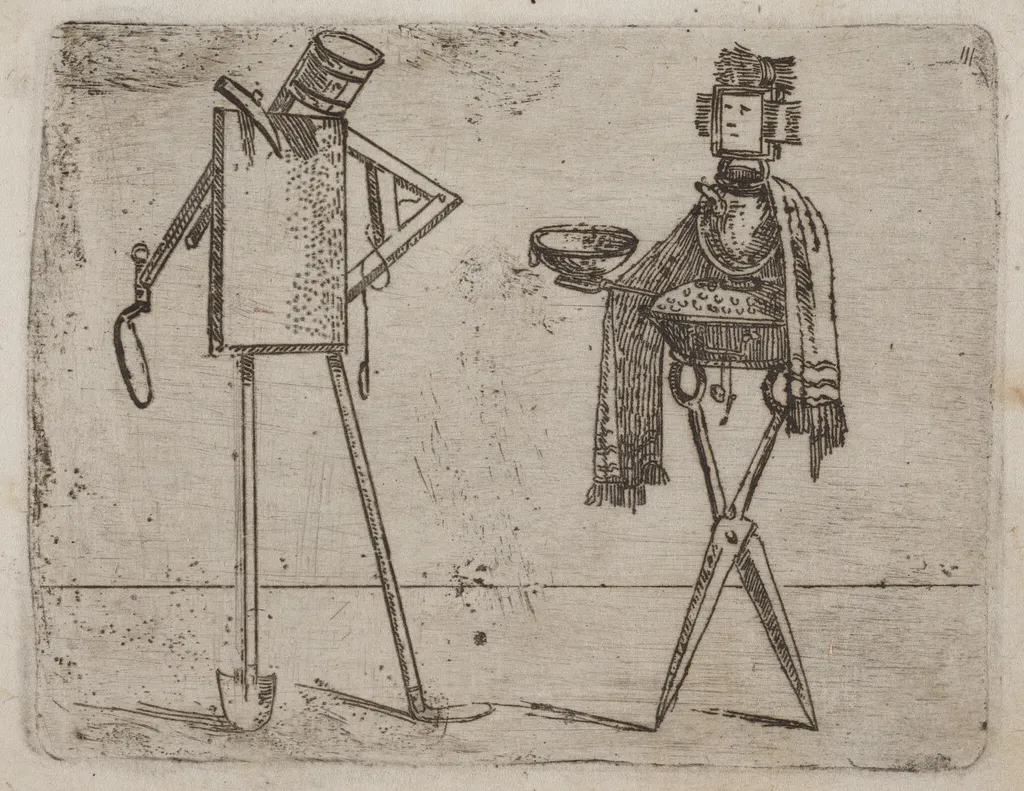
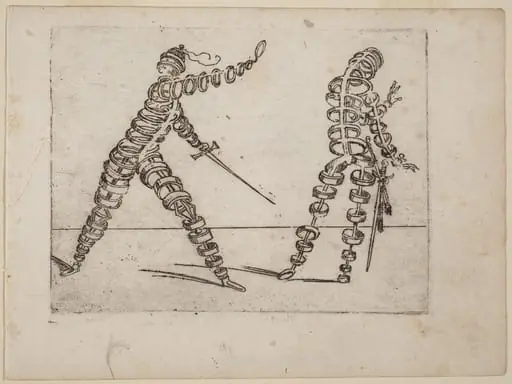
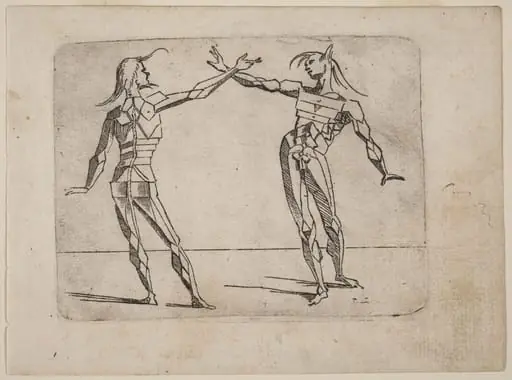
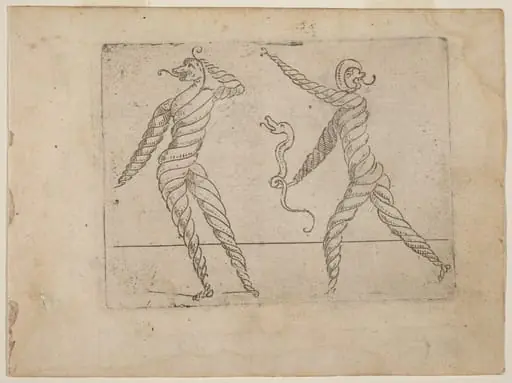
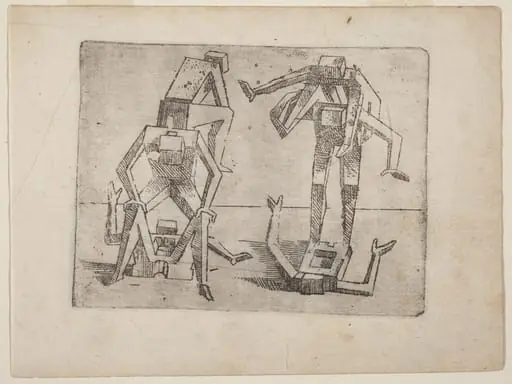
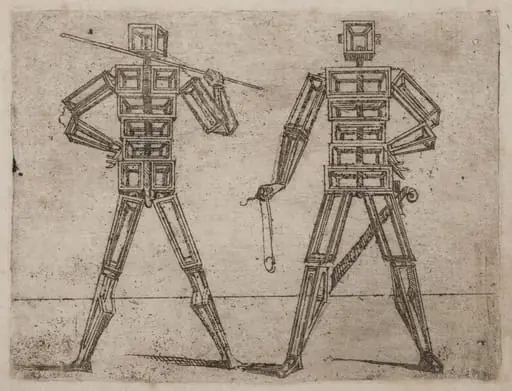
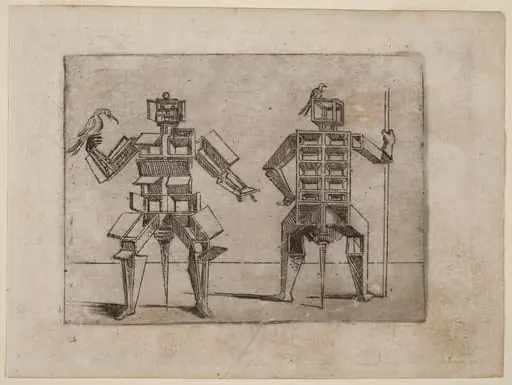
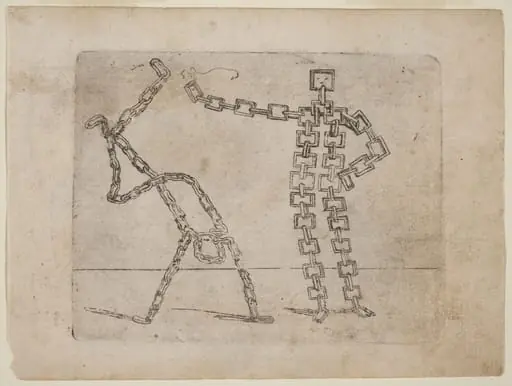
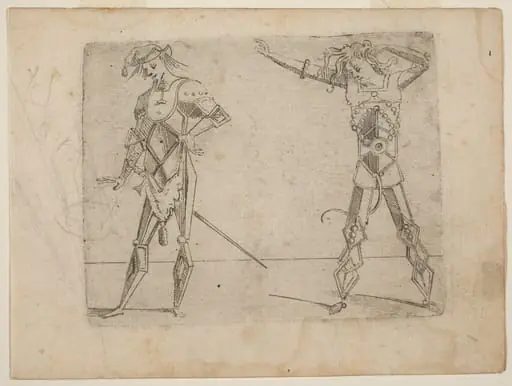
From "Bizzarie di varie Figure" is an ink print by the Baroque artist Giovanni Battista Bracelli. It dates from 1624 and is held in the collection of the National Gallery of Art.
About this work
Overview
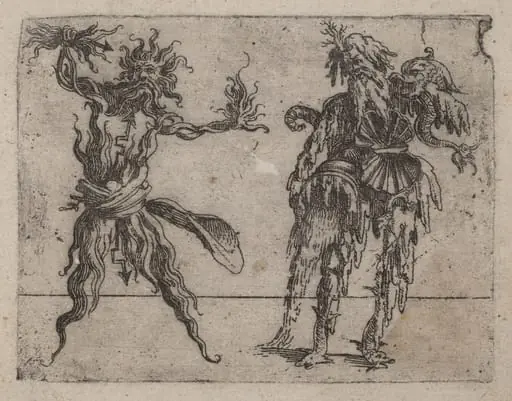
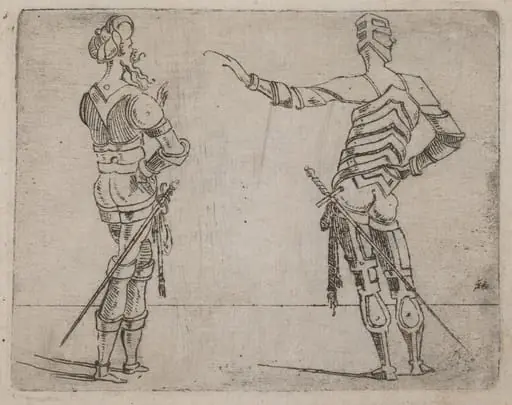
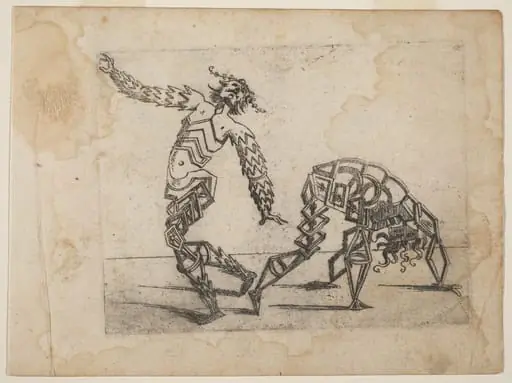
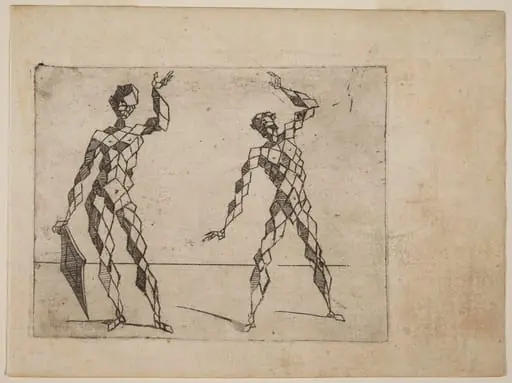
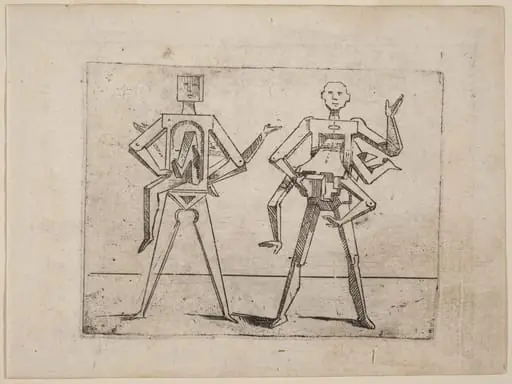
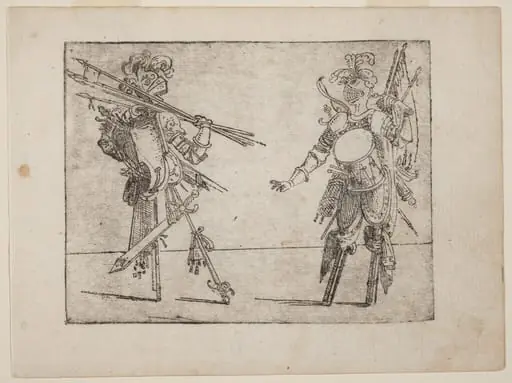
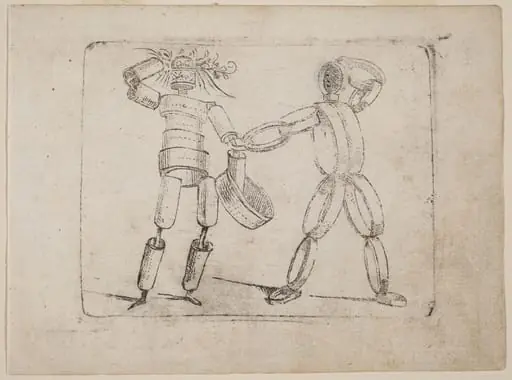
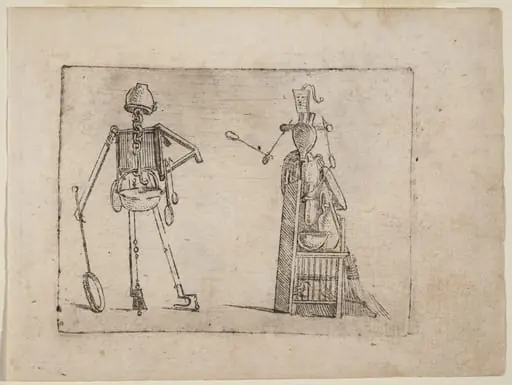
The image presents two stylized figures against a near-empty background, emphasizing their unnatural proportions and mechanical qualities.
Created in 1624, this etching is part of Giovanni Battista Bracelli’s series 'Bizzarie di varie Figure,' a collection of prints exploring fantastical human forms. Bracelli, active in central Italy from roughly 1616 to 1649, produced this work during a period when experimental figuration was gaining traction among printmakers. The image presents two stylized figures against a near-empty background, emphasizing their unnatural proportions and mechanical qualities.
Subject & Meaning
The two figures are deliberately distorted, combining human anatomy with inanimate objects: one wears a barrel-shaped hat and carries a tool, the other a boxy headpiece and a shallow bowl. Their rigid postures and exaggerated features suggest a satirical or allegorical intent, possibly commenting on social types or the artificiality of human roles. The absence of context or narrative cues invites interpretation as abstract studies in form rather than literal portraits.
Technique & Style
Bracelli employed etching to achieve fine, linear precision, using minimal shading to define volume and texture. The figures are rendered with sparse, deliberate strokes that accentuate their mechanical, puppet-like appearance. The blank background isolates the forms, directing attention to their odd juxtapositions and intricate details. This restrained approach reflects a deliberate aesthetic of strangeness, prioritizing conceptual novelty over naturalistic representation.
History & Provenance
Bracelli trained under Giovanni Battista Paggi in Genoa and later worked in Florence, contributing to ecclesiastical art before turning to printmaking. The 'Bizzarie' series emerged during his mature period, likely intended for collectors interested in curiosities and artistic invention. While few records detail the original circulation of this print, its inclusion in the series suggests it was part of a broader trend in early 17th-century Italian print culture favoring the bizarre and the inventive.
Context
In early Baroque Italy, artists increasingly explored the grotesque and the fantastical as a counterpoint to classical ideals. Bracelli’s work aligns with contemporaries who used printmaking to experiment with form beyond religious or mythological subjects. The 'Bizzarie' series reflects a growing interest in visual puzzles and the deconstruction of the human figure, resonating with broader intellectual currents that questioned perception and representation.
Legacy
Though Bracelli is not widely known today, his 'Bizzarie' series contributed to a niche tradition of Italian printmaking that valued eccentricity and formal innovation. The series influenced later artists interested in the grotesque and the mechanized body, particularly in 18th-century caricature and 20th-century surrealism. Its enduring relevance lies in its quiet challenge to conventional figuration through deliberate, unembellished strangeness.
Artist & collection

Artist
Giovanni Battista Bracelli or Braccelli is the name of more than one engraver and painter active in central Italy in the Baroque period, between about 1616 and 1649.