Artwork
From "Bizzarie di varie Figure"
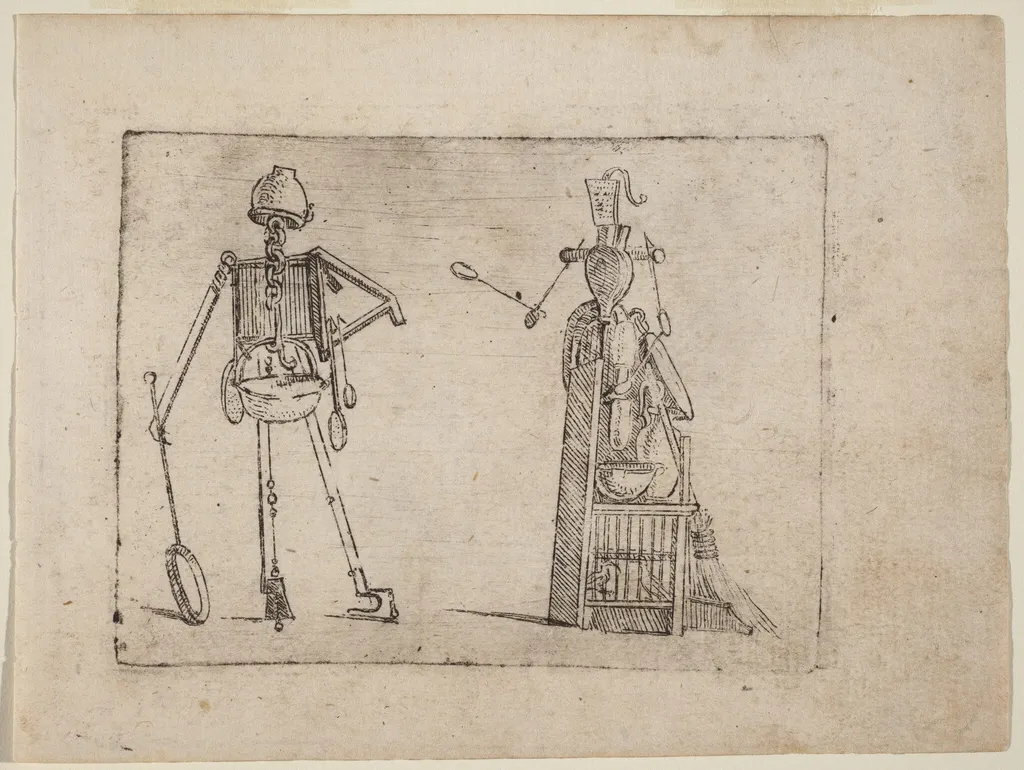
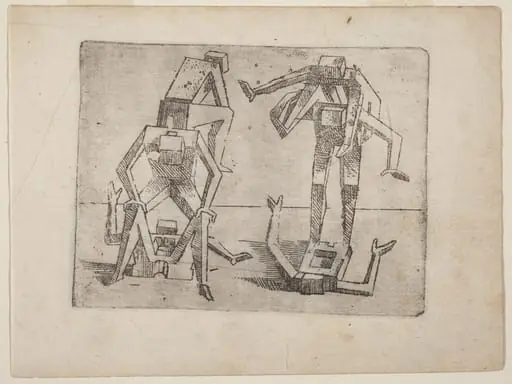
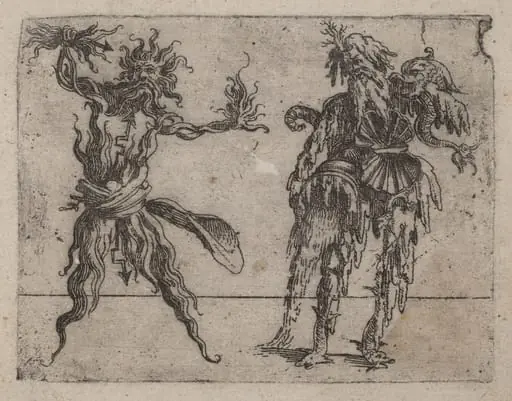
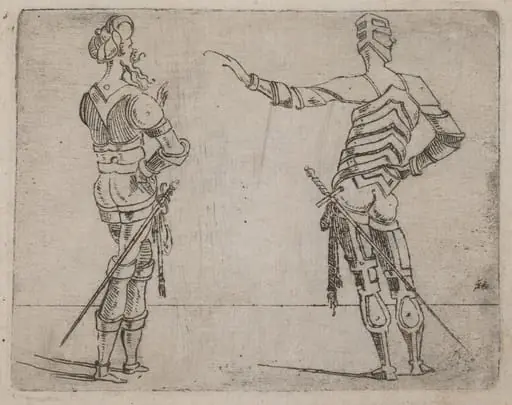
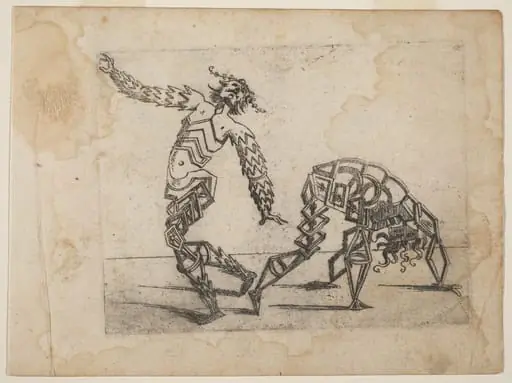
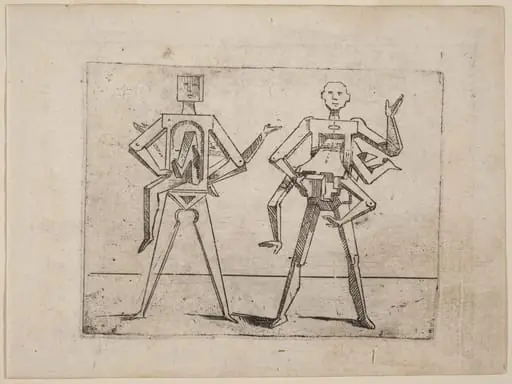
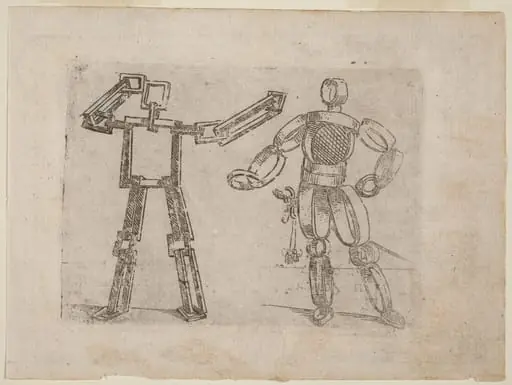
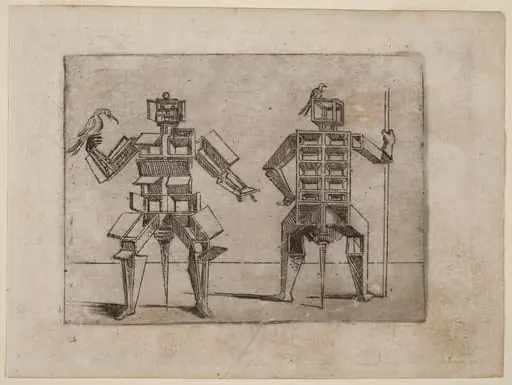
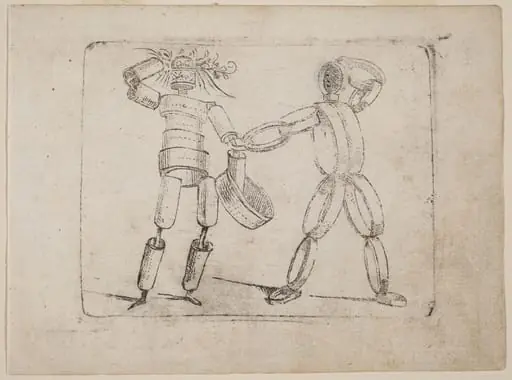
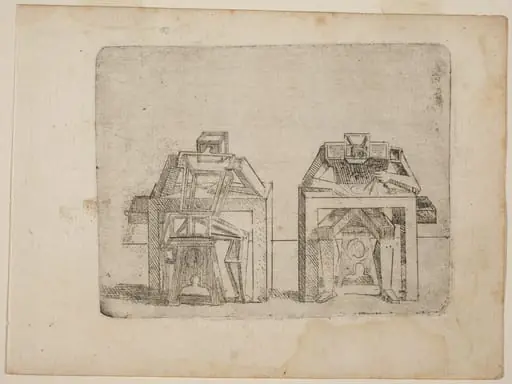
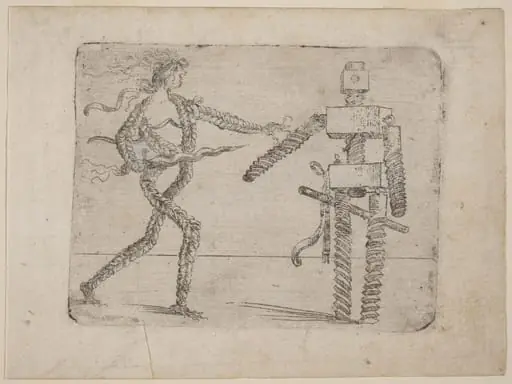
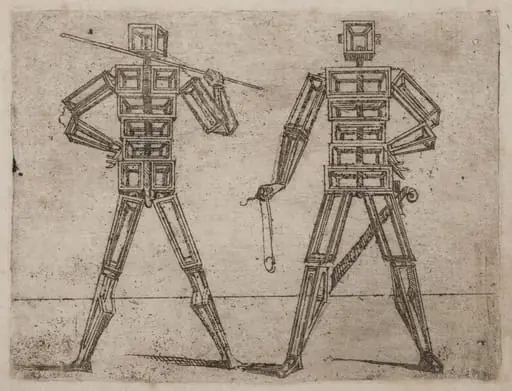
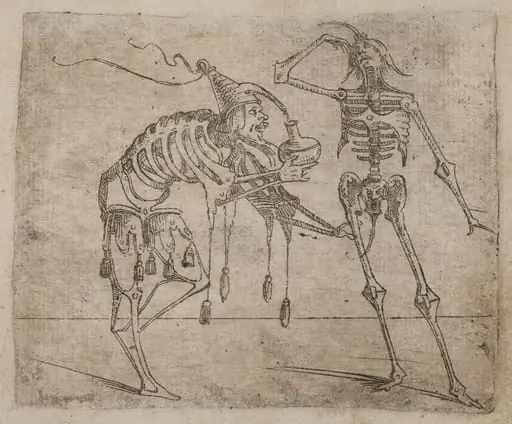
From "Bizzarie di varie Figure" is an ink print by the Baroque artist Giovanni Battista Bracelli. It dates from 1624 and is held in the collection of the National Gallery of Art.
About this work
Overview
Giovanni Battista Bracelli, an Italian artist active in the early 17th century, produced a series of etchings titled 'Bizzarie di varie Figure' around 1624.
Giovanni Battista Bracelli, an Italian artist active in the early 17th century, produced a series of etchings titled 'Bizzarie di varie Figure' around 1624. These prints explore imaginative, non-naturalistic figures that defy conventional anatomy. The work exemplifies the experimental spirit of Baroque printmaking, where fantasy and technical precision converged in small-scale compositions meant for collectors and connoisseurs.
Subject & Meaning
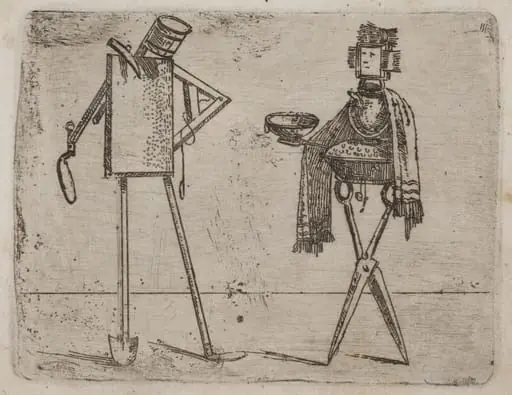
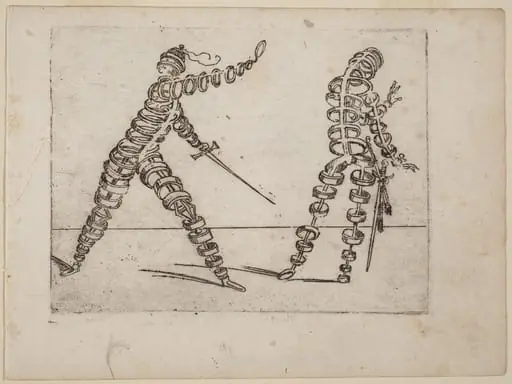
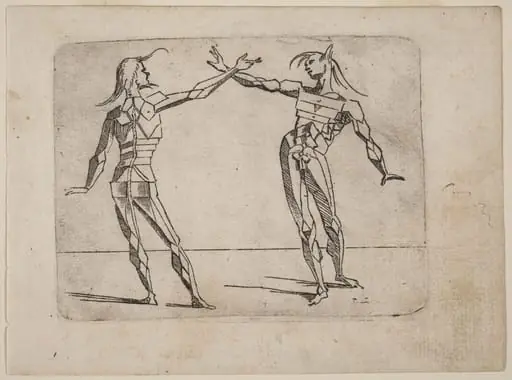
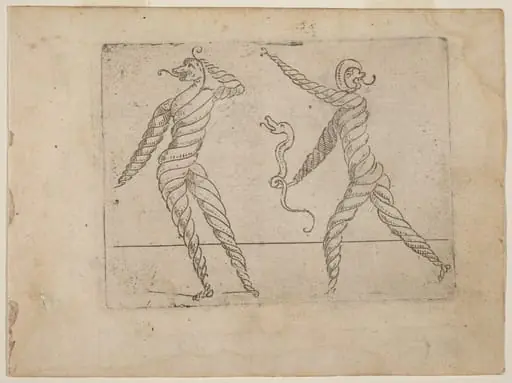
The etching depicts two surreal figures: one resembling a soldier adorned with a drum and tall hat, the other a towering woman clutching kitchen utensils, accompanied by a small dog. Their proportions and mixed attributes—human, mechanical, and domestic—suggest a whimsical commentary on identity and role. The figures evoke puppetry or automata, inviting interpretation as metaphors for societal archetypes or mere visual play.
Technique & Style
Bracelli used etching to carve fine lines into a metal plate, which, when inked and pressed, produced delicate, linear forms. His use of minimal shading and crisp contours gives the figures a stylized, almost sculptural quality, as if carved from wood or metal. The restrained detail emphasizes structure over realism, aligning with the playful, abstracted aesthetic of the Bizzarie series.
History & Provenance
The etching originated as part of a small, privately circulated series likely intended for artistic circles rather than public display. No definitive record of its early ownership exists, but similar prints from the period were collected by scholars and patrons interested in curiosities and graphic experimentation. Its survival reflects the niche but enduring appeal of such inventive prints in early modern Italy.
Context
In early 17th-century Italy, printmakers increasingly turned to fantastical subjects as a means of showcasing technical skill and intellectual wit. Bracelli’s work aligns with contemporaries like Salvator Rosa and the Carracci circle, who explored the boundaries between art and imagination. These 'bizzarie' responded to a growing appetite for visual puzzles and allegorical novelty among educated audiences.
Legacy
Bracelli’s 'Bizzarie' contributed to a tradition of eccentric figure studies that influenced later generations of printmakers and illustrators. Though not widely known today, the series remains a quiet example of how Baroque artists used printmaking to explore the absurd and the uncanny, preserving a moment when art embraced whimsy as a legitimate mode of expression.
Artist & collection

Artist
Giovanni Battista Bracelli or Braccelli is the name of more than one engraver and painter active in central Italy in the Baroque period, between about 1616 and 1649.