Artwork
From "Bizzarie di varie Figure"
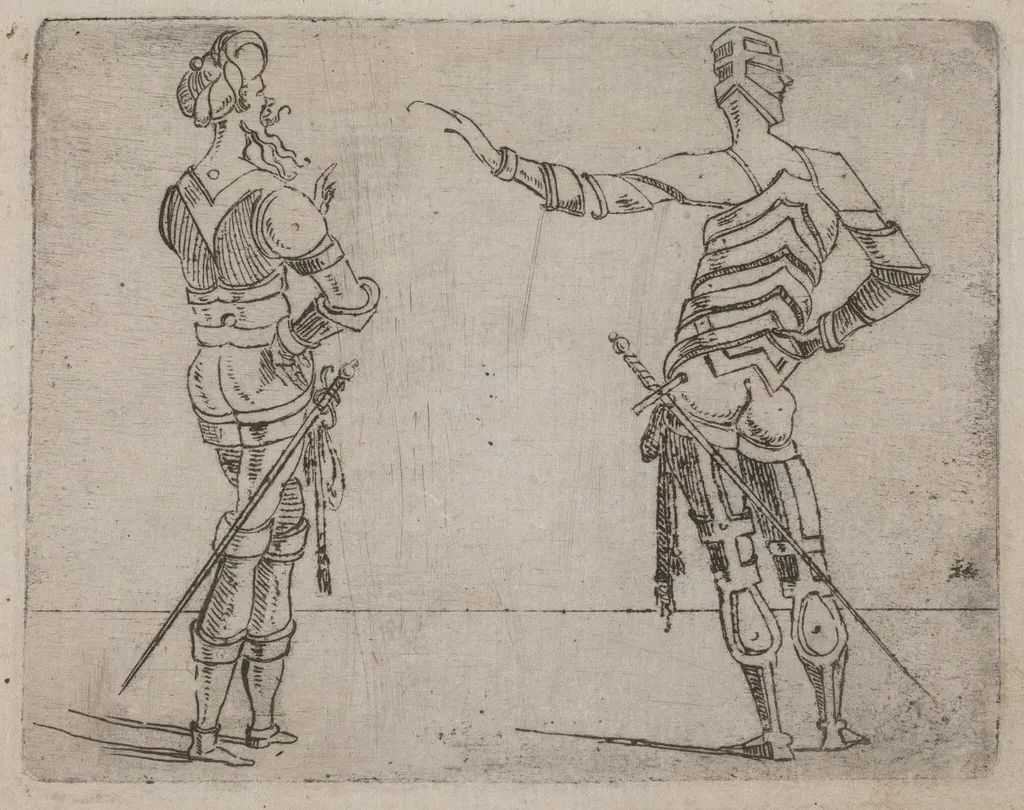
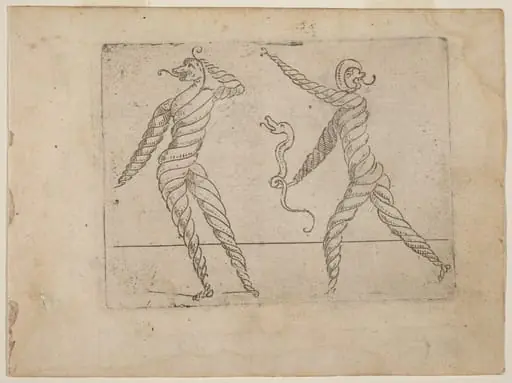
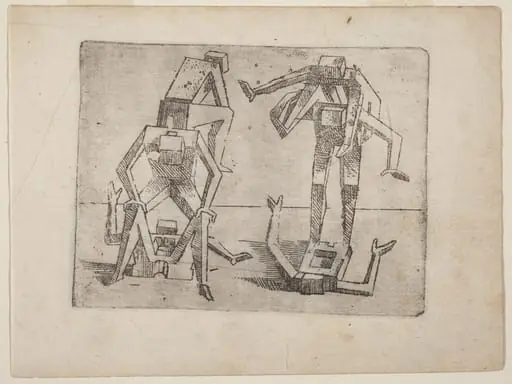
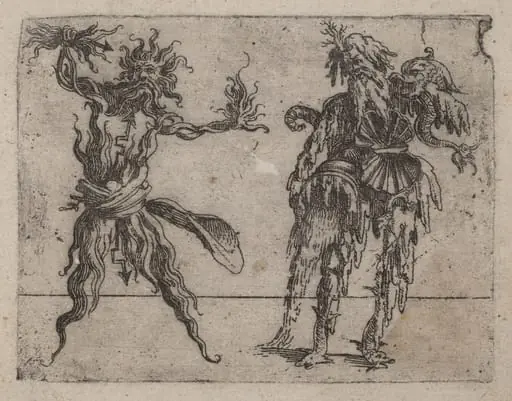
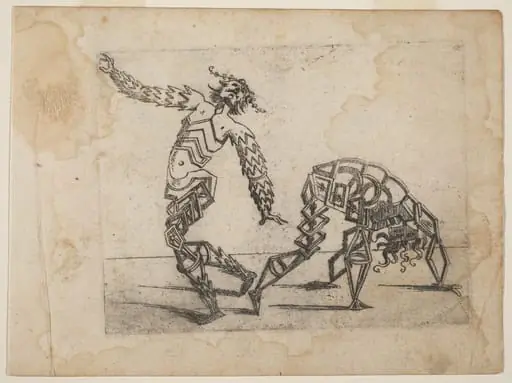
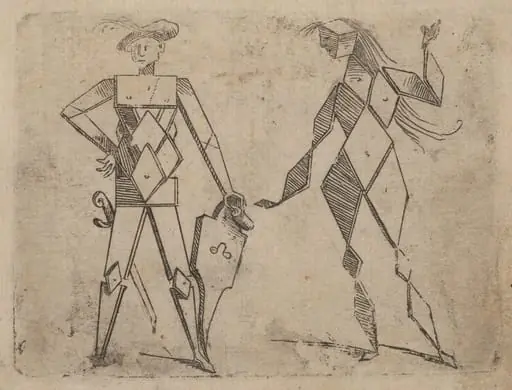
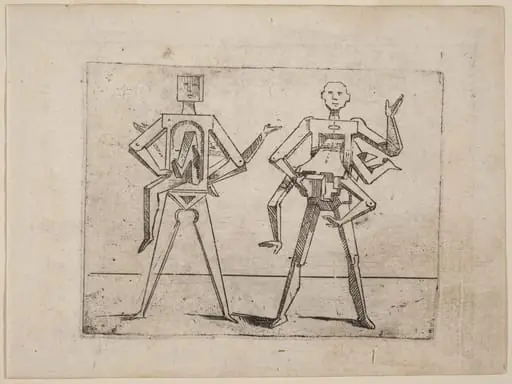
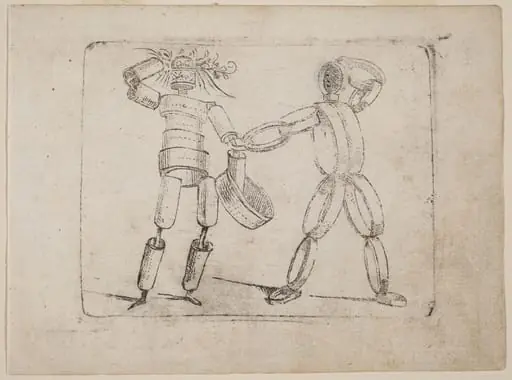
From "Bizzarie di varie Figure" is an ink print by the Baroque artist Giovanni Battista Bracelli. It dates from 1624 and is held in the collection of the National Gallery of Art.
About this work
Overview
The work exemplifies his focus on stylized human forms, rendered with precision through the etching technique, emphasizing structure over narrative.
Created in 1624, this etching is one of many in Giovanni Battista Bracelli’s series 'Bizzarie di varie Figure,' a collection of imaginative figure studies produced in central Italy during the early Baroque era. Bracelli, active between 1616 and 1649, was linked to the artistic circle of Giovanni Battista Paggi in Genoa. The work exemplifies his focus on stylized human forms, rendered with precision through the etching technique, emphasizing structure over narrative.
Subject & Meaning
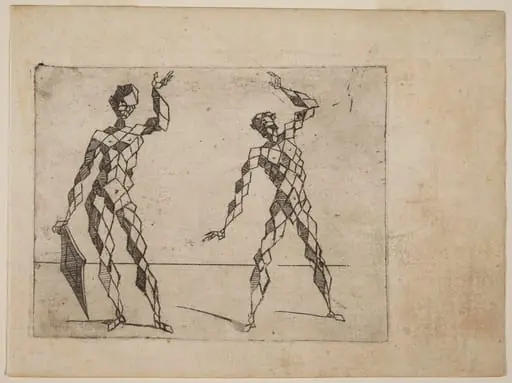
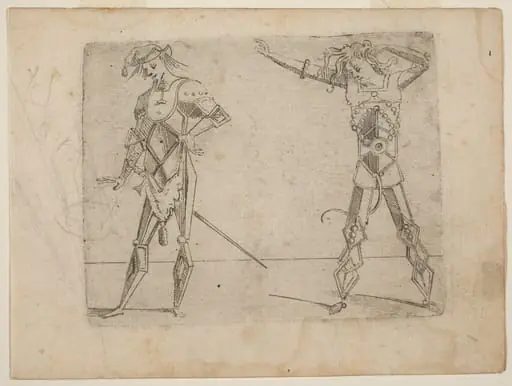
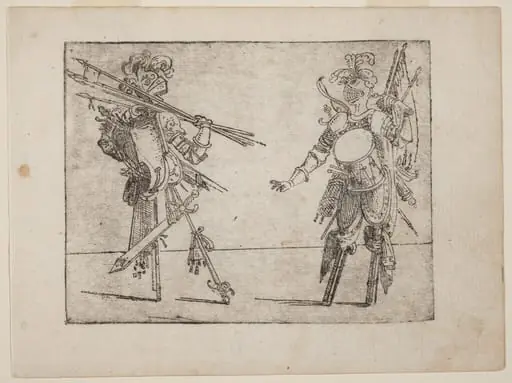
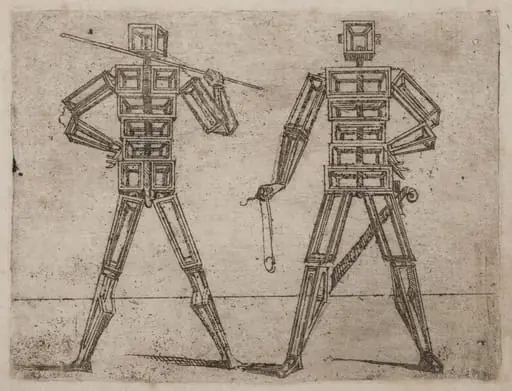
The print depicts two armored figures standing in rigid, symmetrical poses, each adorned with distinct helmet plumes and weaponry—one bearing a sword and feathered hat, the other a shield. Their armor is rendered with meticulous detail, suggesting martial prestige rather than action. The absence of context or environment shifts focus to the figures as abstract embodiments of chivalric form, possibly intended as studies in idealized masculinity or costume design.
Technique & Style
Bracelli employed sharp, clean etching lines to define the contours of armor and posture, creating a sense of mechanical clarity. The lack of shading or background enhances the graphic quality, isolating the figures as sculptural silhouettes. This approach reflects a preference for linear precision over atmospheric depth, aligning with the Mannerist tradition of elongated proportions and stylized anatomy, while avoiding the dramatic lighting typical of high Baroque.
History & Provenance
The etching originates from a published series of prints issued in 1624, likely intended for collectors and artists as visual references. Bracelli’s association with Genoese circles suggests the prints circulated among regional patrons and academies. While specific early ownership records are sparse, the series is documented in 17th-century print collections, indicating its recognition among connoisseurs of decorative and fantastical imagery.
Context
Produced during a period when printmaking flourished as a medium for artistic experimentation, Bracelli’s work reflects broader trends in Italian Mannerism and early Baroque visual culture. Similar figure studies appeared in the works of artists like Giacomo Franco and Antonio Tempesta, who also explored exaggerated forms and armor as subjects. These prints served both as artistic exercises and as sources for costume and design in theater and courtly life.
Legacy
Bracelli’s 'Bizzarie' series contributed to the tradition of print-based figure studies that influenced later generations of draftsmen and designers. Though not widely known today, the precision and inventiveness of his etchings remain notable for their departure from naturalism, offering a distinct visual language that prioritized formal invention over narrative or emotional expression.
Artist & collection

Artist
Giovanni Battista Bracelli or Braccelli is the name of more than one engraver and painter active in central Italy in the Baroque period, between about 1616 and 1649.

 From "Bizzarie di varie Figure"
 From "Bizzarie di varie Figure"
 From "Bizzarie di varie Figure"
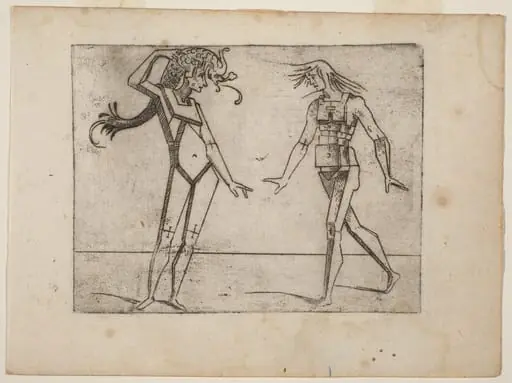 From "Bizzarie di varie Figure"
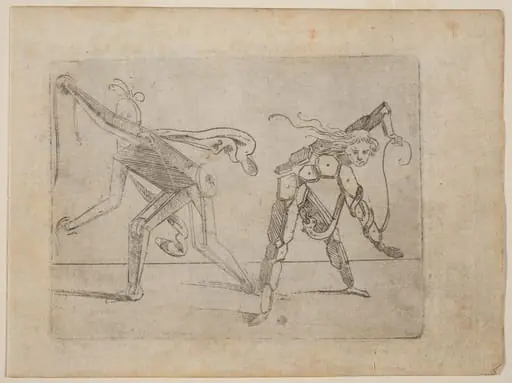 From "Bizzarie di varie Figure"
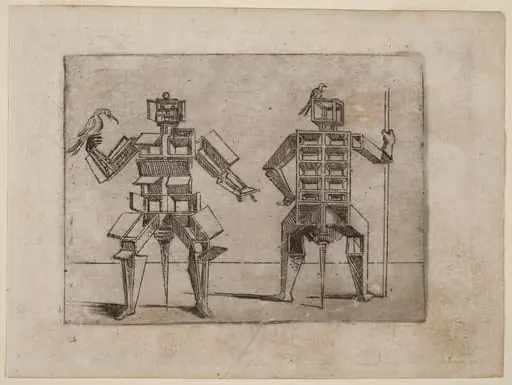 From "Bizzarie di varie Figure"
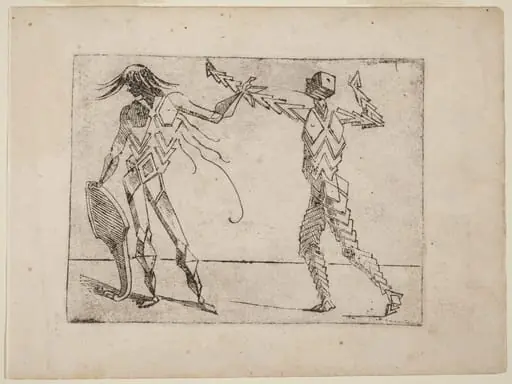 From "Bizzarie di varie Figure"
 From "Bizzarie di varie Figure"
 From "Bizzarie di varie Figure"
 From "Bizzarie di varie Figure"