Artwork
From "Bizzarie di varie Figure"
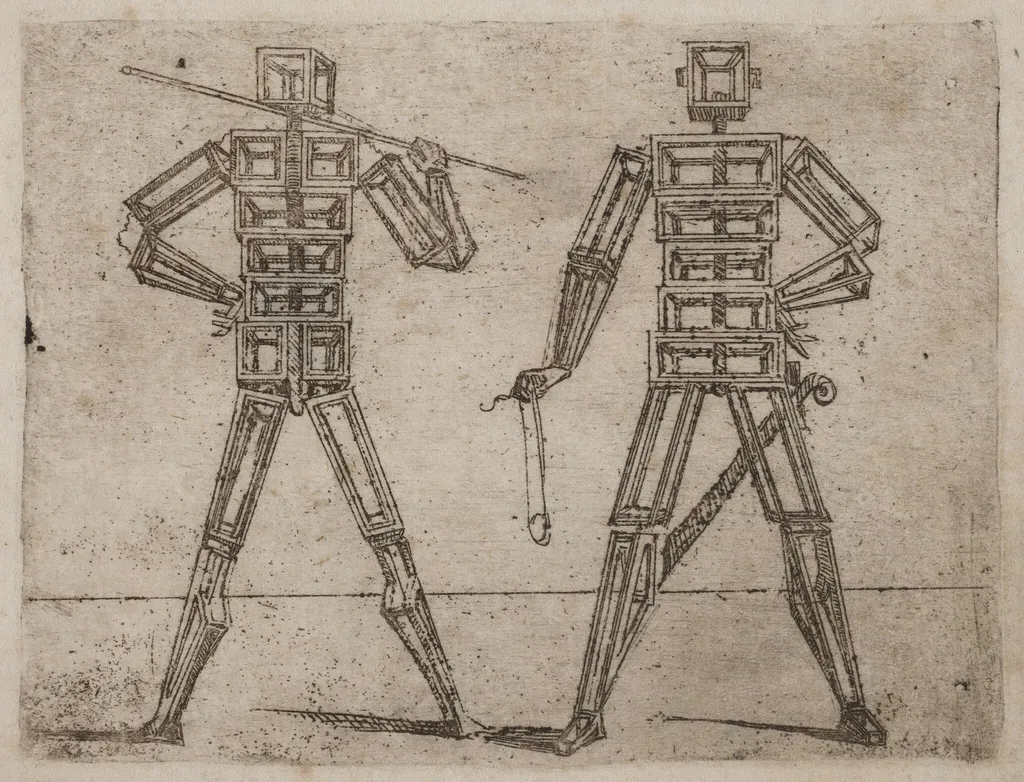
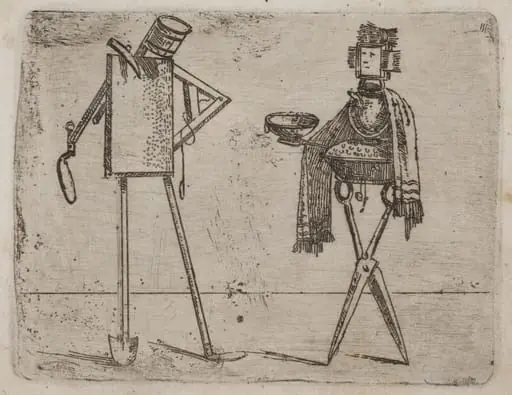
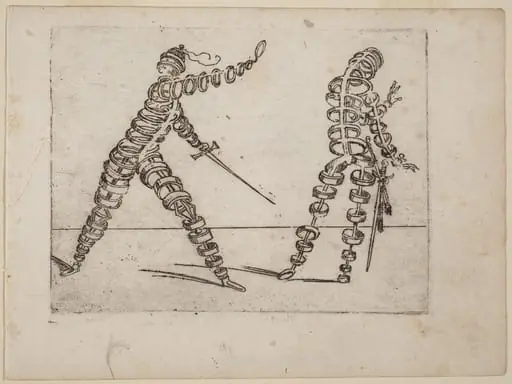
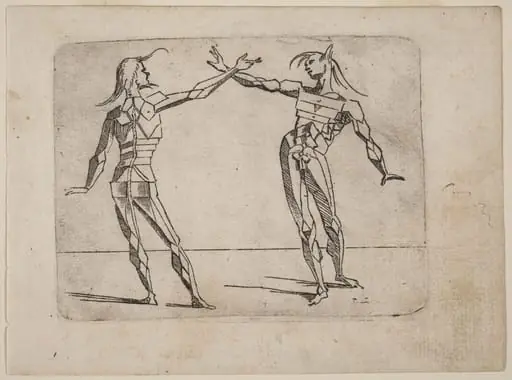
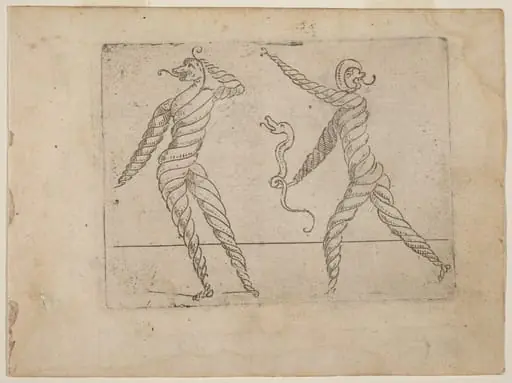
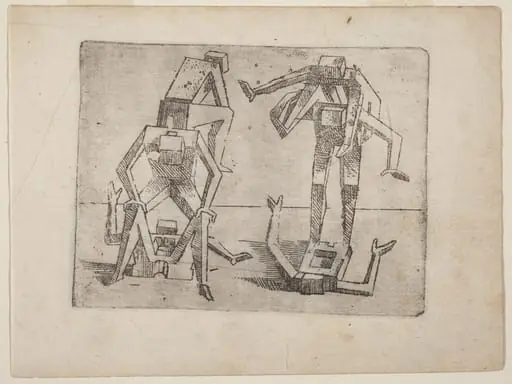
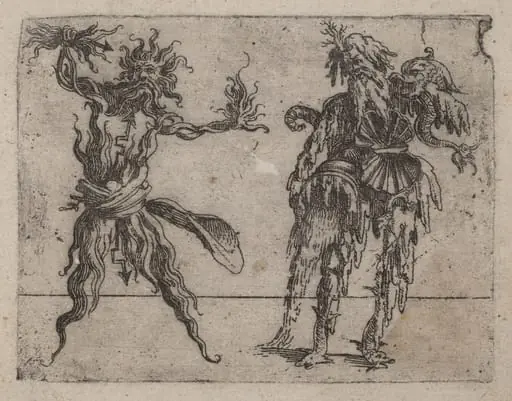
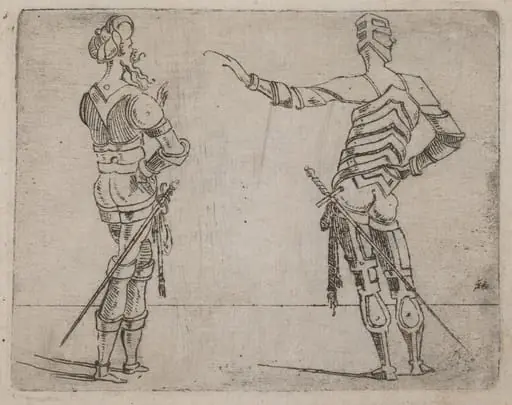
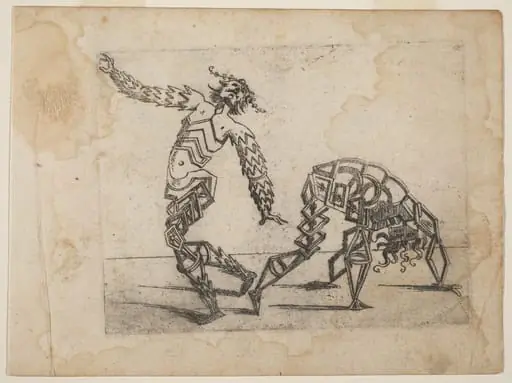
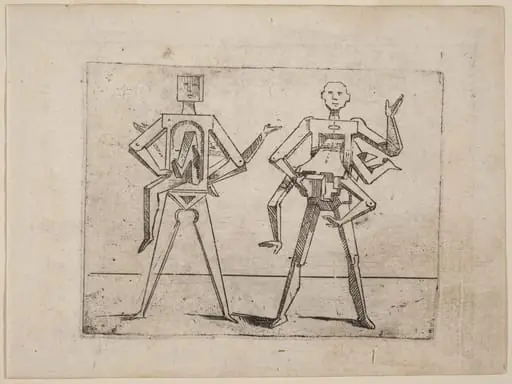
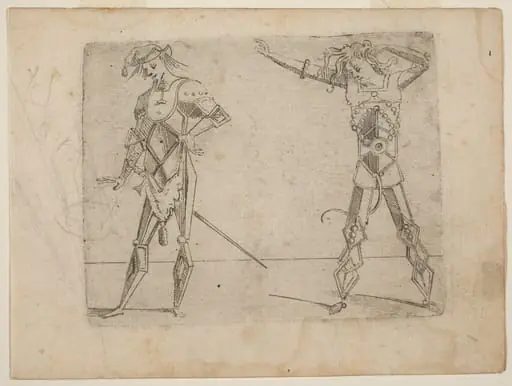
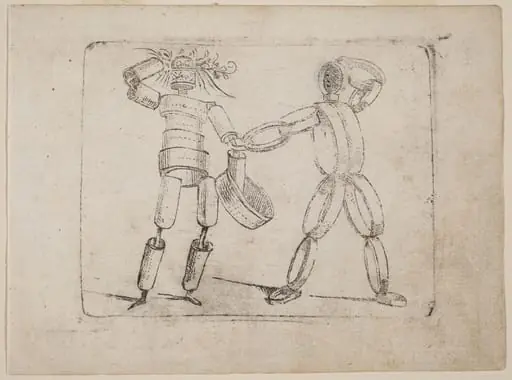
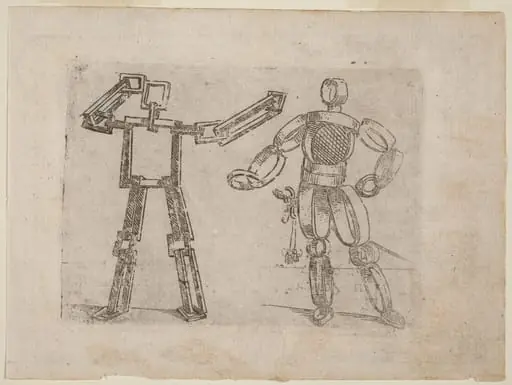
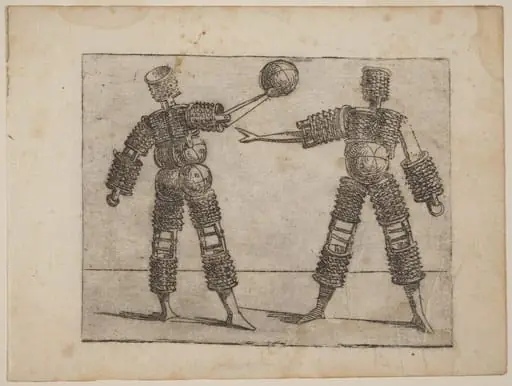
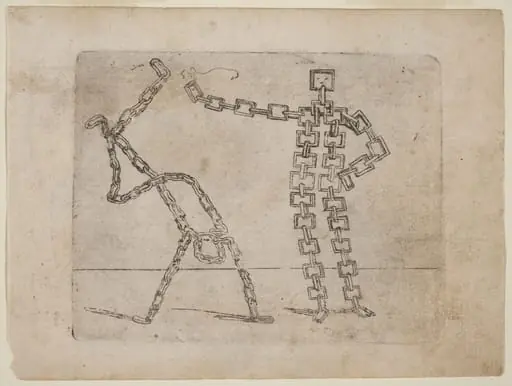
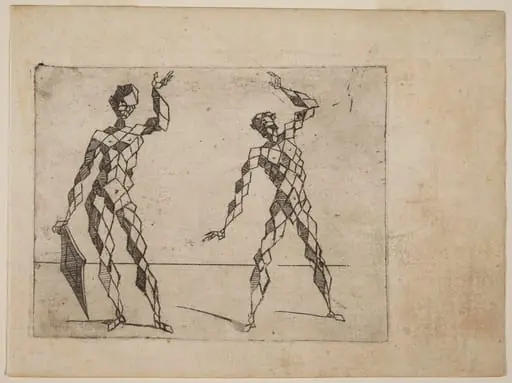
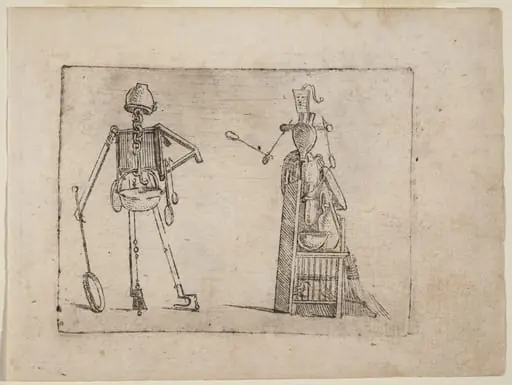
From "Bizzarie di varie Figure" is an ink print by the Baroque artist Giovanni Battista Bracelli. It dates from 1624 and is held in the collection of the National Gallery of Art.
About this work
Overview
The print is one of many in a collection that prioritizes invention over naturalism, reflecting a broader Baroque interest in the uncanny and the theatrical.
Giovanni Battista Bracelli, an Italian artist active in the early 17th century, produced this etching as part of a larger series titled 'Bizzarie di varie Figure.' Created around 1624, the work exemplifies the period’s fascination with hybrid forms, merging the human body with inanimate, mechanical structures. The print is one of many in a collection that prioritizes invention over naturalism, reflecting a broader Baroque interest in the uncanny and the theatrical.
Subject & Meaning
The image depicts two elongated, skeletal figures constructed from angular, box-like segments and mechanical components. Their limbs articulate at unnatural joints, suggesting puppetry or clockwork. One holds a staff; another terminates in a hooked appendage. These figures resist clear narrative, instead evoking a world where anatomy and machinery blur—perhaps a commentary on the limits of human form or an exploration of artificial life through visual metaphor.
Technique & Style
Executed in etching, the work relies on fine, controlled lines to define its intricate forms. The precision of the incised marks gives the figures a diagrammatic quality, as if drawn from technical plans. Sharp contrasts and minimal shading emphasize structure over texture, reinforcing the mechanical character of the subjects. This restrained aesthetic aligns with the intellectual curiosity of the era, favoring clarity and invention over emotional expression.
History & Provenance
Bracelli’s 'Bizzarie di varie Figure' series was published in 1624, likely intended as a collection of prints for collectors and artists. Few original impressions survive, and the series was not widely disseminated during the artist’s lifetime. The etching remained obscure until later scholarly interest in Baroque eccentricity revived attention to Bracelli’s work, particularly for its departure from conventional figure studies of the time.
Context
In early 17th-century Italy, artists increasingly experimented with fantastical and grotesque forms, influenced by Mannerist precedents and the rise of curiosity cabinets. Bracelli’s figures resonate with contemporaneous works that fused human anatomy with mechanical or architectural elements, reflecting a cultural fascination with invention, illusion, and the boundaries between nature and artifice.
Legacy
Though Bracelli’s output was limited and largely forgotten for centuries, his 'Bizzarie' series has since been recognized as an early example of speculative design in printmaking. The work anticipates later explorations of automata and surreal anatomy, offering a unique bridge between Renaissance humanism and the imaginative excesses of the Baroque. It remains a quiet but distinct voice in the history of printed fantasy.
Artist & collection

Artist
Giovanni Battista Bracelli or Braccelli is the name of more than one engraver and painter active in central Italy in the Baroque period, between about 1616 and 1649.