Artwork
From "Bizzarie di varie Figure"
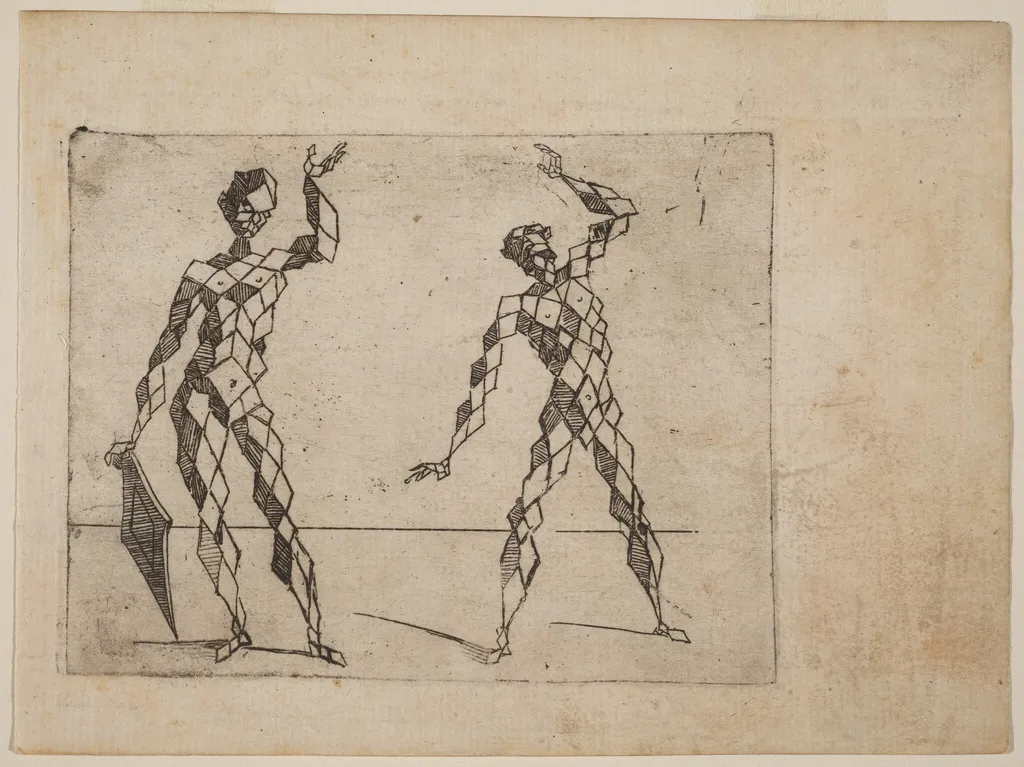
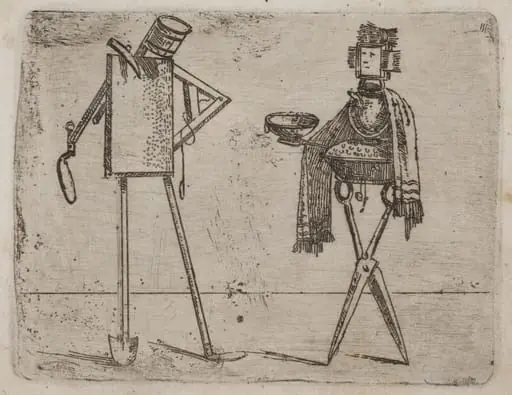
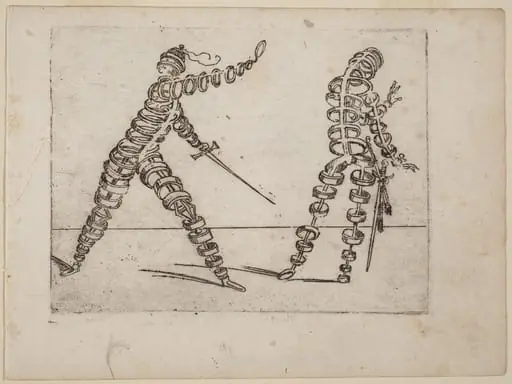
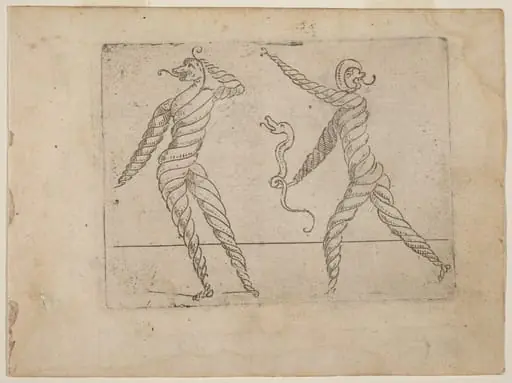
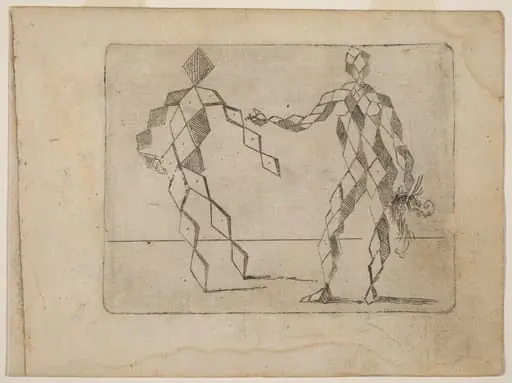
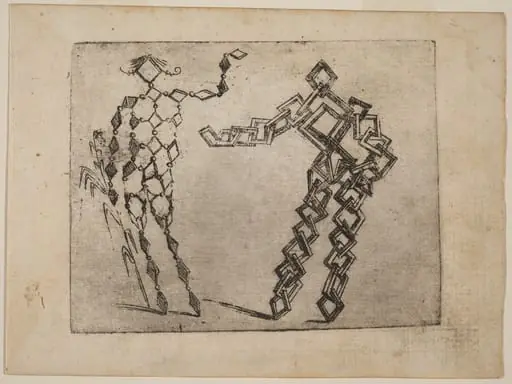
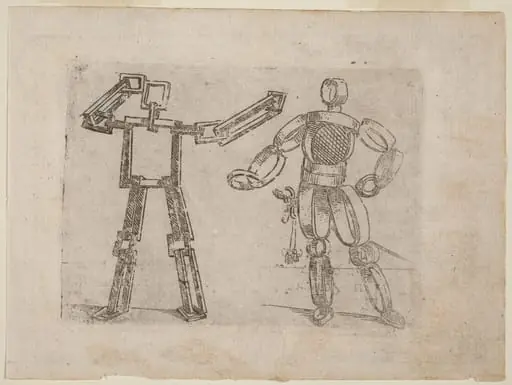
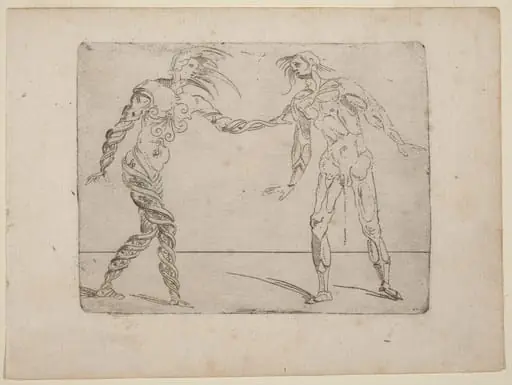
From "Bizzarie di varie Figure" is an ink print by the Baroque artist Giovanni Battista Bracelli. It dates from 1624 and is held in the collection of the National Gallery of Art.
About this work
Overview
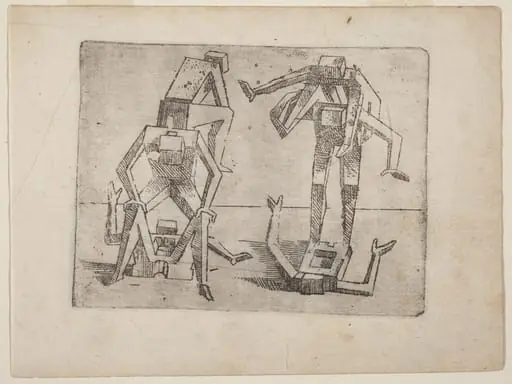
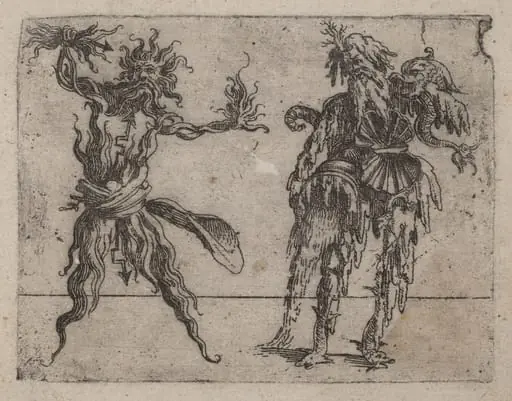
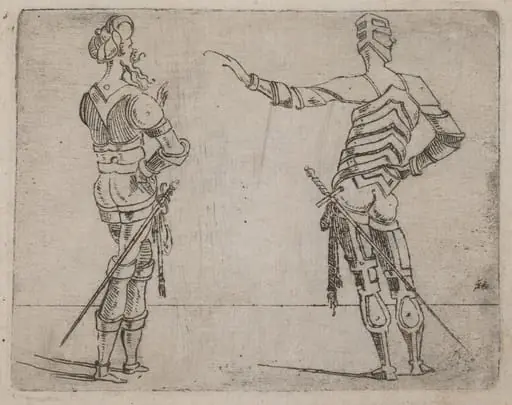
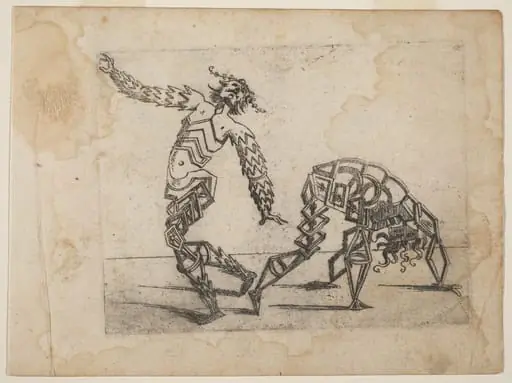
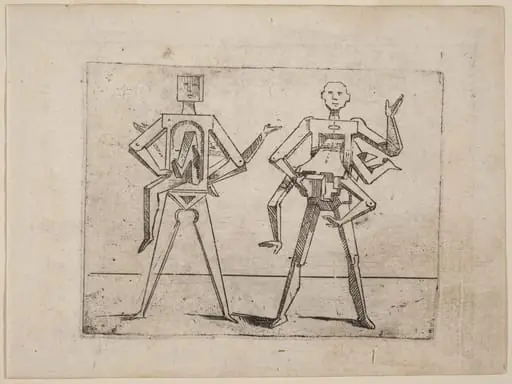
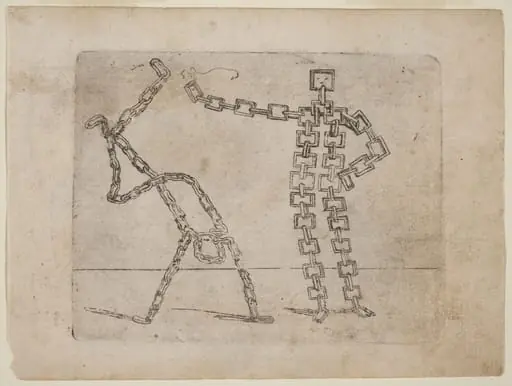
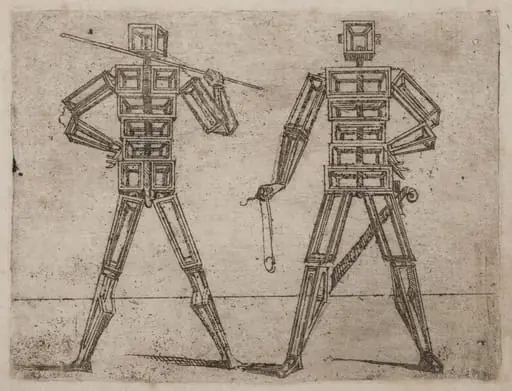
Created in 1624 by Giovanni Battista Bracelli, this etching is one of many in the series 'Bizzarie di varie Figure,' a collection of imaginative figure studies.
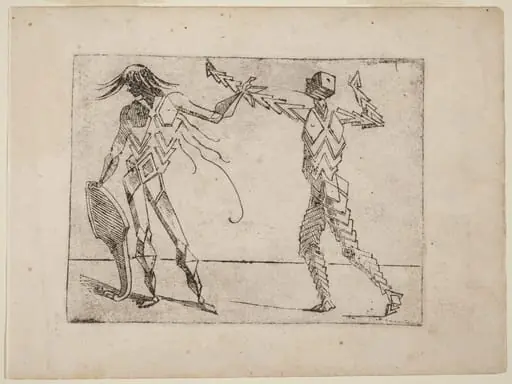
Created in 1624 by Giovanni Battista Bracelli, this etching is one of many in the series 'Bizzarie di varie Figure,' a collection of imaginative figure studies. Bracelli, active in central Italy between 1616 and 1649, used the graphic medium to explore unconventional forms. The print exemplifies his interest in distortion and stylization, departing from naturalistic representation to emphasize inventive composition over realism.
Subject & Meaning
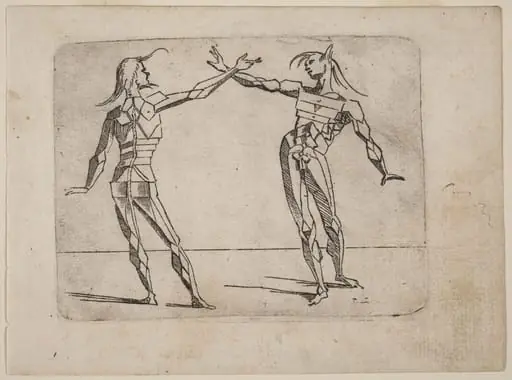
Two elongated, fragmented figures stand on a plain ground, their bodies assembled from angular, tile-like segments. One gestures with an outstretched arm, the other holds a small object aloft. Their abstracted forms suggest a playful or satirical intent, possibly commenting on human posture or social types. The lack of narrative context invites interpretation as a study in eccentricity rather than a depiction of specific individuals.
Technique & Style
Bracelli employed etching to achieve sharp, irregular lines that mimic fractured surfaces. The rough, deliberate strokes convey texture and volume through contrast rather than smooth gradation. This method, common among Baroque printmakers, allowed for rapid experimentation with form. The uneven contours and abrupt transitions between light and dark reflect an interest in the materiality of the medium itself.
History & Provenance
The etching originates from a printed series produced in the early 1620s, likely intended for collectors of graphic art. Bracelli’s works circulated in Italy and beyond, though few individual prints from the 'Bizzarie' series survive in large numbers. Its current whereabouts are documented in institutional collections, but its early ownership history remains largely unrecorded.
Context
During the early Baroque period, Italian artists increasingly turned to printmaking as a space for personal exploration. Bracelli’s figures align with a broader trend of fantastical and grotesque imagery found in Mannerist and early Baroque prints. These works often served as visual curiosities, appealing to patrons interested in novelty and technical virtuosity over religious or mythological themes.
Legacy
Bracelli’s 'Bizzarie' series influenced later generations of printmakers who valued inventive form over strict representation. Though not widely known today, his experiments with distortion contributed to the development of expressive graphic styles in 17th-century Europe. The series remains a testament to the creative freedom possible within the constraints of etching technique.
Artist & collection

Artist
Giovanni Battista Bracelli or Braccelli is the name of more than one engraver and painter active in central Italy in the Baroque period, between about 1616 and 1649.