Artwork
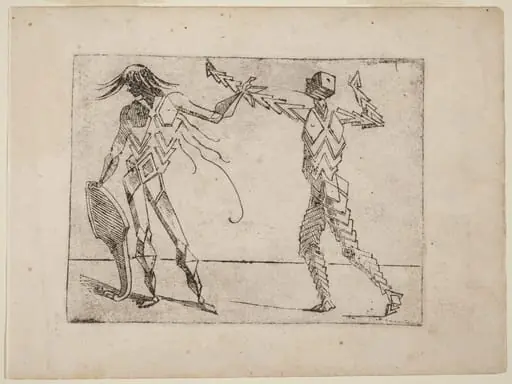
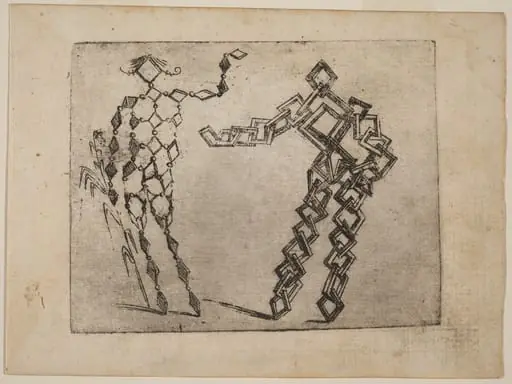
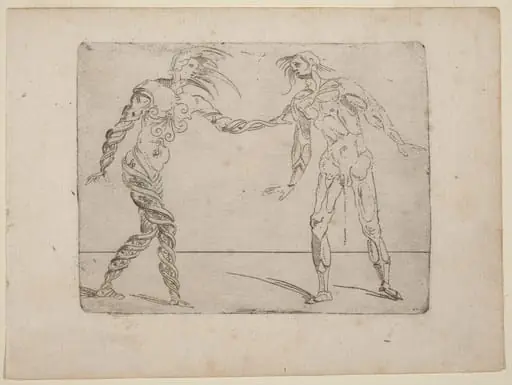
From "Bizzarie di varie Figure"
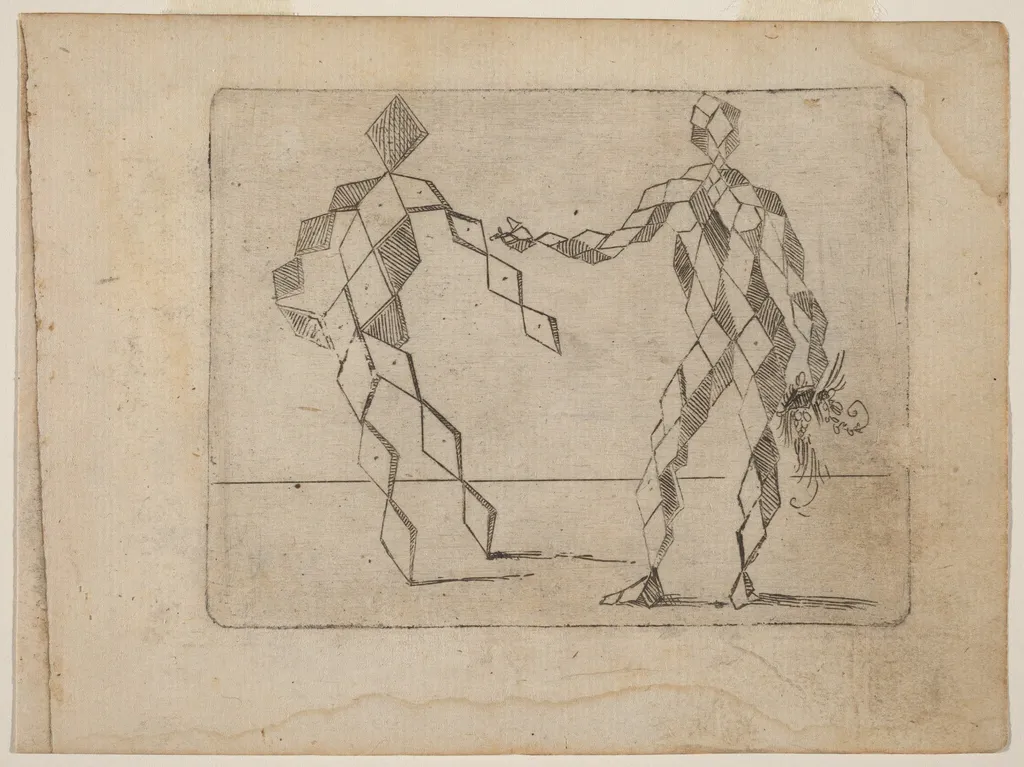
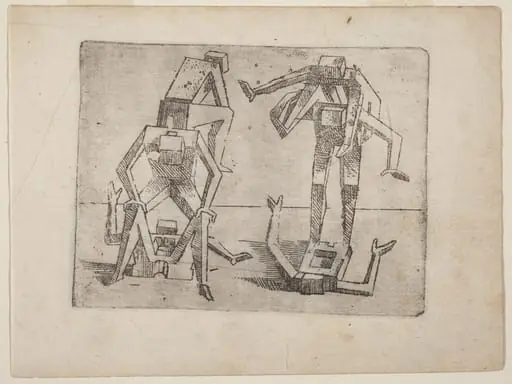
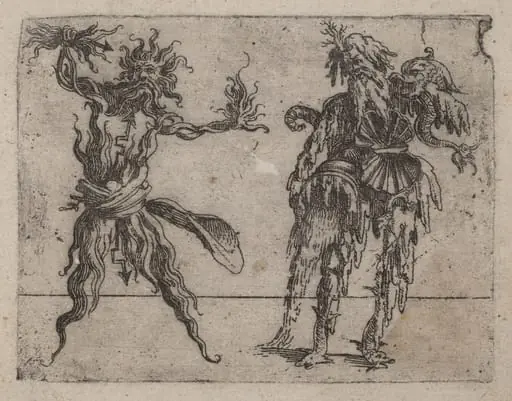
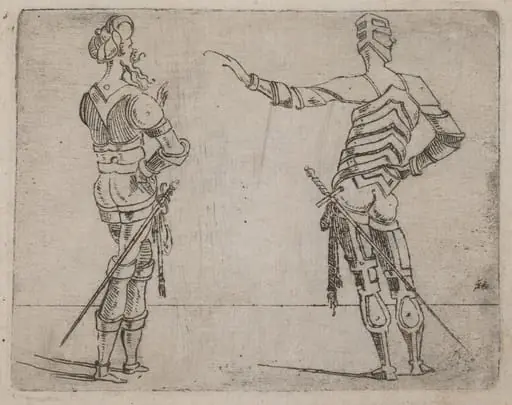
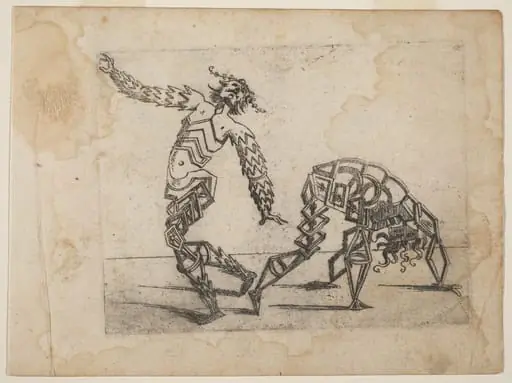
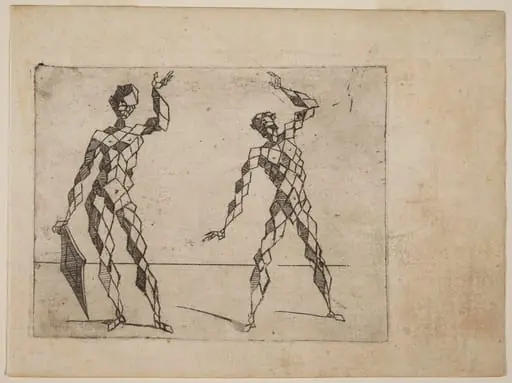
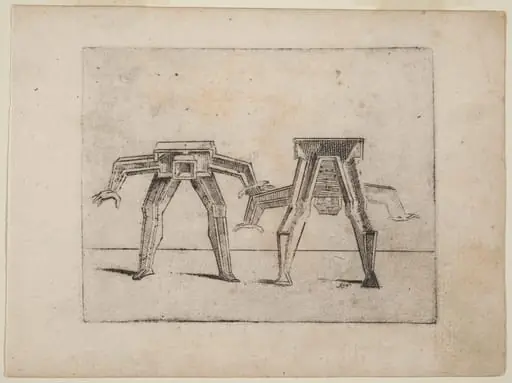
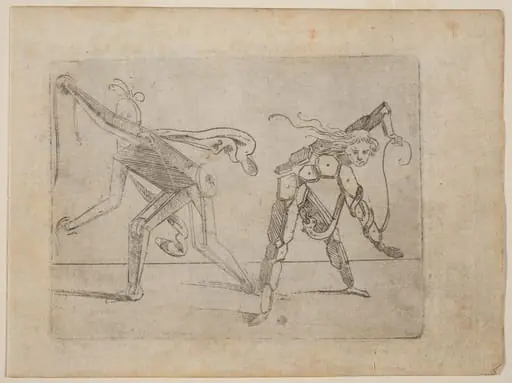
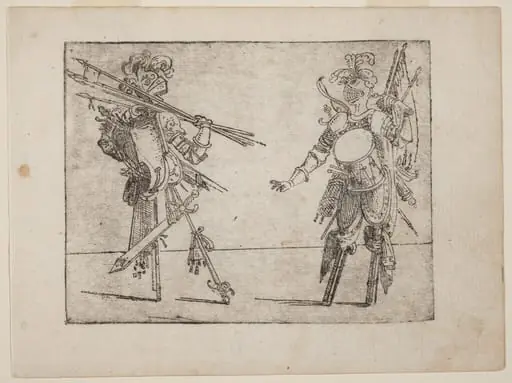
From "Bizzarie di varie Figure" is an ink print by the Baroque artist Giovanni Battista Bracelli. It dates from 1624 and is held in the collection of the National Gallery of Art.
About this work
Overview
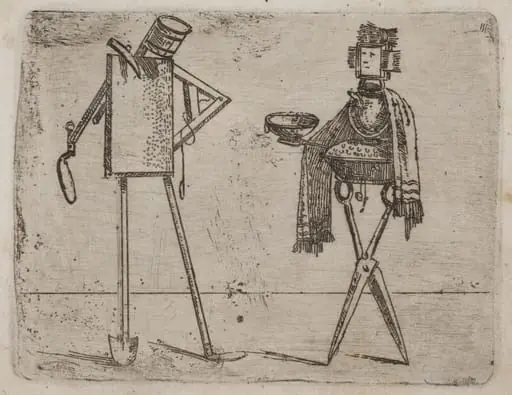
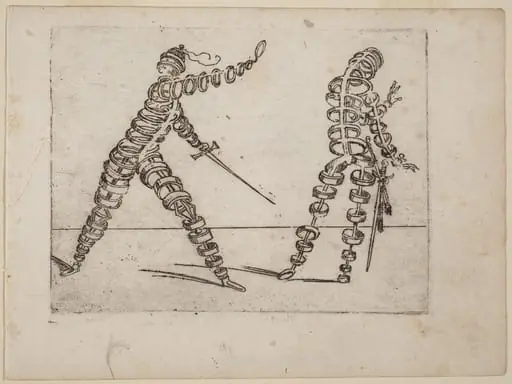
Giovanni Battista Bracelli, a Baroque engraver and painter active in central Italy from roughly 1616 to 1649, produced an etching in 1624 titled *From "Bizzarie di varie Figure"*. The work belongs to a series noted for its elongated, stylized figures arranged within geometric frameworks, reflecting the artist’s interest in formal experimentation during the early seventeenth century.
Subject & Meaning
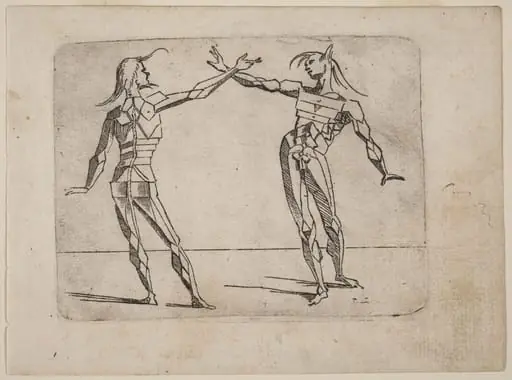
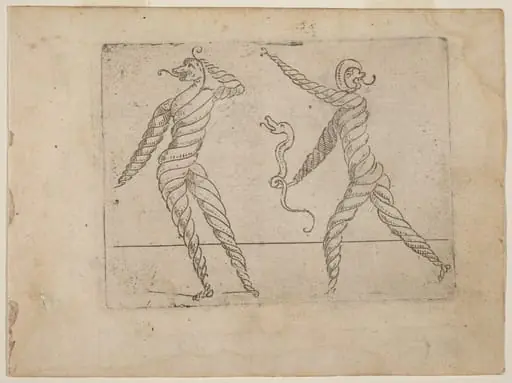
The print depicts two slender, almost skeletal figures intertwined. Their bodies are constructed from sharp, angular fragments that resemble shards of glass or interlocking puzzle pieces, lacking any softened contour. One figure leans backward with arms raised, while the other stands rigid, clutching a twisted rope that links the pair, suggesting tension or a playful entanglement.
Technique & Style
Executed as an etching, the image was created by incising the design into a copper plate with a needle, then exposing the plate to acid to bite the lines. Bracelli’s hand is evident in the vigorous, dark strokes that scratch the paper, giving the work a raw, almost impromptu quality rather than a refined finish.
History & Provenance
The piece forms part of Bracelli’s early output, emerging in 1624 amid a prolific period of printmaking in central Italy. While specific ownership records are scarce, the work is documented within the broader corpus of Bracelli’s prints that circulated among collectors of baroque graphic art.
Artist & collection

Artist
Giovanni Battista Bracelli or Braccelli is the name of more than one engraver and painter active in central Italy in the Baroque period, between about 1616 and 1649.