Artwork
From "Bizzarie di varie Figure"
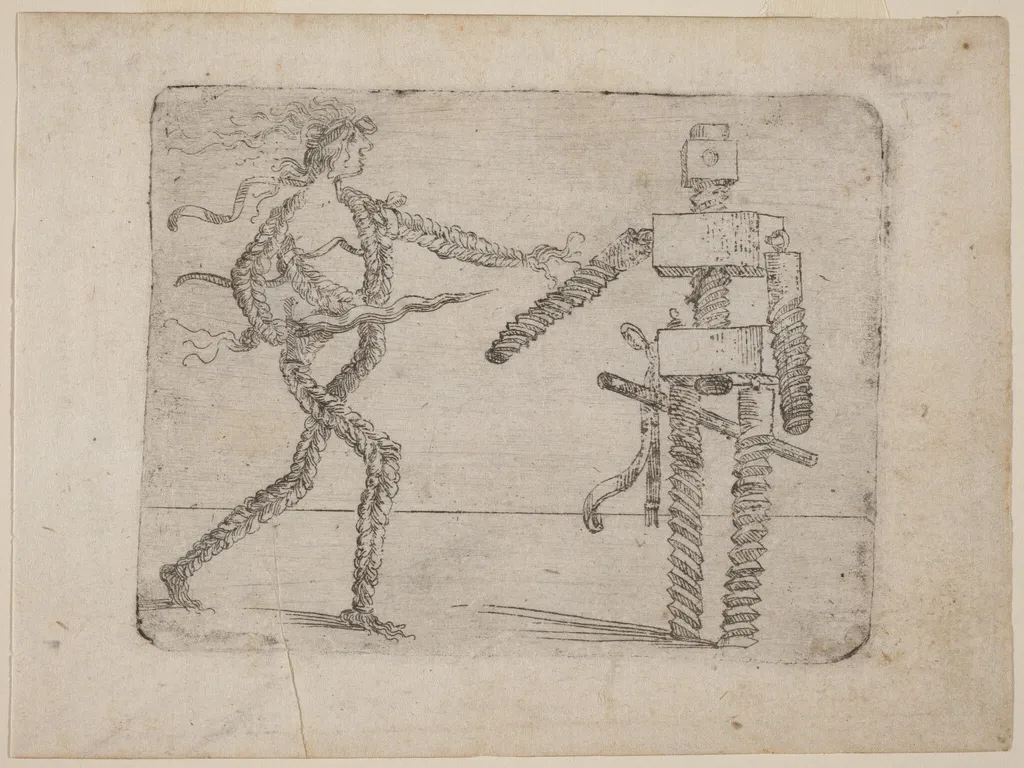
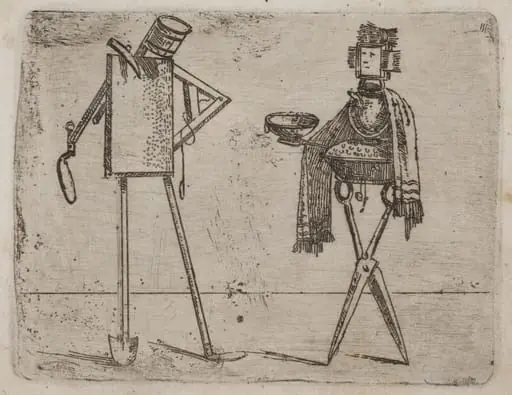
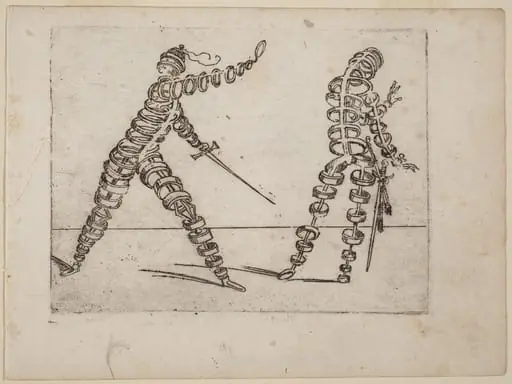
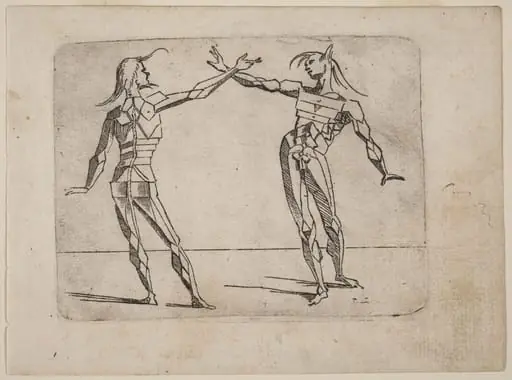
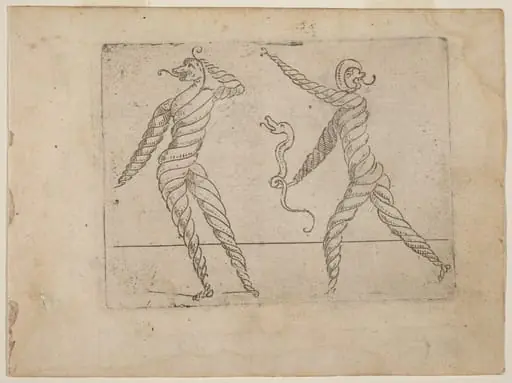
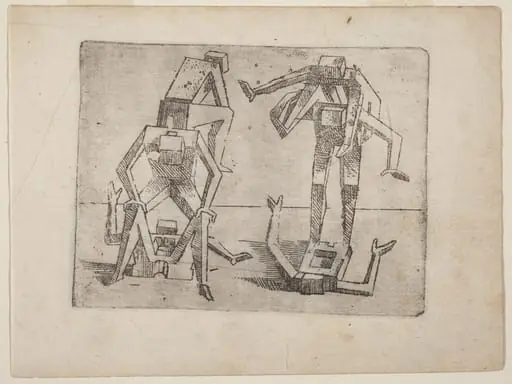
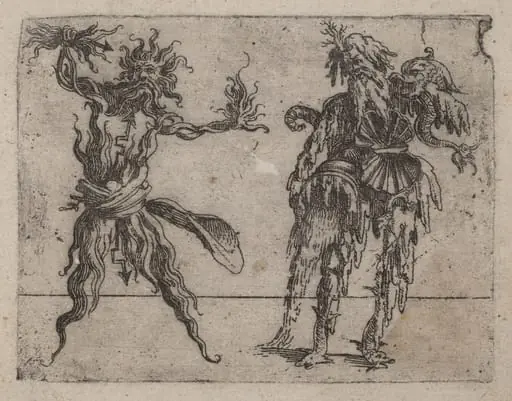
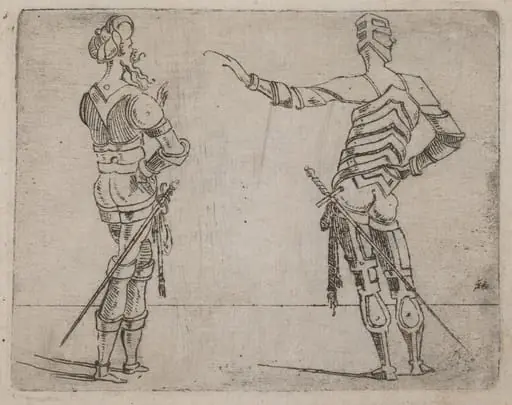
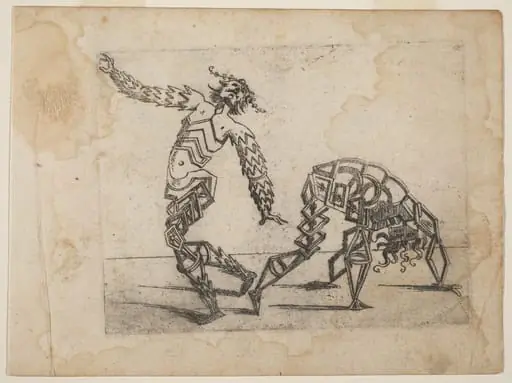
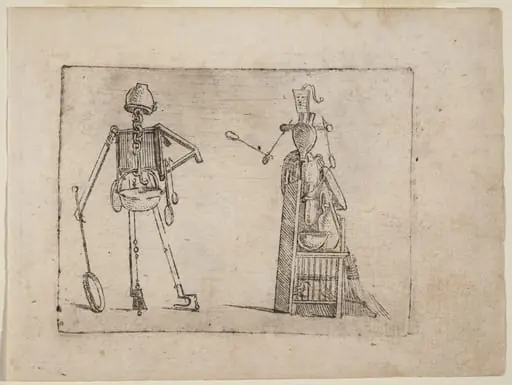
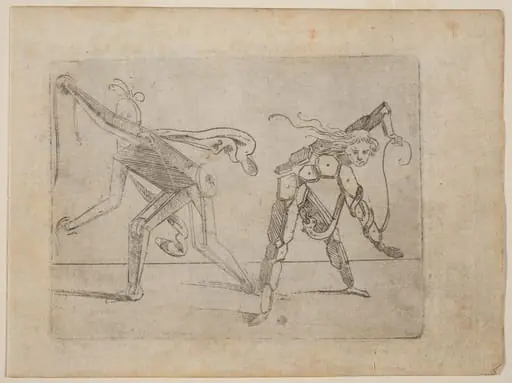
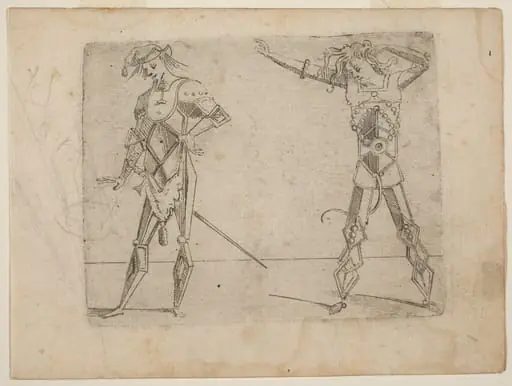
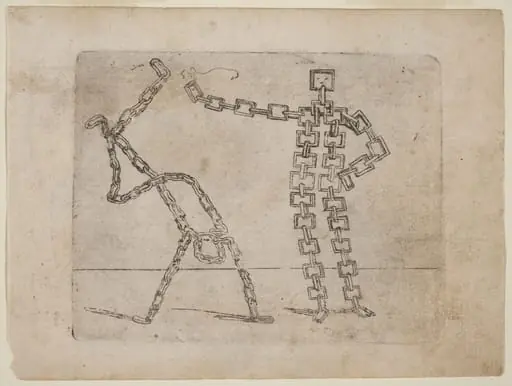
From "Bizzarie di varie Figure" is an ink print by the Baroque artist Giovanni Battista Bracelli. It dates from 1624 and is held in the collection of the National Gallery of Art.
About this work
Overview
Giovanni Battista Bracelli, an Italian artist active in the early 17th century, produced this etching as part of a series titled 'Bizzarie di varie Figure.
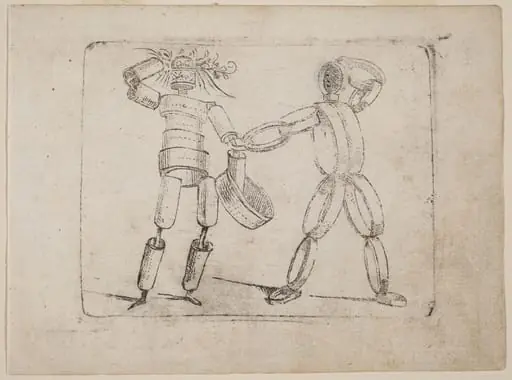
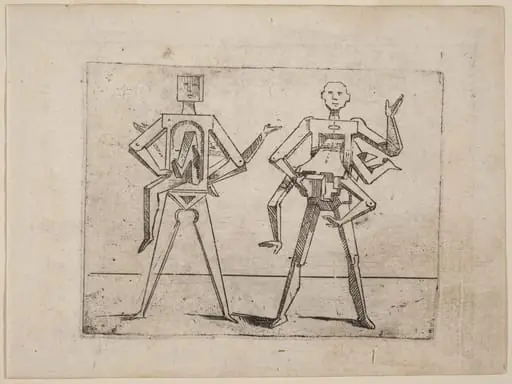
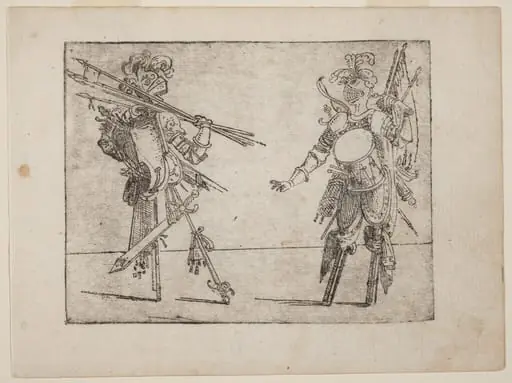
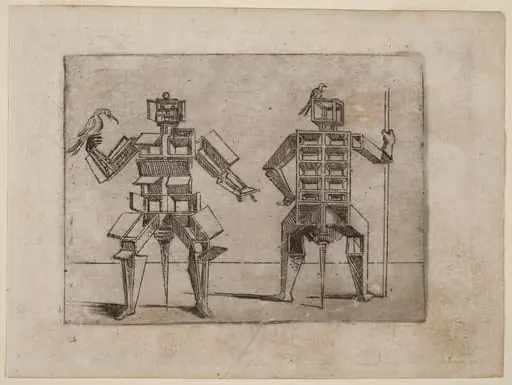
Giovanni Battista Bracelli, an Italian artist active in the early 17th century, produced this etching as part of a series titled 'Bizzarie di varie Figure.' Created around 1624, the work belongs to a tradition of fantastical printmaking that explored imaginative and unconventional human forms. The composition presents two contrasting figures against a minimal background, emphasizing their symbolic rather than narrative relationship.
Subject & Meaning
The image juxtaposes a naturalistic human form, entwined with vines and foliage, against a mechanical figure composed of rigid coils and a geometric head. This contrast may reflect contemporary tensions between organic life and emerging mechanistic worldviews. The figures appear to interact, yet their differing natures suggest an unbridgeable divide, evoking themes of transformation, alienation, or the boundaries between nature and artifice.
Technique & Style
Bracelli employed etching to achieve fine linear detail and tonal variation. The human figure’s vines are rendered with intricate, flowing lines, while the mechanical form uses repetitive, angular strokes to suggest metallic structure. The plain background isolates the figures, heightening their surreal presence. The medium’s capacity for delicate texture supports the dreamlike quality, reinforcing the work’s departure from naturalistic representation.
History & Provenance
The etching originates from a small portfolio of prints published in 1624, likely intended for collectors interested in curiosities and Mannerist invention. Few original impressions survive, and the work was not widely reproduced in its time. Its attribution to Bracelli is supported by stylistic parallels with his other known engravings and documented references in early 17th-century Italian print circles.
Context
Bracelli worked during a period when Italian printmakers increasingly explored fantastical and grotesque subjects, influenced by Mannerist aesthetics and the popularity of emblem books. His figures align with contemporaneous interest in hybrid forms and allegorical invention, though his approach remains distinct in its stark minimalism and absence of narrative context, setting it apart from more elaborate allegorical prints of the era.
Legacy
Though Bracelli’s output was limited and largely forgotten after his death, this etching has gained retrospective attention for its prescient fusion of organic and mechanical forms. It anticipates later surrealist and science fiction imagery, serving as an early example of visual speculation on artificial life. Scholars now view it as a rare, enigmatic artifact of Baroque imaginative print culture.
Artist & collection

Artist
Giovanni Battista Bracelli or Braccelli is the name of more than one engraver and painter active in central Italy in the Baroque period, between about 1616 and 1649.