Artwork
From "Bizzarie di varie Figure"
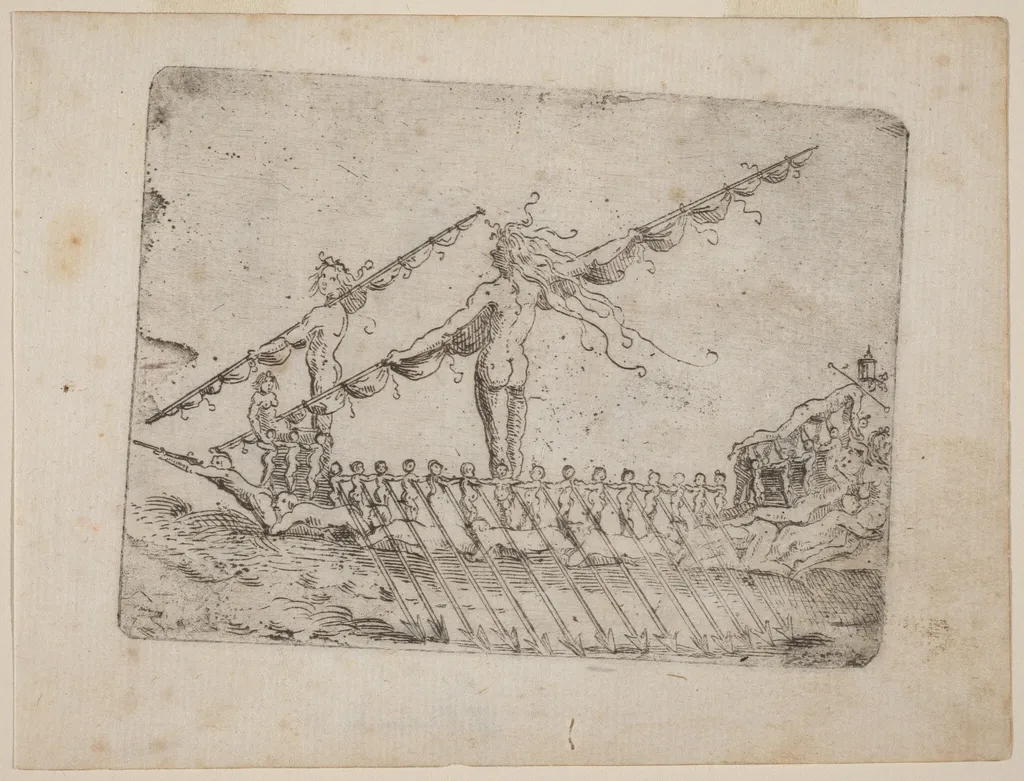
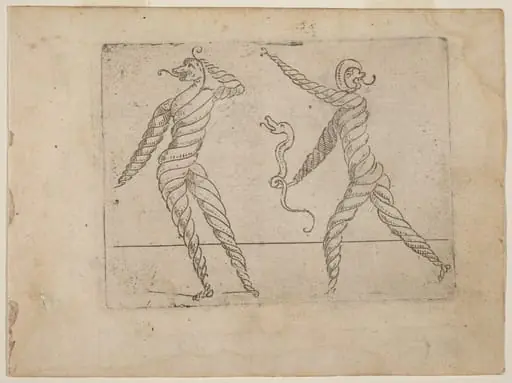
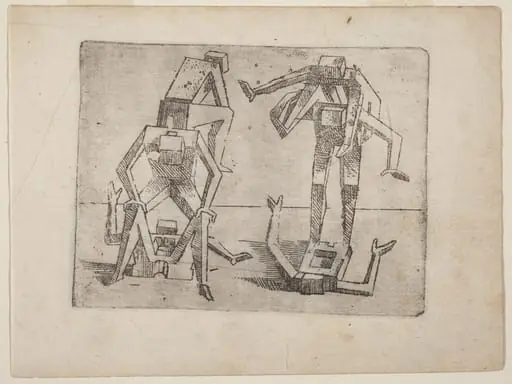
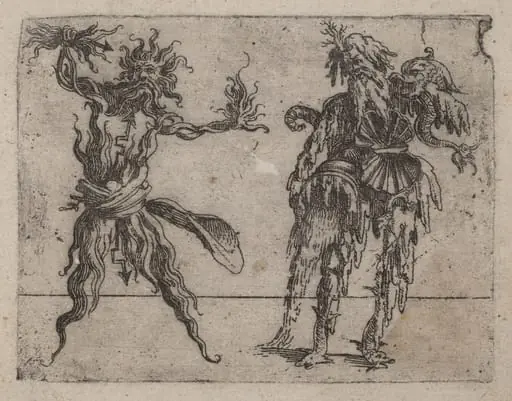
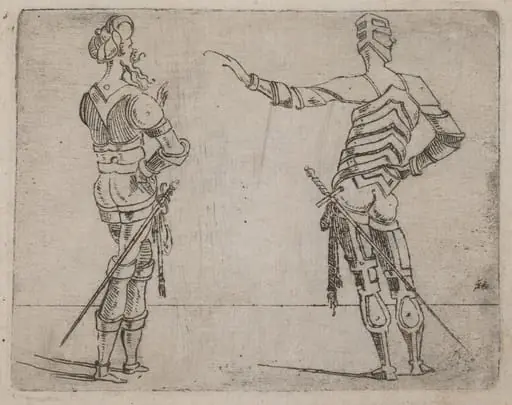
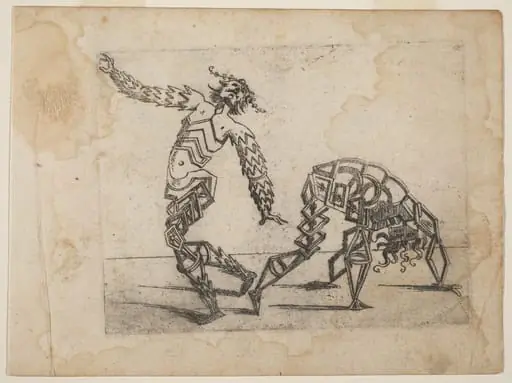
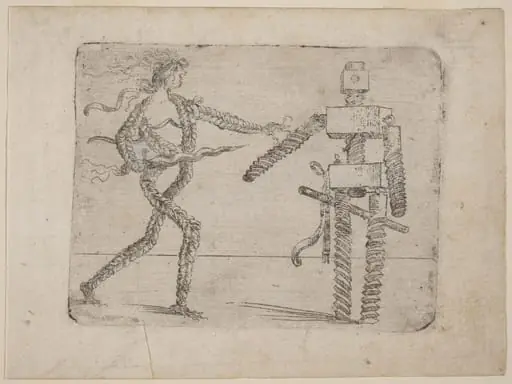
From "Bizzarie di varie Figure" is an ink print by the Baroque artist Giovanni Battista Bracelli. It dates from 1624 and is held in the collection of the National Gallery of Art.
About this work
Overview
Giovanni Battista Bracelli, active in central Italy from around 1616 to 1649, produced a series of etchings titled 'Bizzarie di varie Figure' in 1624.
Giovanni Battista Bracelli, active in central Italy from around 1616 to 1649, produced a series of etchings titled 'Bizzarie di varie Figure' in 1624. These prints feature exaggerated, hybrid figures that defy natural anatomy, showcasing his technical command of the etching needle. The work emerged from his training in Genoa and later engagement with Florentine artistic circles, reflecting a fascination with the grotesque and the inventive.
Subject & Meaning
The figures in this etching are elongated and contorted, combining human limbs with improbable, almost mechanical articulations. Rather than depicting narrative or religious themes, the composition functions as a display of imaginative form—exploring the limits of bodily possibility. These distortions may reflect contemporary interests in Mannerist exaggeration and the playful subversion of classical ideals.
Technique & Style
Bracelli employed etching to create fine, intricate lines scratched into a metal plate, which were then inked and pressed onto paper. His style emphasizes fluid, continuous contours and delicate cross-hatching to suggest volume and movement. The precision of his line work reveals mastery over the medium, prioritizing visual ingenuity over realism, and demonstrating the printmaker’s ability to manipulate form through controlled incision.
History & Provenance
Bracelli trained under Giovanni Battista Paggi in Genoa, where he assisted in ecclesiastical decoration projects before moving to Florence. His 'Bizzarie' series was likely produced during this transitional phase, serving as independent artistic experiments rather than commissioned works. The prints circulated among collectors and artists, though few original impressions survive today, with holdings at institutions like the National Gallery of Art in Washington.
Context
In early 17th-century Italy, printmakers increasingly turned to fantastical subjects as a means of demonstrating technical virtuosity and intellectual play. Bracelli’s figures align with broader trends in Mannerist and early Baroque visual culture, where curiosity about the unnatural and the inventive flourished. His work stands apart from religious or mythological print cycles, offering instead a private, exploratory vision of form.
Legacy
Bracelli’s 'Bizzarie' series did not establish a direct school but contributed to the tradition of inventive printmaking in early Baroque Italy. His emphasis on bodily distortion and technical precision influenced later artists interested in the expressive potential of etching. Though less widely known than contemporaries, his prints remain notable for their eccentricity and the quiet confidence of their execution.
Artist & collection

Artist
Giovanni Battista Bracelli or Braccelli is the name of more than one engraver and painter active in central Italy in the Baroque period, between about 1616 and 1649.

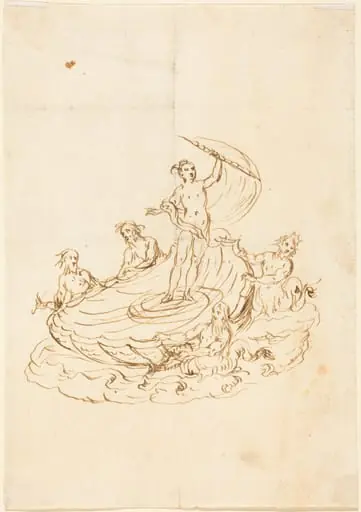 A Design for a Saltcellar
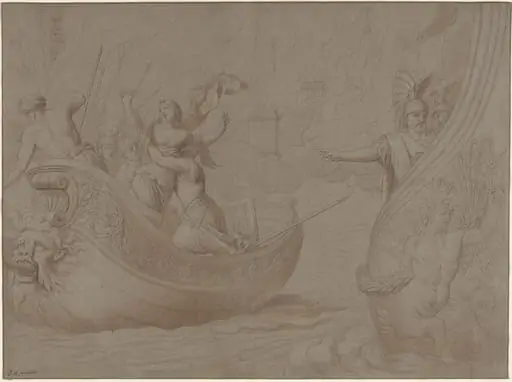 The Abduction of Helen of Troy
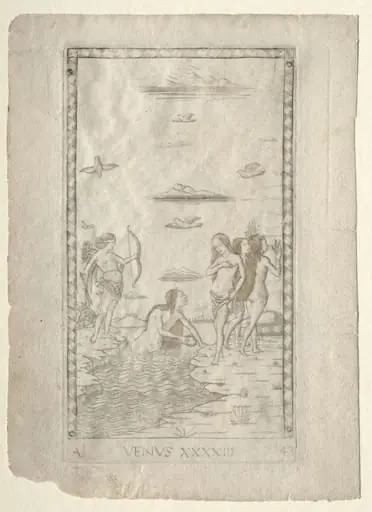 Venus (from the Tarocchi, series A: Firmaments of the Universe, #43)
 The Triumph of Venus
 The Float of the Sun
 The Personification of Amsterdam Riding in Neptune's Chariot
 The Triumph of Galatea
 The Float of Mount Parnassus
 From the Apocalypse
 From "Bizzarie di varie Figure"