Artwork
The Float of Mount Parnassus
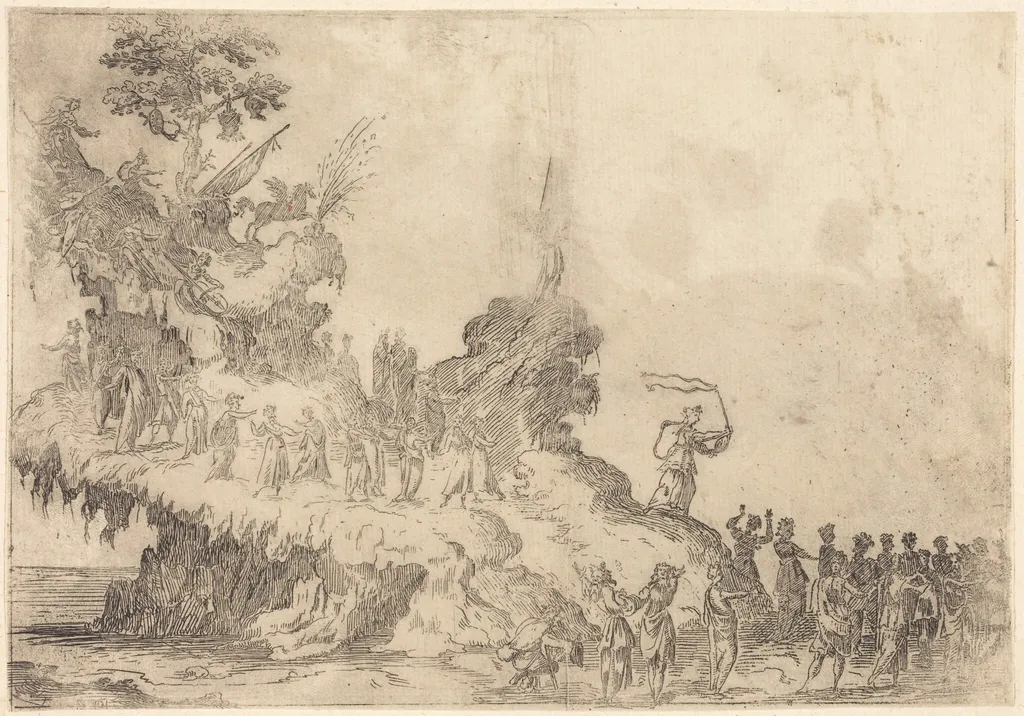
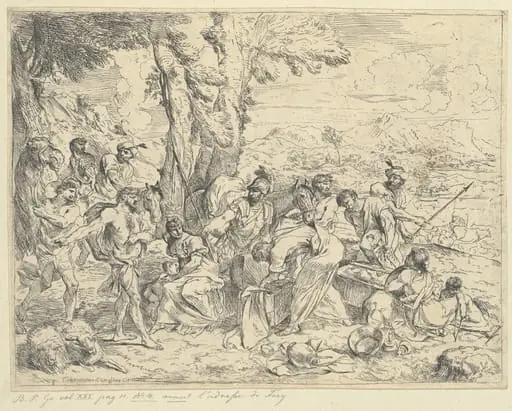
The Float of Mount Parnassus is an ink print by the Baroque artist French 17th Century. It dates from 1616 and is held in the collection of the National Gallery of Art. This etching depicts a mythological scene centered on Mount Parnassus, rendered in fine, dynamic lines on laid paper.
About this work
Overview
The use of swirling, energetic strokes conveys motion and turbulence, transforming the print into a narrative landscape rather than a static view.
This etching depicts a mythological scene centered on Mount Parnassus, rendered in fine, dynamic lines on laid paper. The composition divides into two distinct zones: a terrestrial group on the left shore and a floating mass of figures on the right. The use of swirling, energetic strokes conveys motion and turbulence, transforming the print into a narrative landscape rather than a static view. The medium allows for intricate detail and expressive texture, characteristic of early modern printmaking techniques.
Subject & Meaning
The scene alludes to the mythological association of Mount Parnassus with Apollo and the Muses, where poets and musicians gathered in divine inspiration. The flute player among the floating figures suggests musical celebration, while the shore-bound group may represent observers or pilgrims. The churning water and unstable rock imply a liminal space between earth and the divine, reinforcing the theme of artistic transcendence through movement and fluidity.
Technique & Style
The artist employed etching to achieve sharp, fluid lines that capture motion and texture with precision. The dense, overlapping strokes create a sense of agitation in the water and a crowded, animated composition on the floating rock. The contrast between the solid shore and the drifting island enhances visual tension. The technique’s capacity for fine detail allows each figure to be individually suggested, contributing to the scene’s lively, almost theatrical quality.
History & Provenance
The print originates from a series of mythological subjects popular in 17th-century Northern Europe, often circulated among collectors and artists. Its paper type and line quality align with workshop practices of the period, though the specific artist remains unattributed. Early ownership records are sparse, but its preservation in institutional collections suggests it was valued for its technical finesse and thematic richness within its time.
Context
This work reflects the Renaissance revival of classical themes in visual art, particularly in regions where print culture flourished. Artists used etching to explore mythological narratives with both scholarly intent and imaginative freedom. The emphasis on movement and group dynamics mirrors contemporary literary depictions of Parnassus as a site of poetic communion, bridging visual and textual traditions of the era.
Legacy
Though not widely reproduced in later centuries, the print exemplifies the expressive potential of etching in conveying narrative and emotion through line alone. Its composition influenced later depictions of mythological gatherings in print, particularly in how movement and spatial ambiguity were used to suggest divine presence. It remains a quiet but significant example of early modern printmaking’s capacity for storytelling.
Artist & collection

Artist
Seventeenth-century French printmakers turned ink into story. Their tools were burin and acid, paper their stage. Look at the Beggar Woman with Rosary (1622), etched on laid paper, her hands folded around faith, or The…

![The Temptation of Saint Anthony [first version], by Jacques Callot](https://artifactworldgallery.com/img/jacques-callot--the-temptation-of-saint-anthony-first-version--602de3bc7b235261-w320.webp)