Artwork
Charles Meryon
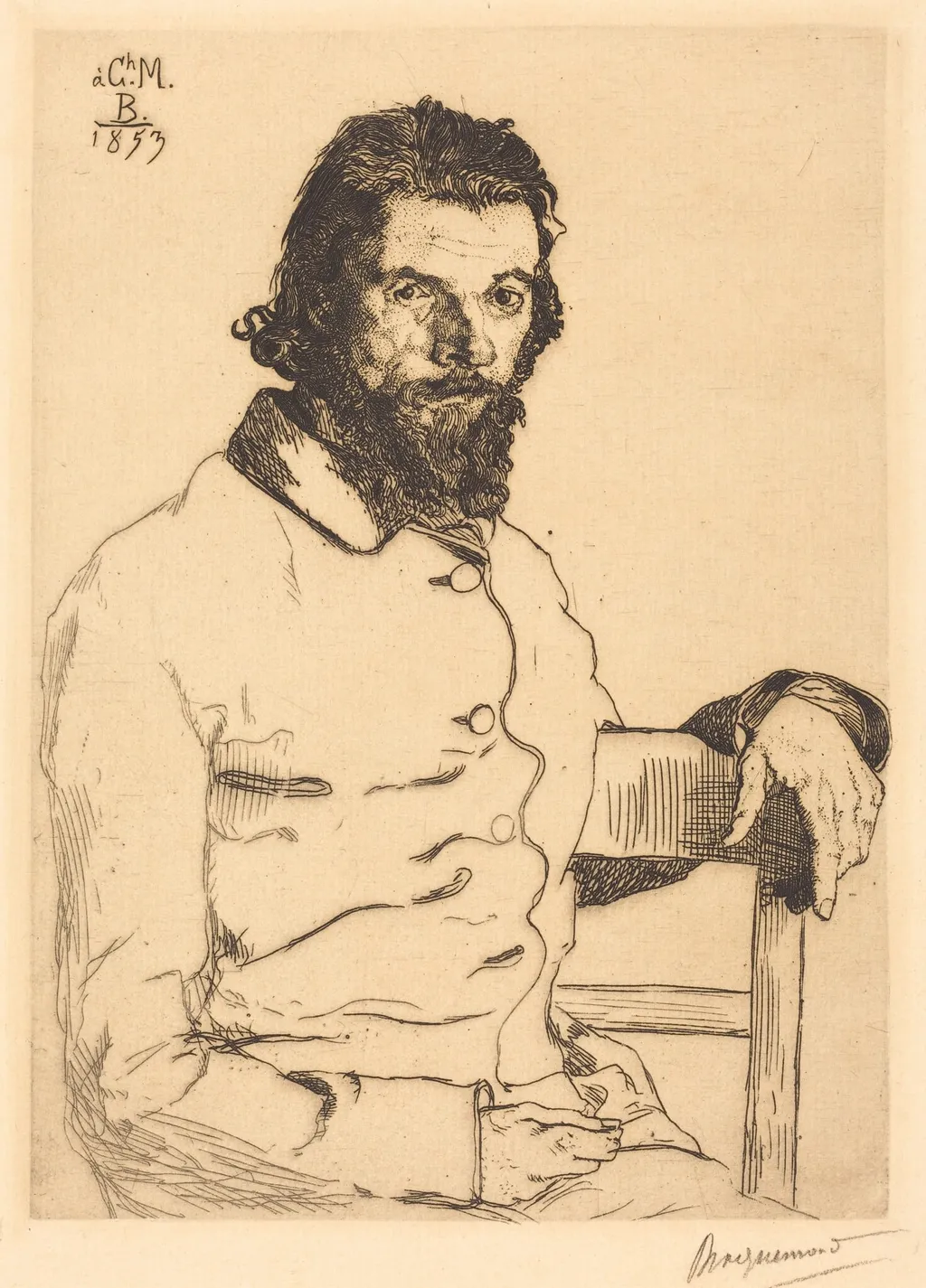
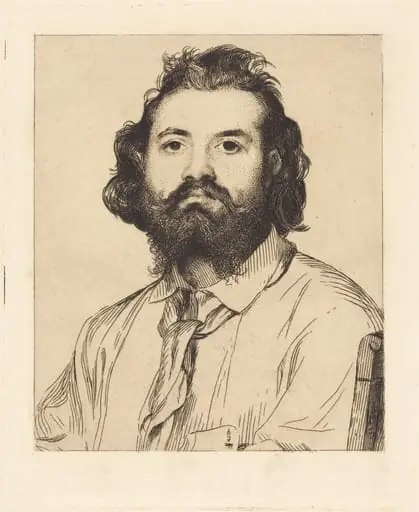
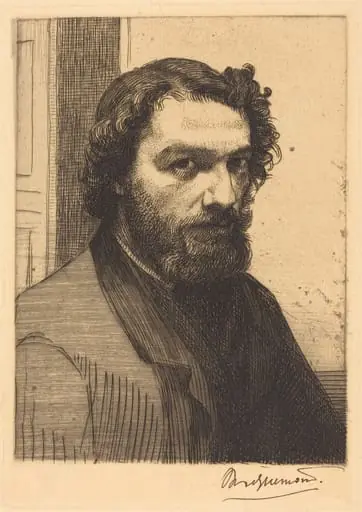
Charles Meryon is a print by the Impressionist artist Félix Bracquemond. It dates from 1853 and is held in the collection of the National Gallery of Art.
About this work
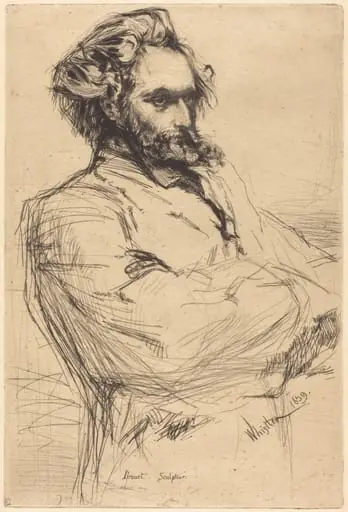
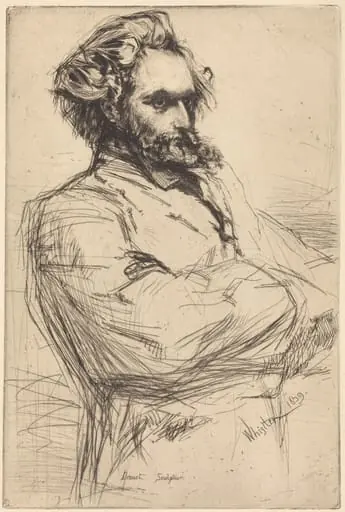
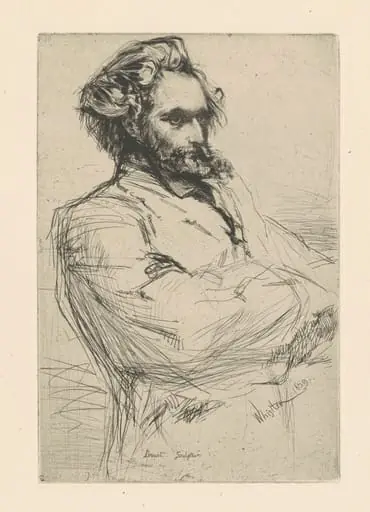
This sketch shows a bearded man sitting with one arm resting on a chair. His shirt is loose, and he looks directly at you. The lines are rough and dark, leaving some areas blank.
The artist signed the bottom right corner and dated it 1853. This style uses sharp contrasts between light and dark.
Check out Bracquemond, Félix for more works like this.
Overview
Félix Henri Bracquemond created this heliogravure in 1853, portraying the French printmaker Charles Meryon. Executed on laid paper, the work is a portrait in monochrome, emphasizing tonal contrast through bold, expressive lines. Bracquemond, known for his engagement with printmaking revival, used the heliogravure process to capture Meryon’s likeness with a direct, unidealized approach.
Subject & Meaning
The portrait depicts Charles Meryon, a noted engraver of Parisian architecture, seated and gazing outward with quiet intensity. His loose shirt and beard suggest an informal, contemplative state, aligning with his reputation as a solitary, introspective artist. The direct eye contact invites a sense of personal presence, framing Meryon not as a public figure but as a maker absorbed in his craft.
Technique & Style
Bracquemond employed heliogravure, a photomechanical process that allowed for rich tonal gradations. The image relies on stark contrasts between deep blacks and untouched paper, with rough, deliberate strokes defining form. Areas of blank paper serve as highlights, enhancing the sculptural quality of the face and hands, while the background remains void, focusing attention on the subject.
History & Provenance
Created in 1853, the portrait emerged during a period when Bracquemond was deeply involved in redefining printmaking in France. It was made shortly before his broader engagement with Japanese aesthetics and his marriage to Marie Bracquemond. The work reflects his early commitment to capturing the essence of fellow artists through print, a practice that would influence later generations.
Context
In mid-19th century Paris, printmaking was undergoing renewal as artists sought alternatives to academic painting. Meryon’s atmospheric etchings of the city had already established him as a distinctive voice. Bracquemond’s portrait situates him within this circle of printmakers, honoring his quiet influence while aligning with broader efforts to elevate graphic arts as a serious medium.
Legacy
This portrait remains a significant example of Bracquemond’s early printmaking, illustrating his ability to convey character through minimal means. Though less known than his later decorative work, it contributed to the growing recognition of portraiture in print. The image endures as a testament to the mutual respect among artists engaged in the revival of graphic arts during the 1850s.
Artist & collection

Artist
Félix Henri Bracquemond (French pronunciation: ; 22 May 1833 – 29 October 1914) was a French painter, etcher, and printmaker.