Artwork
Blumenstraussmädchen (Flower Seller)
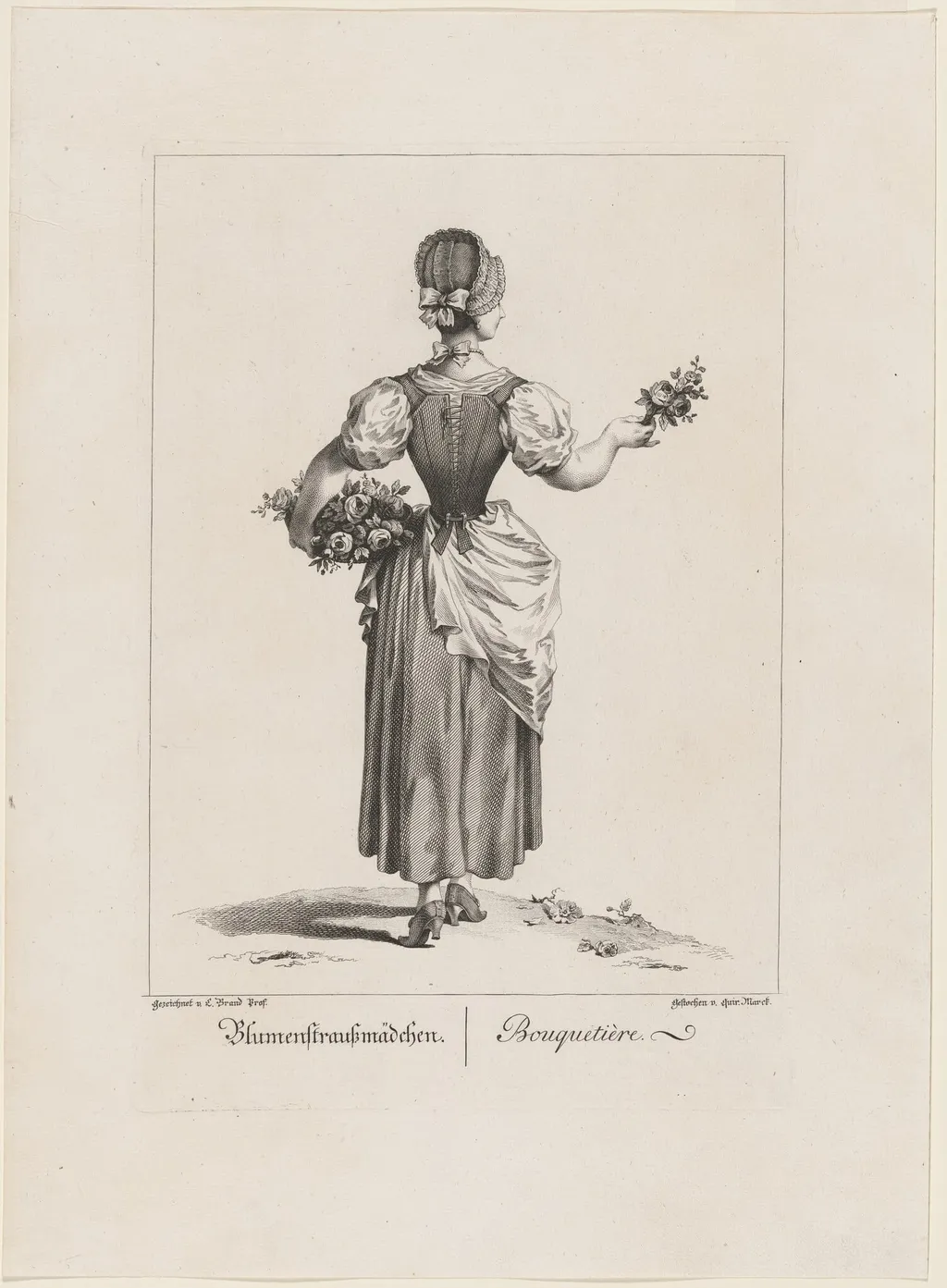
Blumenstraussmädchen (Flower Seller) is an ink print by the Romanticist artist Quirin Mark. It dates from 1775 and is held in the collection of the National Gallery of Art.
About this work
Overview
Created in 1775, this black‑and‑white engraving by Quirin Mark portrays a young woman engaged in the trade of selling flowers. The image is executed on laid paper, a common support for prints of the period, and is signed with the descriptive title that identifies the figure as a flower seller.
Subject & Meaning
The central figure is dressed in a period costume with puffed sleeves, a high neckline, and an elaborate coiffure accented by ribbons. She balances a large bouquet in one hand while holding a single blossom in the other, emphasizing both the abundance of her wares and the intimate gesture of offering a flower.
Technique & Style
Mark employs fine, closely spaced lines to render the texture of the fabric and the delicate structure of the flowers. The engraving demonstrates the artist’s control of line work to suggest volume and surface detail, typical of late‑Baroque printmaking practices.
History & Provenance
The print originates from the late eighteenth‑century German market for affordable artworks, where engravings served both decorative and instructional purposes. It has been catalogued in several collections of German prints, though specific ownership records prior to the nineteenth century remain sparse.
Context
During the 1770s, depictions of everyday laborers, especially women in domestic or market roles, were popular in print media, reflecting Enlightenment interests in genre scenes and the lives of ordinary people. This work aligns with that trend, offering a glimpse into the visual culture surrounding street commerce.
Artist & collection

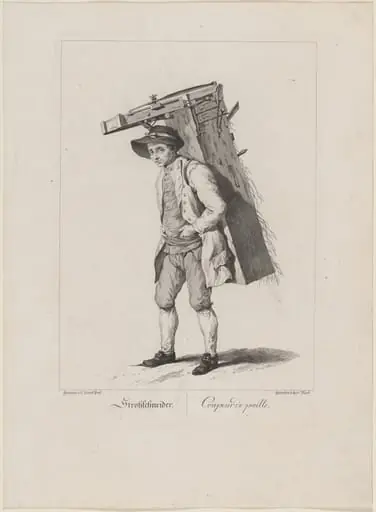 Strohschneider (Straw Cutter)
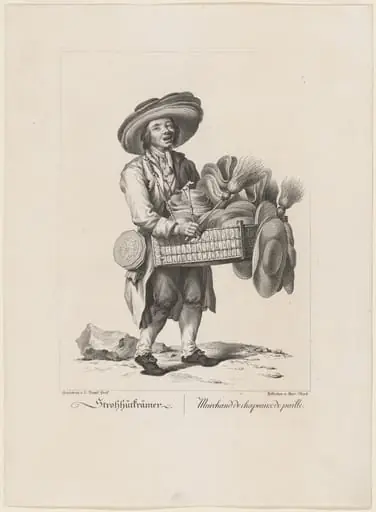 Strohhütkrämer (Straw Hat Seller)
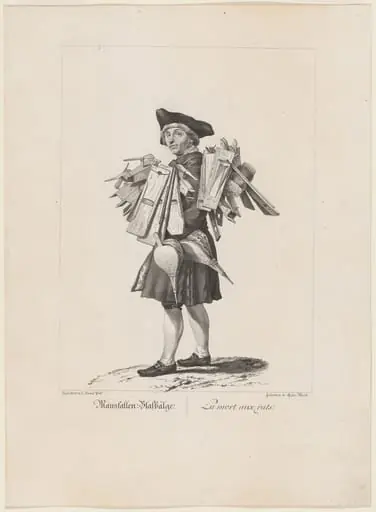 Mausfallen! Blasbälge! (Death to Mice)
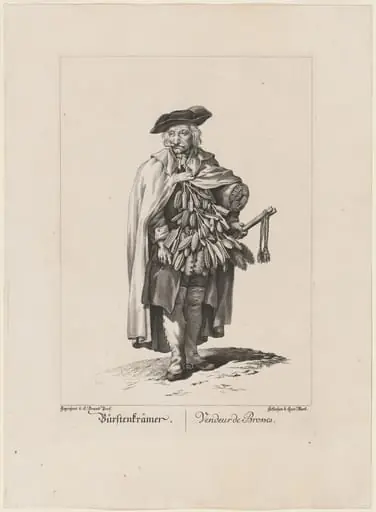 Bürstenkrämer/Vendeur de Brosses (Brush Seller)
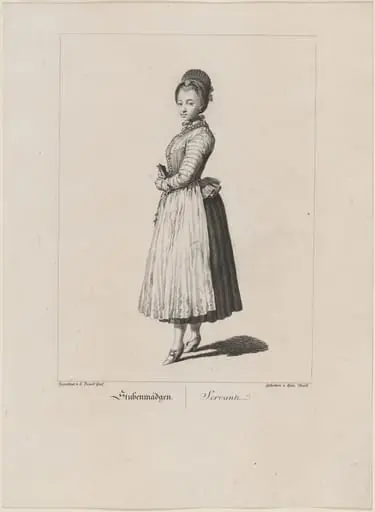 Stubenmädgen (Servant Girl)
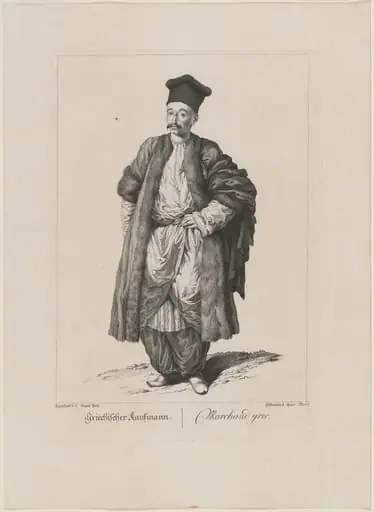 Griechischer Kaufman (Greek Merchant)
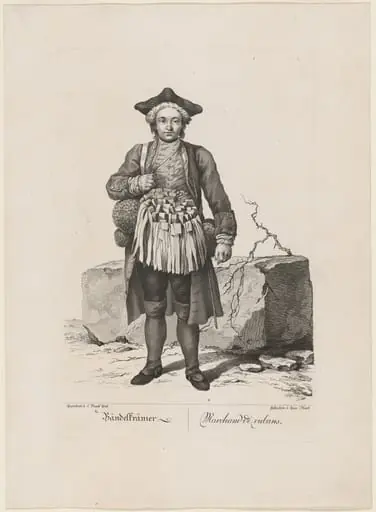 Bändelkrämer (Ribbon Seller)
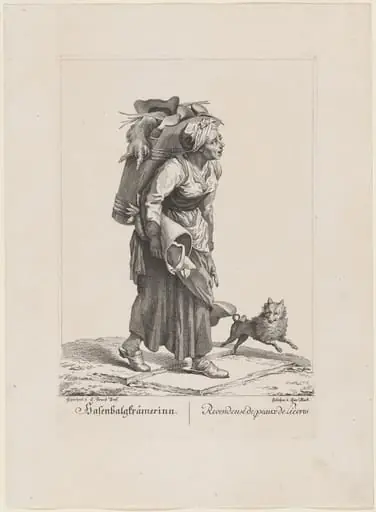 Hasenbalgkrämerinn/Revendeuse de peaux de Lièvres (Seller of Hares' Skins)
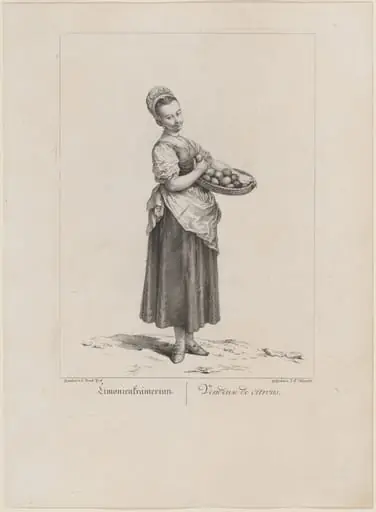 Limonienkrämerinn (Lemon Seller)
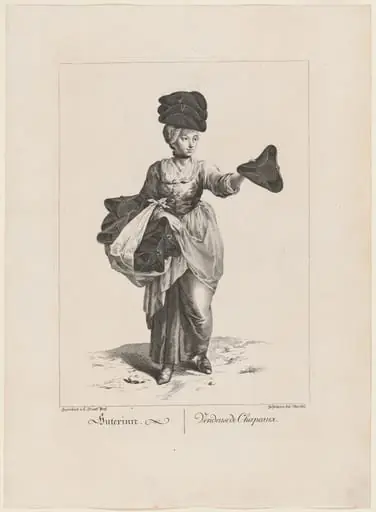 Huterinn/Vendeuse de Chapeaux. (Hat Seller)
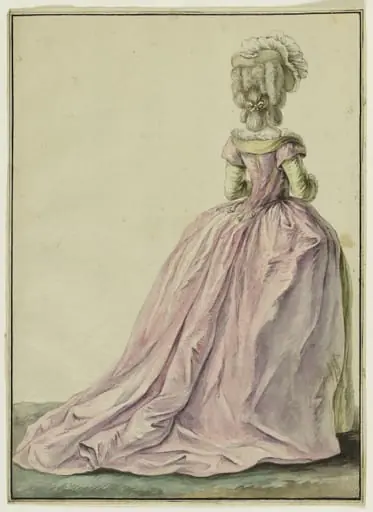 Robe dite à la turque
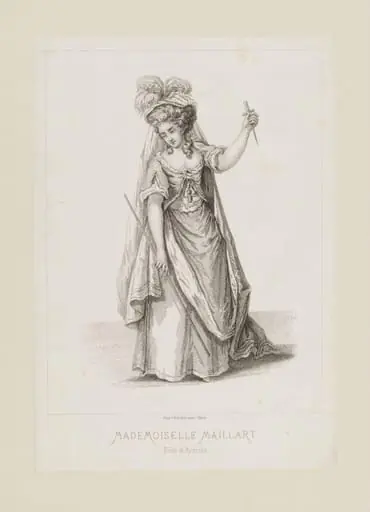 H Beard Print Collection
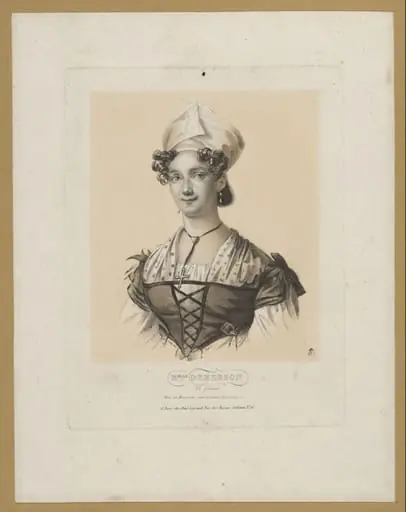 H Beard Print Collection
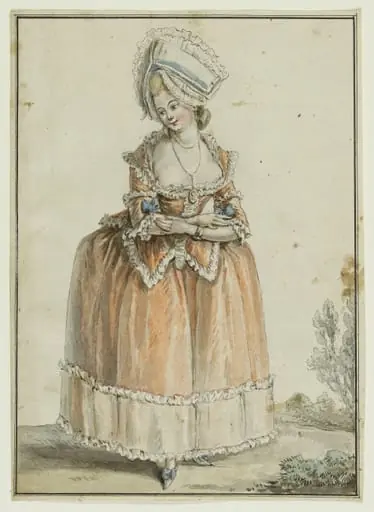 Jeune femme
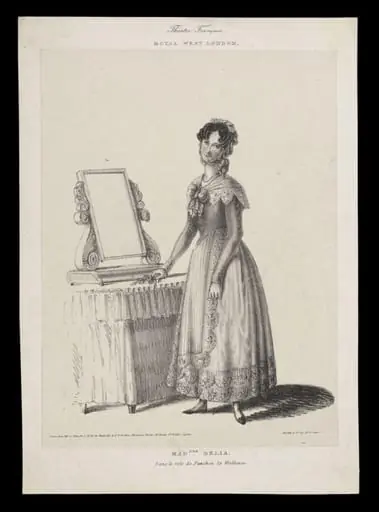 H Beard Print Collection
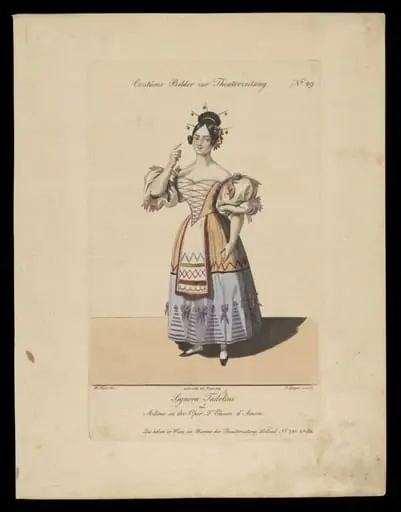 H Beard Print Collection
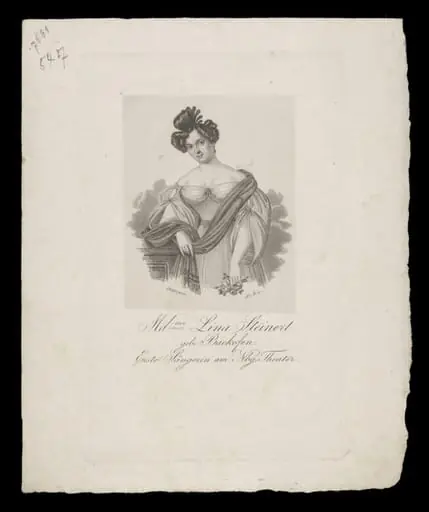 H Beard Print Collection
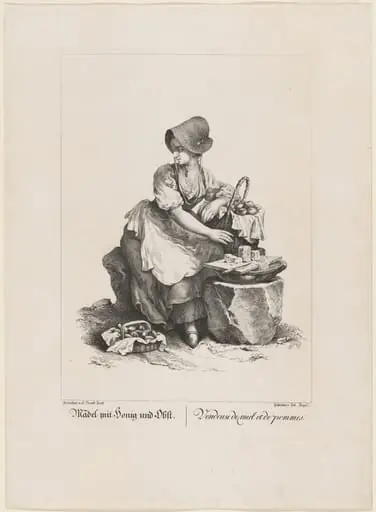 Mädel mit Honig und Obst (Girl Selling Honey and Fruit)
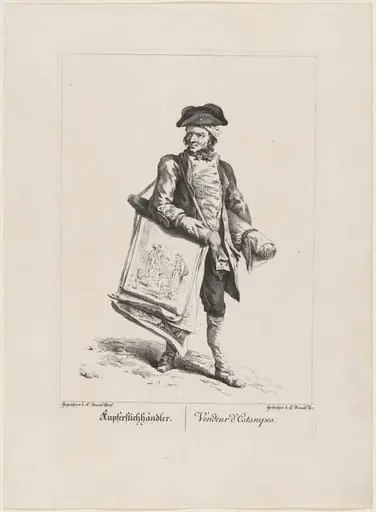 Kupferstichhändler (Print Seller)