Artwork
Building the Victoria and Albert Museum
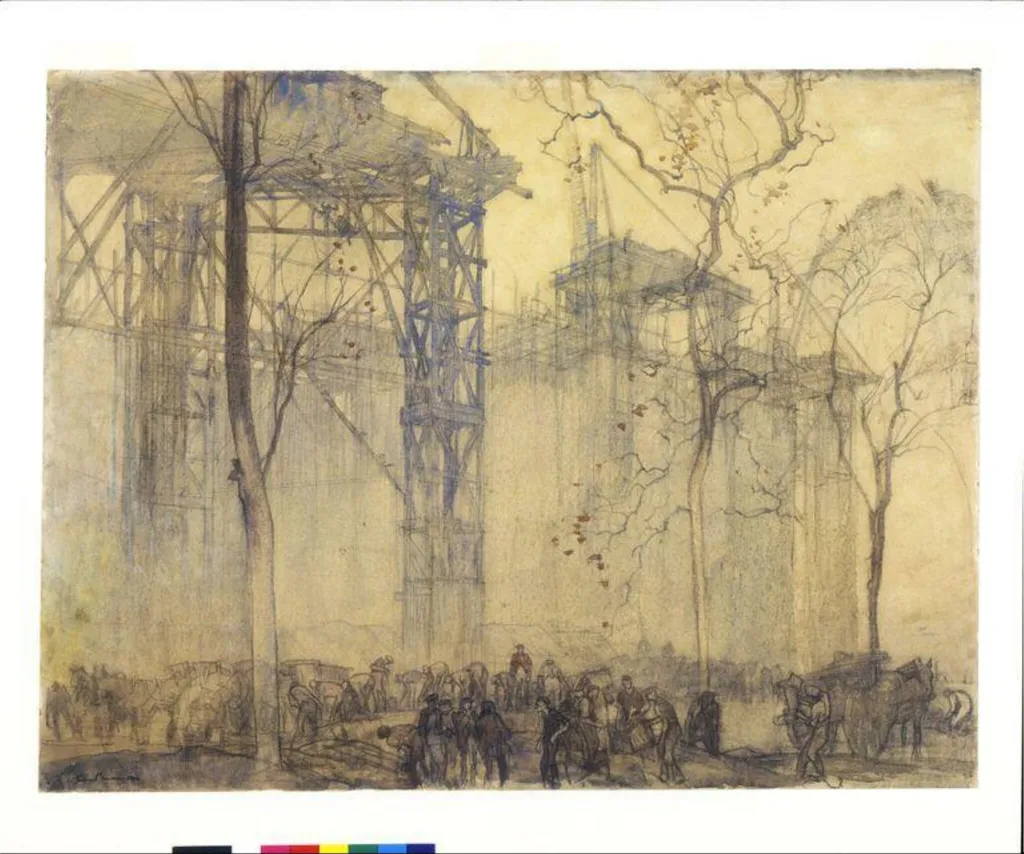
Building the Victoria and Albert Museum is a watercolor work on paper by the Post-Impressionist artist Frank Brangwyn. It dates from 1904 and is held in the collection of the Victoria and Albert Museum.
About this work
Overview
The scene is rendered with swift, fluid brushwork and restrained pigments—browns, pale yellows, and soft blues—conveying the transient nature of the site.
Frank Brangwyn’s 1904 watercolour captures the Victoria and Albert Museum during its construction phase, focusing on the southern elevation as it rose along Brompton Road. The scene is rendered with swift, fluid brushwork and restrained pigments—browns, pale yellows, and soft blues—conveying the transient nature of the site. Rather than idealizing the architecture, Brangwyn emphasizes the raw, active process of its assembly.
Subject & Meaning
The painting portrays a working construction site teeming with labor: horses pulling carts, workers moving materials, and tangled ropes crisscrossing the frame. The half-built stone structure, surrounded by skeletal scaffolding, stands as a monument in progress. Bare winter trees in the background offer a quiet, natural counterpoint to the human effort, suggesting the intersection of industry and the seasons.
Technique & Style
Brangwyn employed loose, gestural lines and thin washes to evoke movement and immediacy. The watercolour medium allowed for rapid execution, capturing the fleeting energy of the site without fine detail. Shadows and highlights are suggested rather than modeled, creating a sense of atmosphere rather than precision. The palette remains muted, reinforcing the unvarnished reality of the scene.
History & Provenance
Created in 1904, the work documents a pivotal moment in the museum’s expansion under the direction of Sir Aston Webb. Brangwyn, commissioned to record architectural progress, produced this piece as part of a broader effort to chronicle the institution’s growth. The watercolour remained in the artist’s possession until its eventual acquisition by the V&A itself, grounding it in the very history it depicts.
Context
At the turn of the 20th century, London’s public institutions were undergoing significant physical expansion, reflecting broader cultural ambitions. Brangwyn’s depiction aligns with a growing interest in documenting industrial and civic labor—not as finished monuments, but as living processes. The painting stands apart from traditional architectural renderings by prioritizing motion and human presence over static grandeur.
Legacy
The watercolour endures as a record of the museum’s evolving identity, offering insight into the labor behind its physical form. Unlike celebratory depictions of completed buildings, Brangwyn’s work preserves the transient, gritty reality of construction. It remains a valued artifact within the V&A’s collection, illustrating how institutions are built—not just designed.
Artist & collection
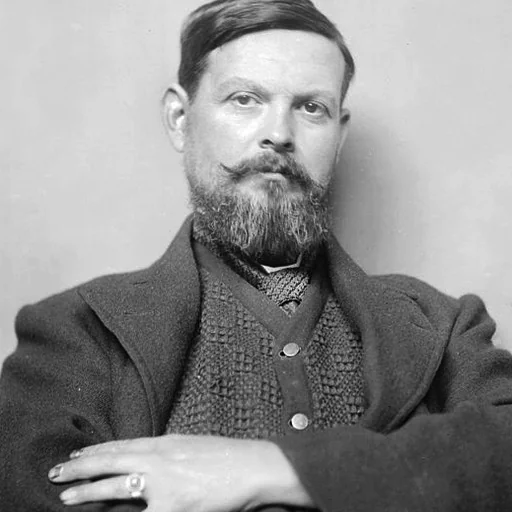
Artist
Sir Frank William Brangwyn (12 May 1867 – 11 June 1956) was a Welsh artist, painter, watercolourist, printmaker, illustrator and designer.

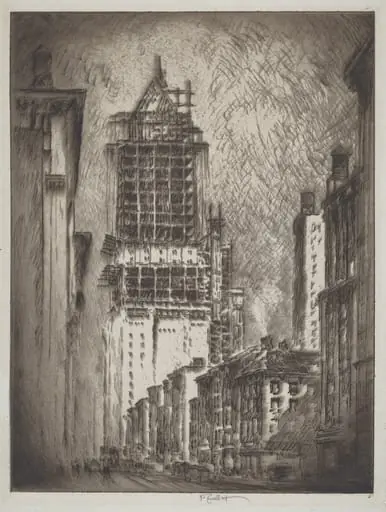 Lodgings for Gents
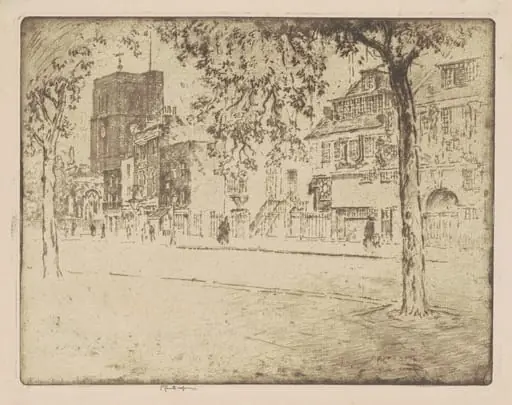 House Where Whistler Died
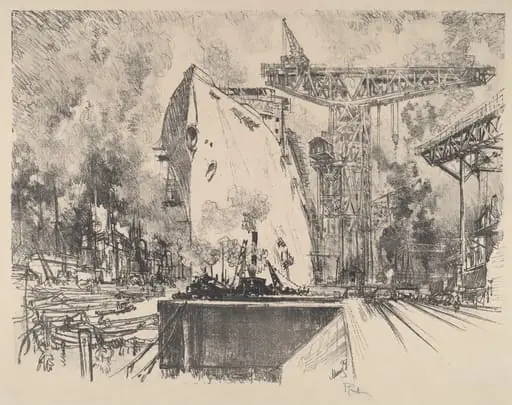 Building the Bismarck, Hamburg
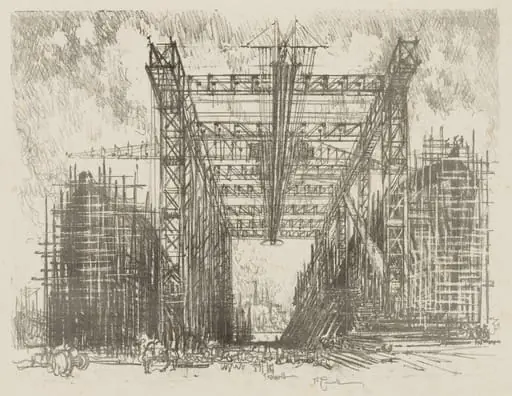 English War Work: The Gantry (A Merchant Shipyard)
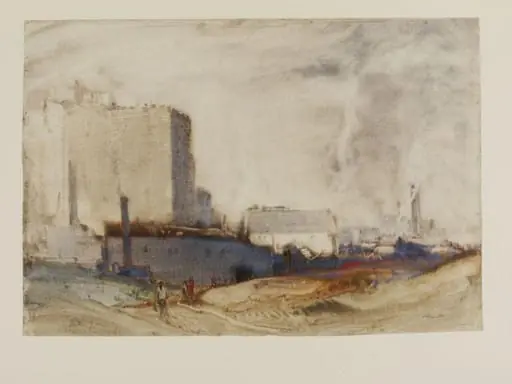 The White Factory
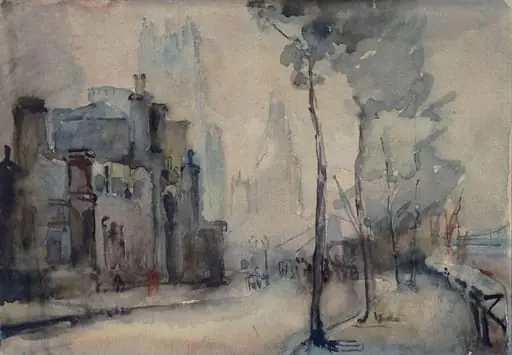 Westminster
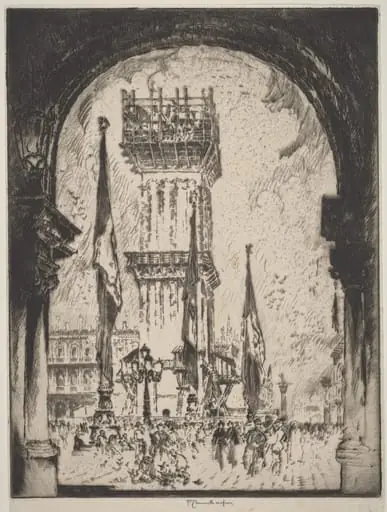 Rebuilding the Campanile, Venice, No.I
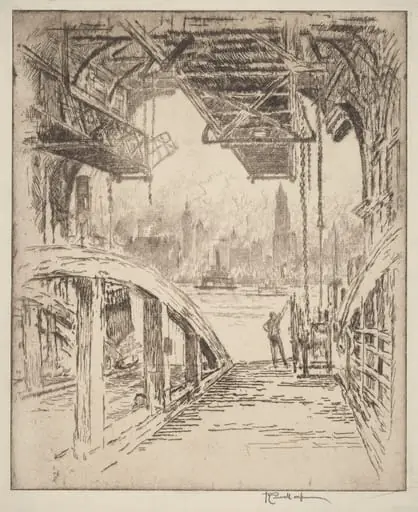 The Ferry House
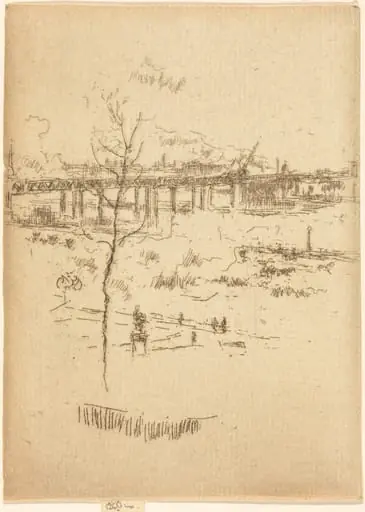 Charing Cross Railway-Bridge
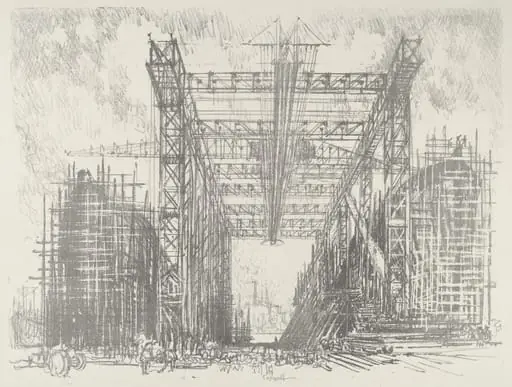 The Gantry
 Herodias: Page 19, The ramparts were thronged with people when Vitellius entered the castle gates
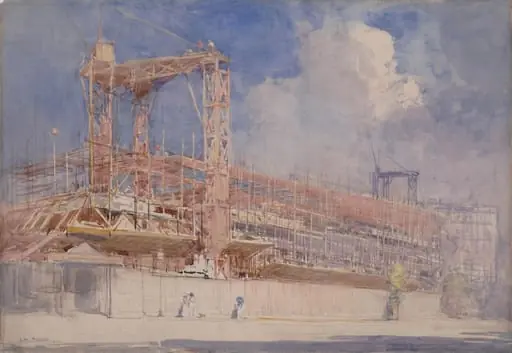 The west façade of the Victoria and Albert Museum, while under construction 1899-1906