Artwork
Venice
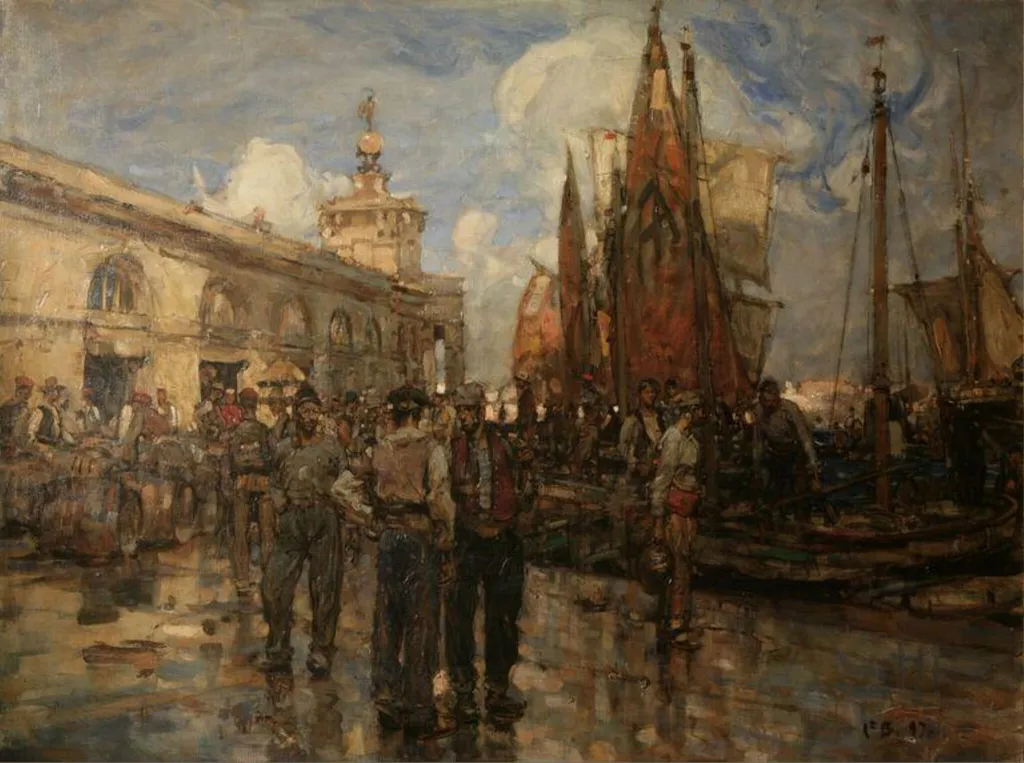
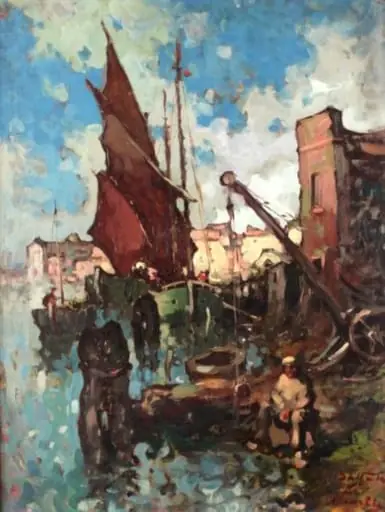
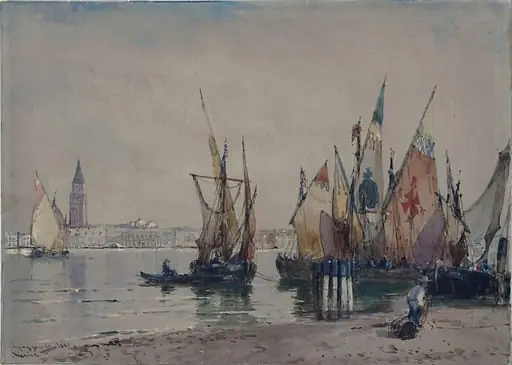
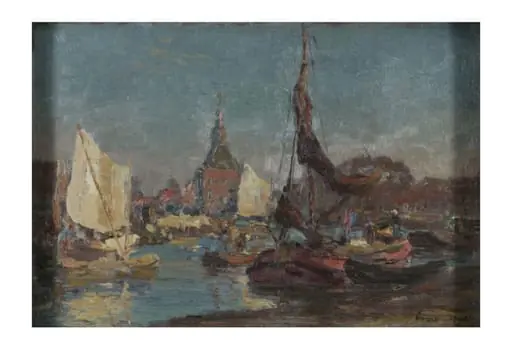
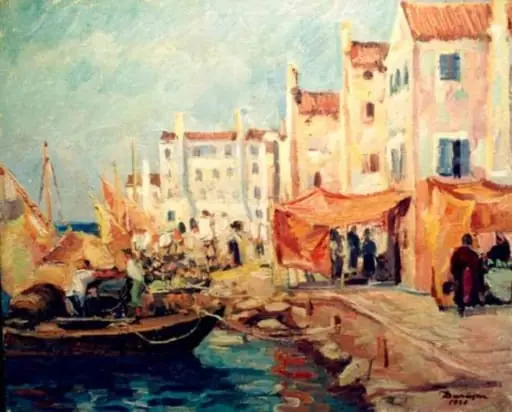
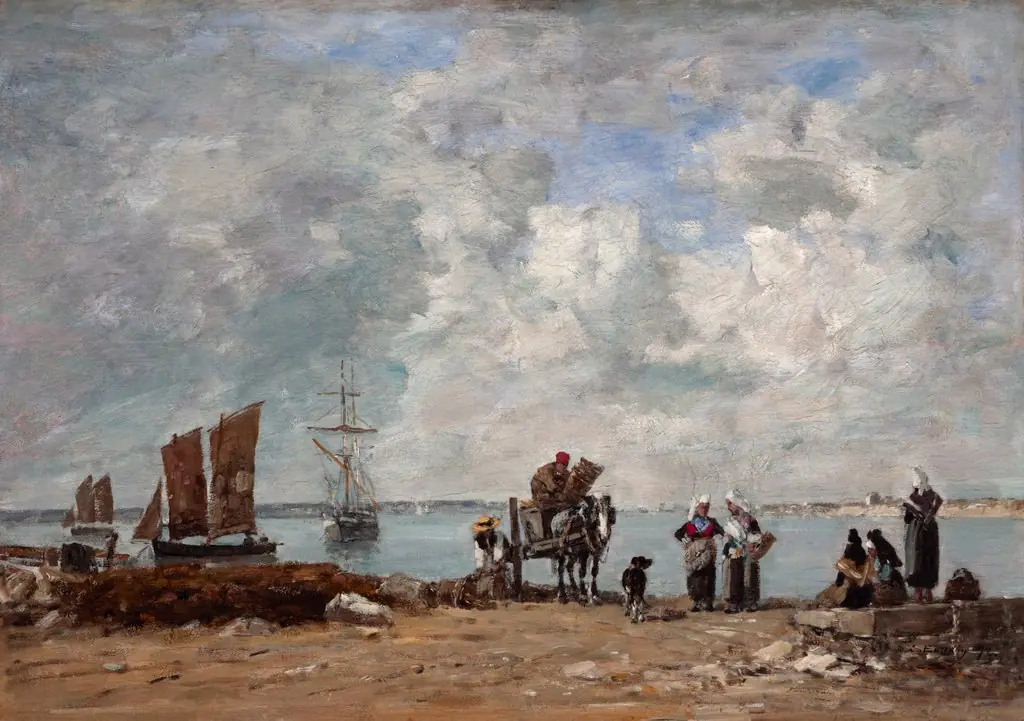
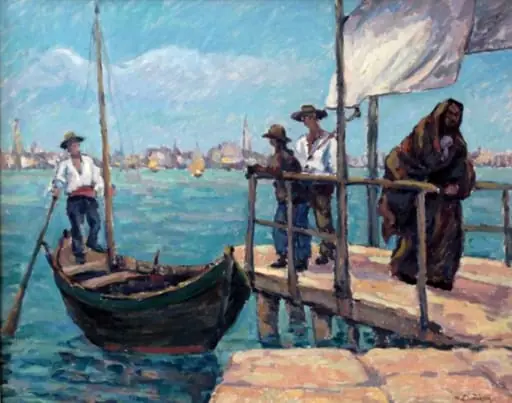
Venice is an oil painting by the Impressionist artist Frank Brangwyn. It dates from 1897 and is held in the collection of the Victoria and Albert Museum.
About this work
Overview
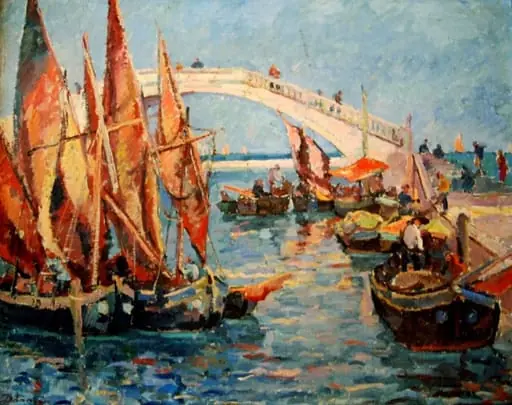
Frank Brangwyn painted Venice multiple times, drawn to its active waterfronts rather than its landmarks. This early work captures the Dogana da Mar, the historic customs house at the Grand Canal’s entrance, not as a monument but as a hub of labor. The scene is alive with motion, emphasizing the daily routines of dockworkers and sailors over postcard views.
Subject & Meaning
The painting centers on laborers and vessels engaged in routine tasks—loading, unloading, navigating—rather than aristocratic architecture or scenic vistas. Brangwyn’s focus on ordinary people at work reflects a deliberate rejection of romanticized tourism. The dignity of manual labor becomes the subject, grounding the city’s identity in its economic pulse rather than its ornamentation.
Technique & Style
Loose, energetic brushwork conveys the flicker of sunlight on water and the motion of figures. Pigment is applied with immediacy, suggesting direct observation from life. Colors remain unvarnished and bright, avoiding academic polish. The composition’s spontaneity evokes the rhythm of a working port, where form is suggested rather than meticulously defined.
History & Provenance
This painting dates from Brangwyn’s early engagement with Venice, likely created during one of his first visits in the 1890s. It remained in his personal collection for years before entering institutional hands. Its preservation reflects his enduring interest in the city’s working character, a theme he revisited across decades.
Context
In an era when Venetian views were dominated by luminous, tranquil scenes by Turner or Canaletto, Brangwyn’s focus on industry and labor stood apart. His approach aligned with broader late-19th-century shifts toward realism and social observation, rejecting idealized tourism in favor of unvarnished urban vitality.
Legacy
Brangwyn’s Venice paintings contributed to a broader redefinition of the city’s visual representation, shifting attention from spectacle to substance. His emphasis on labor and movement influenced later artists seeking to depict urban environments with authenticity. Many of these works are held in British collections, including the Victoria and Albert Museum.
Artist & collection
Artist
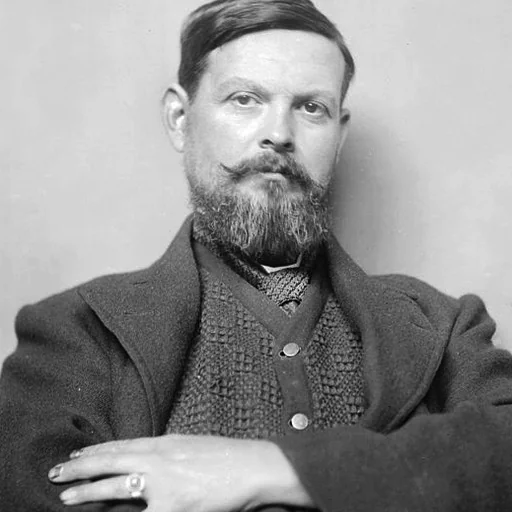
Sir Frank William Brangwyn (12 May 1867 – 11 June 1956) was a Welsh artist, painter, watercolourist, printmaker, illustrator and designer.