Artwork
Herodias: Page 19, The ramparts were thronged with people when Vitellius entered the castle gates
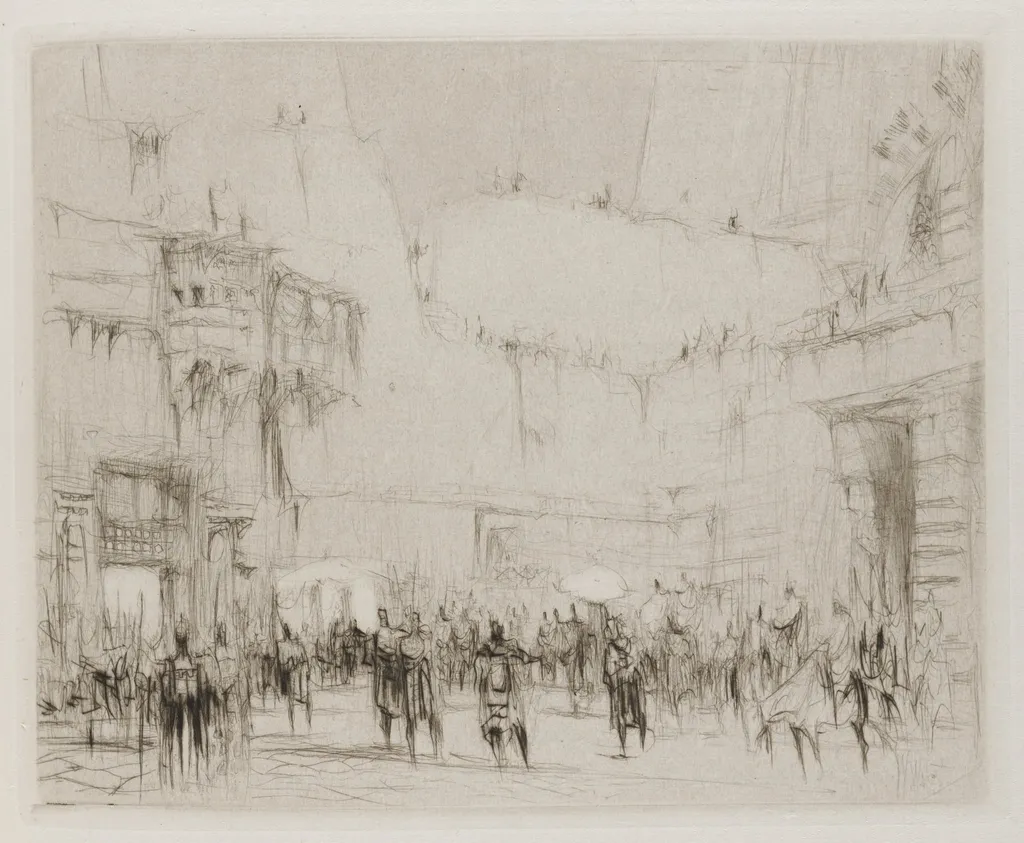
Herodias: Page 19, The ramparts were thronged with people when Vitellius entered the castle gates is a print by William Walcot. It dates from 1928 and is held in the collection of the Cleveland Museum of Art.
About this work
Overview
Created in 1928 by William Walcot, this ink sketch is part of a series illustrating biblical narratives.
Created in 1928 by William Walcot, this ink sketch is part of a series illustrating biblical narratives. Executed with rapid, fluid lines, it captures a moment of public gathering without detailed rendering. The work is held in the collection of The Cleveland Museum of Art and reflects Walcot’s interest in architectural settings and crowd dynamics, rendered with minimal detail and an emphasis on movement.
Subject & Meaning
The title references Herodias and the entry of Vitellius into a fortified castle, suggesting a scene from the historical or biblical narrative surrounding Herod’s court. However, the image does not depict specific figures or actions. Instead, it conveys the atmosphere of a crowd assembled before imposing walls, evoking tension and anticipation without literal storytelling.
Technique & Style
Walcot employed loose, gestural ink lines to suggest mass and structure, avoiding precise contours or facial features. The composition relies on overlapping shapes and varying line weight to imply depth and motion. Background areas remain largely blank, directing focus to the fragmented forms of the ramparts and scattered figures, creating a sense of immediacy and sketch-like spontaneity.
History & Provenance
The work was produced as part of a larger illustrated project, likely intended for publication. It entered The Cleveland Museum of Art’s collection as a study or preparatory drawing, valued for its expressive economy and connection to Walcot’s broader engagement with historical themes. Its status as a fragmentary work underscores its role in the artist’s process rather than as a finished piece.
Context
In the 1920s, Walcot was known for architectural illustrations and book engravings, often drawing from ancient and biblical sources. This sketch aligns with contemporary interest in narrative illustration that prioritized mood over realism. Its unfinished quality reflects a broader trend among illustrators who treated preparatory drawings as autonomous expressions of visual thought.
Legacy
Though not widely exhibited, the sketch contributes to understanding Walcot’s approach to historical illustration—emphasizing atmosphere and structure over detail. It remains a representative example of early 20th-century graphic interpretation of classical narratives, valued for its restraint and evocative simplicity rather than its finish.
Artist & collection

Artist
William Walcot RE was a Russian-Scottish architect, graphic artist and etcher, notable as a architect of refined Art Nouveau in Moscow, Russia.

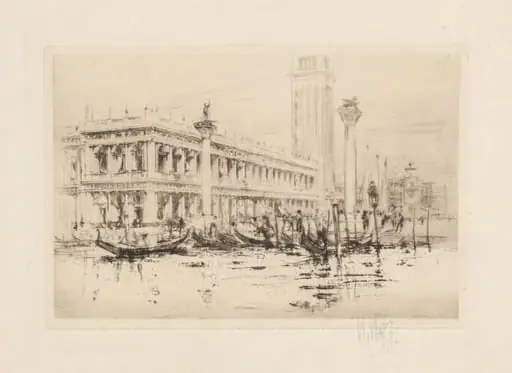 The Venice Set: The Library of St. Mark’s
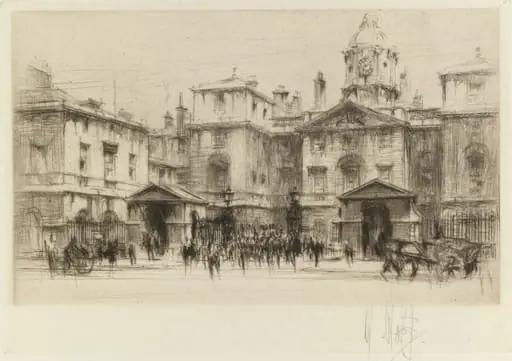 London Set: Horseguards
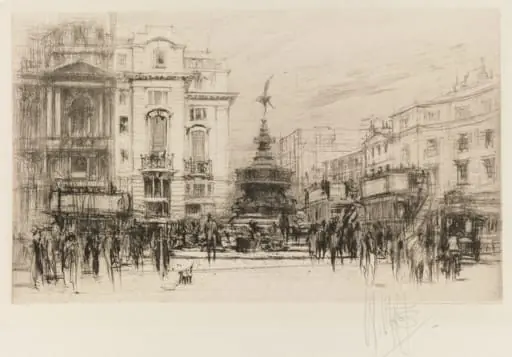 London Set: Piccadilly Circus (with Criterion Theatre)
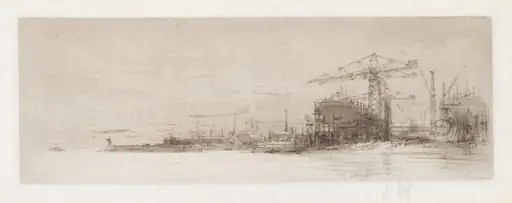 The Clyde from the series The Arteries of Great Britain
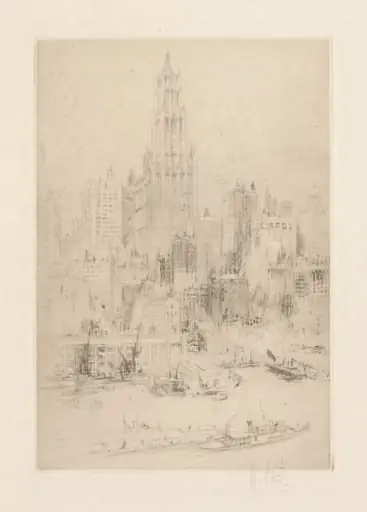 Downtown Manhattan from the East River, with the Woolworth Building
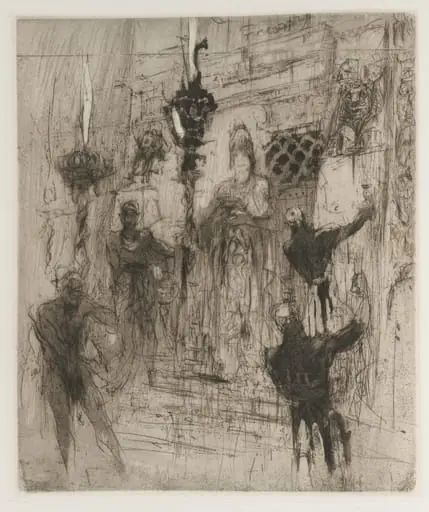 Herodias
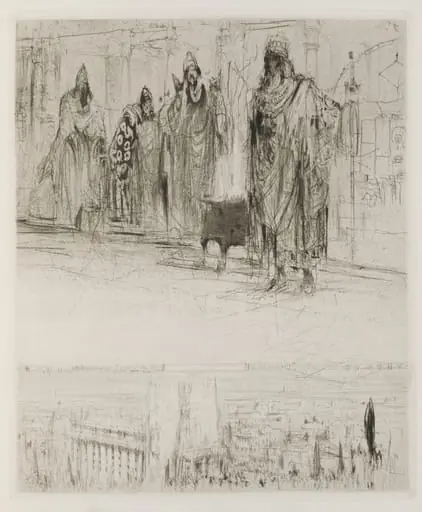 Herodias: Page 13, The tetrarch was awaited by several Galileans, the master of scribes, the chief of the land steward, the manager of the salt mines, and a Jew from Babylon commanding his troops on horse
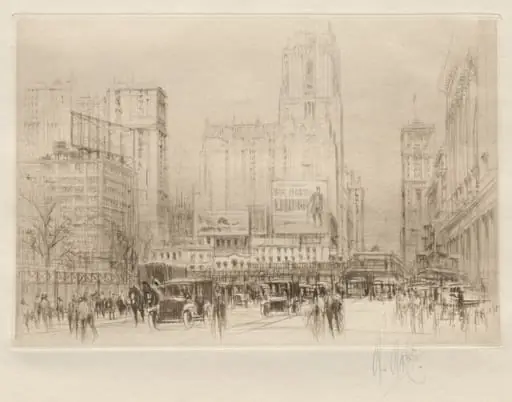 Forty-second Street NY
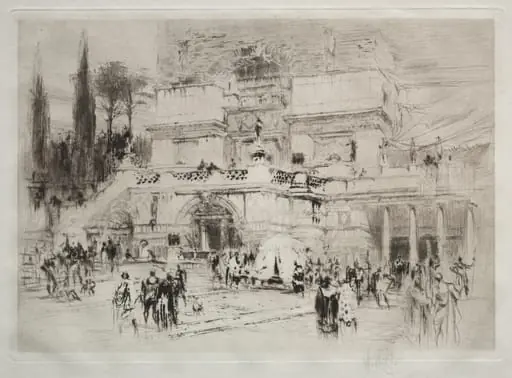 The Villa Quintillii
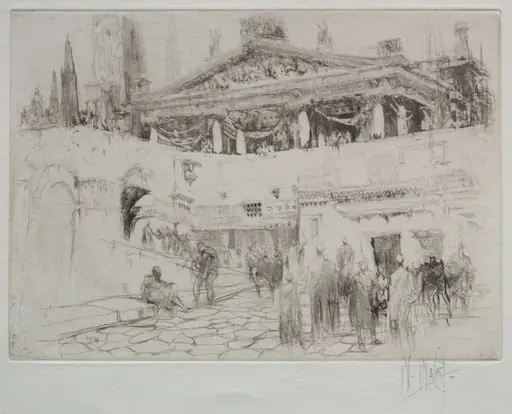 The First Wooden Temple of Jupiter
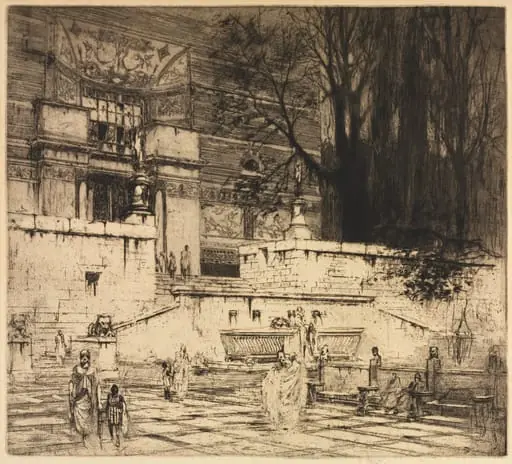 The Days of Ancient Rome: At the House of a Patrician
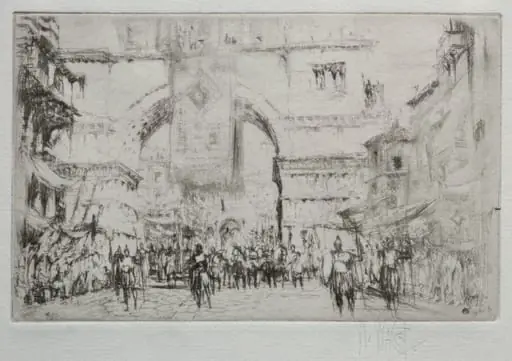 Hadrian Entering Salonica
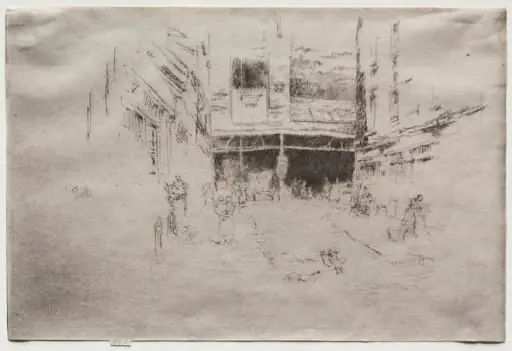 Clothes Exchange, No. 1
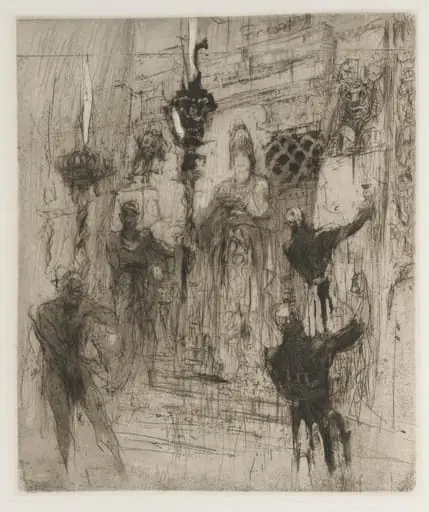 Herodias: Frontispiece, Herodias appeared, coiffed in an Assyrian mitre to which a chin strap was attached to the front
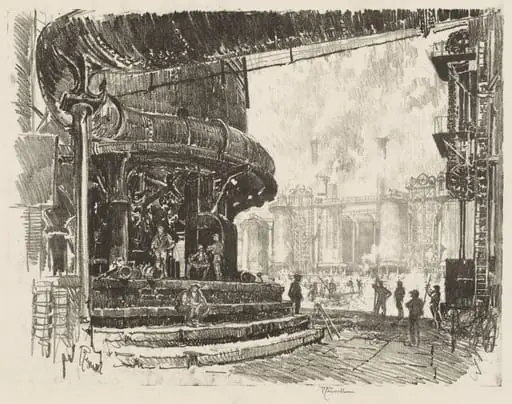 English War Work: Making Pig Iron, The Base of the Blast Furnaces
 Drawing
 Arco San Carlo, Naples