Artwork
Fantastic Heads
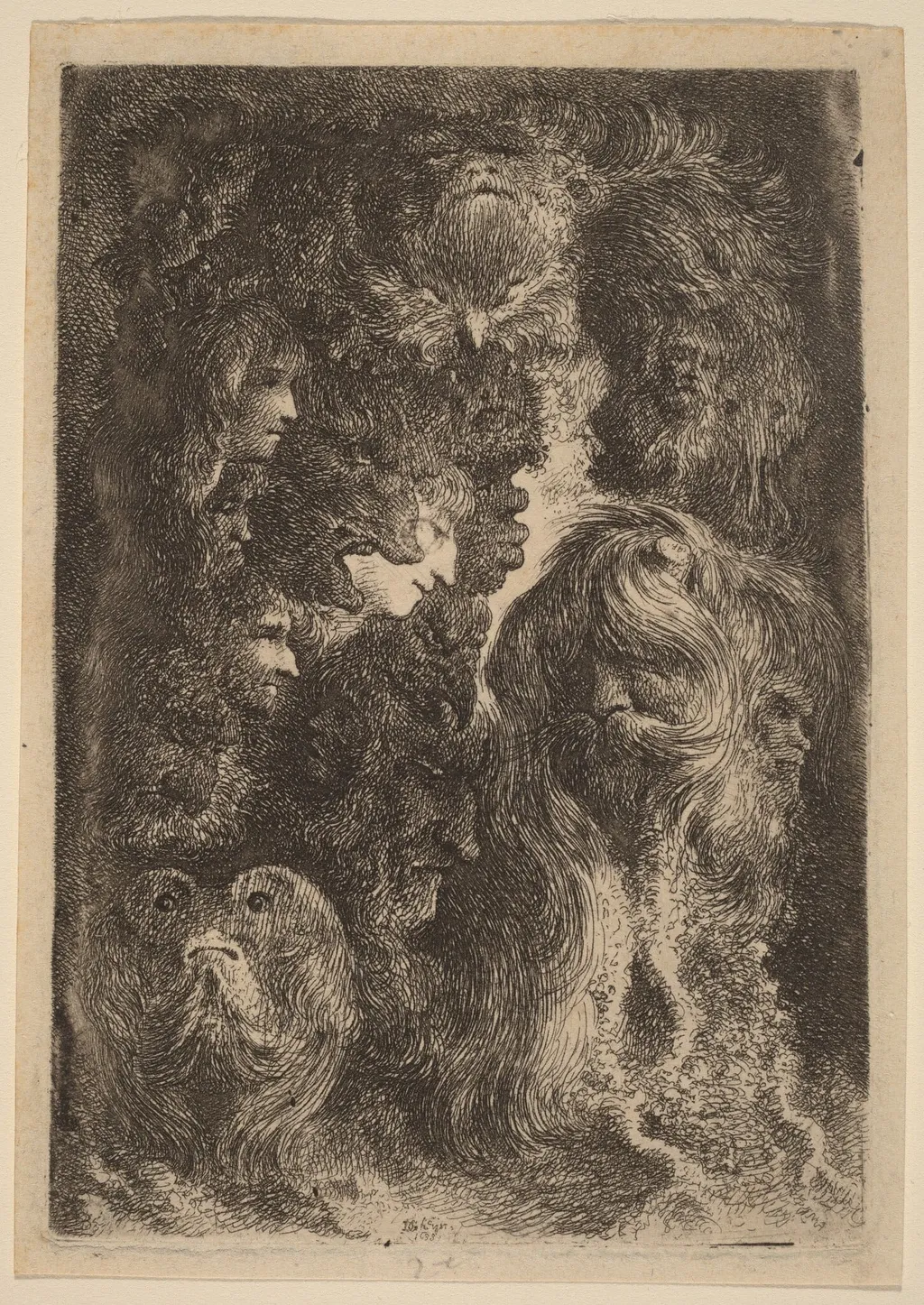
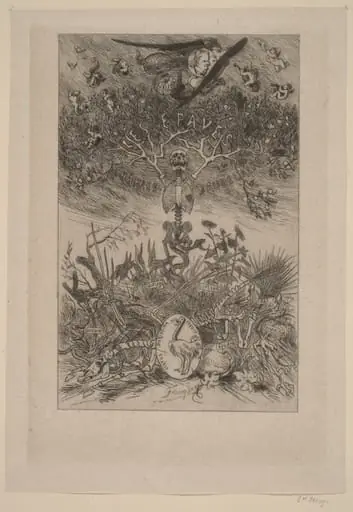
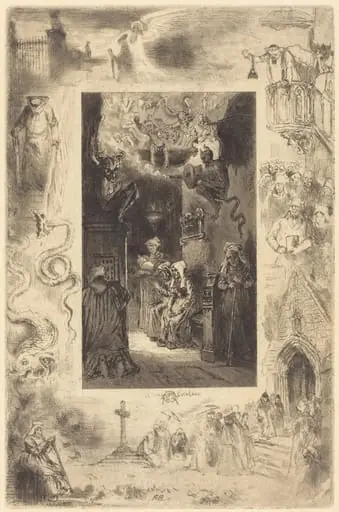
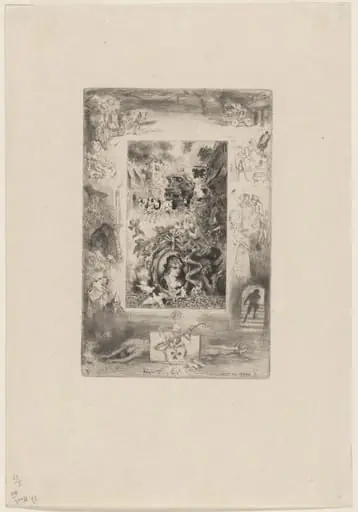
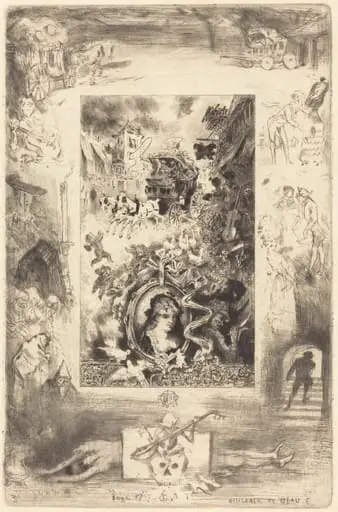
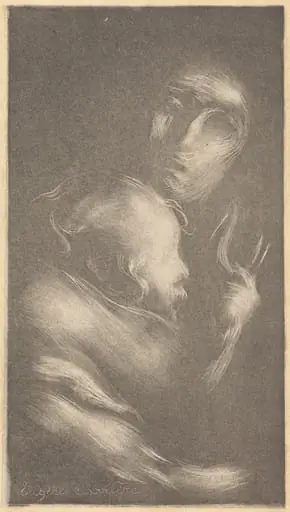
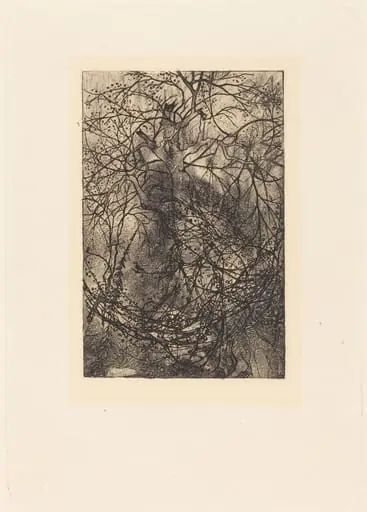
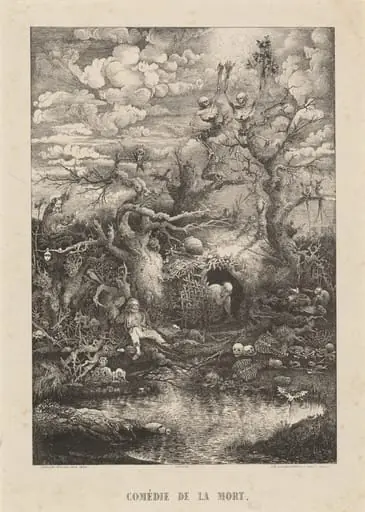
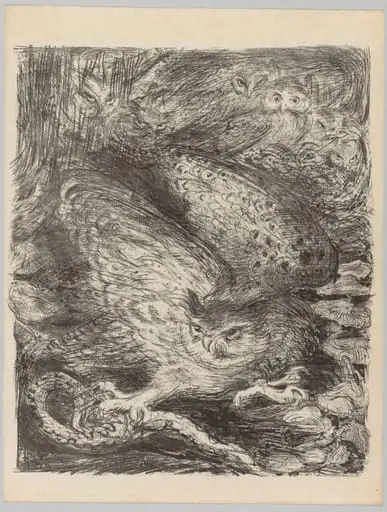
Fantastic Heads is an ink print by the Baroque artist Bartholomeus Breenbergh. It dates from 1638 and is held in the collection of the National Gallery of Art.
About this work
Overview
The image occupies a small format yet feels visually saturated, reflecting a fascination with the uncanny in early 17th-century Northern European printmaking.
Created in 1638, Fantastic Heads is an etching by Bartholomeus Breenbergh on laid paper. The composition densely layers three indistinct facial forms within a tangle of organic forms—twisting vines and gnarled branches. The dark, fluid lines suggest vigorous hand pressure, while areas of light break through the foliage, contrasting with the blurred, spectral quality of the faces. The image occupies a small format yet feels visually saturated, reflecting a fascination with the uncanny in early 17th-century Northern European printmaking.
Subject & Meaning
The three faces emerge ambiguously from the vegetal mass, neither fully formed nor entirely hidden. Their ghostly presence evokes themes of transformation, the subconscious, or the blurring of human and natural realms. Rather than depicting a narrative, the work invites contemplation of hidden identities or inner states, aligning with period interests in allegory and the mysterious interplay between the visible and the unseen.
Technique & Style
Breenbergh employed etching to achieve dense, swirling lines with strong contrast. The dark, incised strokes create a sense of movement and depth, while the paper’s natural texture enhances the organic feel. Light areas are reserved rather than etched, allowing the paper’s whiteness to suggest illumination. The style prioritizes atmospheric effect over clarity, characteristic of Mannerist influences that favored complexity and visual ambiguity over naturalism.
History & Provenance
The print dates from Breenbergh’s time in Rome, where he absorbed Italian and Flemish artistic currents. Though few of his etchings survive, Fantastic Heads is among the more distinctive examples of his graphic work. Its early provenance is undocumented, but it likely circulated among collectors interested in imaginative prints. The work remained relatively obscure until modern scholarship began to reassess Northern Mannerist printmakers in the 20th century.
Context
In the 1630s, Northern European artists often explored fantastical and hybrid imagery, influenced by allegorical traditions and emerging interest in the irrational. Breenbergh’s etching aligns with contemporaneous works by artists like Brueghel and Salvator Rosa, who used dense, dreamlike compositions to evoke wonder or unease. Such imagery responded to intellectual currents that questioned the boundaries between reality and imagination.
Legacy
Fantastic Heads stands as a rare example of Breenbergh’s graphic output and a testament to the period’s appetite for enigmatic imagery. While not widely reproduced, it contributes to understanding how Northern artists adapted Italianate techniques to express psychological and metaphysical themes. Today, it is studied as a nuanced artifact of early modern print culture, valued for its atmospheric density and symbolic ambiguity.
Artist & collection


![The Fantastic Rocks and Castle at Bomarzo [verso], by Bartholomeus Breenbergh](https://artifactworldgallery.com/img/bartholomeus-breenbergh--the-fantastic-rocks-and-castle-at-bomarzo-verso--5a96047e30ba1d0f-w320.webp)
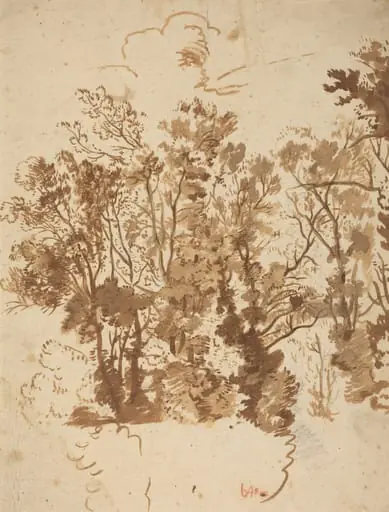
![The Fantastic Rocks and Castle at Bomarzo [recto], by Bartholomeus Breenbergh](https://artifactworldgallery.com/img/bartholomeus-breenbergh--the-fantastic-rocks-and-castle-at-bomarzo-recto--e05f03da6f1f9c0a-w320.webp)