Artwork
Pope Sixtus V
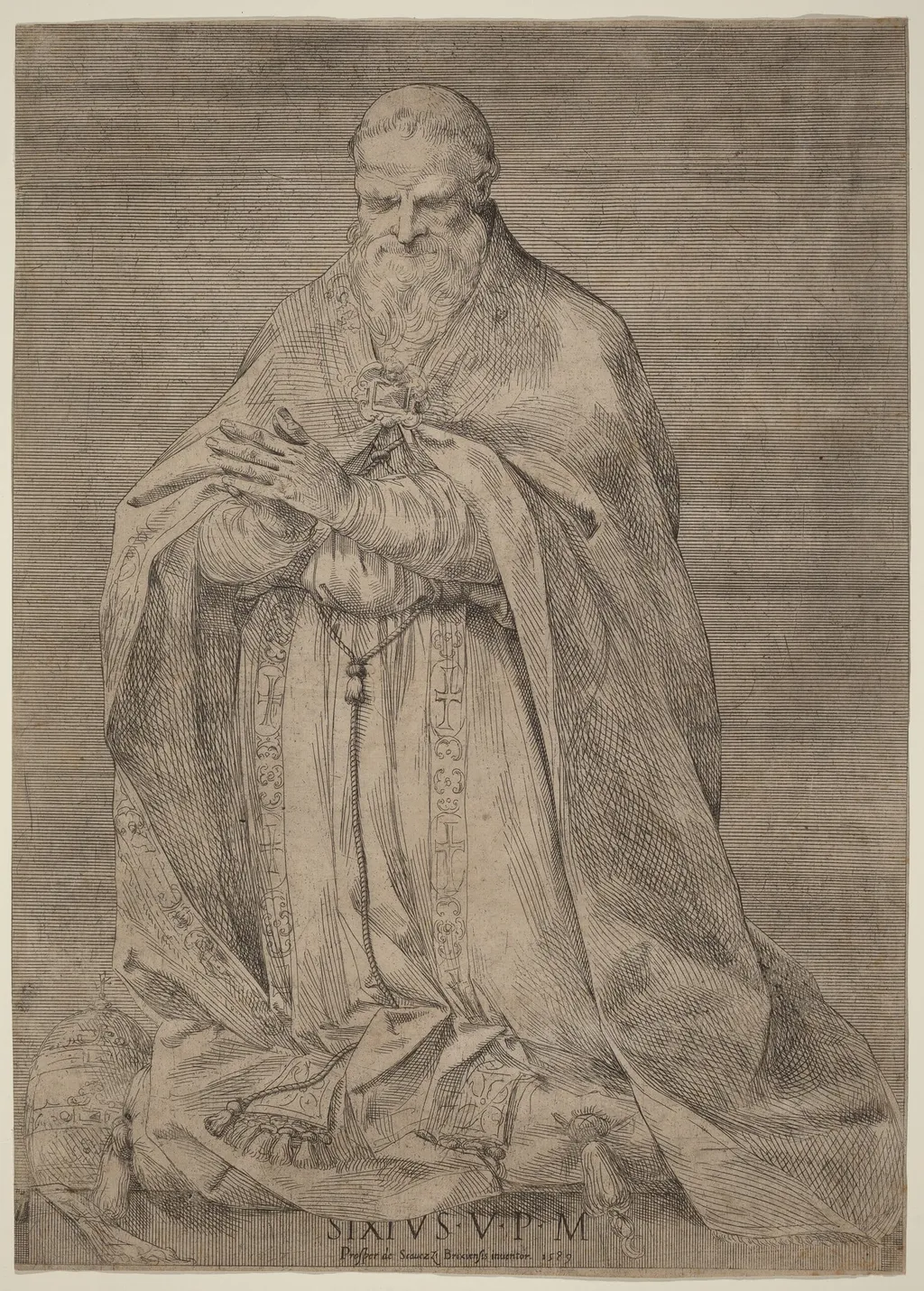
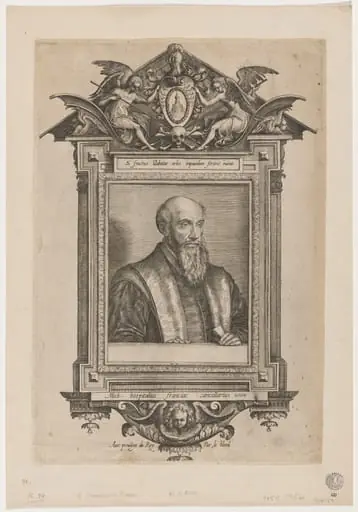
Pope Sixtus V is an ink print by the Renaissance artist Prospero Bresciano. It dates from 1589 and is held in the collection of the National Gallery of Art.
About this work
The fabric of his robe is detailed with lines and patterns, and there’s a small dog at his feet.
This etching shows an older man with a long white beard and curly hair, dressed in heavy robes. His hands are clasped together, and he looks down with a serious expression. The fabric of his robe is detailed with lines and patterns, and there’s a small dog at his feet.
The artist used fine lines to create texture, especially in the fur and fabric. This was made in 1589, a time when artists focused on precise details.
Next, look up technique: etching to see how this method works.
Overview
Prospero Bresciano’s 1589 etching portrays Pope Sixtus V, presenting the pontiff as an elderly figure with a flowing white beard and curled hair. He is shown in richly detailed robes, hands joined, and a small dog at his feet, conveying a solemn, contemplative demeanor.
Subject & Meaning
The composition emphasizes the Pope’s authority and piety through his downward gaze and clasped hands, traditional symbols of prayer and humility. The inclusion of a dog, a common emblem of fidelity, subtly reinforces themes of loyalty to the Church.
Technique & Style
Executed in etching, the work relies on delicate incised lines to render the texture of fur, fabric folds, and intricate patterns on the vestments. This fine linear approach reflects the late‑sixteenth‑century emphasis on precise, almost microscopic detail in printmaking.
History & Provenance
Created in 1589, the print emerged during the Counter‑Reformation, a period when papal portraiture served both devotional and propagandistic purposes. While specific ownership records are scarce, the image circulated among collectors of religious prints in Italy.
Context
The portrait aligns with contemporary efforts to visually reinforce papal legitimacy after the tumult of the Reformation. By depicting Sixtus V in a dignified, contemplative pose, the etching contributes to the broader visual culture that sought to affirm the Pope’s spiritual and temporal authority.
Artist & collection


![An Apostle, from Albert [sic] Durer, by James Henry Lynch](https://artifactworldgallery.com/img/james-henry-lynch--an-apostle-from-albert-sic-durer--8d1f7b246df4fa78-w320.webp)