Artwork
The Last Supper
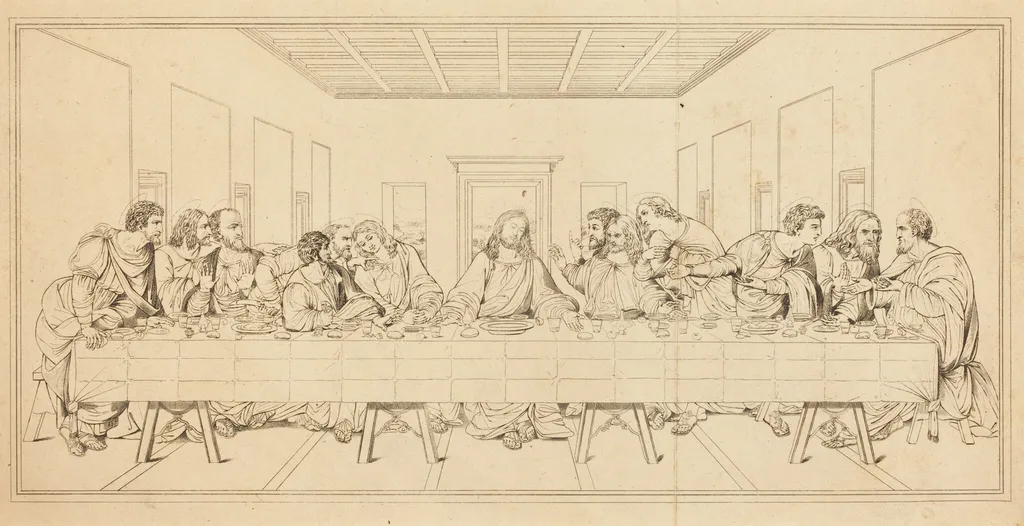
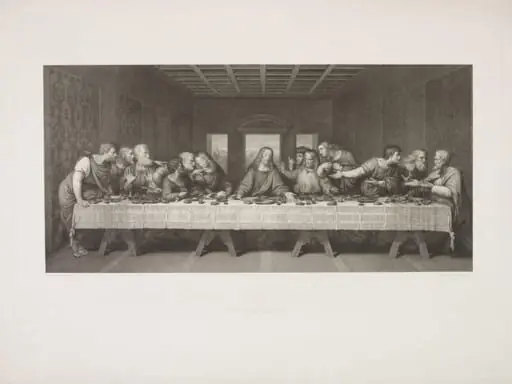
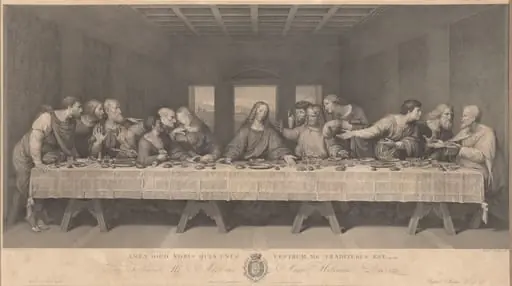
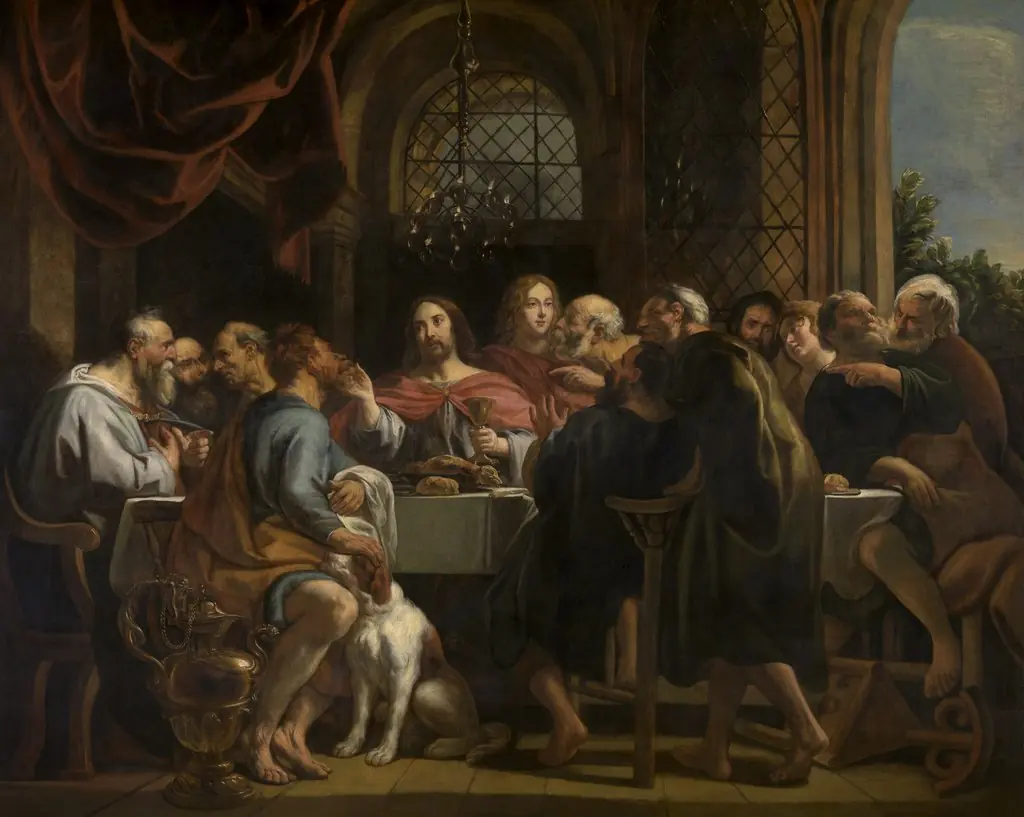
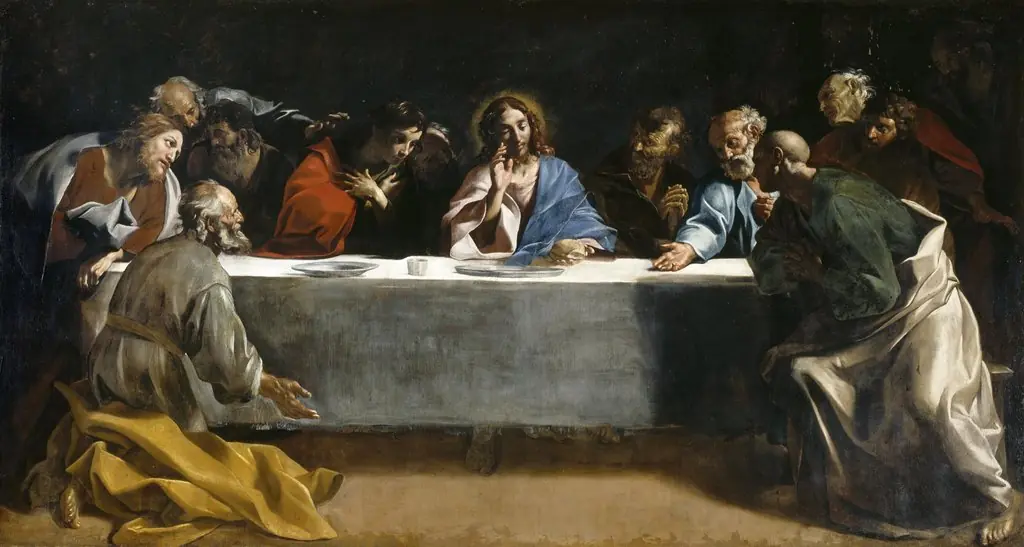
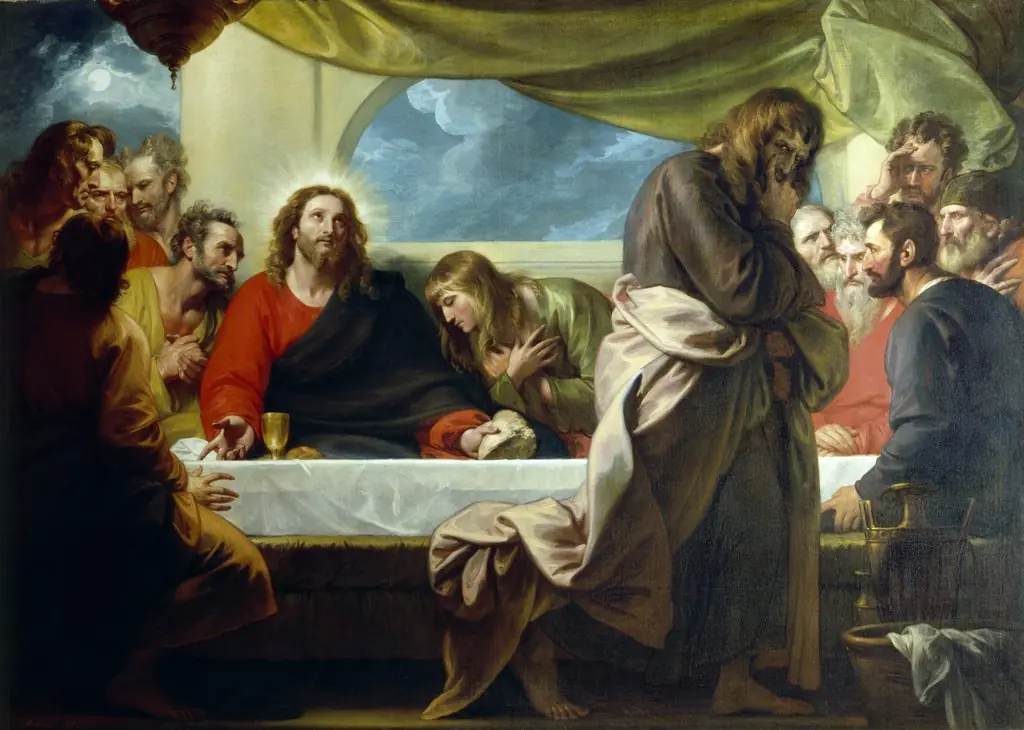
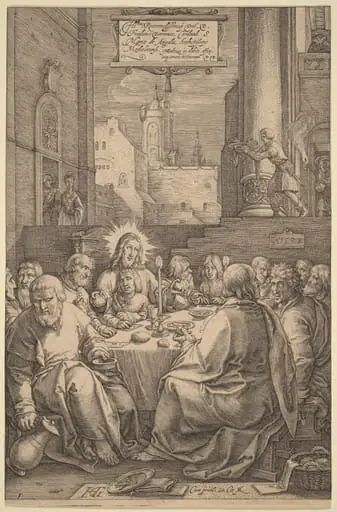
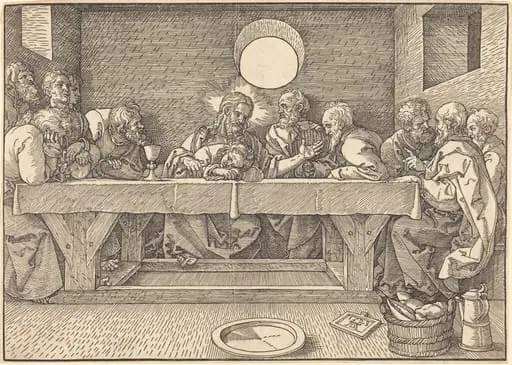
The Last Supper is an ink print by the Romanticist artist British 19th Century. It dates from 1801 and is held in the collection of the National Gallery of Art. This print depicts a gathering of figures arranged around a lengthy table, rendered through the medium of etching.
About this work
Overview
The setting features architectural elements such as high ceilings and vacant doorways, suggesting an interior space.
This print depicts a gathering of figures arranged around a lengthy table, rendered through the medium of etching. The composition centers on a seated male figure, flanked by others engaged in conversation or expressive gestures. The setting features architectural elements such as high ceilings and vacant doorways, suggesting an interior space. The image is characterized by loose, sketch-like lines, indicative of a rapid execution.
Subject & Meaning
The scene evokes the biblical narrative of the Last Supper, a moment of final communion before betrayal. While the central figure’s demeanor appears composed, the surrounding figures display varied reactions—leaning forward, gesturing, or conversing—implying tension or discourse. The empty doorways and sparse details may underscore the gravity of the occasion, focusing attention on the human interactions rather than the environment.
Technique & Style
Executed in etching, the work employs acid-bitten lines on a metal plate to create the printed image. The lines appear soft and slightly blurred, resembling a preliminary sketch rather than a polished study. This approach, common in 19th-century printmaking, allowed for intricate detail while retaining a sense of immediacy. The technique’s capacity for fine lines and tonal variation is evident in the figures’ expressions and drapery.
History & Provenance
Etchings from this period were often produced as independent works or as illustrations for printed publications. The technique’s popularity in the 1800s stemmed from its ability to replicate fine detail, making it suitable for both artistic and reproductive purposes. Little is known of this specific print’s early ownership, though its style aligns with practices of the era, where prints circulated widely among collectors and institutions.
Context
The 19th century saw a resurgence of interest in etching as a medium for both original art and reproduction. Artists valued its capacity for delicate line work and atmospheric effects, often using it to explore historical, religious, or literary themes. This print reflects that trend, offering a reinterpretation of a canonical subject through the lens of contemporary printmaking techniques.
Artist & collection

Artist
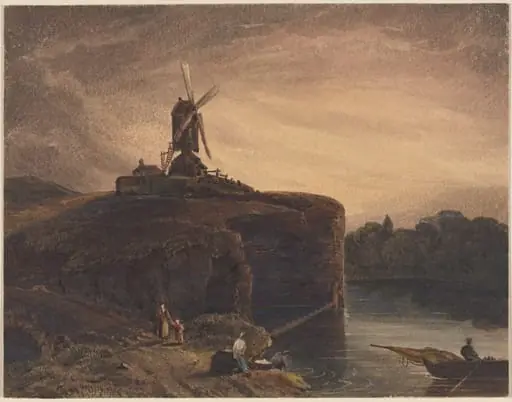
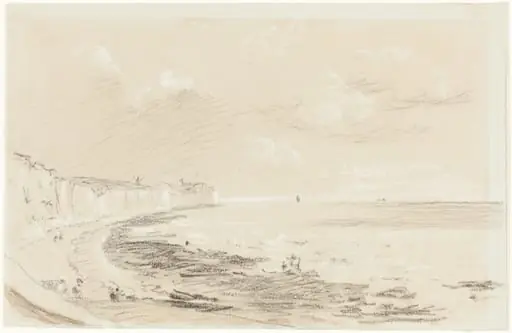
This artist’s short life left behind a quiet obsession with water—whether the churn of a mill wheel, the choppy waves off England’s south coast, or the way light bounces off pond lilies.