Artwork
An Elegant Young Man Personifying Vanity
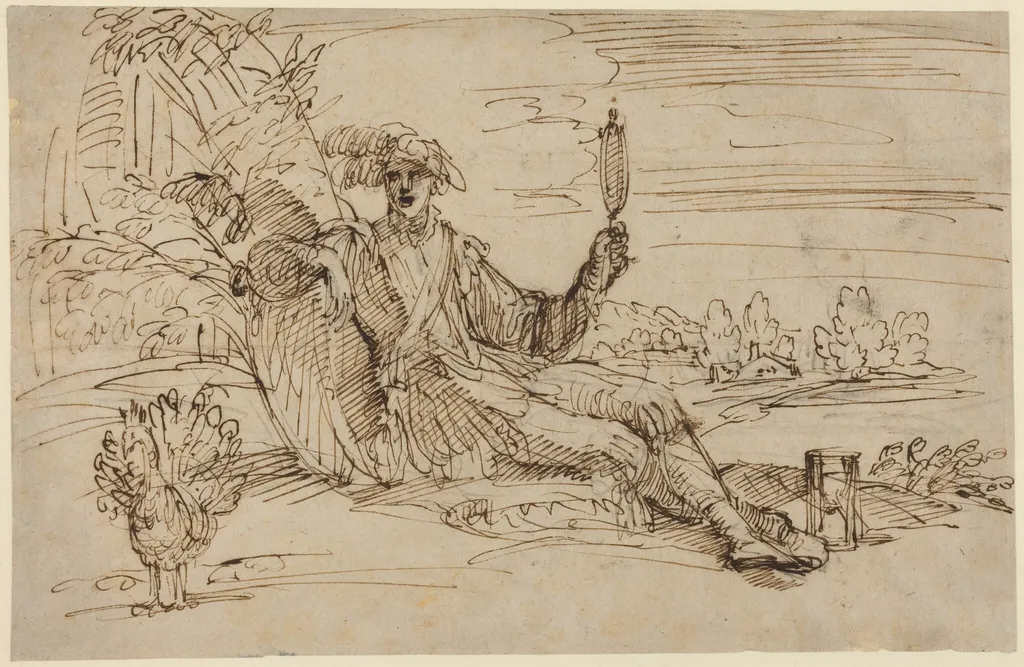
An Elegant Young Man Personifying Vanity is a chalk drawing by the Renaissance artist Francesco Brizio. It dates from 1599 and is held in the collection of the National Gallery of Art.
About this work
Overview
Created in 1599 by Francesco Brizio, this drawing depicts a refined young man in a contemplative pose, embodying the theme of vanity through gesture and attire. Executed in pen and brown ink over black chalk on laid paper, the work exemplifies late Renaissance draftsmanship, combining precise line work with subtle tonal gradations to convey both physical presence and psychological nuance.
Subject & Meaning
The figure, seated against a tree and gazing into a handheld mirror, visually articulates the moral concept of vanity—a preoccupation with personal appearance.
The figure, seated against a tree and gazing into a handheld mirror, visually articulates the moral concept of vanity—a preoccupation with personal appearance. His elaborate clothing and self-absorbed posture suggest indulgence, while the natural setting contrasts his artificial elegance. The mirror, central to the composition, functions as both object and symbol, reflecting not just his face but the transient nature of beauty.
Technique & Style
Brizio employed a layered approach using black chalk for foundational contours and brown ink for refined lines and shading. Delicate hatching defines the texture of fabric and hair, while soft washes model the figure’s form against the background. The interplay of warm ink tones and the paper’s natural hue enhances the intimacy of the scene, emphasizing tactile detail without overt drama.
History & Provenance
The drawing has been held by the National Gallery of Art in Washington since its acquisition, though its earlier provenance remains undocumented. It is attributed to Brizio based on stylistic parallels with his other known works and the period’s conventions in Italian draftsmanship. No records of its commission or early ownership have surfaced, leaving its original context speculative.
Context
In late 16th-century Italy, allegorical drawings of virtue and vice were common among artists trained in Mannerist traditions. Brizio, active in Bologna, engaged with humanist themes through refined graphic studies. This piece reflects a broader cultural interest in moralizing imagery, where the human figure served as a vehicle for philosophical reflection rather than mere portraiture.
Legacy
Though not widely reproduced, the drawing stands as a representative example of Bolognese draftsmanship at the turn of the 17th century. Its quiet intensity and technical precision influenced later generations of artists who valued the expressive potential of linear drawing over painted finish. It remains a key reference for understanding how moral themes were explored in private, non-commissioned works.
Artist & collection


![A Comic Actor Dressed as a Gentleman [recto], by Jean-Baptiste Joseph Pater](https://artifactworldgallery.com/img/jean-baptiste-joseph-pater--a-comic-actor-dressed-as-a-gentleman-recto--e5df5dc0f9bcc859-w320.webp) A Comic Actor Dressed as a Gentleman [recto]
A Comic Actor Dressed as a Gentleman [recto]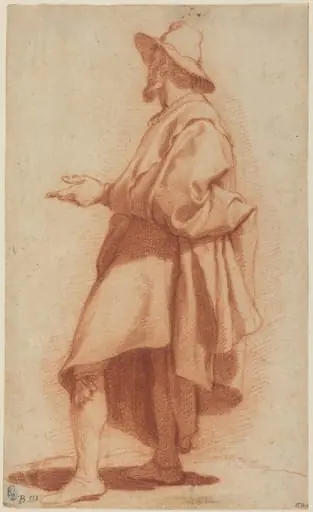 Standing Man Wearing a Cloak and Hat
![Seated Guitarist [recto], by Jean Antoine Watteau](https://artifactworldgallery.com/img/jean-antoine-watteau--seated-guitarist-recto--1923603ffd027bd7-w320.webp) Seated Guitarist [recto]
Seated Guitarist [recto]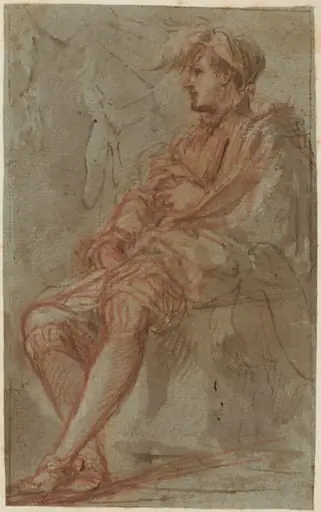 A Young Man
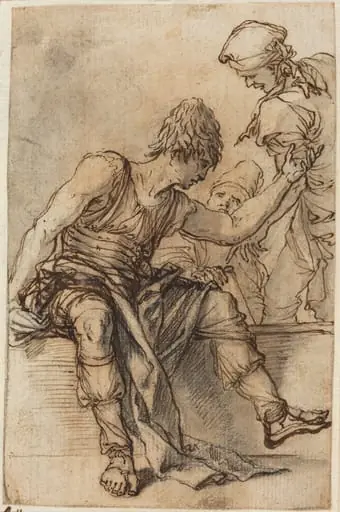 Youth Sitting on a Wall in Conversation with Two Men
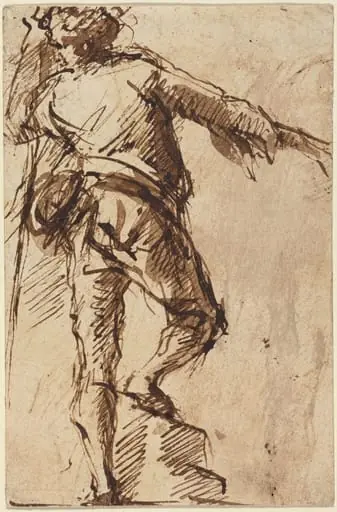 A Young Man with a Staff
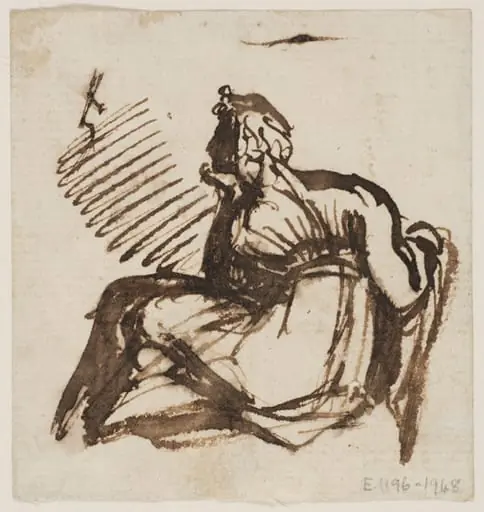 Untitled
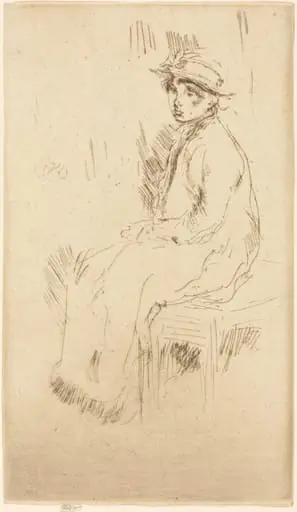 Nora Quinn
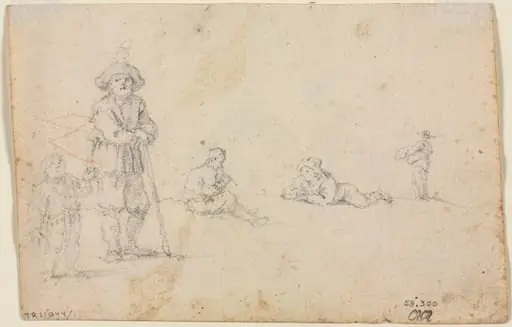 Five Figure Studies (verso)
![Man Leaning on a Rail [verso], by Matteo Rosselli](https://artifactworldgallery.com/img/matteo-rosselli--man-leaning-on-a-rail-verso--c9936b6777df930d-w320.webp) Man Leaning on a Rail [verso]
Man Leaning on a Rail [verso]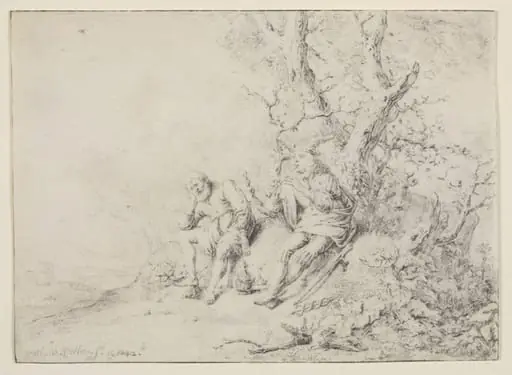 Mercury and Argus (Ovid, Metamorphoses i.668–721)
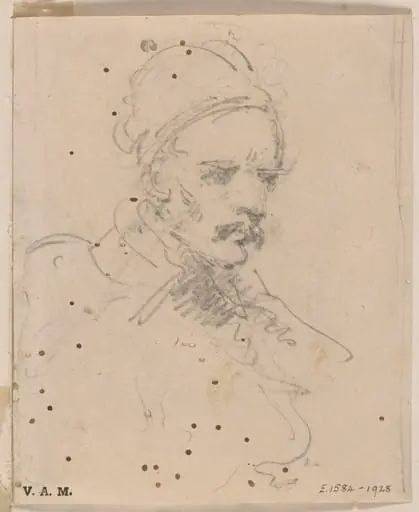 A moustachio'd man