Artwork
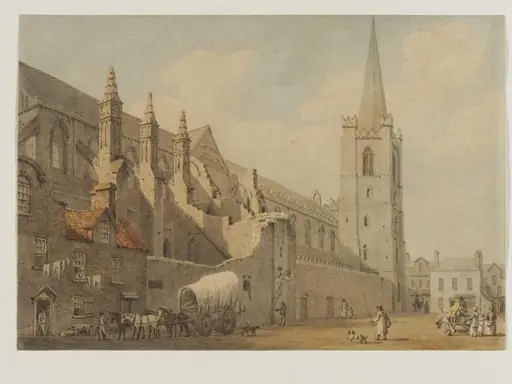
Castle Chapel, Dublin
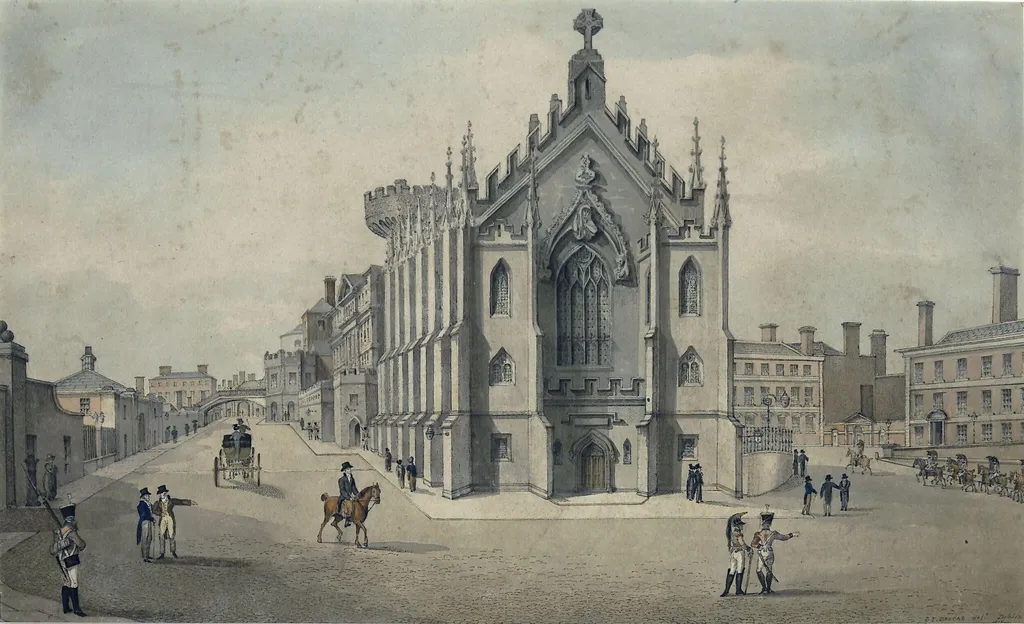
Castle Chapel, Dublin is a watercolor work on paper by the British Romanticist artist Samuel Frederick Brocas. It dates from 1818 and is held in the collection of the Victoria and Albert Museum.
About this work
Overview
Samuel Frederick Brocas created this watercolour in 1818, capturing the Castle Chapel in Dublin with quiet precision.
Samuel Frederick Brocas created this watercolour in 1818, capturing the Castle Chapel in Dublin with quiet precision. The work is signed and dated by the artist, confirming its origin and placing it within his early career. Rendered in delicate washes, the piece presents a restrained yet evocative view of a religious building set within an ordinary urban space, reflecting Brocas’s interest in architectural detail and everyday atmosphere.
Subject & Meaning
The Castle Chapel, a modest but prominent structure, rises above surrounding low buildings in a tranquil square. Figures in early 19th-century attire move subtly through the scene—pedestrians and a lone horseback rider—grounding the image in daily life. The chapel’s presence suggests spiritual continuity amid urban routine, its isolation emphasizing its role as a quiet anchor in the city’s fabric.
Technique & Style
Brocas employed soft, layered watercolour washes to model form and suggest atmospheric light. The chapel’s stonework is rendered with careful shadowing, enhancing its verticality without harsh outlines. Background structures are muted, allowing the church to emerge through tonal contrast rather than detail. The overall effect is one of stillness, achieved through restrained colour and deliberate pacing of visual elements.
History & Provenance
Created in 1818, the watercolour is among the known works by Samuel Frederick Brocas, an Irish artist active in Dublin during the early 1800s. Its survival and signature suggest it was preserved as a personal or commissioned record. No documented ownership history beyond the artist’s hand is available, but its existence reflects the period’s interest in documenting local architecture through intimate, observational media.
Context
In early 19th-century Dublin, watercolour was a common medium for recording architecture and civic scenes, often used by amateur and professional artists alike. The Castle Chapel, though not a cathedral, held local significance as part of the castle complex. Brocas’s focus on its quiet presence amid ordinary life aligns with a broader trend of documenting urban spaces with observational accuracy rather than grandeur.
Legacy
Brocas’s watercolour contributes to a modest but valuable archive of Dublin’s architectural landscape before major 19th-century transformations. While not widely exhibited, the work exemplifies the quiet, detailed approach of Irish topographical artists of the era. Its preservation offers insight into how religious and civic structures were perceived within the rhythms of daily urban life.
Artist & collection
Artist
Samuel Frederick Brocas was a Dublin-based watercolor artist in the early 1800s, best known for detailed paintings of Irish buildings.

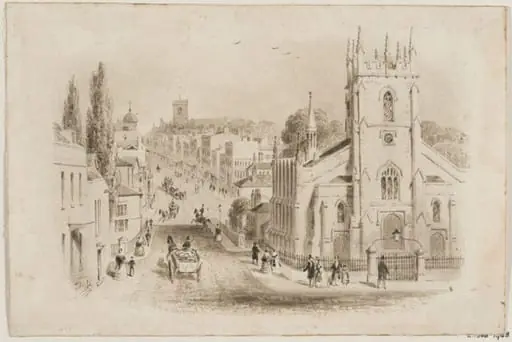 Untitled
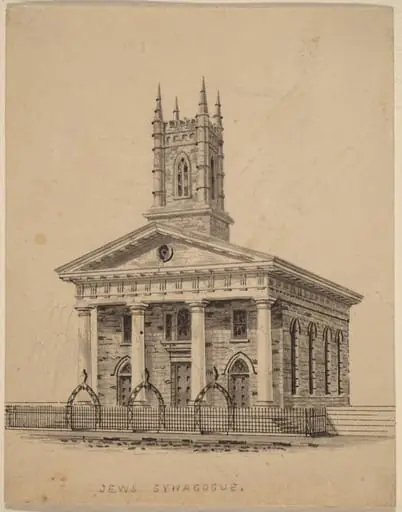 Jewish Synagogue, N.Y.
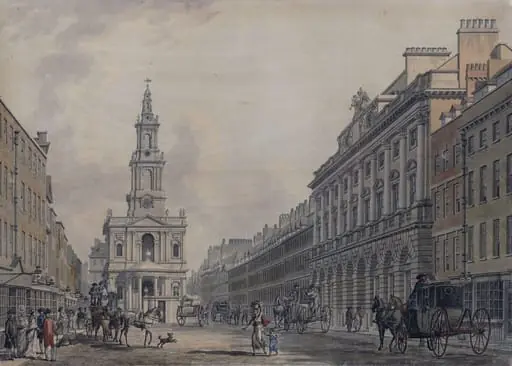 The Strand, with Somerset House and St Mary's Church
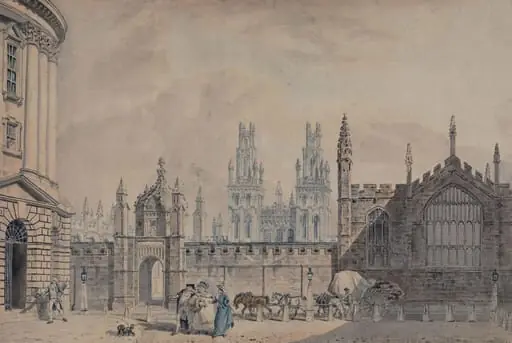 All Souls' College, Oxford
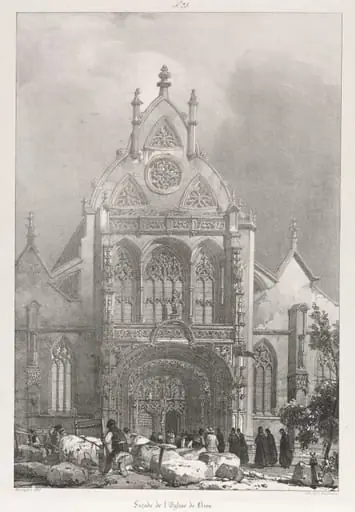 Picturesque and Romantic Trips in Old France, Franche-Compté: Front of the Church at Brou
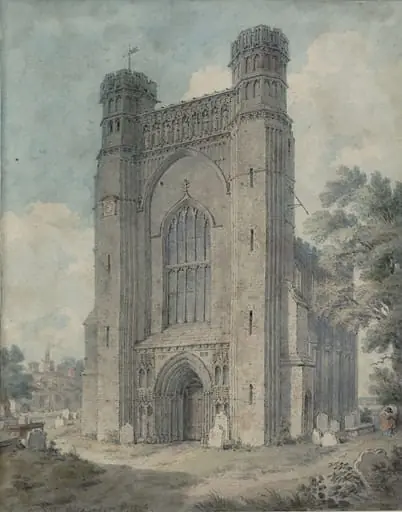 Thorney Abbey, Cambridgeshire
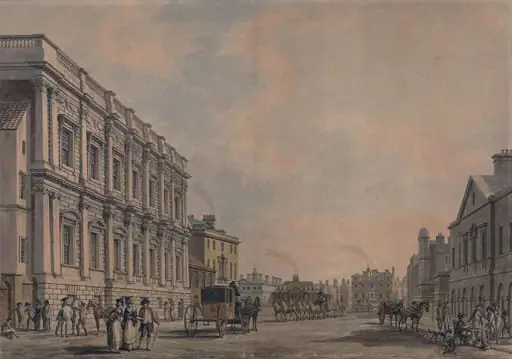 Whitehall, with the Banqueting House
 Picturesque Architecture in Paris, Ghent, Antwerp, Rouen: St. Severin, Paris
 West View of Old Montague House
 High Street, Oxford
 St. Séverin, Paris
 St Patrick's Cathedral, Dublin