Artwork
St. Séverin, Paris
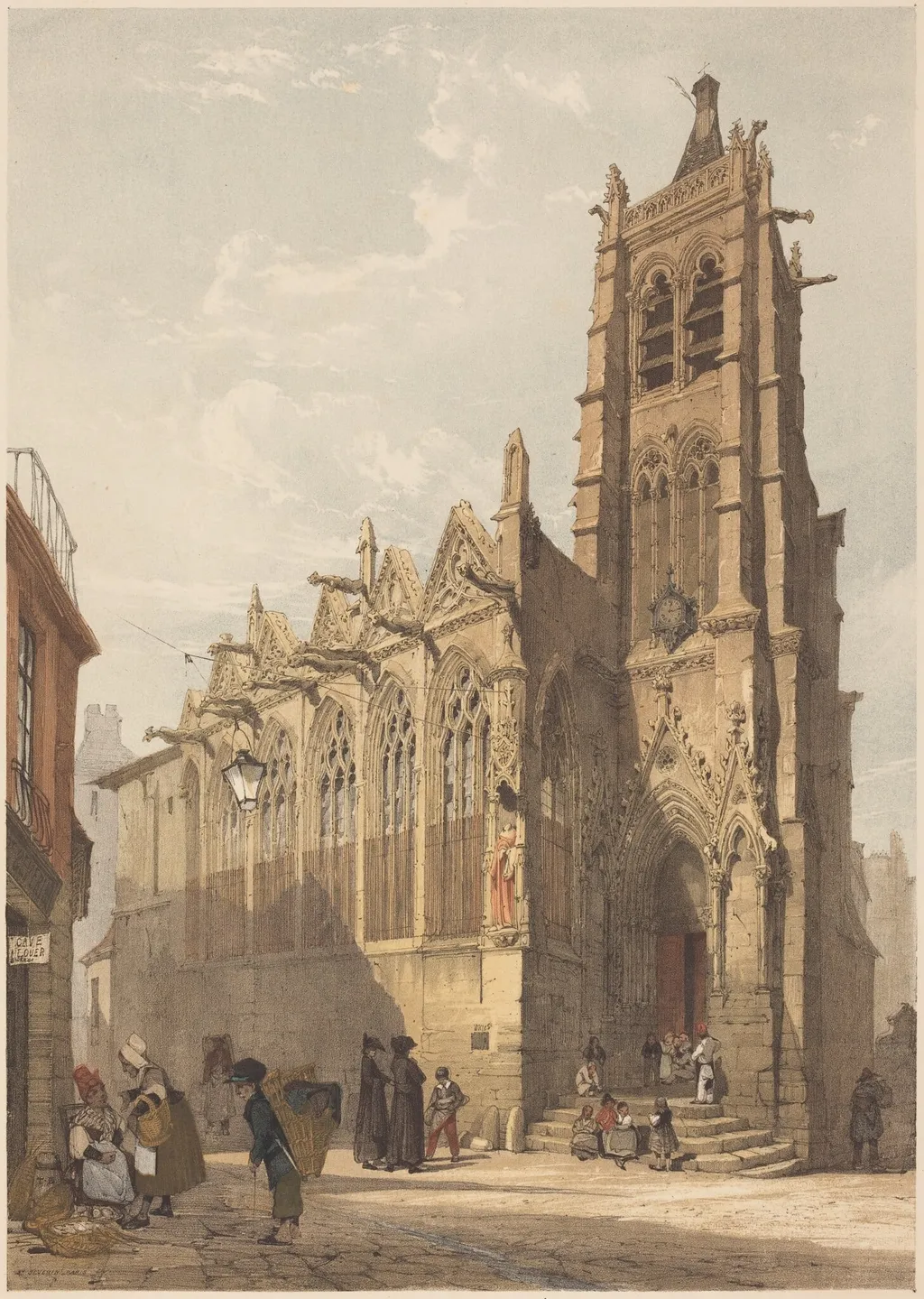
St. Séverin, Paris is an ink print by the Romanticist artist Thomas Shotter Boys. It dates from 1839 and is held in the collection of the National Gallery of Art.
About this work
Overview
Thomas Shotter Boys, an English artist known for architectural subjects, produced this lithograph in 1839 as part of his exploration of European urban environments. The work captures the Church of Saint-Séverin in Paris, rendered with precision through the lithographic process, which allowed for fine lines and tonal gradations suited to documenting stone surfaces and atmospheric light.
Subject & Meaning
The image presents the church not as a solitary monument but as a living part of the city. Figures in period dress move along its steps and gather on the ground, suggesting routine daily activity. The contrast between the church’s ornate Gothic structure and the ordinary presence of pedestrians underscores a broader interest in architecture’s integration into civic life.
Technique & Style
Lithography enabled Boys to achieve intricate detailing of the church’s carved stonework, pointed arches, and weathered surfaces. The soft, even tonality of the print conveys a muted daylight, with light clouds diffusing the sky. His line work is deliberate but unembellished, prioritizing observational accuracy over dramatic effect.
History & Provenance
Created during Boys’s travels in France, the print was likely made for a broader audience interested in topographical records of European cities. It belongs to a series of lithographs documenting urban architecture, circulated in England and France as both artistic and documentary works, reflecting mid-19th-century interest in preserving visual records of historic sites.
Context
In the 1830s, lithography became a favored medium for recording architecture as cities modernized. Boys’s work aligns with a European trend of documenting historic buildings before industrial change altered their surroundings. His focus on ordinary people within these spaces reflects a growing cultural attention to the relationship between public monuments and everyday life.
Legacy
Though not widely exhibited today, the print remains an example of how 19th-century artists used emerging print technologies to document urban landscapes with nuance. Boys’s approach influenced later topographical artists who sought to record architectural heritage without romanticizing it, emphasizing observation over idealization.
Artist & collection
Artist
Thomas Shotter Boys (1803–1874) was an English watercolour painter and lithographer, mostly producing cityscapes and images of buildings, although he produced some rural landscapes and marine subjects.

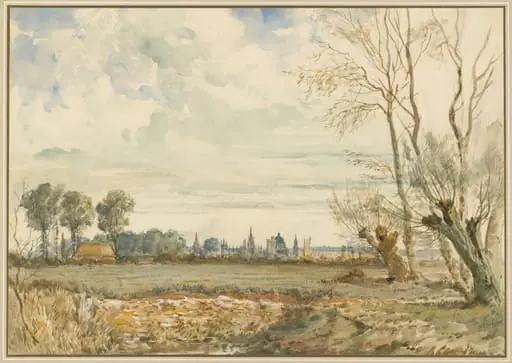
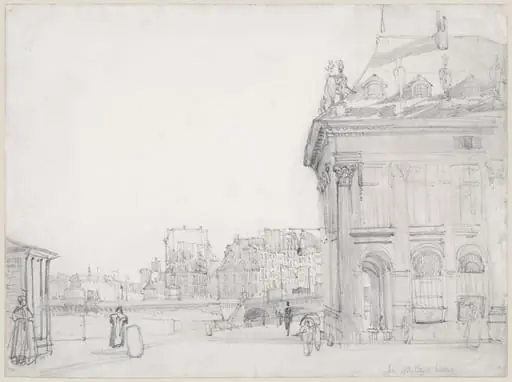
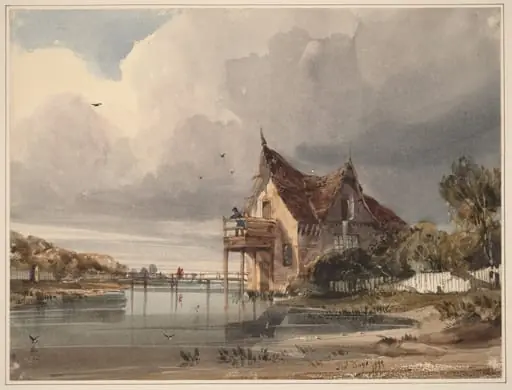
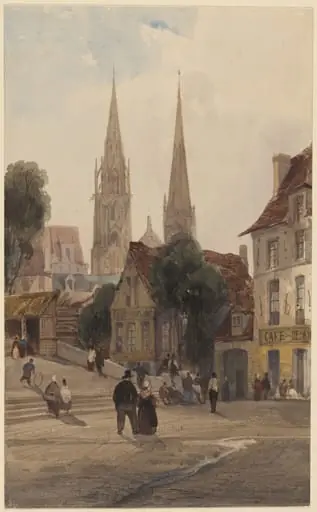
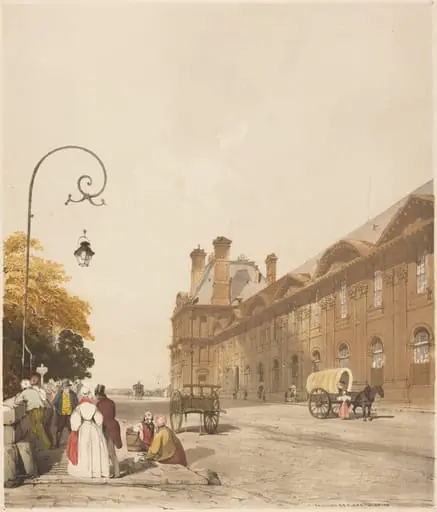
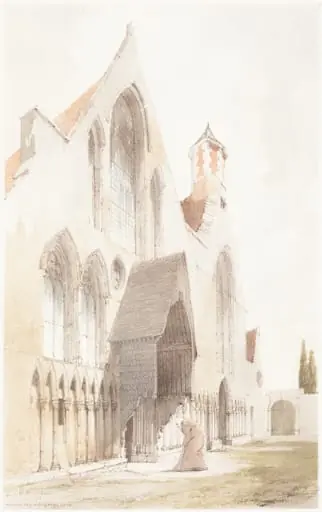
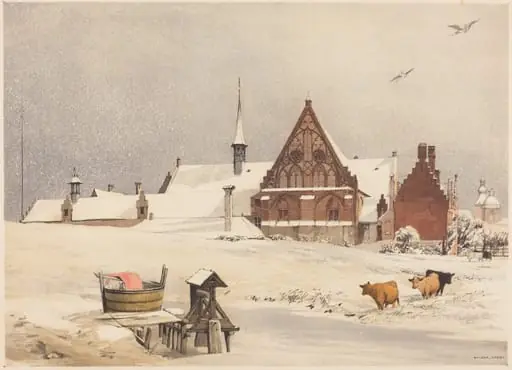
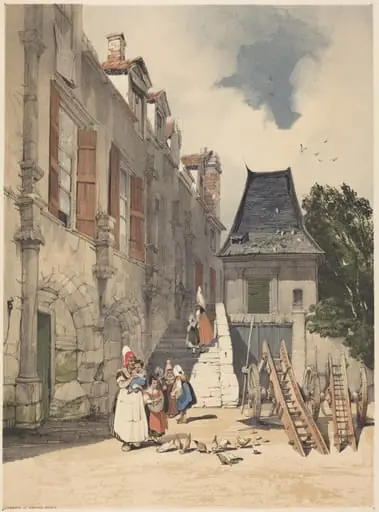
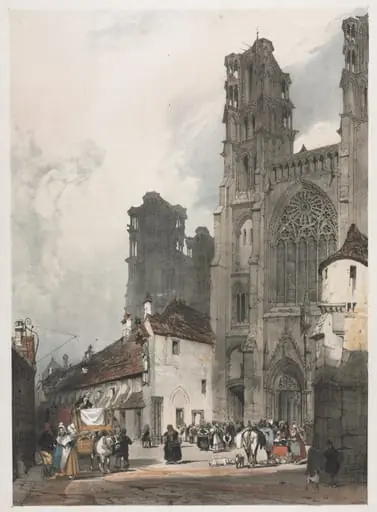 Picturesque Architecture in Paris, Ghent, Antwerp, Rouen: Laon, France
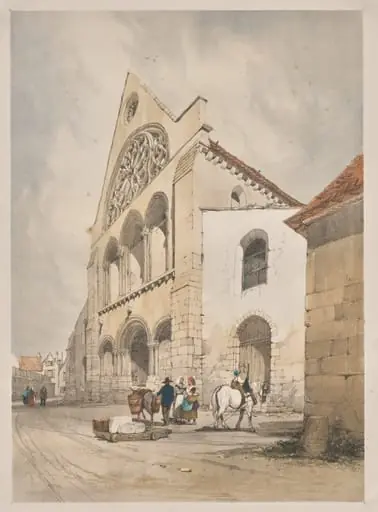 Picturesque Architecture in Paris, Ghent, Antwerp, Rouen: St. Andre, Chartres, France
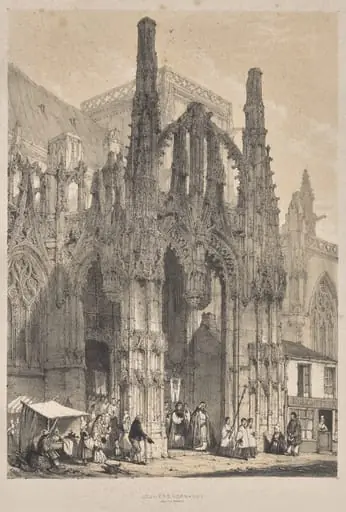 Architecture of the Middle Ages: Louviers, Normandy, South Porch
 Apse of St.-Didier, Avignon
 Picturesque Architecture in Paris, Ghent, Antwerp, Rouen: St. Etienne du Mont, Paris
 Architecture of the Middle Ages: Church at Serran, near Gisore
 Picturesque Architecture in Paris, Ghent, Antwerp, Rouen: La. Ste Chapelle, Paris
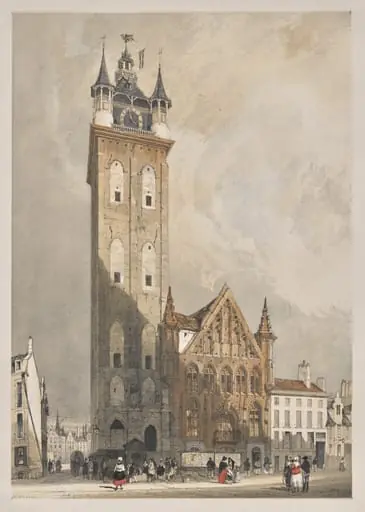 Picturesque Architecture in Paris, Ghent, Antwerp, Rouen: Belfrey, Ghent, Belgium
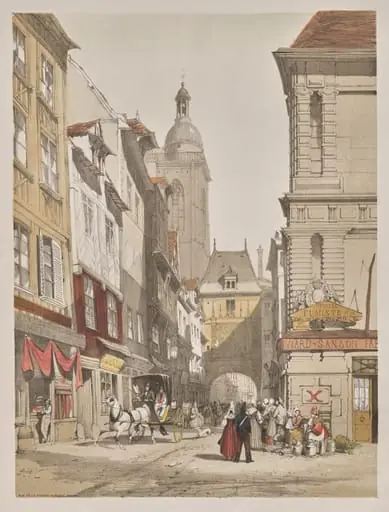 Picturesque Architecture in Paris, Ghent, Antwerp, Rouen: Rue de la Crosse Horlogue, Rouen, France
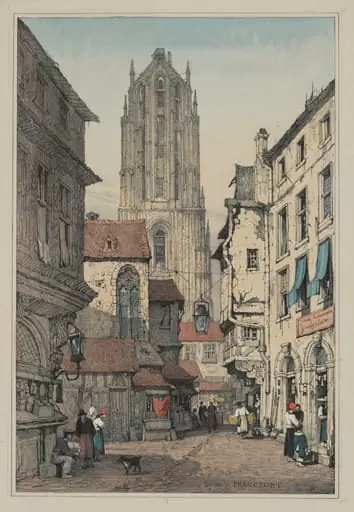 Facisimilies of Sketches made in Flanders and Germany: Dome, Francfort