Artwork
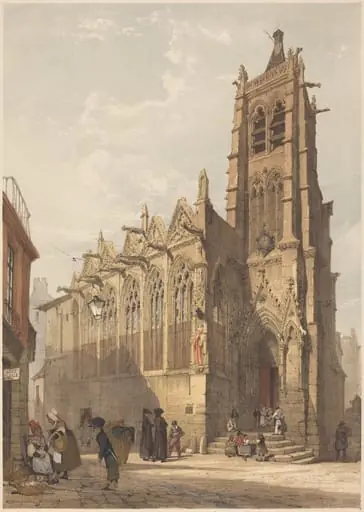
Picturesque Architecture in Paris, Ghent, Antwerp, Rouen: St. Severin, Paris
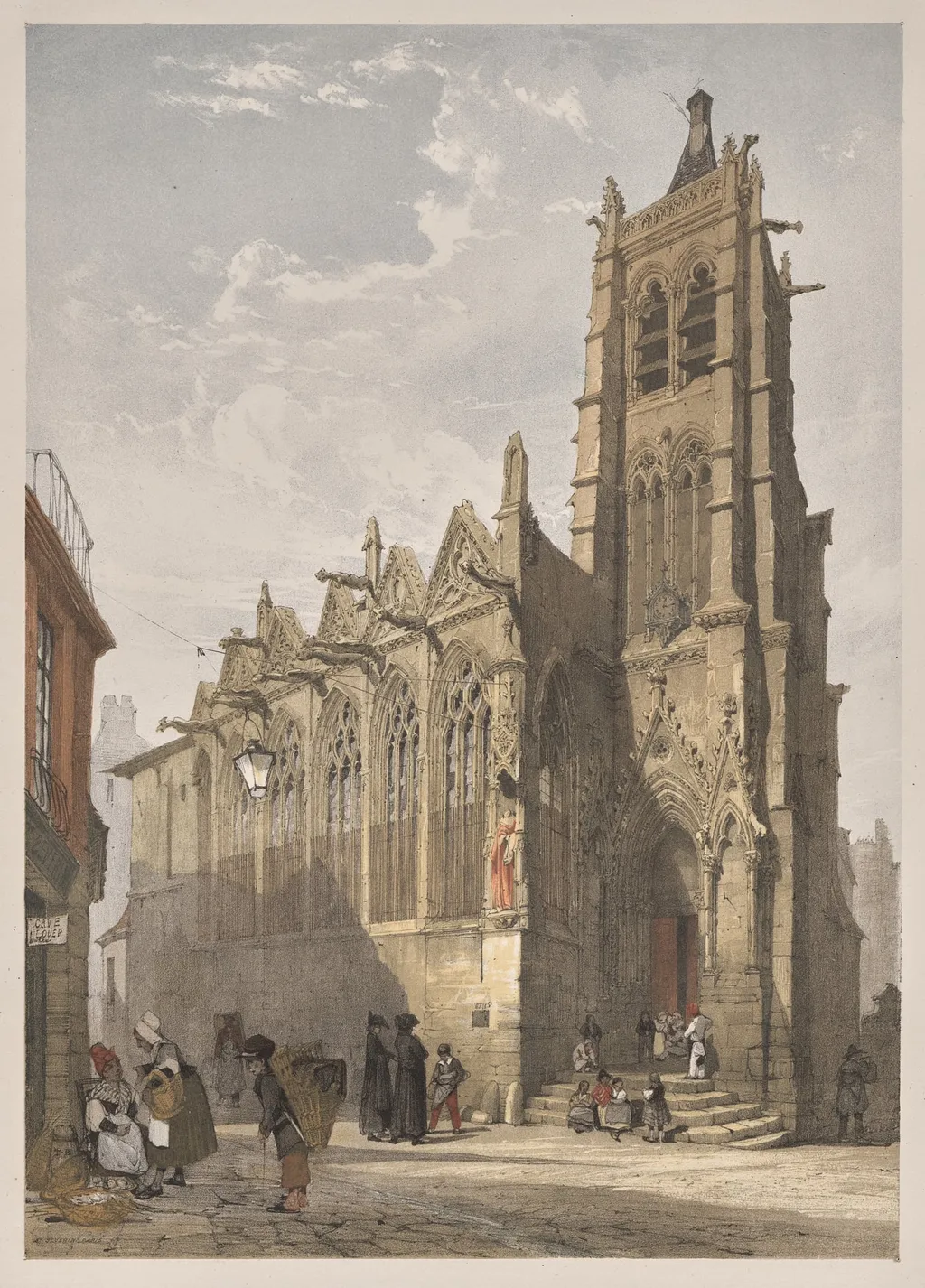
Picturesque Architecture in Paris, Ghent, Antwerp, Rouen: St. Severin, Paris is a work on paper by the Romanticist artist Thomas Shotter Boys. It dates from 1839 and is held in the collection of the Cleveland Museum of Art.
About this work
Overview
Thomas Shotter Boys produced a lithograph in 1839 as part of a portfolio documenting Gothic architecture across four northern European cities.
Thomas Shotter Boys produced a lithograph in 1839 as part of a portfolio documenting Gothic architecture across four northern European cities. The print focuses on the Church of Saint-Séverin in Paris, rendered with precision in the lithographic medium. Boys, an English artist known for architectural subjects, used this technique to capture urban structures with clarity and tonal nuance, avoiding overt romanticization while emphasizing structural detail.
Subject & Meaning
The image presents Saint-Séverin, a 13th-century Parisian church, as a quiet fixture within daily life. Figures are scattered along its steps and courtyard, suggesting ordinary activity rather than ceremonial grandeur. The composition frames the building not as a monument to be revered, but as a lived-in element of the city—its presence enduring, unembellished, and integrated into the rhythms of urban existence.
Technique & Style
Lithography allowed Boys to achieve fine gradations of light and shadow across the church’s carved stonework. The sky is rendered in pale washes, contrasting with the dense, textured facade. Delicate lines define tracery, buttresses, and pinnacles, while the human figures are simplified, serving as scale markers rather than individualized subjects. The method prioritizes architectural accuracy over dramatic effect.
History & Provenance
The lithograph was issued in 1839 as part of a series commissioned to document Gothic buildings in Paris, Ghent, Antwerp, and Rouen. Boys traveled to these cities to sketch on-site, later translating the drawings into prints for an audience interested in architectural heritage. The portfolio was circulated among British collectors and institutions, reflecting a growing 19th-century fascination with medieval European urban forms.
Context
Produced during the early years of France’s Gothic revival, the print aligns with broader European efforts to record and preserve medieval architecture amid industrial change. While French artists emphasized restoration, Boys’s approach remained observational, avoiding idealization. His work contributed to a British tradition of topographical printmaking that valued documentation over emotional interpretation.
Legacy
Boys’s lithographs of Saint-Séverin and other churches remain referenced in studies of 19th-century architectural illustration. They offer a neutral visual record of structures before later restorations altered their appearances. Though not widely exhibited today, the prints serve as historical references for scholars examining how Gothic architecture was perceived and recorded in the pre-photographic era.
Artist & collection
Artist
Thomas Shotter Boys (1803–1874) was an English watercolour painter and lithographer, mostly producing cityscapes and images of buildings, although he produced some rural landscapes and marine subjects.

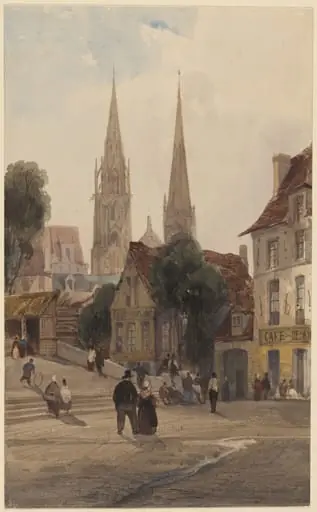
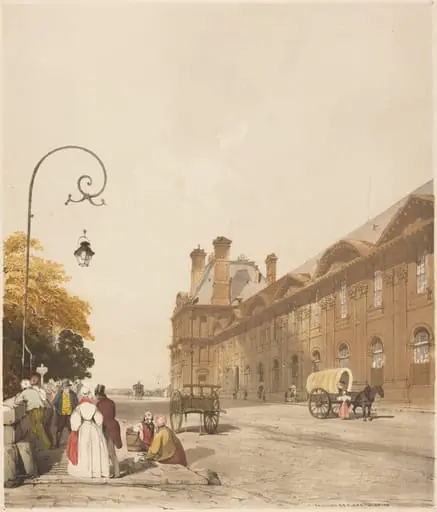
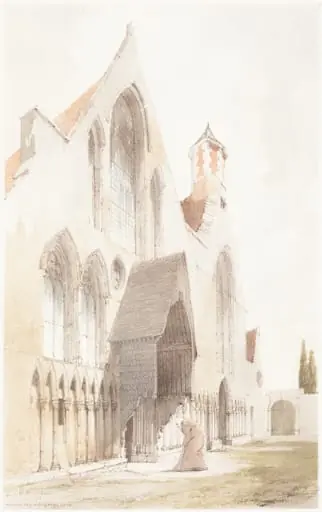
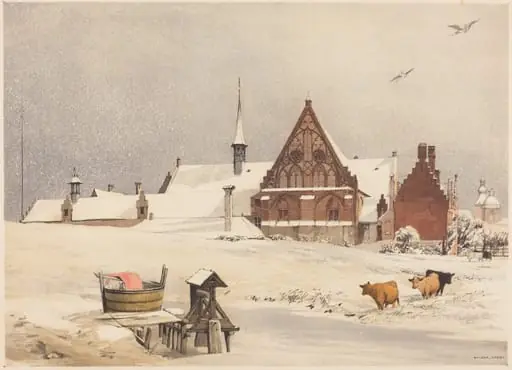
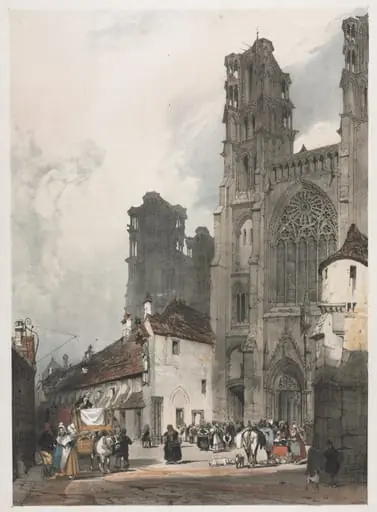 Picturesque Architecture in Paris, Ghent, Antwerp, Rouen: Laon, France
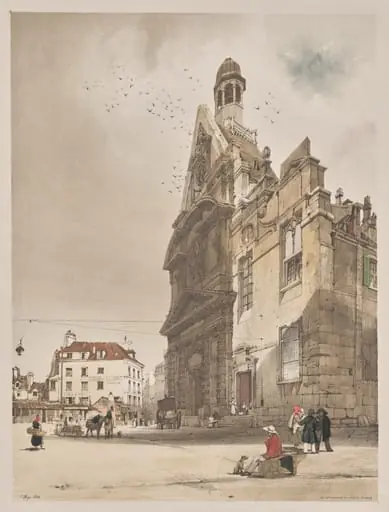 Picturesque Architecture in Paris, Ghent, Antwerp, Rouen: St. Etienne du Mont, Paris
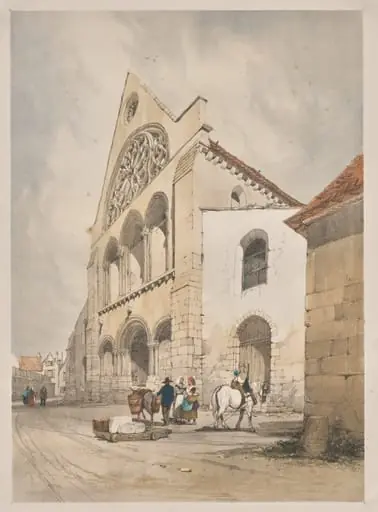 Picturesque Architecture in Paris, Ghent, Antwerp, Rouen: St. Andre, Chartres, France
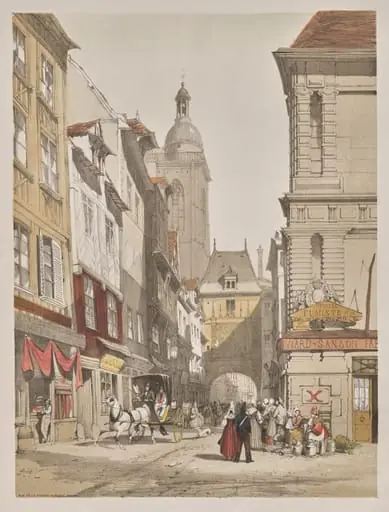 Picturesque Architecture in Paris, Ghent, Antwerp, Rouen: Rue de la Crosse Horlogue, Rouen, France
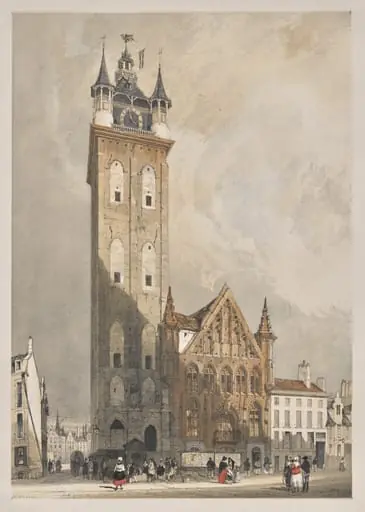 Picturesque Architecture in Paris, Ghent, Antwerp, Rouen: Belfrey, Ghent, Belgium
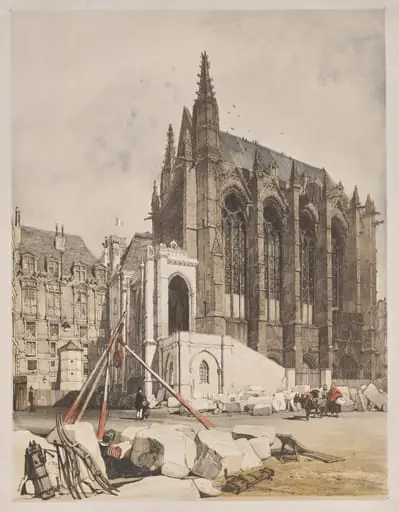 Picturesque Architecture in Paris, Ghent, Antwerp, Rouen: La. Ste Chapelle, Paris
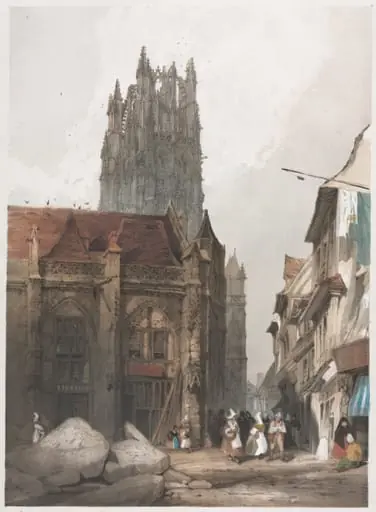 Picturesque Architecture in Paris, Ghent, Antwerp, Rouen: St. Laurent, Rouen, France
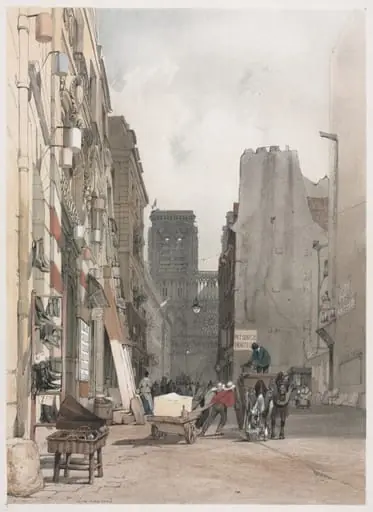 Picturesque Architecture in Paris, Ghent, Antwerp, Rouen: Nôtre Dame, Paris
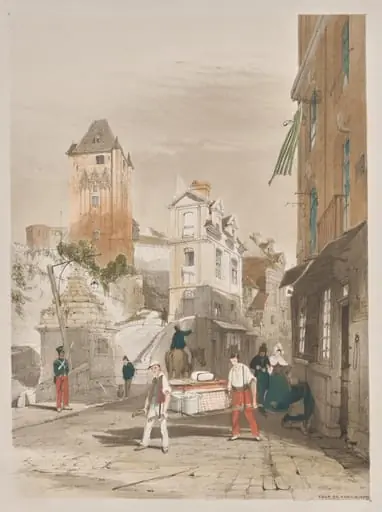 Picturesque Architecture in Paris, Ghent, Antwerp, Rouen: Tour de Remy, Dieppe, France
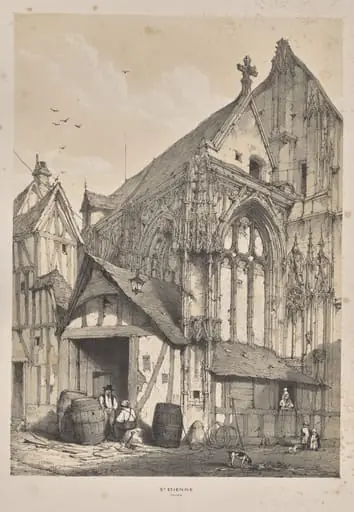 Architecture of the Middle Ages: St. Etienne, Rouen
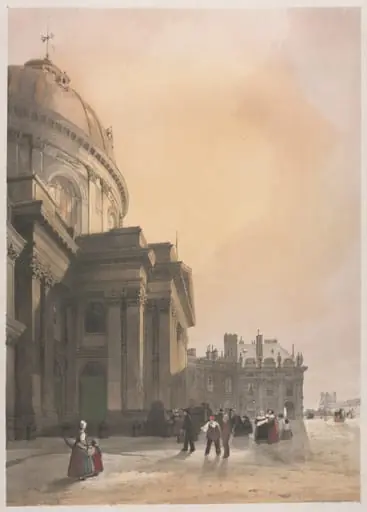 Picturesque Architecture in Paris, Ghent, Antwerp, Rouen: La Chapelle de l'Institut, Paris