Artwork
Maquignons (Horse Dealers)
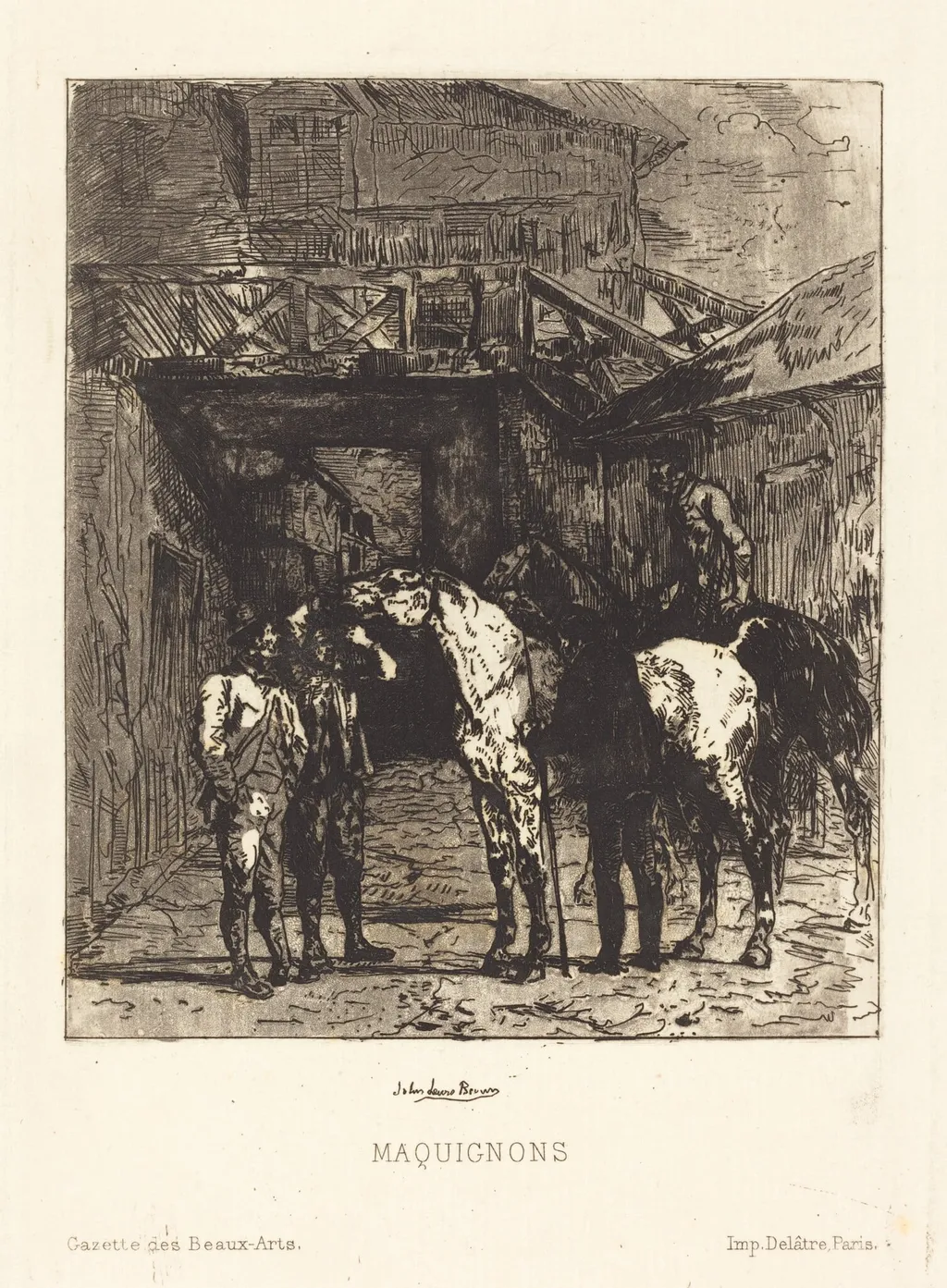
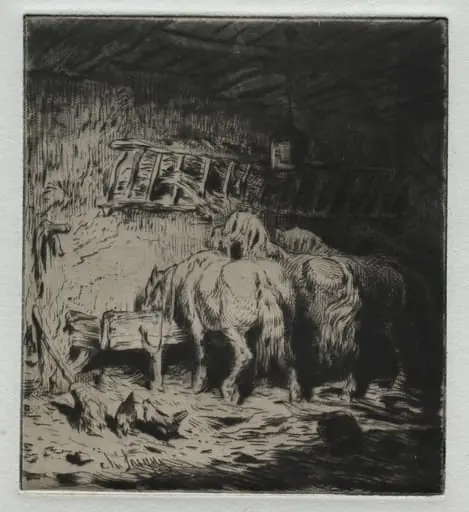
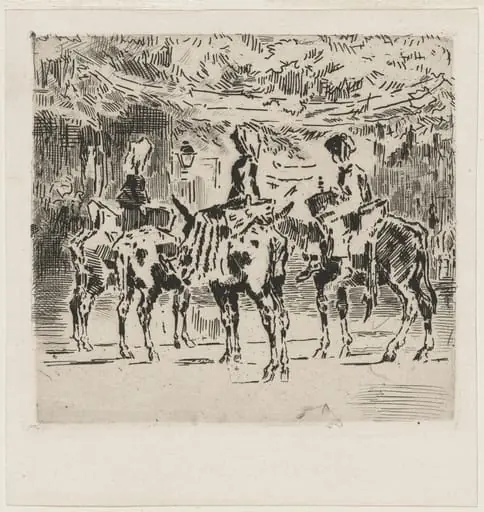
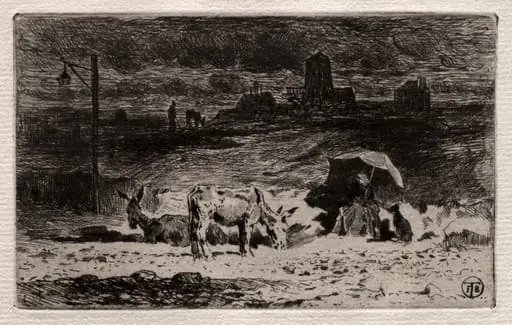
Maquignons (Horse Dealers) is an ink print by the Romanticist artist John Lewis Brown. It dates from 1860 and is held in the collection of the National Gallery of Art.
About this work
Overview
Created in 1860 by John Lewis Brown, Maquignons (Horse Dealers) is a black-and-white print made using etching and aquatint techniques on laid paper.
Created in 1860 by John Lewis Brown, Maquignons (Horse Dealers) is a black-and-white print made using etching and aquatint techniques on laid paper. It depicts a quiet moment in a rural setting: four men and three horses gathered near a weathered stable. The composition emphasizes texture and atmosphere over narrative action, capturing the subdued realism of everyday labor in mid-19th-century France.
Subject & Meaning
The title refers to horse traders, suggesting a commercial exchange, though the scene lacks overt drama or negotiation. The figures stand passively, their dark clothing blending into the shadows of the stable. The horses, with their coarse coats and varied markings, appear as both livestock and silent participants. The image conveys the quiet dignity of rural trade, where animals and humans coexist in a space defined by utility and time-worn surfaces.
Technique & Style
Brown employed etching for fine lines and aquatint for tonal gradations to render the rough textures of horsehide and aged timber. The deep shadows and uneven ink application create a sense of depth and material weight. Light falls unevenly, highlighting the horses’ flanks and the wooden beams overhead while leaving corners of the stable in near darkness. The technique prioritizes tactile realism over idealized form.
History & Provenance
The print was produced in 1860 during a period when Brown focused on rural French life. It was likely part of a series documenting working-class scenes, though few records of its early ownership survive. The work remained in private collections until entering institutional hands in the 20th century, where it is now preserved as an example of 19th-century French printmaking.
Context
In mid-19th-century France, rural economies still relied heavily on animal labor, and horse trading was a common, if unglamorous, trade. Artists like Brown turned away from grand historical themes to observe ordinary life, influenced by Realist movements and the rise of print culture. This work reflects a broader interest in documenting the textures of daily existence beyond urban centers.
Legacy
Though not widely exhibited today, Maquignons remains a quiet example of how etching could convey the physicality of rural labor. It contributes to a body of work that shifted artistic attention toward the overlooked corners of society. Its technical precision and restrained emotion continue to inform studies of 19th-century printmaking and social observation in art.
Artist & collection