Artwork
Bible Lesson [recto]
![Bible Lesson [recto], by Mather Brown, ink, 1785](https://artifactworldgallery.com/img/mather-brown--bible-lesson-recto--9f541524e49e0ca0-w1024.webp)
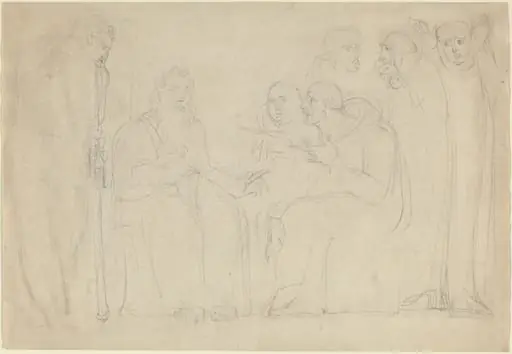
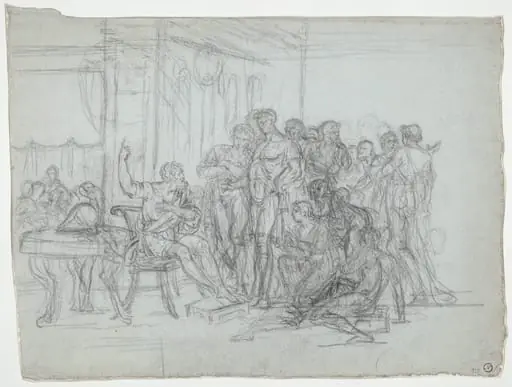
Bible Lesson [recto] is an ink drawing by the Romanticist artist Mather Brown. It dates from 1785 and is held in the collection of the National Gallery of Art.
About this work
Overview
Created in 1785 by Mather Brown, this drawing on laid paper uses pen and brown ink over graphite to depict a quiet moment of instruction.
Created in 1785 by Mather Brown, this drawing on laid paper uses pen and brown ink over graphite to depict a quiet moment of instruction. The composition centers on a robed figure gesturing toward an unseen object, surrounded by attentive onlookers. Its modest scale and medium suggest a preparatory study rather than a finished work, reflecting the artist’s engagement with narrative scenes drawn from religious or moral contexts.
Subject & Meaning
The scene portrays a teacher, likely a biblical figure, addressing a group in a moment of exposition. The raised hand and focused gaze of the central figure imply the transmission of knowledge, while the observers’ postures convey receptiveness. Though the specific passage is not identified, the subject aligns with 18th-century interest in moral instruction through scriptural narratives, emphasizing quiet reverence over dramatic spectacle.
Technique & Style
Brown employed fine pen lines and subtle graphite underdrawing to define forms with clarity and restraint. The ink’s tonal variations suggest volume and spatial depth without heavy shading. The draftsmanship is precise yet unembellished, characteristic of academic training in figure composition. The use of laid paper, with its visible chain lines, grounds the work in contemporary drawing practices of the period.
History & Provenance
The drawing dates to 1785, during Brown’s early career in London, after his studies in Boston and before his move to Rome. It likely served as a preparatory sketch for a larger composition or as an independent study. No documented early ownership is recorded, but its survival suggests it remained in the artist’s possession or within his circle, reflecting the private nature of such studies at the time.
Context
In late 18th-century Britain, religious and historical subjects were common in academic art, often used to convey ethical lessons. Brown, trained in the tradition of Benjamin West, engaged with such themes while navigating the transition from neoclassical formality to emerging Romantic sensibilities. This drawing reflects the period’s emphasis on moral clarity and quiet narrative over theatricality.
Legacy
Though not widely exhibited or reproduced, the drawing exemplifies Brown’s skill in capturing human interaction through restrained draftsmanship. It contributes to understanding his development as a narrative artist before his later portrait commissions. As a surviving study from his formative years, it offers insight into the working methods of British artists navigating religious subject matter in an increasingly secular age.
Artist & collection

Artist
Mather Brown (baptized 11 October 1761 – 25 May 1831) was an American painter who was born in Boston, Massachusetts and was active in England.


 Saint Augustine Converting King Ethelbert of Kent
![Three Figures [verso], by Mather Brown](https://artifactworldgallery.com/img/mather-brown--three-figures-verso--d67cc3e7c0d36b3b-w320.webp) Three Figures [verso]
Three Figures [verso]![Mucius Scaevola [recto], by John Hamilton Mortimer](https://artifactworldgallery.com/img/john-hamilton-mortimer--mucius-scaevola-recto--0de678fa443f7962-w320.webp) Mucius Scaevola [recto]
Mucius Scaevola [recto]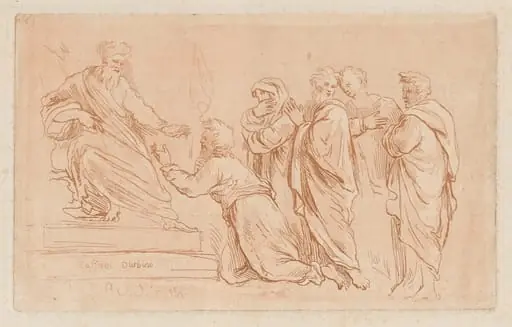 Adonias Imploring the Grace of Solomon or Jeroboam Kneeling before Rehoboam
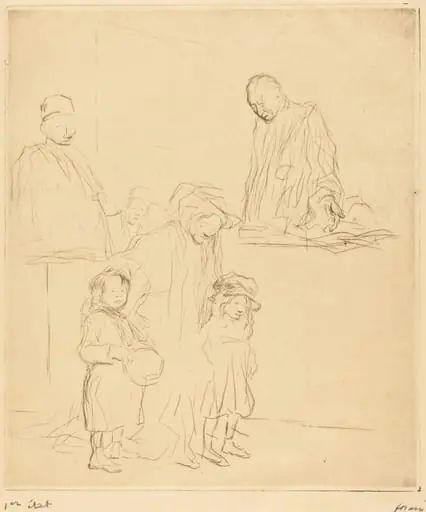 La sortie de l'audience (1ère planche) (Coming Out of the Hearing) (first plate)
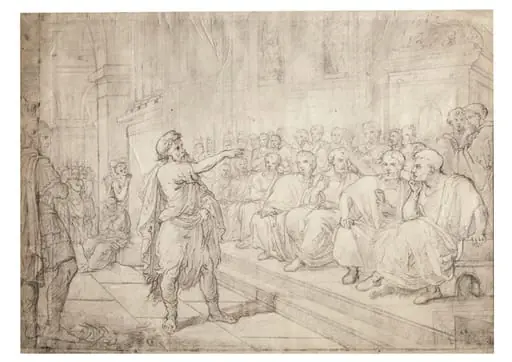 Țăranul de la Dunăre
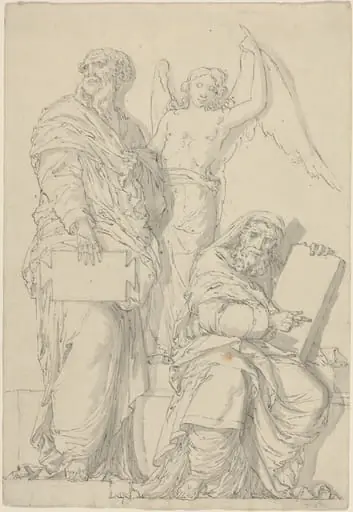 The Prophets Hosea and Jonah
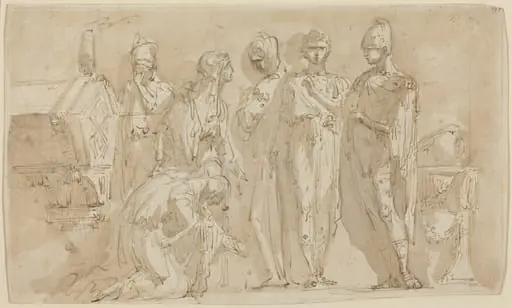 Coriolanus before the Women of Rome
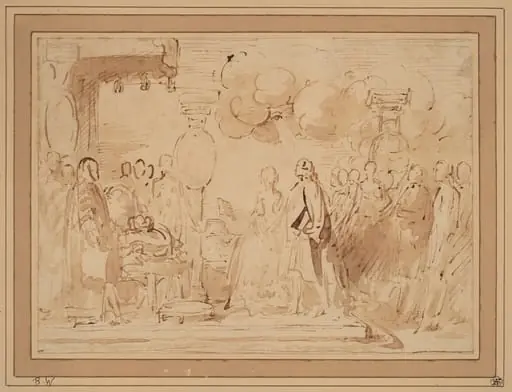 George III Resuming Royal Power in 1789
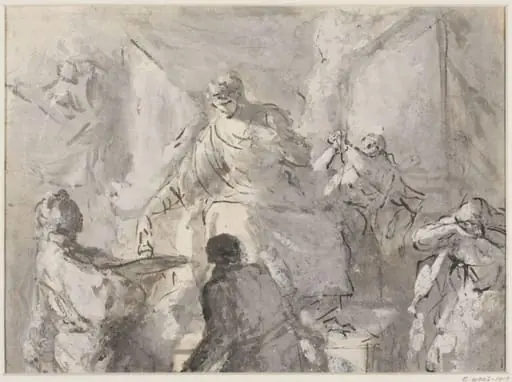 A seated figure receiving an offering
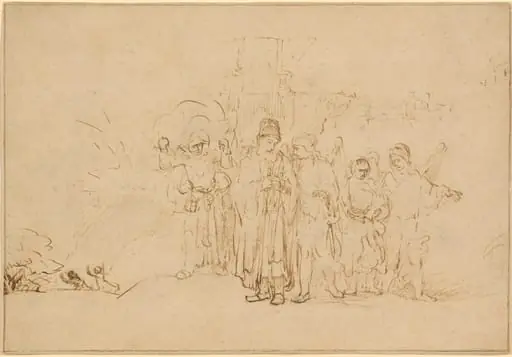 Lot and His Family Leaving Sodom
 Timoleon Thanked by the Citizens of Syracuse