Artwork
Saint Augustine Converting King Ethelbert of Kent
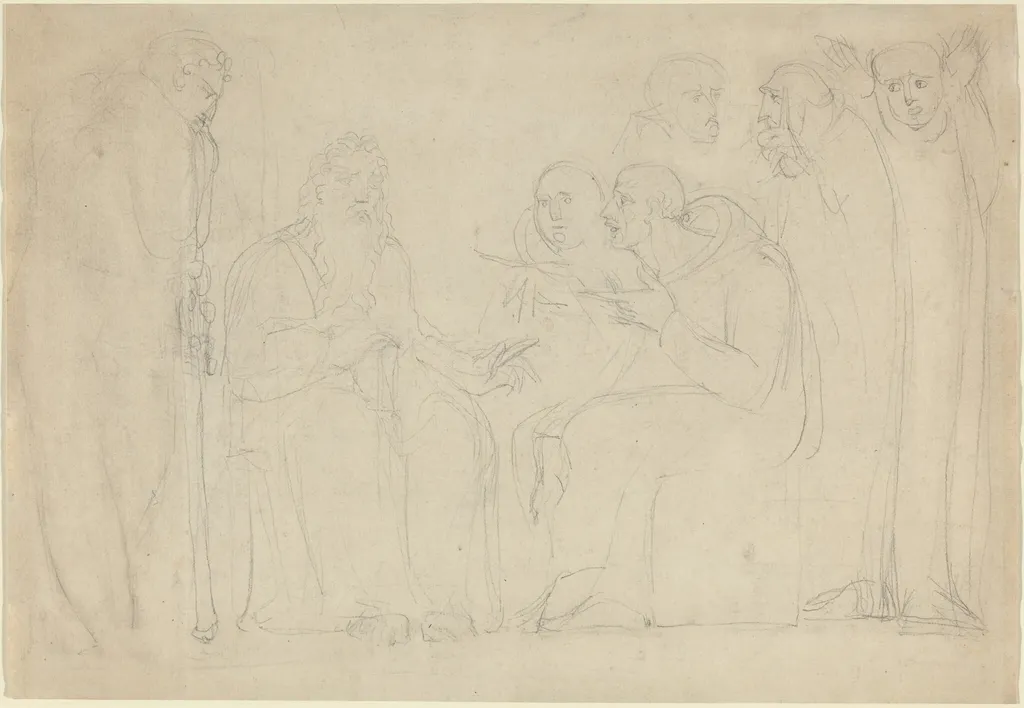
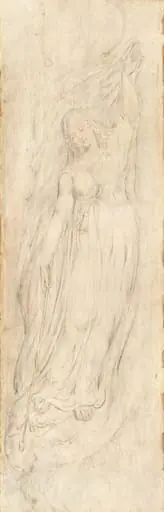
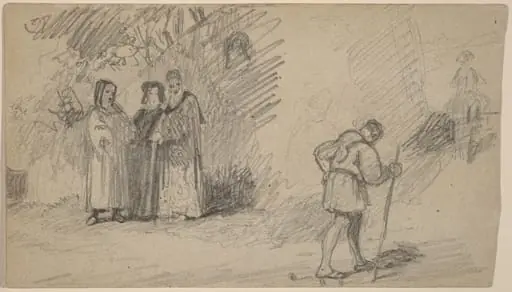
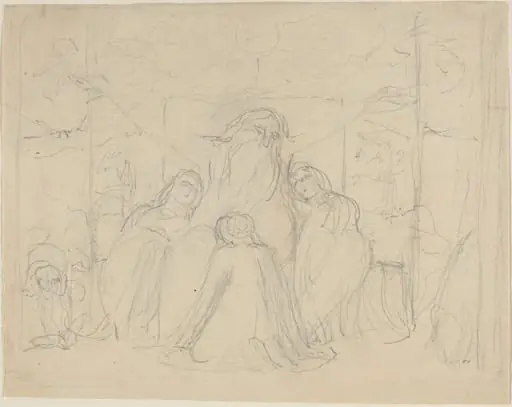
Saint Augustine Converting King Ethelbert of Kent is a graphite drawing by the Romanticist artist William Blake. It dates from 1793 and is held in the collection of the National Gallery of Art.
About this work
This painting is titled Saint Augustine Converting King Ethelbert of Kent.
It was created by William Blake in the late 18th century, a time when artists were exploring new ways to express emotion and imagination. The fact that it's a graphite drawing suggests Blake was focusing on line and texture.
Check out the movement Romanticism to learn more about the art of this time.
Overview
The work presents a moment from early Christian history, portraying the missionary Saint Augustine as he engages the Anglo‑Saxon ruler Ethelbert.
Created around 1793, William Blake’s drawing titled *Saint Augustine Converting King Ethelbert of Kent* is executed in graphite on laid paper. The work presents a moment from early Christian history, portraying the missionary Saint Augustine as he engages the Anglo‑Saxon ruler Ethelbert. Though modest in size, the composition reflects Blake’s characteristic blend of narrative depth and spiritual inquiry.
Subject & Meaning
The scene captures the legendary conversion of King Ethelbert of Kent by Saint Augustine, an event traditionally seen as the introduction of Christianity to England. Blake emphasizes the dialogue between the two figures, suggesting a transformative encounter that bridges pagan authority and emerging Christian faith, a theme resonant with his broader interest in spiritual revelation.
Technique & Style
Rendered entirely in graphite, the drawing relies on line, hatching, and subtle tonal variations to model forms and suggest texture. Blake’s use of laid paper provides a faint ribbed surface that interacts with the graphite, enhancing the sense of depth. The composition’s linear clarity and symbolic arrangement are hallmarks of Blake’s personal visual language, distinct from the more painterly approaches of his contemporaries.
History & Provenance
Blake produced the work during his London years, a period when his artistic output was largely overlooked by the public and patrons. The drawing remained in private hands for much of the 19th century before entering a museum collection in the early 20th century, where it has been catalogued as part of his religious narrative series.
Context
The late eighteenth century saw artists increasingly exploring emotion, imagination, and individual vision, trends that would later be identified with Romanticism. Blake’s drawing aligns with this shift, foregrounding personal spiritual insight over classical restraint. While his contemporaries favored oil and watercolor, Blake’s choice of graphite underscores his focus on the power of line to convey theological ideas.
Artist & collection
Artist
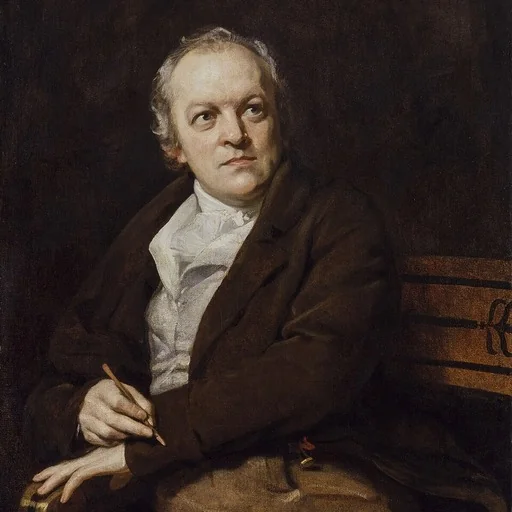
William Blake (28 November 1757 – 12 August 1827) was an English poet, painter and printmaker.

![Mucius Scaevola [recto], by John Hamilton Mortimer](https://artifactworldgallery.com/img/john-hamilton-mortimer--mucius-scaevola-recto--0de678fa443f7962-w320.webp)
![Sheet of Studies [recto and verso], by John Flaxman](https://artifactworldgallery.com/img/john-flaxman--sheet-of-studies-recto-and-verso--37ffe1e79b52e688-w320.webp)
![Bible Lesson [recto], by Mather Brown](https://artifactworldgallery.com/img/mather-brown--bible-lesson-recto--9f541524e49e0ca0-w320.webp)