Artwork
Soldier of Sudanese Camel Corps
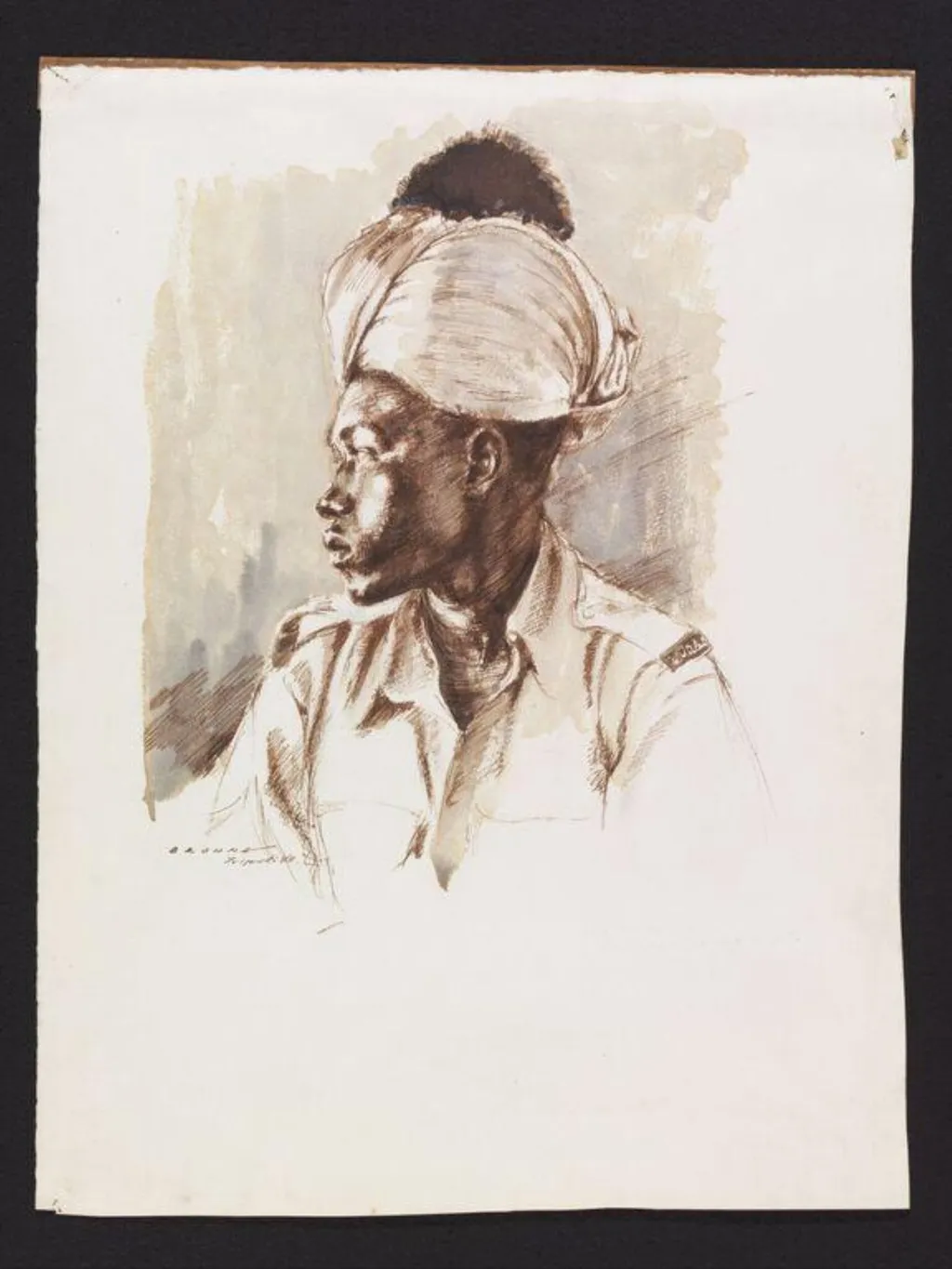
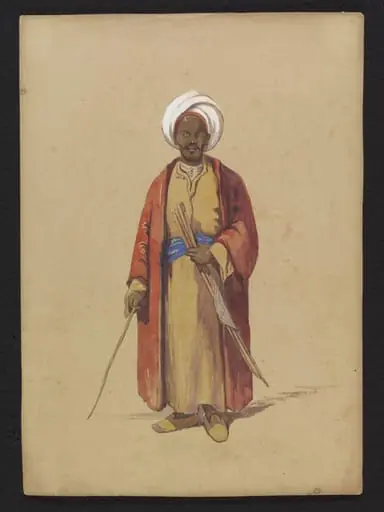
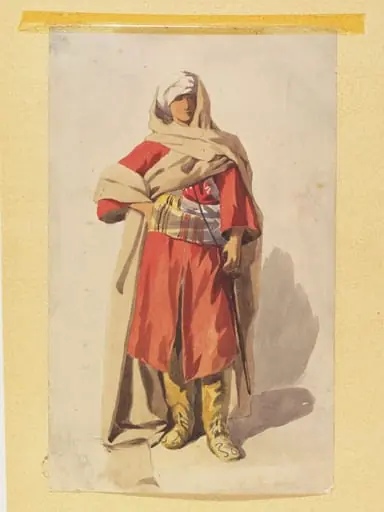
Soldier of Sudanese Camel Corps is a watercolor work on paper by Kenneth George Browne Browne. It dates from 1944 and is held in the collection of the Victoria and Albert Museum. This watercolor, executed in 1944 by Captain Kenneth George Browes, portrays a member of the Sudanese Camel Corps.
About this work
Overview
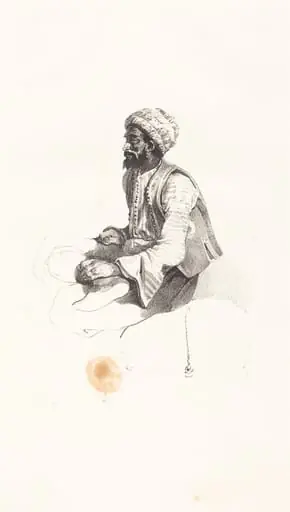
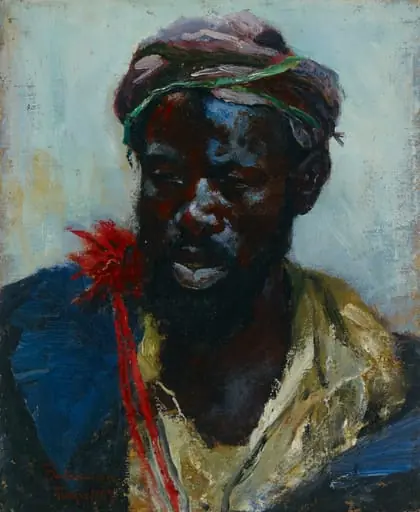
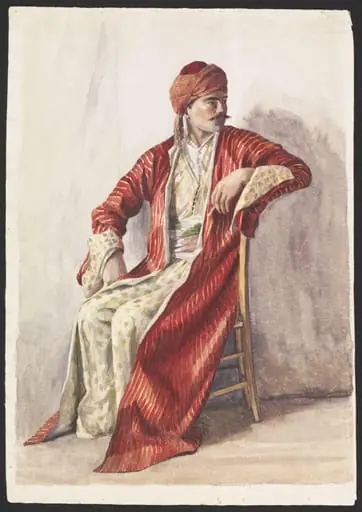
This watercolor, executed in 1944 by Captain Kenneth George Browes, portrays a member of the Sudanese Camel Corps. Rendered in a side profile, the figure wears a turban and a collared shirt, his expression solemn as he gazes forward. The composition is set against a loosely rendered background of varying tonalities, allowing the soldier to dominate the visual field.
Subject & Meaning
The work captures a colonial-era soldier, reflecting the British military presence in Sudan during the early twentieth century. By focusing on the individual’s attire and demeanor, the drawing emphasizes the cultural hybridity of the camel corps, a unit that combined local dress with British military organization, suggesting themes of authority, adaptation, and the human face of imperial forces.
Technique & Style
Browes employs transparent washes of watercolor to model the figure, using a limited palette of light and dark tones to generate depth.
Browes employs transparent washes of watercolor to model the figure, using a limited palette of light and dark tones to generate depth. Visible brushstrokes in the background create a sense of atmospheric space, while the contrast between the muted backdrop and the more saturated rendering of the turban and shirt draws the eye to the subject. The approach demonstrates a controlled yet expressive handling of the medium.
History & Provenance
After its creation, the drawing entered the collection of Christopher Tower, a noted private collector of British watercolors. It was later auctioned at Christie's in 1977, fetching a price of £12. The Victoria and Albert Museum subsequently acquired the piece, where it remains part of the institution’s holdings on British military art.
Context
The Sudanese Camel Corps was formed in the late nineteenth century as a mounted unit recruited from local populations to serve under British command. Watercolor was a common medium for field sketches and documentation among officer-artists, allowing rapid depiction of personnel and terrain. This piece thus serves both as an artistic study and a historical record of a specific colonial military formation.
Artist & collection
Artist
Kenneth George Browne painted a lone soldier in the Sudanese Camel Corps during World War II.