Artwork
A Nubian selling Canes
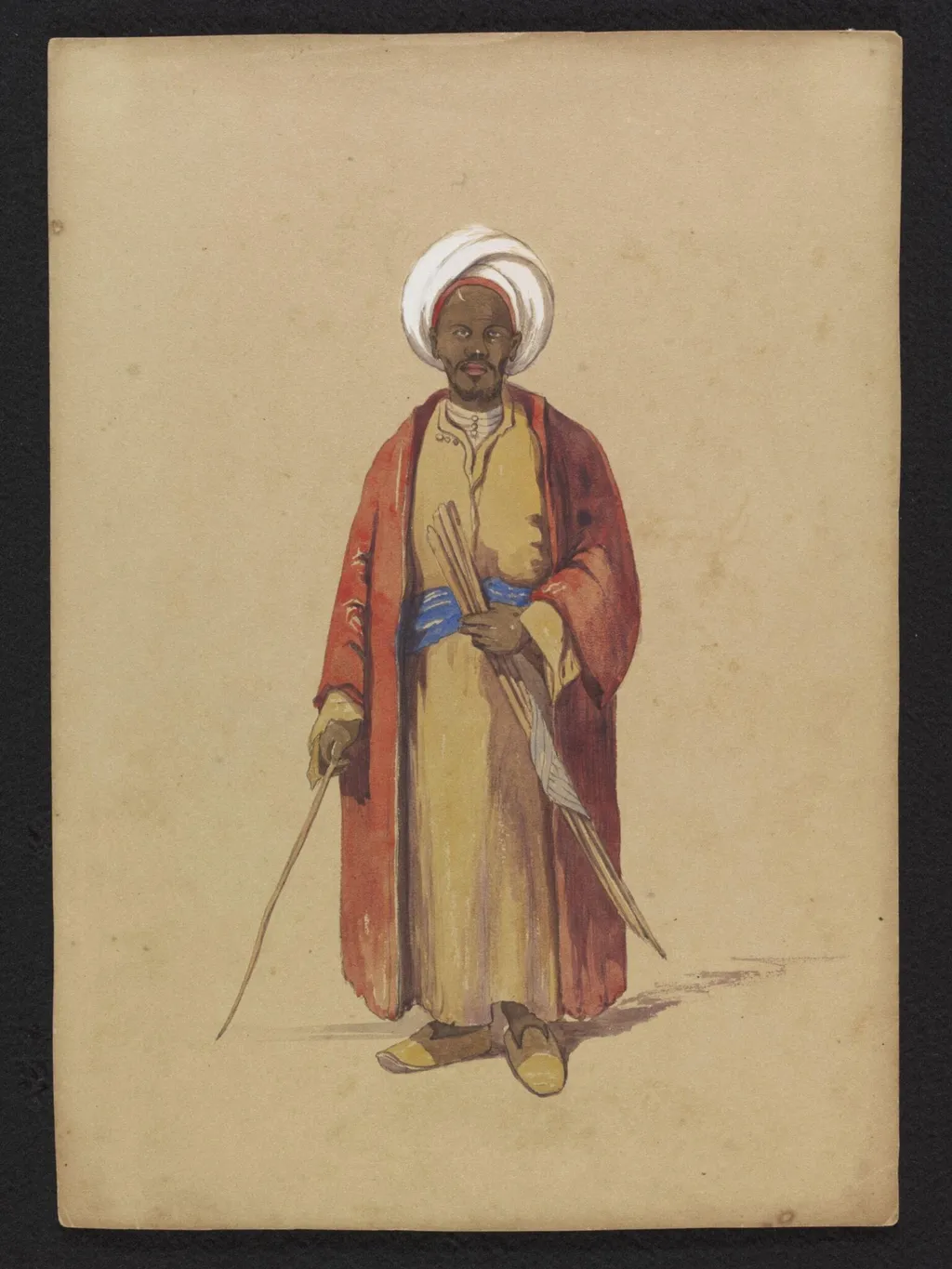
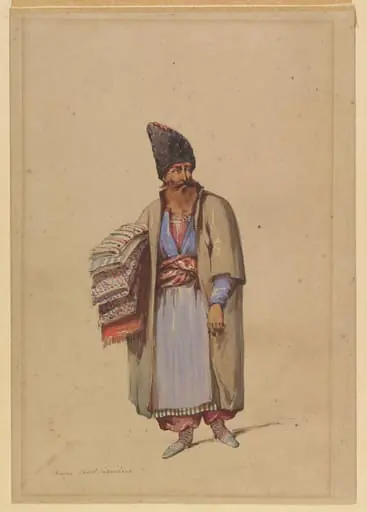
A Nubian selling Canes is a watercolor work on paper by the Impressionist artist H. H. Morant. It dates from 1852 and is held in the collection of the Victoria and Albert Museum.
About this work
Overview
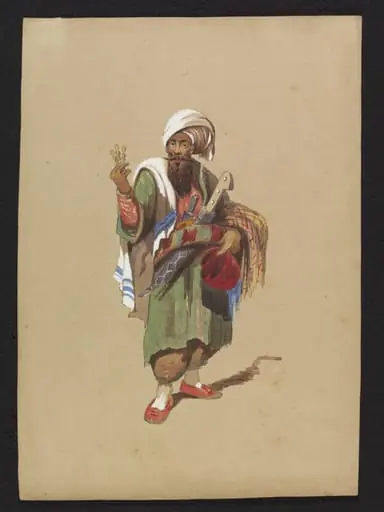
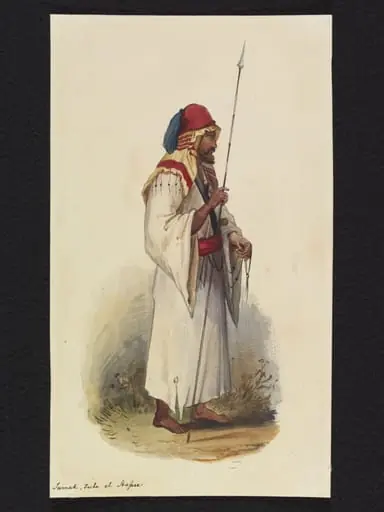
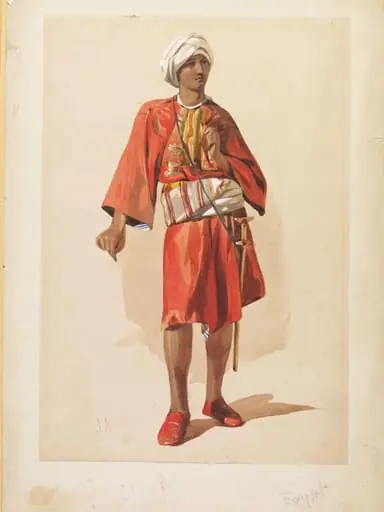
A watercolour portrays a Nubian figure standing upright, dressed in a long robe and turban of muted yellow and brown, with a red cloak draped over his shoulders. He holds a bundle of walking sticks in one hand and a single cane in the other, set against a plain, light background that concentrates attention on the subject.
Subject & Meaning
The work presents a straightforward scene of a Nubian merchant offering canes for sale, emphasizing everyday commerce. The calm composition and warm palette convey a sense of ordinary activity rather than exotic spectacle, inviting viewers to consider the ordinary livelihoods of people from the region.
Technique & Style
Executed in watercolour, the piece relies on a limited, earthy colour range—yellow, brown, and a touch of red—to define clothing and objects. The brushwork is restrained, and the flat, light background eliminates depth, reinforcing the focus on the figure and his wares.
History & Provenance
The image belongs to a series of three related studies dated 1852, 1853, and 1854, all sharing a common provenance. Two of the versions were derived from sketches by Amadeo Preziosi, and the composition originates from a study recorded in a Christie’s album titled *A Nubian selling Canes*. The watercolour entered the collection in 1973 through acquisition from Mrs. M.J. Netting.
Artist & collection
Artist
British artist H. H. Morant painted everyday street scenes in watercolor during the mid-1800s. His small, precise works capture vendors and passersby in Cairo and Nubia—like *A Sherbert Seller* (1852–54) and *A Nubian…