Artwork
Three Months
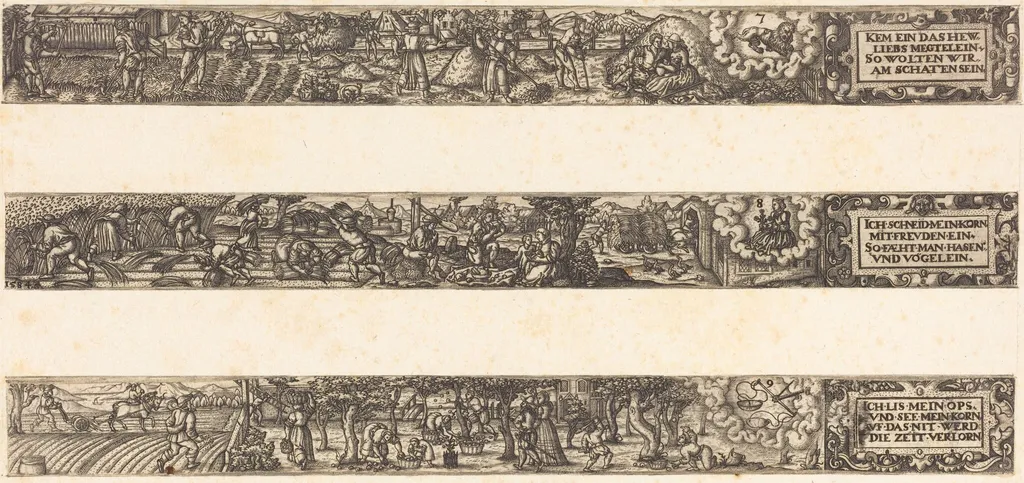
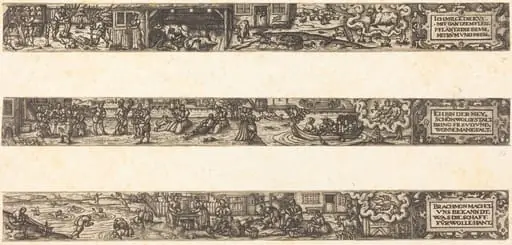
Three Months is an ink print by the Renaissance artist Franz Brun. It dates from 1584 and is held in the collection of the National Gallery of Art.
About this work
Overview
Three Months, an engraving executed by Franz Brun in 1584, presents a densely populated scene rendered on a single copper plate. The work is notable for its intricate line work, which creates a lace‑like texture across the composition, and for the sheer number of individual figures it contains.
Subject & Meaning
The print depicts a bustling domestic environment where numerous characters engage in everyday tasks: a woman prepares food, children play, and laborers cut wood. The inclusion of a figure stumbling in the corner adds a touch of humor, emphasizing the ordinary rhythms of daily life.
Technique & Style
Brun employed fine cross‑hatching to achieve delicate tonal variations, allowing the multitude of tiny forms to be distinguished within a limited space. This meticulous line work contributes to the overall impression of a tightly woven tapestry of activity.
History & Provenance
Created in the late sixteenth century, the engraving reflects the period’s interest in detailed genre scenes. While specific ownership records are scarce, the work has been cited in studies of early printmaking for its exceptional figure count and technical execution.
Context
During the 1580s, engravers increasingly explored complex compositions that could convey narrative depth within a single image. Brun’s Three Months aligns with this trend, showcasing the capacity of the medium to render crowded, narrative-rich scenes.
Legacy
The print remains a reference point for scholars examining the limits of detail achievable in early engraving, particularly regarding the management of space and the use of cross‑hatching to delineate numerous subjects.
Artist & collection


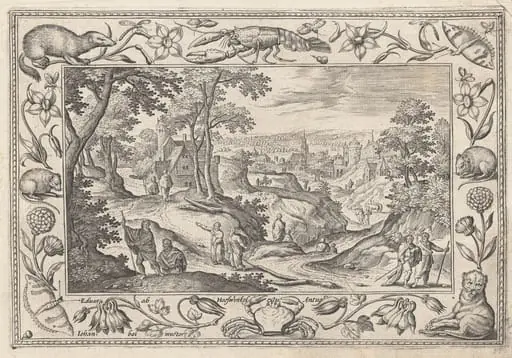 The Sending Out of the Apostles
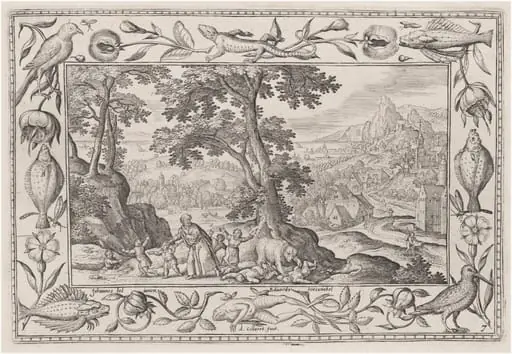 The Mocking Children Cursed by Elijah and Eaten by a She-Bear
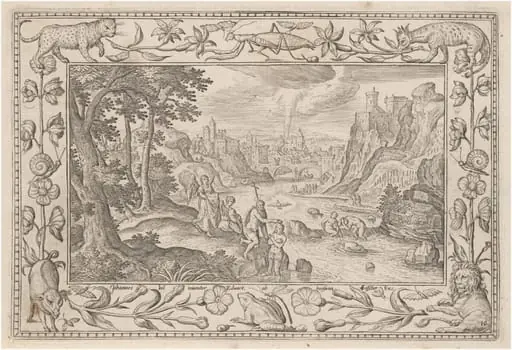 The Baptism of Christ
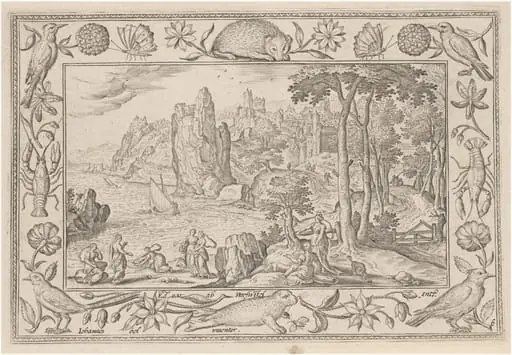 Pharaoh’s Daughter Finding Moses
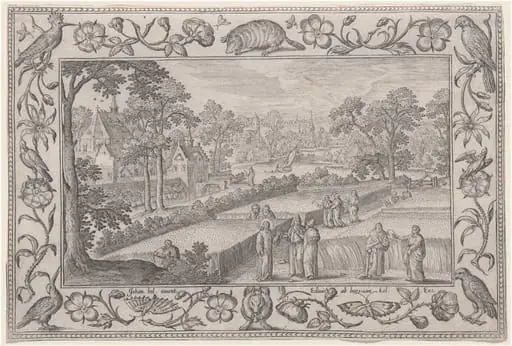 Christ and the Disciples in the Field
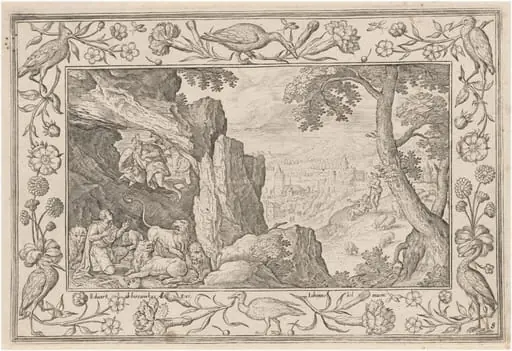 Daniel in the Lion’s Den
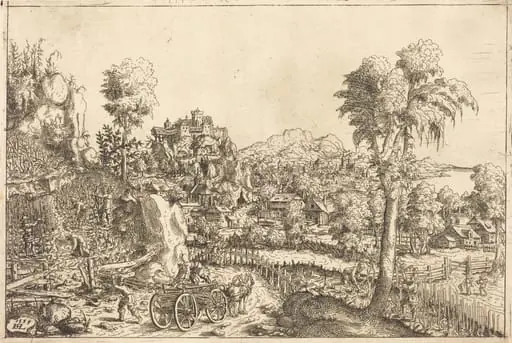 Landscape with a Vineyard
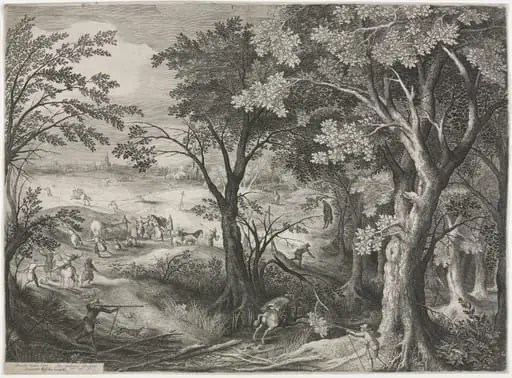 Landscape with Travelers Attacked by a Gang of Robbers
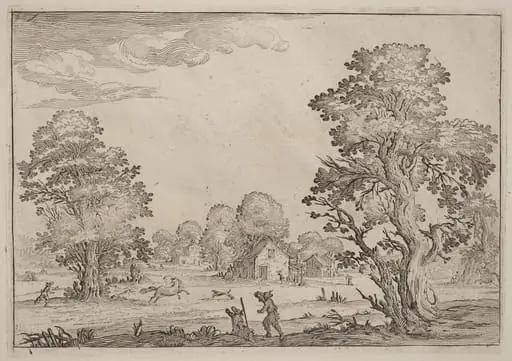 Landscape with Runaway Horses