Artwork
Three Months
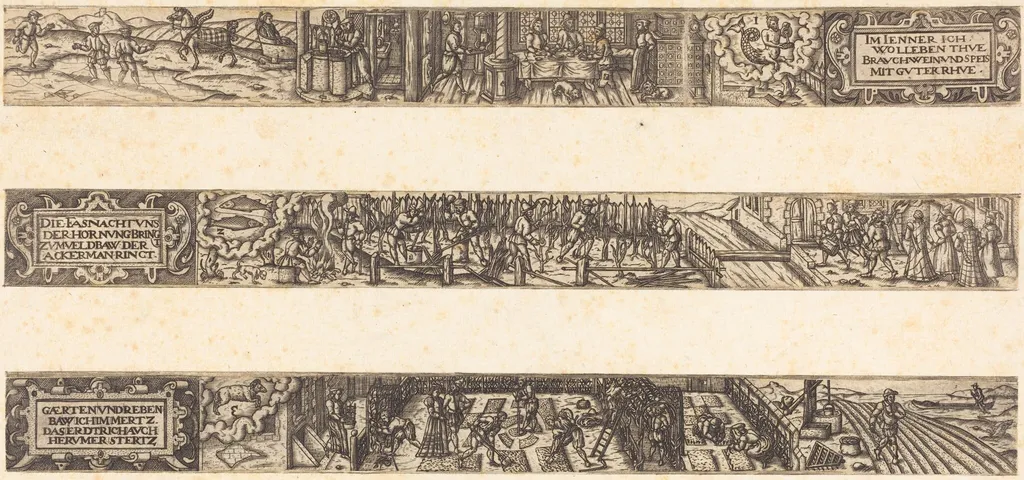
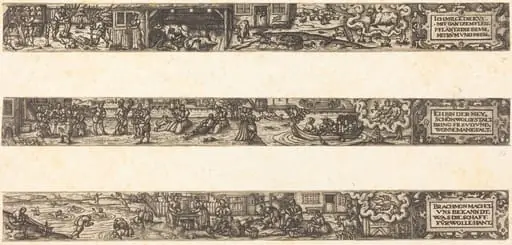
Three Months is an ink print by the Renaissance artist Franz Brun. It dates from 1584 and is held in the collection of the National Gallery of Art.
About this work
Overview
Three Months is an early modern engraving dated 1584 and attributed to Franz Brun. The work presents a modest, detailed composition that reflects the printmaking practices of the late sixteenth century. Its title suggests a temporal or seasonal theme, though the image itself remains straightforward, focusing on the clarity of line and the density of decorative elements typical of the period.
Subject & Meaning
The engraving depicts a simple scene without overt narrative, inviting viewers to consider the passage of time implied by the title. The absence of elaborate symbolism points to a possible utilitarian or instructional purpose, perhaps related to calendars or agricultural cycles, common motifs in contemporary printed material.
Technique & Style
Executed through traditional copperplate engraving, the piece showcases fine incised lines that build texture and depth. Brun’s hand is evident in the meticulous cross‑hatching and the balanced distribution of detail across the surface, hallmarks of late Renaissance printmaking that emphasize precision over painterly effect.
History & Provenance
The work is recorded as being produced in the same year as Brun’s birth, an unusual circumstance that has prompted scholarly curiosity about its attribution. Apart from this date, documentation of the print’s ownership history is scarce, and the engraving has largely circulated among specialized collections of early modern prints.
Context
Created during a period of expanding print culture in Europe, the engraving aligns with the growing demand for reproducible images for both educational and decorative purposes. Its modest scale and detailed execution reflect the broader trend of disseminating visual information through affordable, portable media.
Legacy
Although Franz Brun remains a relatively obscure figure, Three Months contributes to the understanding of late sixteenth‑century engraving techniques and the role of prints in everyday visual communication. The piece continues to be examined by scholars interested in the intersection of art, chronology, and early modern print production.
Artist & collection


 The Fall and Redemption of Man
![The Siege of La Rochelle [plate 1 of 16; set comprises 1952.8.97-112], by Jacques Callot](https://artifactworldgallery.com/img/jacques-callot--the-siege-of-la-rochelle-plate-1-of-16-set-comprises-1952-8--4a7a47fc234f38f8-w320.webp) The Siege of La Rochelle [plate 1 of 16; set comprises 1952.8.97-112]
The Siege of La Rochelle [plate 1 of 16; set comprises 1952.8.97-112] Descent into Hell
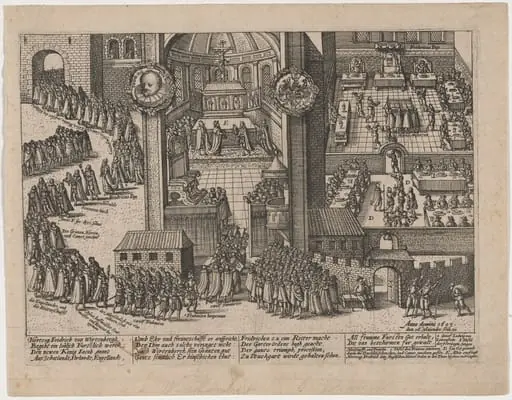 Frederick VI, Duke of Wurtenberg
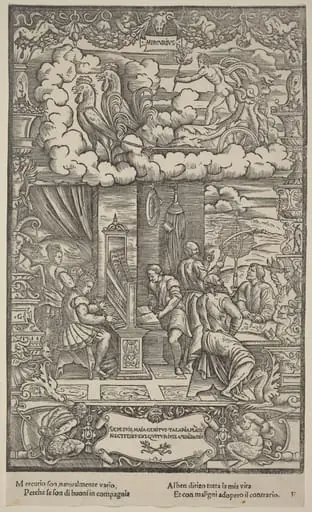 Mercury
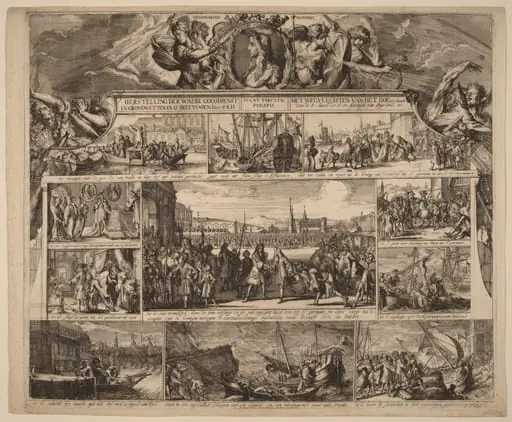 No Monarchy, No Popery
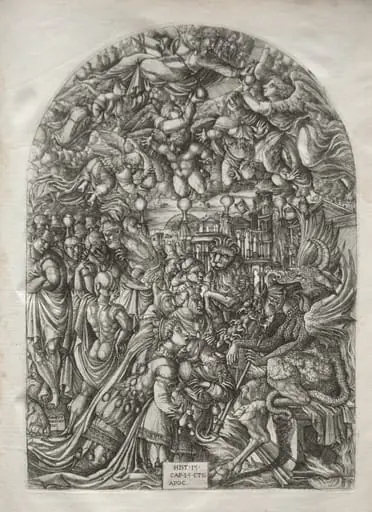 The Apocalypse: The Woman Clothed with the Sun
 Handle for Knife or Fork, Ornamented with Figures
 The Sending Out of the Apostles