Artwork
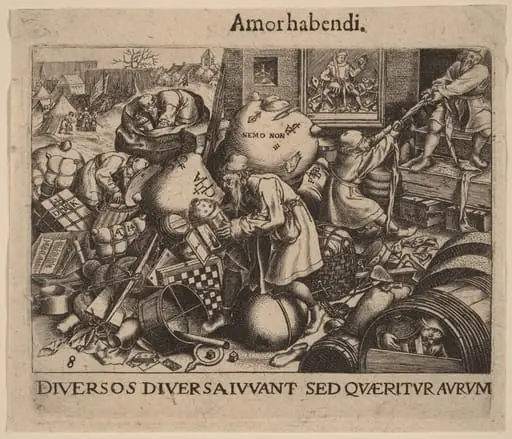
The Man with the Moneybag and His Flatterers
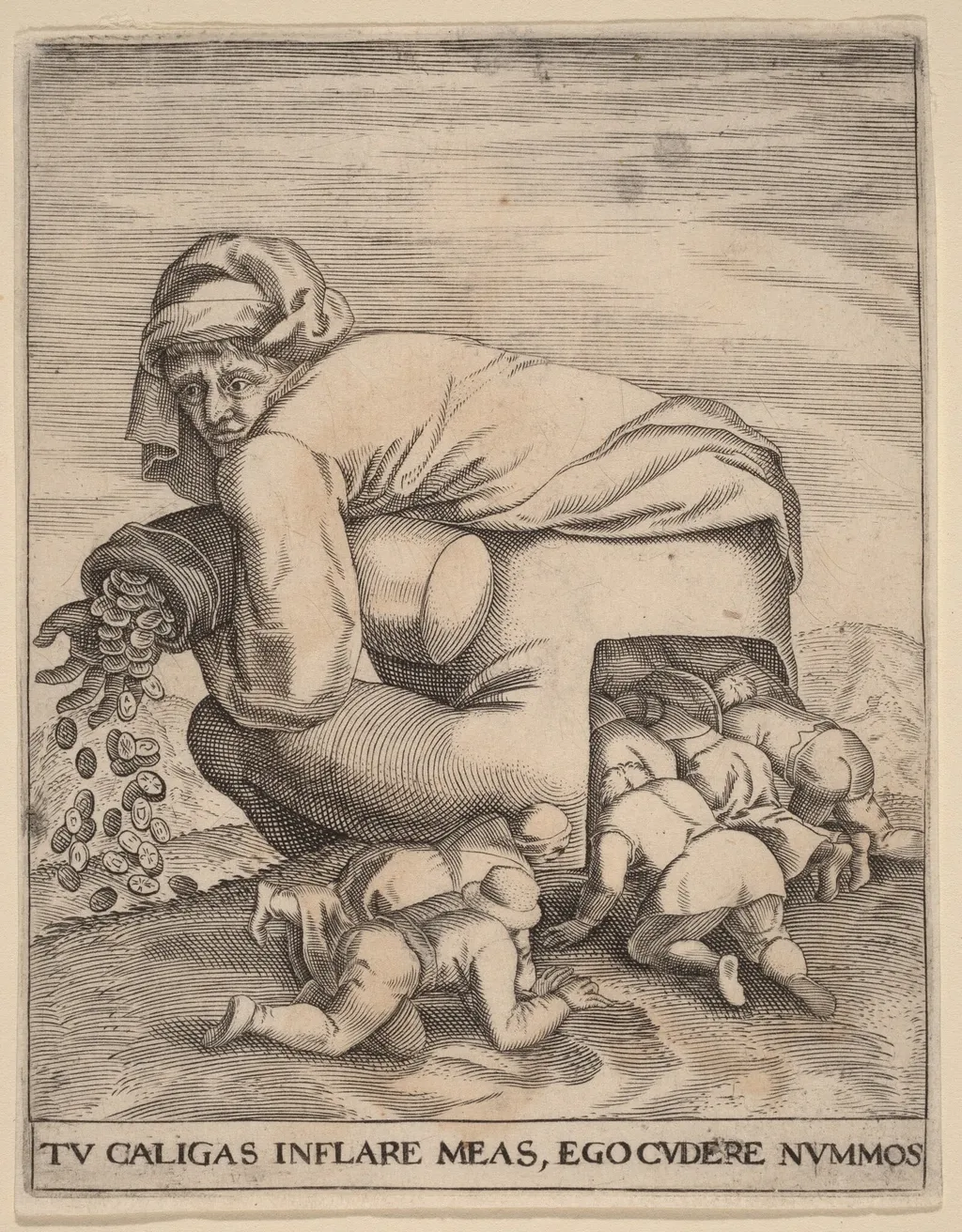
The Man with the Moneybag and His Flatterers is an ink print by the Renaissance artist Johann Theodor de Bry. It dates from 1592 and is held in the collection of the National Gallery of Art.
About this work
Overview
The Man with the Moneybag and His Flatterers is a 1592 engraving by Johann Theodor de Bry, depicting a scene of social commentary. A figure sits atop a large sack, surrounded by attendants in submissive postures.
Subject & Meaning
The central figure, dressed in a long robe and head covering, holds a bag of coins, symbolizing wealth. The surrounding individuals, bowing or kneeling, convey the themes of flattery and the allure of wealth.
Technique & Style
Executed in a detailed cross-hatched technique, the engraving achieves depth and texture. A nuanced range of tones emphasizes volume, particularly in the folds of the main figure's clothing, reflecting Renaissance artistic principles.
History & Provenance
Created in 1592 by Johann Theodor de Bry, the engraving is currently part of the collection at the National Gallery of Art, Washington.
Artist & collection

Artist
Johann Theodor de Bry (1561–1623) was a German artist, born in Strasbourg.


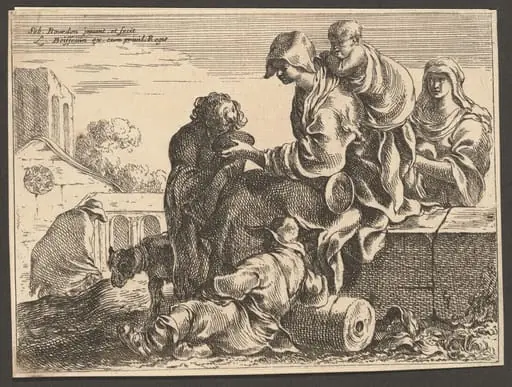 A Drinking Child with Resting Peasants
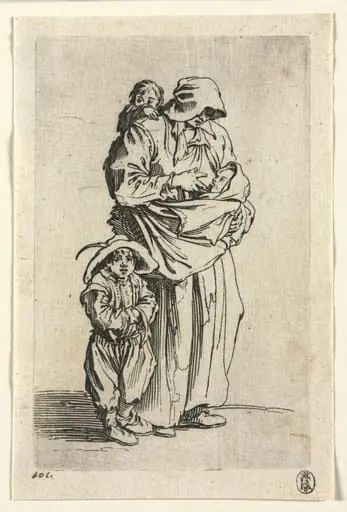 The Beggars: A Mother and Her Three Children
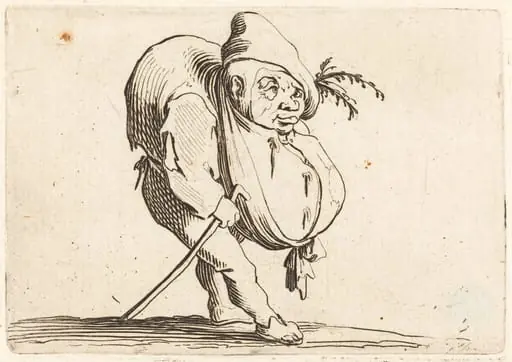 The Hunchback with a Cane
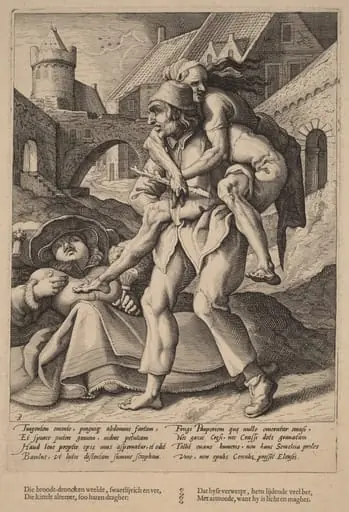 Poverty is Easier to Bear Than Luxury
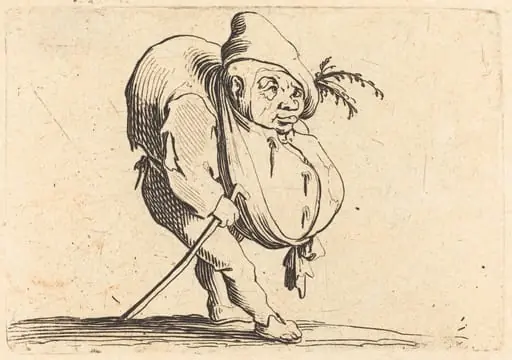 The Hunchback with a Cane
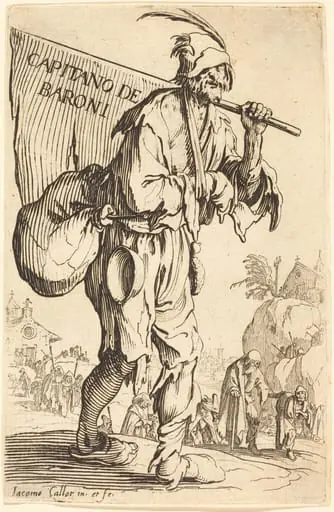 Captain of the Barons
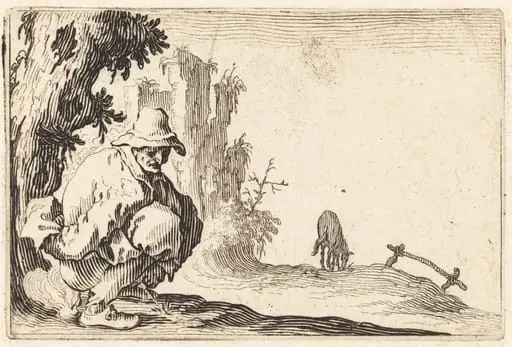 Peasant Defecating
 Captain of the Barons
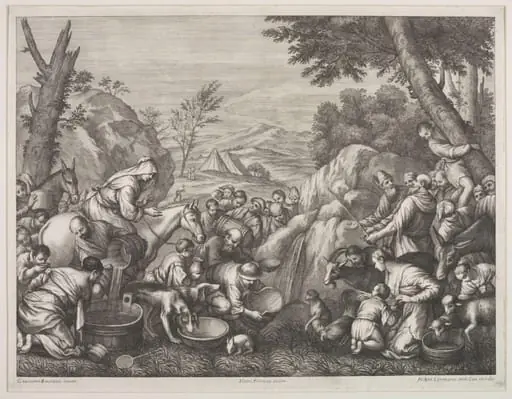 Moses Striking the Rock
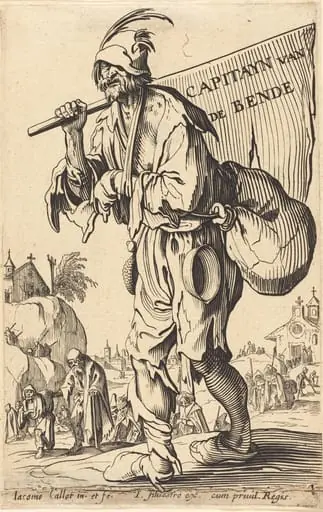 Captain of the Barons
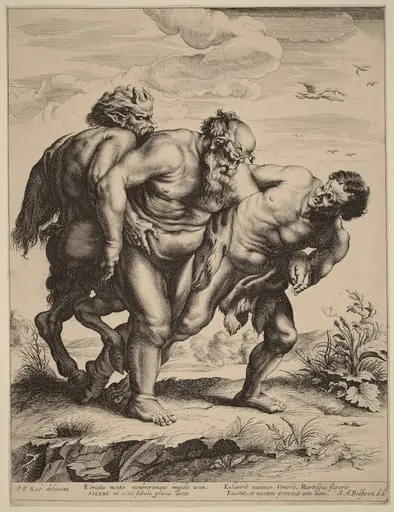 The Drunken Silenus
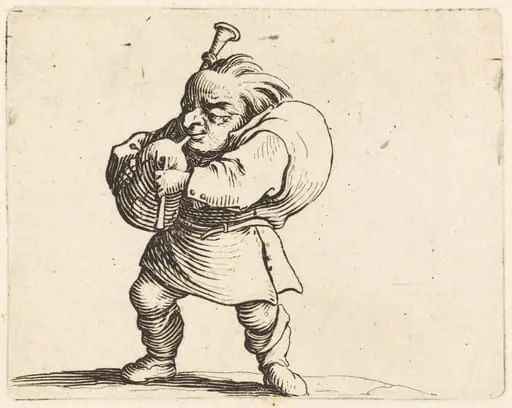 The Bagpipe Player