Artwork
Peasant Defecating
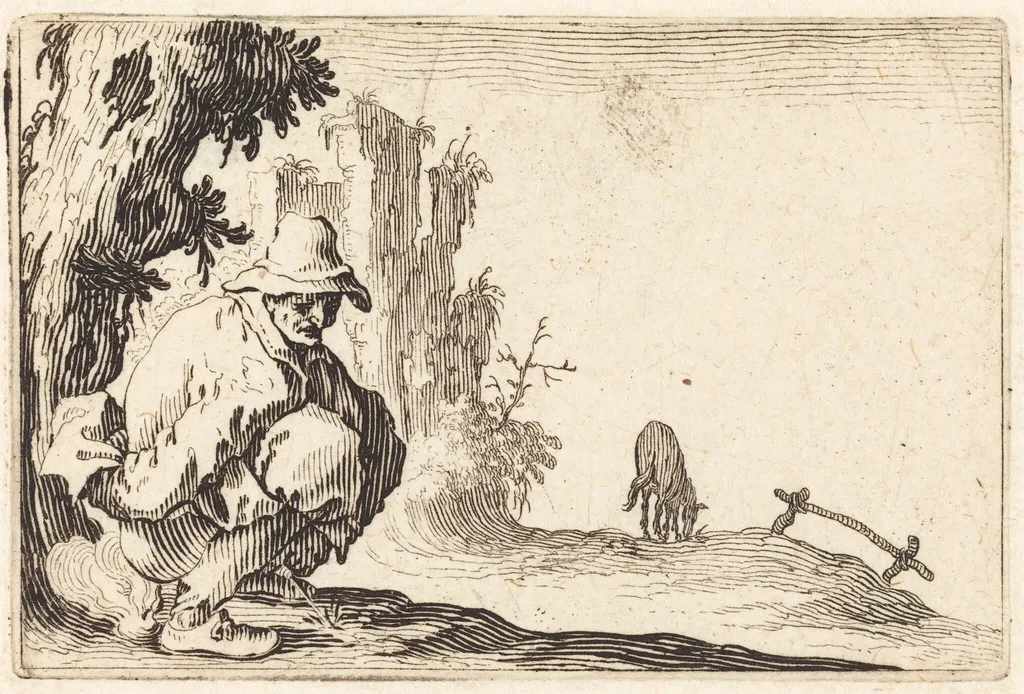
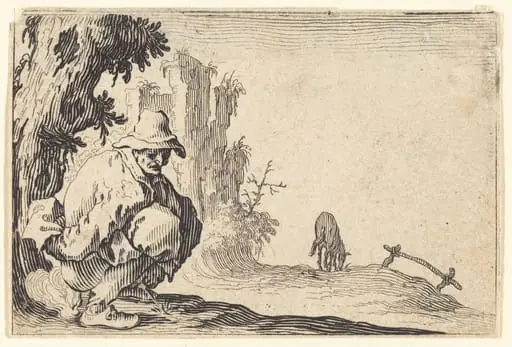
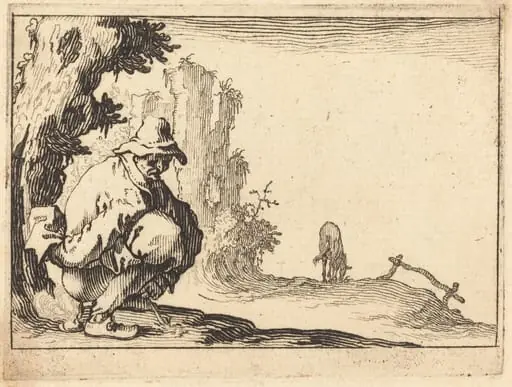
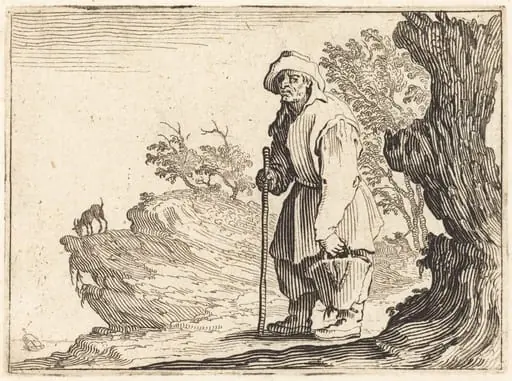
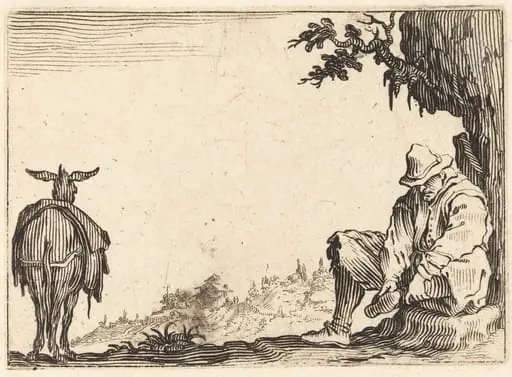
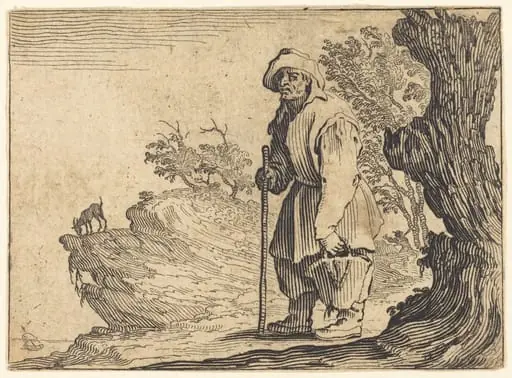
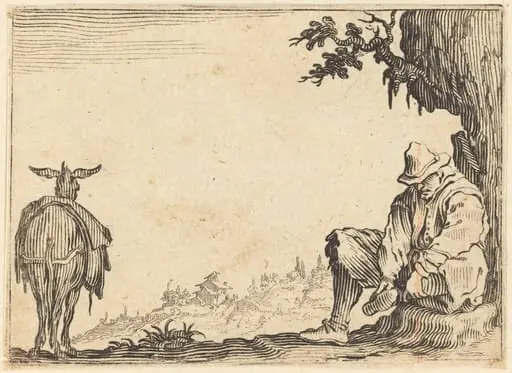
Peasant Defecating is an ink print by the Baroque artist Jacques Callot. It dates from 1622 and is held in the collection of the National Gallery of Art.
About this work
Overview
Created around 1622, this etching on laid paper is one of more than 1,400 prints by Jacques Callot, a French artist from the Duchy of Lorraine.
Created around 1622, this etching on laid paper is one of more than 1,400 prints by Jacques Callot, a French artist from the Duchy of Lorraine. It belongs to a vast body of work documenting the lives of ordinary and marginalized people in early 17th-century Europe. The image captures a solitary peasant in a natural setting, rendered with the fine line work characteristic of Callot’s etching technique.
Subject & Meaning
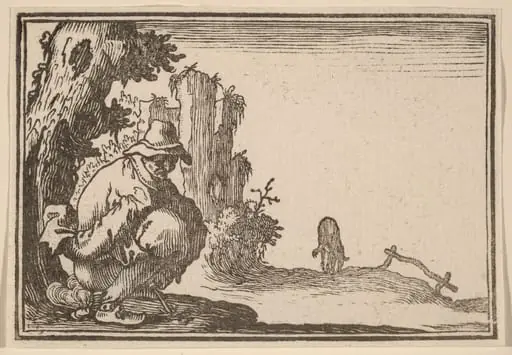
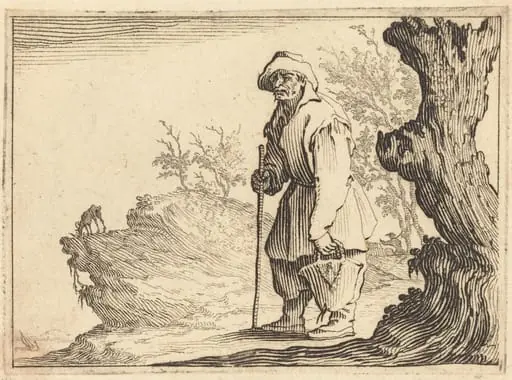
The figure, a peasant squatting in a wooded area, is depicted without idealization or moral judgment. The scene reflects Callot’s interest in unvarnished aspects of rural life, avoiding narrative or symbolism. The presence of a walking stick and small animal suggests a moment of pause during travel or labor, grounding the image in the mundane rhythms of peasant existence.
Technique & Style
Callot employed fine, controlled etching lines to render textures: the roughness of tree bark, the folds of coarse fabric, and the contours of a rocky outcrop. The use of laid paper and ink transfer preserved the delicacy of his draftsmanship. His precision in line and spatial depth, despite the small scale, demonstrates mastery of the etching process, allowing for intricate detail without heavy shading.
History & Provenance
The print emerged during Callot’s most prolific period, when he was producing series of genre scenes and social observations. While the exact early ownership is undocumented, such prints circulated widely among collectors and artists in France and the Low Countries. Their affordability and reproducibility made them accessible beyond elite circles, contributing to their survival in multiple institutional collections.
Context
In early 17th-century Europe, depictions of peasants were often satirical or moralizing. Callot’s approach diverged by presenting such figures with observational neutrality. His work coincided with growing interest in everyday life among artists and intellectuals, reflecting broader cultural shifts toward empirical observation and the documentation of social reality.
Legacy
Callot’s etchings, including this one, influenced later generations of printmakers who sought to capture unidealized human experience. His technical innovations in etching and his commitment to portraying the lower classes helped expand the thematic scope of printmaking, paving the way for 18th- and 19th-century realist traditions in graphic art.
Artist & collection
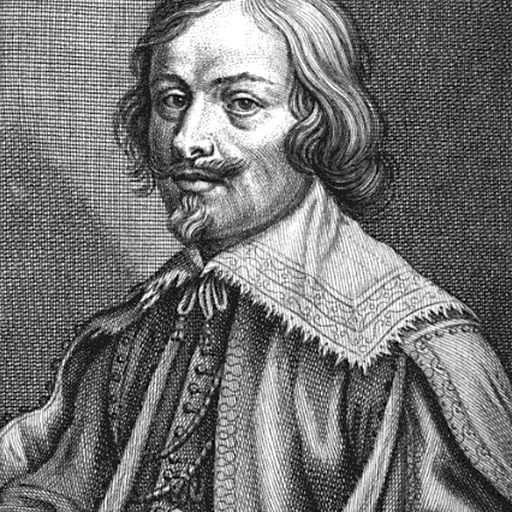
Artist
Jacques Callot was a baroque printmaker and draftsman from the Duchy of Lorraine.

 Holy Family at supper
 Restoration of the Aqueduct at Pisa
 Restoration of the Aqueduct at Pisa
 Square in Paris with Many Figures
 Square in Paris with Many Figures
 Horsemen Attacked by Robbers
 HOW WILL A COVERED PART BE CORRECTED?HOW WIKA A COVERED HEART DEED CORRECTED?
![Christ Walking on the Water [second plate], by Jacques Callot](https://artifactworldgallery.com/img/jacques-callot--christ-walking-on-the-water-second-plate--2069f3bfe4cb2126-w320.webp) Christ Walking on the Water [second plate]
Christ Walking on the Water [second plate]