Artwork
Country Fair
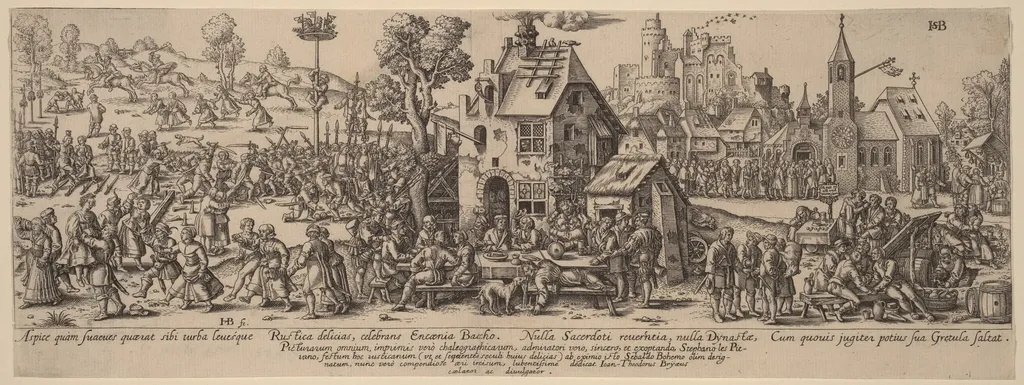
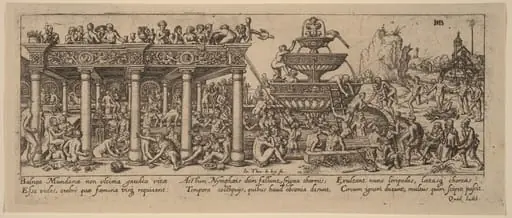
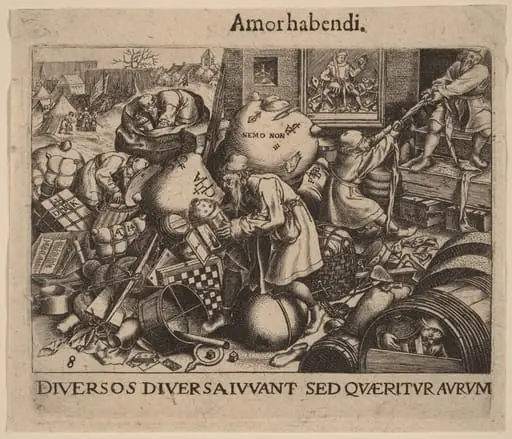
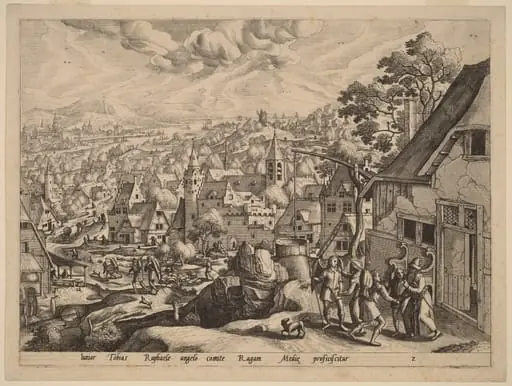
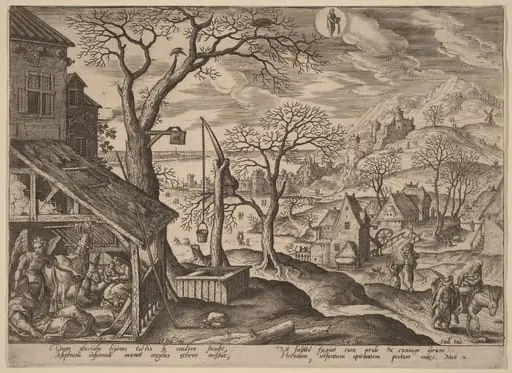
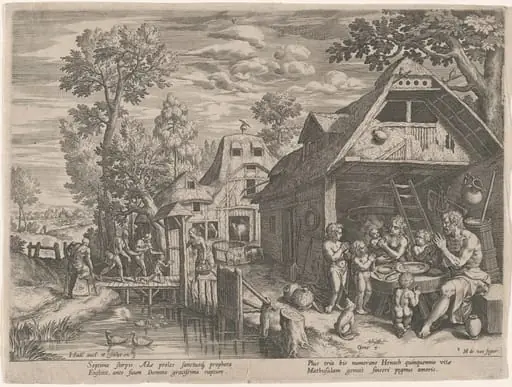
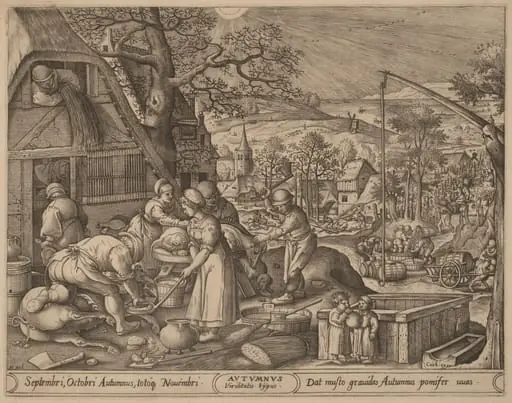
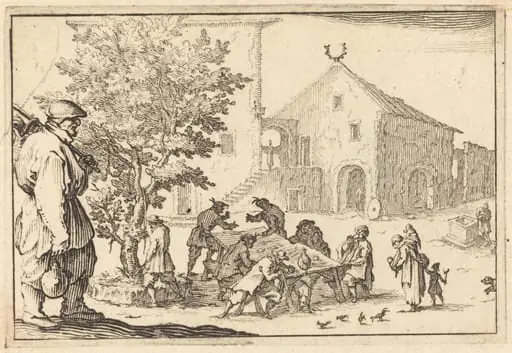
Country Fair is an ink print by the Renaissance artist Johann Theodor de Bry. It dates from 1592 and is held in the collection of the National Gallery of Art.
About this work
Overview
The scene unfolds across a horizontal plane, with figures arranged in loose groupings that suggest spontaneous interaction.
Country Fair is a 1592 engraving by Johann Theodor de Bry, depicting a rural marketplace teeming with activity. Unlike painted works, this piece relies on fine lines and tonal contrasts to convey motion and atmosphere. The scene unfolds across a horizontal plane, with figures arranged in loose groupings that suggest spontaneous interaction. The medium’s precision allows for dense detail without color, relying instead on inked lines to suggest texture and depth.
Subject & Meaning
The engraving captures a seasonal gathering typical of early modern European villages, where commerce, leisure, and social exchange converged. Figures are shown haggling over goods, playing games, eating, and conversing, reflecting the fair’s role as both economic hub and communal ritual. No single narrative dominates; instead, the composition emphasizes collective activity, offering a snapshot of everyday life rather than an idealized or moralized scene.
Technique & Style
De Bry employed fine-line engraving to render the scene with meticulous clarity. Cross-hatching and stippling create subtle gradations of light and shadow, giving volume to figures and structures. The density of lines in clothing and foliage contrasts with open spaces in the background, guiding the viewer’s eye through the composition. The absence of color is compensated by rhythmic line work that suggests movement and texture, characteristic of Northern Renaissance printmaking traditions.
History & Provenance
Created in 1592, the engraving was likely produced for a broader European audience interested in regional customs. De Bry, part of a family of printmakers and publishers, often illustrated ethnographic and topographical subjects. While the original print’s early ownership is undocumented, it was likely circulated among collectors and scholars familiar with the de Bry family’s publications on travel and folk life.
Context
In late 16th-century Europe, printed images of rural life gained popularity as curiosity about regional customs grew. De Bry’s work aligns with a trend of documenting everyday scenes, distinct from religious or mythological themes dominant in high art. His engraving reflects the increasing interest in secular, observational imagery, supported by advances in print technology that made such images widely accessible.
Legacy
Country Fair endures as a record of early modern rural sociability, valued for its unembellished depiction of common life. It contributes to the broader corpus of Northern European printmaking that prioritized observation over idealization. Though not widely exhibited today, it remains a reference point for scholars studying the visual culture of marketplaces and public gatherings in the Renaissance period.
Artist & collection

Artist
Johann Theodor de Bry (1561–1623) was a German artist, born in Strasbourg.