Artwork
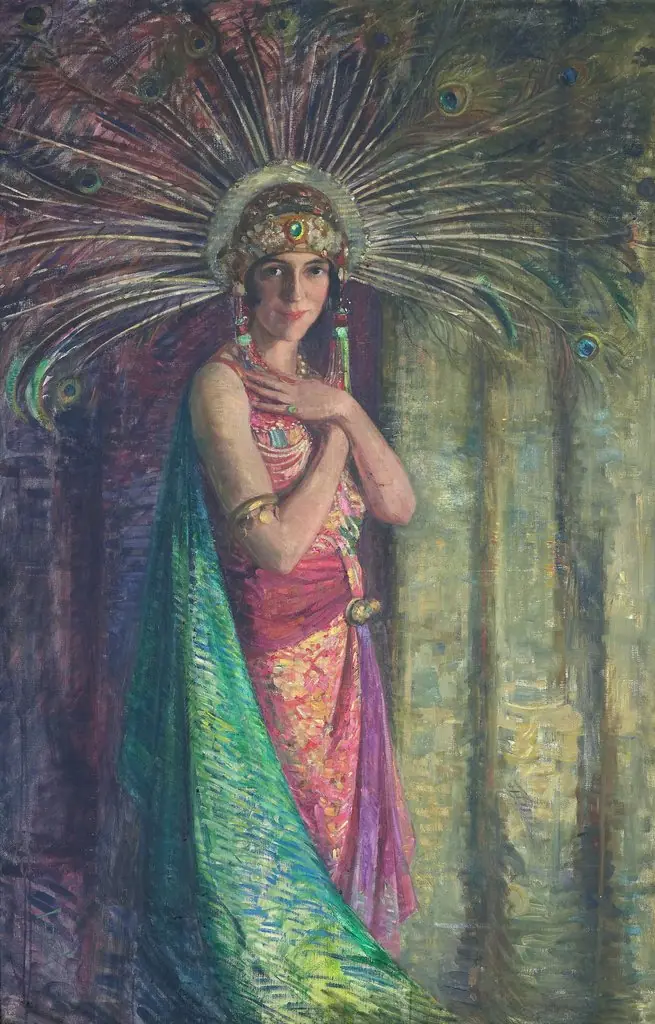
Nancy Price as Calypso in <i>Ulysses</i> by Stephen Phillips
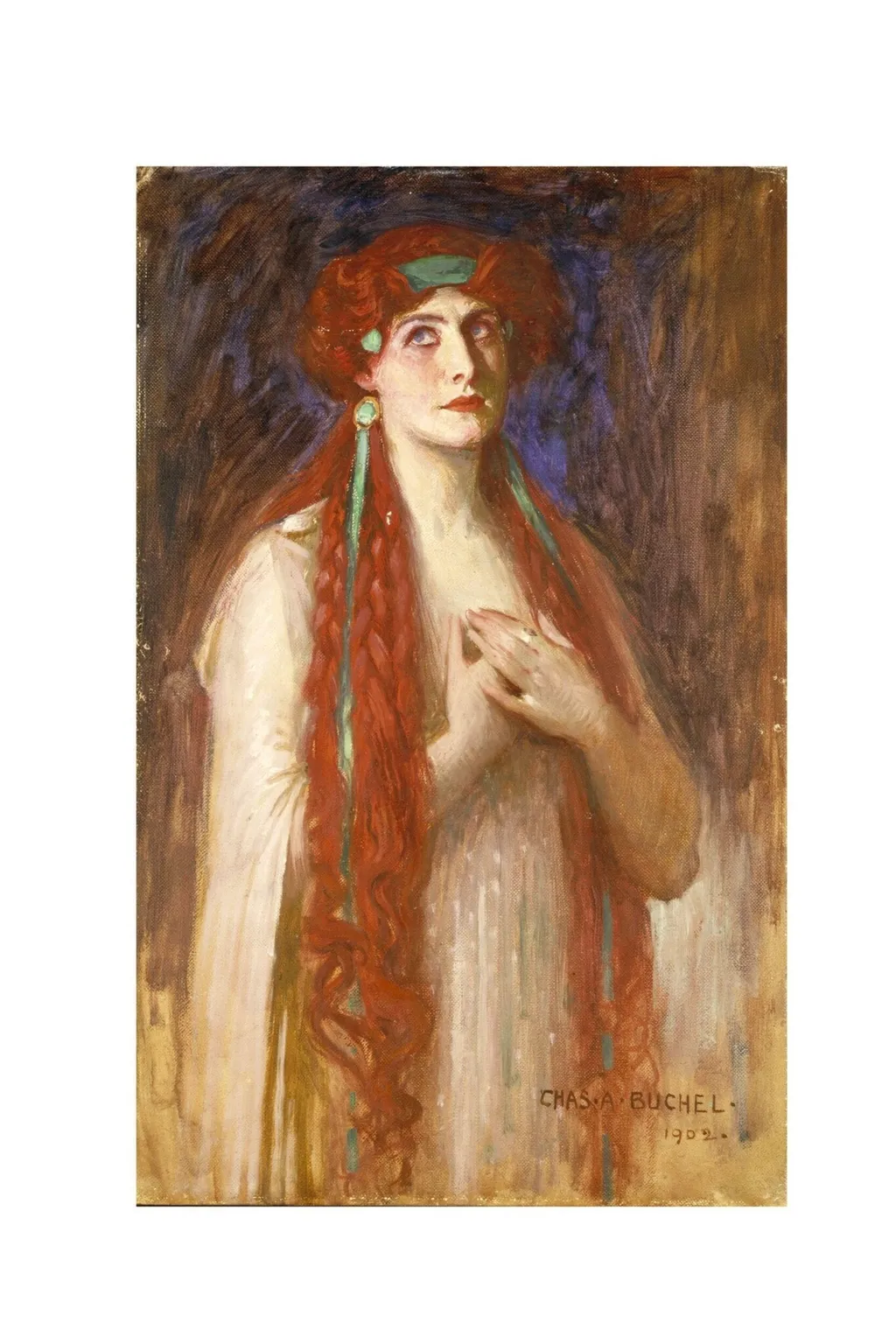
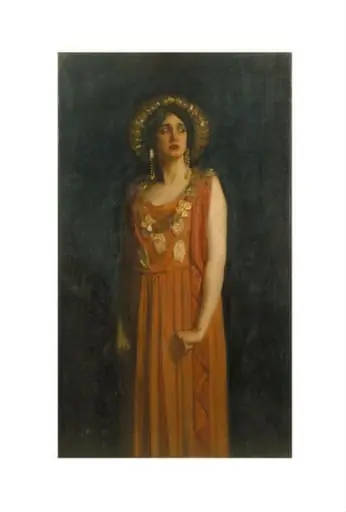
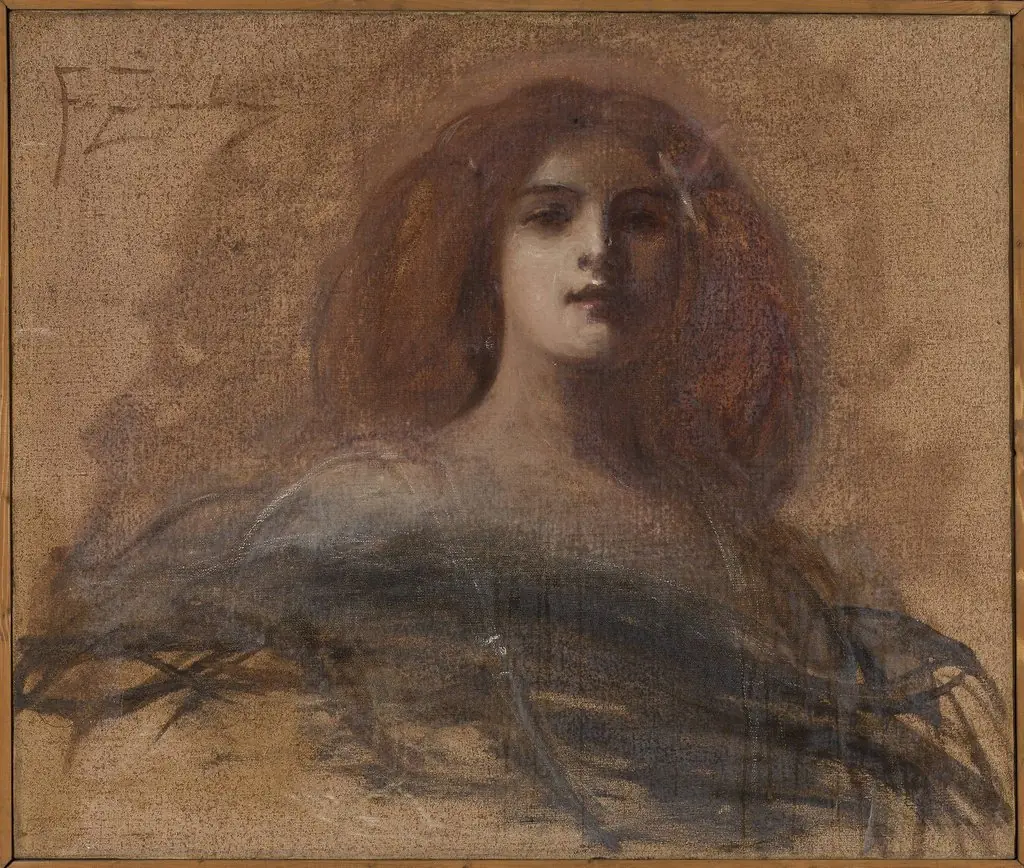
Nancy Price as Calypso in <i>Ulysses</i> by Stephen Phillips is a paint painting by the Post-Impressionist artist Charles Buchel. It dates from 1902 and is held in the collection of the Victoria and Albert Museum. This oil painting portrays actress Nancy Price in the role of Calypso from Stephen Phillips's 1903 verse drama Ulysses.
About this work
Overview
The composition emphasizes her figure against a muted, earth-toned background, with attention given to the texture of fabric and hair.
This oil painting portrays actress Nancy Price in the role of Calypso from Stephen Phillips's 1903 verse drama Ulysses. Rendered in three-quarter view, the subject is depicted with stillness and poise, her hands gently clasped before her chest. The composition emphasizes her figure against a muted, earth-toned background, with attention given to the texture of fabric and hair. The artist’s signature and the date are present, confirming its origin as a deliberate portrait of a theatrical performance.
Subject & Meaning
Nancy Price’s portrayal of Calypso, the nymph who detains Odysseus in Homer’s epic, is rendered with quiet dignity rather than overt seduction. Her upward gaze and serene expression suggest introspection, aligning with the character’s mythic isolation. The restrained pose and minimal gesture evoke a sense of timeless stillness, reflecting the literary theme of longing and waiting. The costume and setting serve not as spectacle but as subtle indicators of her mythic identity.
Technique & Style
The artist employs broad, deliberate brushwork to define the folds of the white dress and the flowing strands of red hair, creating a tactile sense of material and movement. Subtle contrasts in light and shadow, reminiscent of chiaroscuro, model the form without dramatic intensity. The background, composed of layered browns and muted purples, recedes softly, focusing attention on the figure. The green headband and earrings introduce restrained accents that harmonize with the overall tonal harmony.
History & Provenance
The painting was created during Price’s performance in Phillips’s Ulysses, likely as a commissioned portrait capturing her acclaimed portrayal. It remained in the artist’s possession or within Price’s circle until 1971, when her daughter, Miss Elizabeth Maude, donated it to the British Theatre Museum Association. The donation preserved a tangible link between early 20th-century theatre and its visual documentation, ensuring its place in theatrical history.
Context
The painting emerges from a period when theatrical portraiture was a respected genre, bridging stage performance and fine art. Stephen Phillips’s Ulysses, though now obscure, was a significant literary drama of its time, and Price’s performance was widely noted. This portrait reflects the cultural practice of immortalizing celebrated actors through painted likenesses, aligning with broader trends in Edwardian theatre aesthetics and the elevation of acting as a serious art form.
Legacy
As a documented record of a specific theatrical interpretation, the painting serves as a historical artifact of early 20th-century performance culture. It preserves the visual identity of Nancy Price in a role that once captivated audiences, offering insight into how mythic characters were embodied on stage. Its preservation in a theatre museum underscores its value as a material witness to the intersection of literature, performance, and portraiture.
Own this work as a print
Artist & collection
Artist
Charles Buchel (Karl August Büchel) (1872–1950) was a British artist. Buchel was born in Mainz, Germany, but immigrated to England as a child. Buchel studied art at the Royal Academy Schools. He was hired by the…

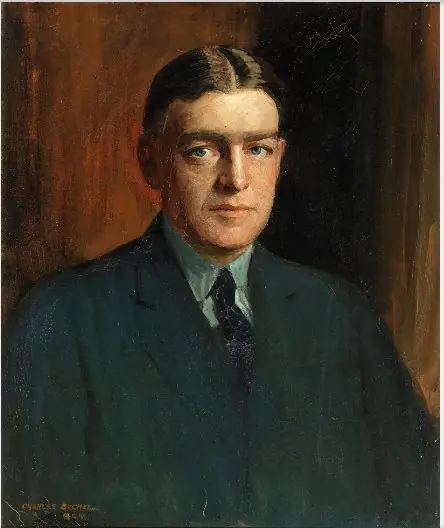 Portrait of Ernest Shackleton (1874 - 1922), Polar Explorer
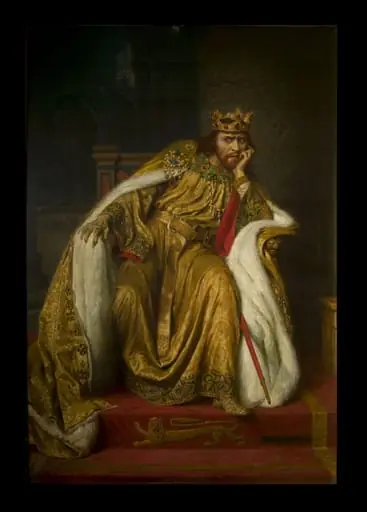 Herbert Beerbohm Tree as King John in <i>King John</i> by William Shakespeare
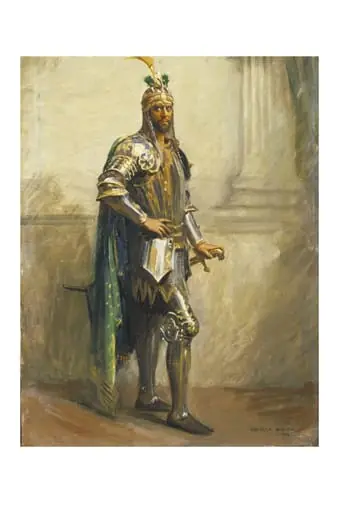 Herbert Beerbohm Tree as Othello in <i>Othello</i> by William Shakespeare
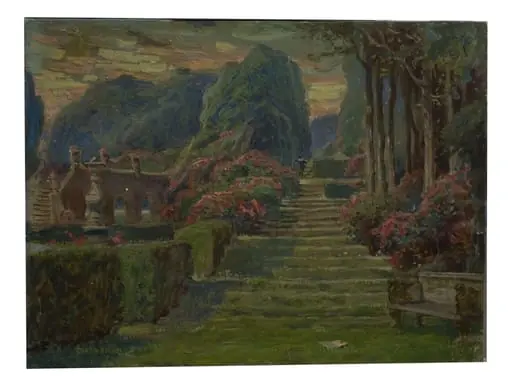 Stage Setting for 'Twelfth Night' by William Shakespeare
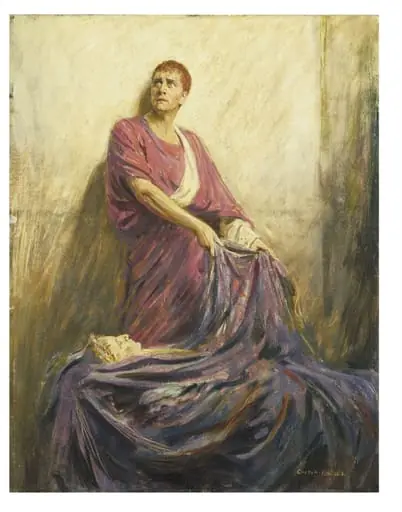 Herbert Beerbohm Tree as Mark Antony in <i>Julius Caesar</i> by William Shakespeare
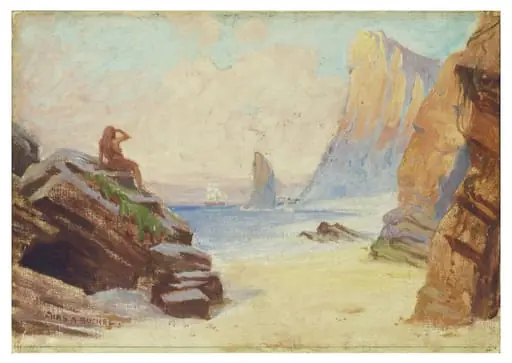 The Setting for the Last Scene of <i>The Tempest</i> by William Shakespeare
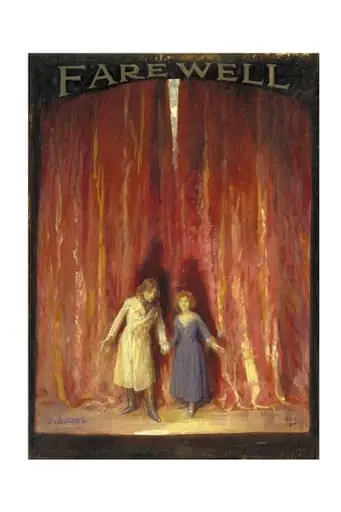 Sir John Martin-Harvey as Sydney Carton and Nina de Silva as Mimi in <i>The Only Way</i> by Freeman Wills and Frederick Langbridge
 H Beard Print Collection