Artwork
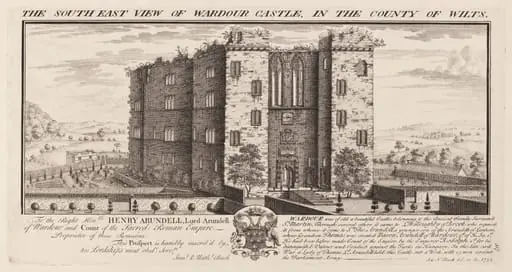
The South-East View of Wardour Castle, in the County of Wilts
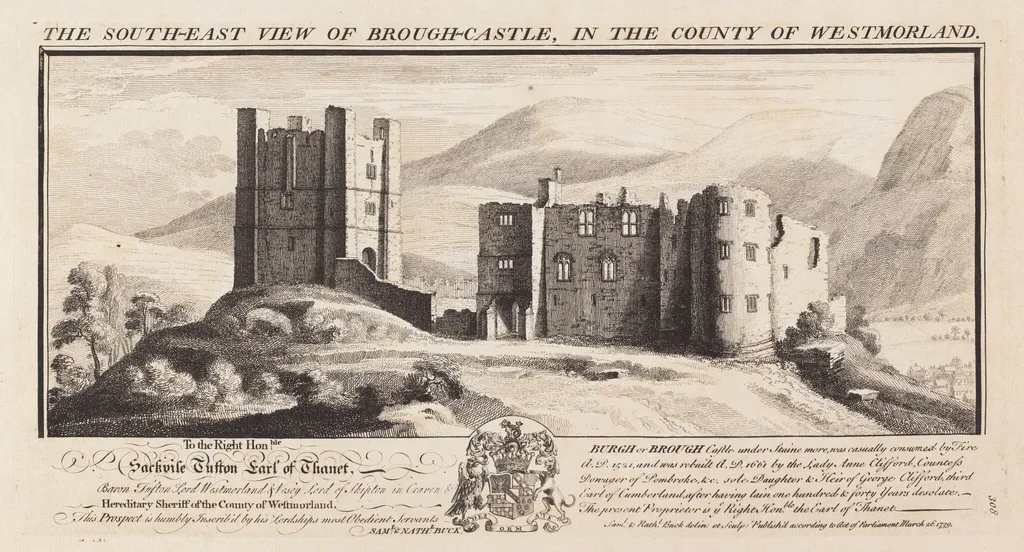
The South-East View of Wardour Castle, in the County of Wilts is an ink print by the Baroque artist Samuel Buck. It dates from 1739 and is held in the collection of the National Gallery of Art. The work is an engraved print dated 1739 that depicts the southeast aspect of Wardour Castle in Wiltshire.
About this work
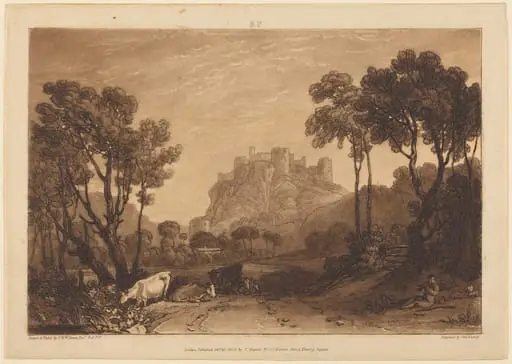
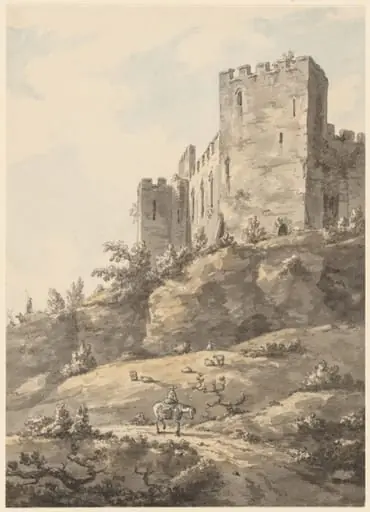
This engraving shows Wardour Castle from the southeast in 1739. Trees frame the castle’s ruins on a hill. A winding path leads to the gate below.
Samuel Buck made this print using cross-hatching. The lines create shadows and texture in the stone and sky. It’s one of 430 views he drew across Britain.
Look up Buck, Samuel to see more of his detailed castle prints.
Overview
The work is an engraved print dated 1739 that depicts the southeast aspect of Wardour Castle in Wiltshire. Executed on laid paper, the image presents the ruined structure perched on a hill, surrounded by foliage and a meandering approach path.
Subject & Meaning
The composition frames the castle’s remnants within a natural setting, emphasizing the contrast between the decayed stone and the surrounding trees. The perspective invites the viewer to contemplate the passage of time and the integration of historic architecture into the landscape.
Technique & Style
Samuel Buck employed fine cross‑hatching to render tonal variations, using closely spaced lines to model the stone’s texture and the sky’s atmosphere. This method creates subtle shadows and depth, characteristic of early 18th‑century topographical engraving.
History & Provenance
Created as part of Buck’s extensive series of British views, the print belongs to a collection of roughly 430 engraved images documenting notable sites across the country. The series was produced for a market interested in visual records of England’s architecture and scenery.
Context
During the early Georgian period, there was growing public interest in antiquarian studies and travel literature. Buck’s work contributed to this trend by providing detailed visual records of historic monuments such as Wardour Castle, which had been largely destroyed in the 17th‑century civil conflicts.
Artist & collection