Artwork
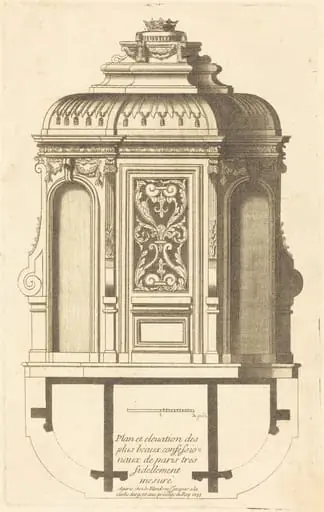
Plan et elevation des plus beaux confessionnaux de Paris, tres fidelemant mesure
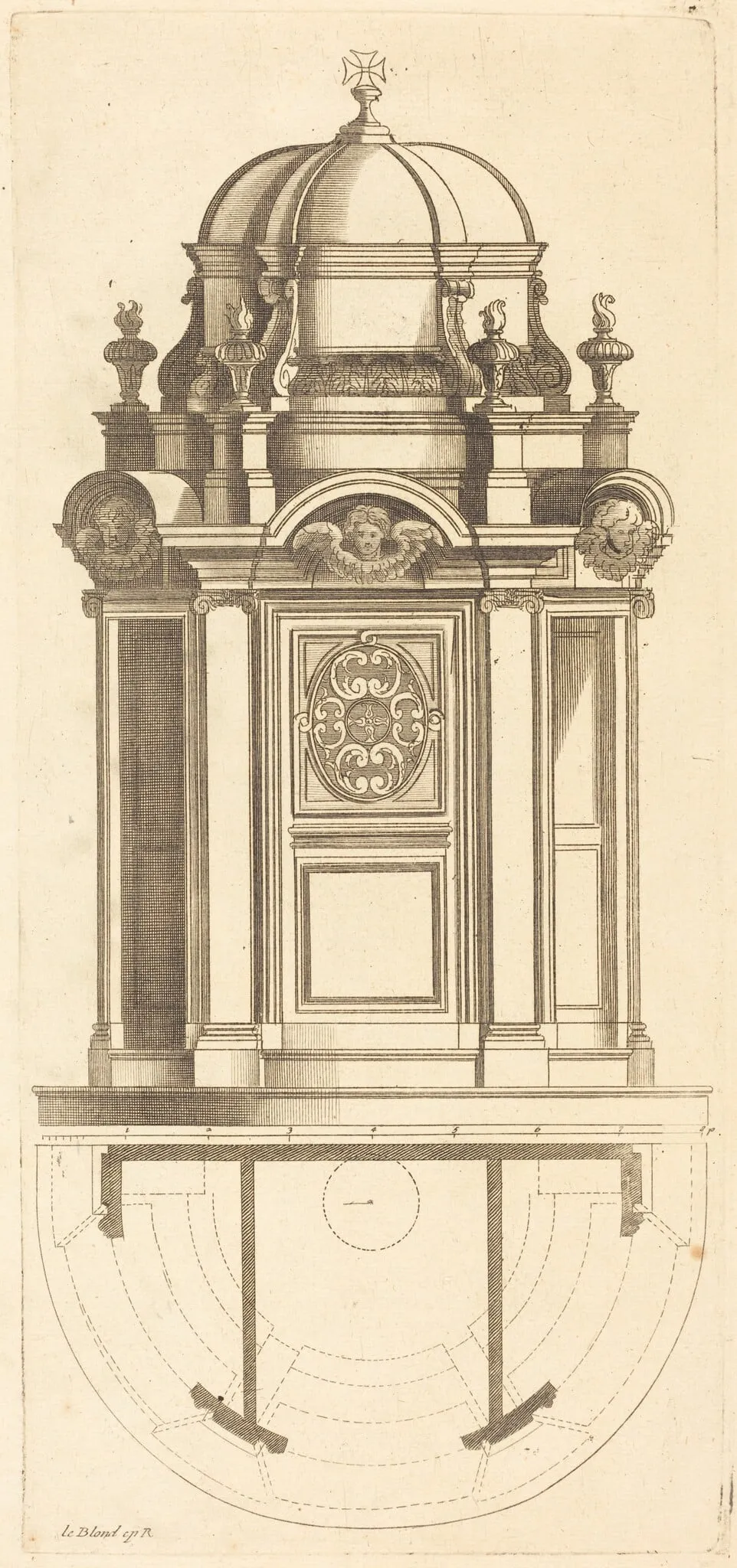
Plan et elevation des plus beaux confessionnaux de Paris, tres fidelemant mesure is an ink print by the Baroque artist Jean Le Blond. It dates from 1688 and is held in the collection of the National Gallery of Art.
About this work
Overview
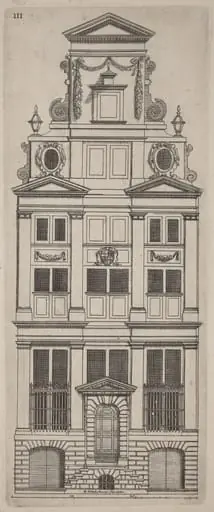
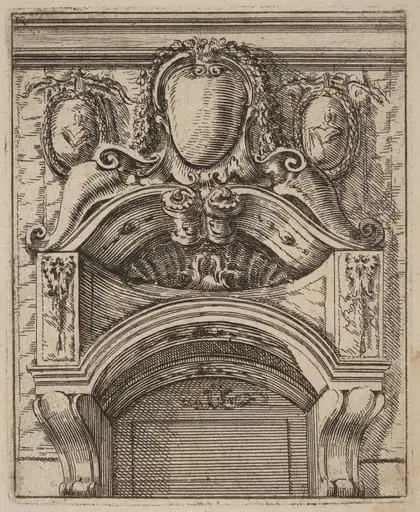
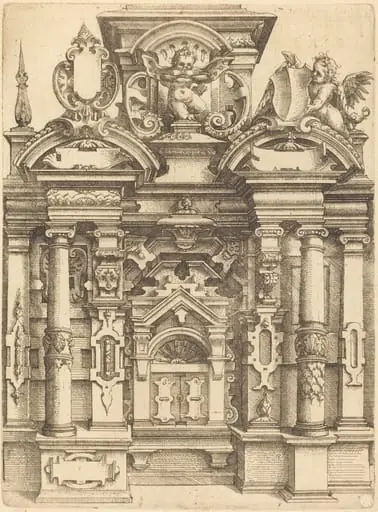
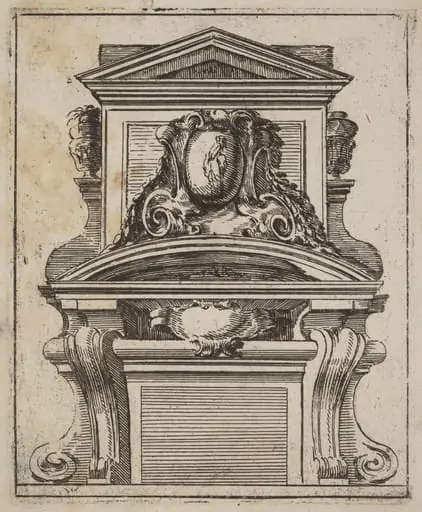
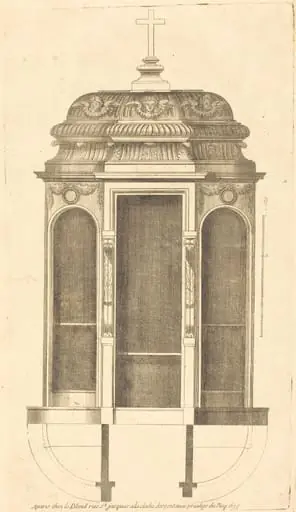
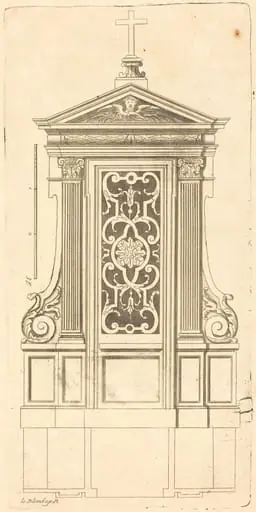
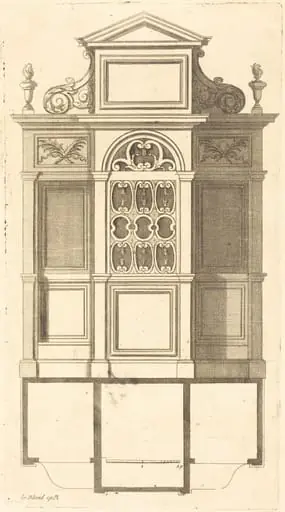
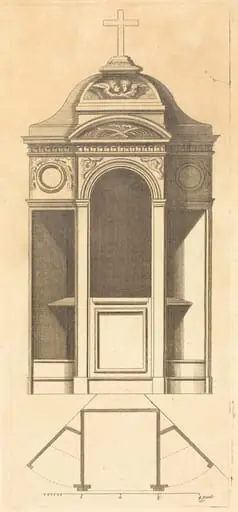
Jean Le Blond’s 1688 engraving presents a detailed architectural drawing of a Parisian confession booth. Rendered in two complementary perspectives—a frontal elevation and a plan view—the image conveys the full spatial arrangement of the wooden structure, highlighting its ornate columns, curved dome, and decorative front panel.
Subject & Meaning
The illustration depicts a richly carved wooden confessional, complete with towering columns supporting a vaulted dome. Beneath the dome, two winged cherubs are perched on a ledge, underscoring the religious function of the piece and reflecting the Baroque taste for allegorical figures within ecclesiastical furnishings.
Technique & Style
Executed as an engraving, the work relies on fine incised lines to render texture and depth, allowing the viewer to discern the heavy timber construction and intricate ornamentation. The dual‑view format, common in 17th‑century architectural documentation, serves both aesthetic and practical purposes, guiding craftsmen in the actual building process.
History & Provenance
Created in 1688, the print is attributed to Jean Le Blond, a French draughtsman known for his precise architectural renderings. It likely originated as a design proposal for a confessional intended for a Paris church, illustrating the collaborative relationship between artists and builders during the late‑Baroque period.
Artist & collection


 Plan et elevation des plus beaux confessionnaux de Paris, tres fidelemant mesure
 Plan et elevation des plus beaux confessionnaux de Paris, tres fidelemant mesure
 Plan et elevation des plus beaux confessionnaux de Paris, tres fidelemant mesure
 Plan et elevation des plus beaux confessionnaux de Paris, tres fidelemant mesure
 Plan et elevation des plus beaux confessionnaux de Paris, tres fidelemant mesure