Artwork
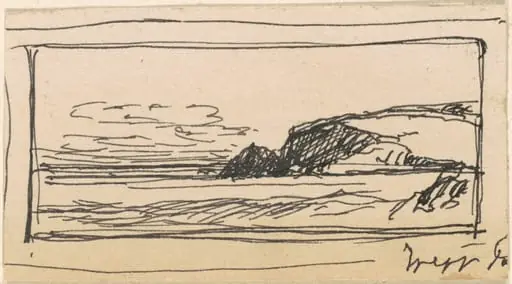
Seascape with a Fortified City at Right, Islands at Left and a Cottage in the Foreground
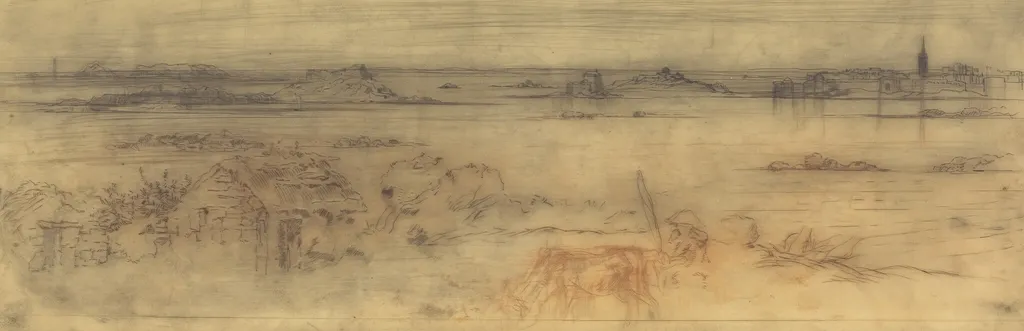
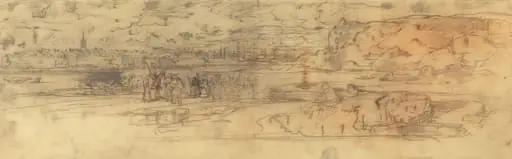
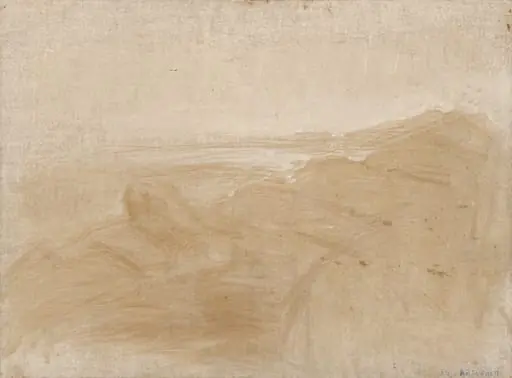
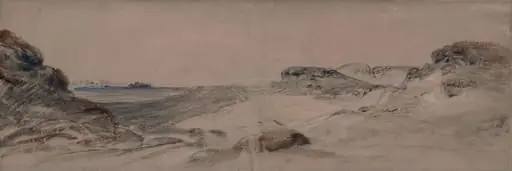
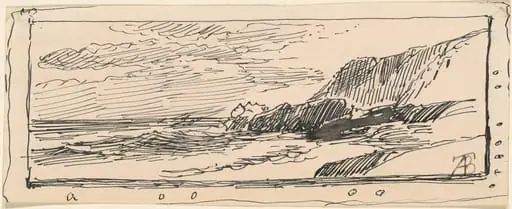
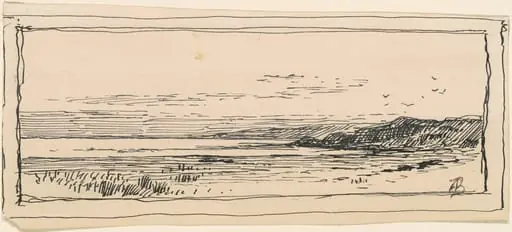
Seascape with a Fortified City at Right, Islands at Left and a Cottage in the Foreground is a print by the Impressionist artist Félix-Hilaire Buhot. It dates from 1882 and is held in the collection of the National Gallery of Art.
About this work
Overview
The composition is sparse yet deliberate, balancing distant architecture, isolated islands, and a modest foreground structure.
This gelatin sheet print, dated around 1882, is a delicate marine study by Félix-Hilaire Buhot. It captures a quiet coastal moment with minimal detail, emphasizing atmosphere over finish. The composition is sparse yet deliberate, balancing distant architecture, isolated islands, and a modest foreground structure. The medium’s fragility and the artist’s light touch suggest a spontaneous observation rather than a polished work.
Subject & Meaning
The scene presents an unidealized coastal landscape: a fortified city perched on a distant hill, small islands fading into the horizon, and a solitary cottage near the water’s edge. No human figures are present, and the few boats suggest quiet activity rather than commerce or travel. The focus lies in the stillness of the environment, reflecting an interest in ordinary, unremarkable places as worthy of attention.
Technique & Style
Buhot employed loose, rapid pencil strokes to suggest form and movement. The city’s walls, the cottage’s thatched roof, and the water’s surface are rendered with minimal definition, relying on suggestion rather than detail. The gelatin sheet medium allowed for subtle tonal variations, enhancing the sense of air and light. The approach aligns with a sketch-like immediacy, prioritizing perception over finish.
History & Provenance
Created during Buhot’s mature period, this work emerged from his extensive travels along the French coast, where he documented maritime life in pencil and print. Though not widely exhibited in his lifetime, it was preserved within his personal archive and later entered institutional collections. Its survival reflects its value as a record of his observational practice rather than as a commercial product.
Context
In the 1880s, French artists increasingly turned to everyday landscapes as subjects, moving away from grand historical narratives. Buhot’s work fits within this shift, aligning with Realist and early Impressionist tendencies that valued direct observation. His use of unconventional materials like gelatin sheets also reflects broader experimentation in printmaking during this period.
Legacy
This print exemplifies Buhot’s contribution to the revival of the sketch as a legitimate artistic form. Though not widely known outside specialist circles, his approach influenced later printmakers who valued spontaneity and atmospheric suggestion. The work remains a quiet testament to the artistic potential of fleeting, unadorned moments in nature.
Artist & collection
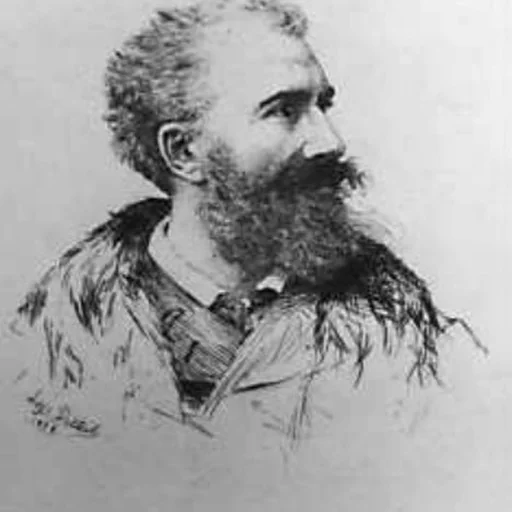

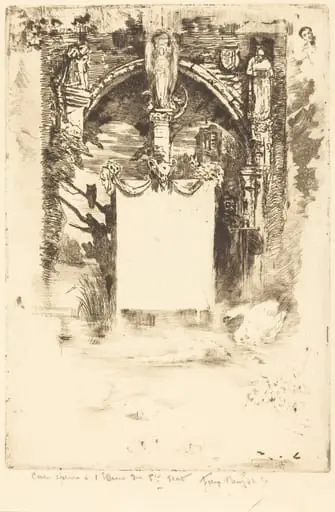 Ex-Libris pour "L'Ensorcelée" (Bookplate for "L'Ensorcelée")
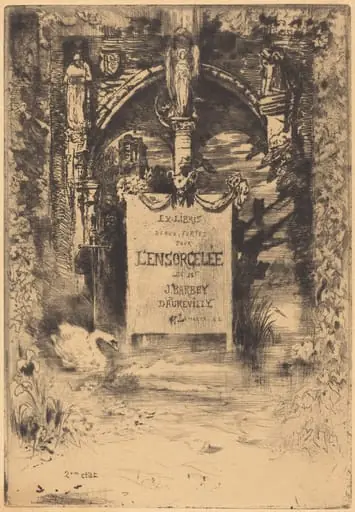 Ex-Libris pour "L'Ensorcelée" (Bookplate for "L'Ensorcelée")
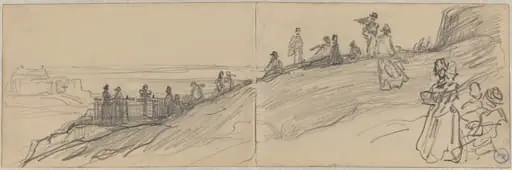 Figures on Top of a Hill, Overlooking the Sea
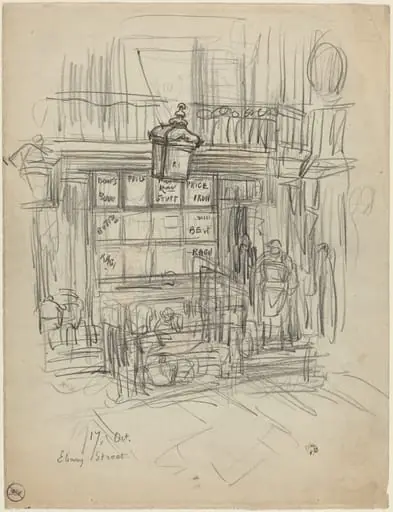 Ebury Street
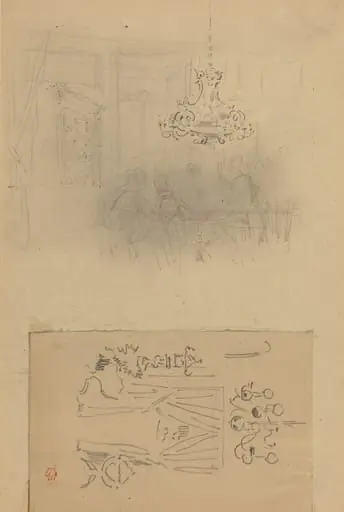 A Gathering in an Interior; A Curtained Doorway
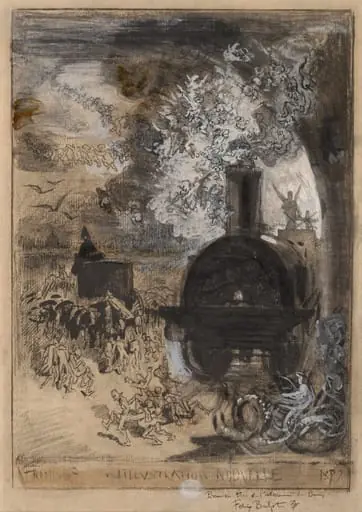 Frontispiece for L'Illustration Nouvelle: The Burial of the Burin
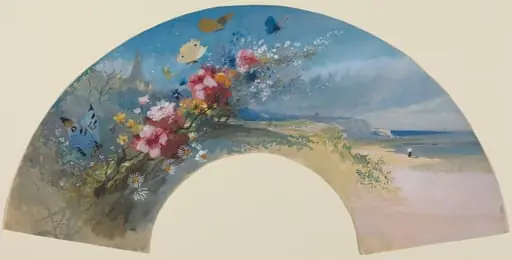 Fan with Wildflowers and Butterflies against the Norman Coast
![Gillingham Pier, London [verso], by Félix-Hilaire Buhot](https://artifactworldgallery.com/img/felix-hilaire-buhot--gillingham-pier-london-verso--641e03dd7de8217b-w320.webp) Gillingham Pier, London [verso]
Gillingham Pier, London [verso]